That Shakespeare Life

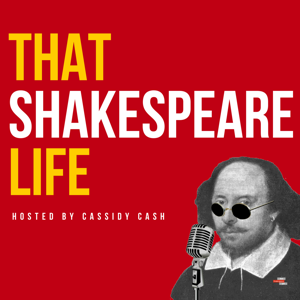
That Shakespeare Life

By Cassidy CashSociety & CultureHistory
Download on the App Store

That Shakespeare Life episodes

  • Finding a Lost Aldrovandi Portrait from the 1590s
    Ulisse Aldrovandi is considered by many scientists, including Carl Linnaeus, the man who formalized the modern system of naming animals, to be the father of natural history studies. During Shakespeare's lifetime, until his death in 1605, Aldrovandi collected a vast amount of specimens for his cabinet of curiosities, gathering over 7000 artifacts, organizing multiple expeditions to collect plants, and illustrating thousands of bizarre natural history phenomenon into at least 12 publications, some of which were compiled posthumously. Today, Aldrovandi's work is preserved at the University of Bologna. However, in 2020, one painting was discovered that claims to be a lost Aldrovandi painting of a young girl that suffered from hypertrichosis, a condition that covers the body in excess hair. We have talked about this girl, Antoinetta Gonzales, on our show previously. That episode, we mentioned that paintings of the Gonzales family were often copied and distributed around Europe for inclusions in cabinets of curiosities, like the one that Aldrovandi compiled in Italy. Today, our guest, Daniel Dawson Gordon of Norfolk Reclamation Center in England, is here to talk about one such painting that belonged to Ulisse Aldrovandi, who at the time was one of the highest ranking members of Italian society. Daniel is here to share about Aldrovandi's work, the painting of Antoinetta Gonzales, and the story of how it was discovered beneath another a famous art painting that been painted over the original of Antionetta.

    Hosted on Acast. See acast.com/privacy for more information.

    34 min
  • Tomatoes Make a Splash in Shakespeare's England

    The fruit today known as a tomato was first introduced to Europe during Shakespeare's lifetime. As many new things were, this fruit was received at first with skepticism, considered a kind of curiosity. It was called a golden apple, as well as a "pomi d'oro" in Italy, where many considered the fruit dangerous, poisonous, and something that was pleasing to the eye, but secretly treacherous. Shakespeare echoes this sentiment in his play, Pericles, when he writes about "golden fruit but dangerous to be touched." Today we are going to explore the arrival, reception, cultivation, and use of tomatoes for 16th century Italy, Germany, and Belgium, with our guest and author of the article "Sixteenth-century tomatoes in Europe: who saw them, what they looked like, and where they came from, Tinde van Andel.

    Hosted on Acast. See acast.com/privacy for more information.

    23 min
  • Atlantic Slave Trade in England for the 16th Century
    During the 16th century in Europe, the Portuguese dominated the African slave trade. European ships were first exposed to African slaves when privateering vessels would find enslaved Africans packed alongside Atlantic trade goods in the hulls of the captured ships. The Spanish were the first to try and break up the Portuguese monopoly on slaves, establishing a system known as the asiento de negros in the 16th century which was an agreement between the Spanish crown and a private person or granting a monopoly in supplying African slaves for the Spanish colonies in the Americas. The Dutch would use similar contracts to compete in this market, and it wasn't long before the British and French followed suit. We see glimpses of this history in Shakespeare's plays when he mentions the word "slave" over 170 times, the word "negro" specifically in his play Merchant of Venice, and he refers to "an African" in the play The Tempest. Here today to help us understand the start of the Atlantic Slave Trade and the place of Africans, and understanding of black skinned people, and even white skinned slaves for Shakespeare's England, is our guest and author of Transformations of Slavery: A History of Slavery in Africa Paul Lovejoy.

    Hosted on Acast. See acast.com/privacy for more information.

    36 min
  • Blackfriars, the Parish, The Puritans, and The Theater
    Prior to Henry VIII's dissolution of the monasteries in 1538, the section of London known as Blackfriars was as major religious institution extending along the bank of the Thames River. In its' entirety, Blackfriars was second in size only to St. Paul's Churchyard. After the Reformation, Blackfriars was located in what's known as a Liberty, which meant it was just outside the reach of the mayoral law. Being outside the mayor's jurisdiction made Blackfriars especially attractive to entrepreneurs like The Burbages and their star writer, William Shakespeare, who wanted to open a theater that wasn't subject to the tighter restrictions of London proper. Blackfriars wasn't only attractive to innovative theater professionals, however, it was also attractive to immigrants and the highly religious who were seeking freedom from the regulation of guilds. At the time that Shakespeare and the Burbages were looking at Blackfriars as a home for their theater, the parish of St Anne, Blackfriars, was dominated by godly clergy and parishioners, the people we usually think of as the enemies of theater. Here today to explain to us how Blackfriars theater was able to survive and thrive in this section of London is our guest, Chris Highley.

    Hosted on Acast. See acast.com/privacy for more information.

    43 min
  • Card Games That Were Popular for Shakespeare
    It's Shakespeare's Birthday this week! Happy Birthday Shakespeare! To celebrate, we're going to paly some card games! From Noddy and Maw to Laugh and Lie Down, card games were popular for Shakespeare's lifetime, with records from the court of King James and Elizabeth I outlining games played, losses incurred, and even insults traded between dignitaries all over the playing of card games. Shakespeare himself mentions a few of these games in his plays by name including Noddy, Primrose, and Laugh and Lie Down. When it comes to early modern card games, no one knows more about the games, their history, and how to play them than internationally renowned game expert David . If you are an Experience Shakespeare patron on PAtreon or followed meon YouTube where we have played some of these early modern games for ourselves, you will be familiar with David 's name, having seen and heard me mention his work as we relied on his research to put together those activities. I am very honored and quite delighted to welcome David to the show today to share with us some of the history of card games, how they were played, and their place in society for the life of William Shakespeare.

    Hosted on Acast. See acast.com/privacy for more information.

    26 min
  • Lost Plays and the Historians Who Find Them Again
    Whether it's a diary entry or a side note in a ledger or account book, history leaves us records of plays that were performed during Shakespeare's lifetime, but their scripts never survived to the present day in any form that's recognizable as a complete play. Other than the occasional snippet of a line or two here and there, we cannot read these plays, and we certainly can't perform them, but we know they were real, and that they had a place in the life of William Shakespeare. This entire group of work is called collectively "Lost Plays" and even bard himself has a few titles that we know he wrote, but we no longer have anything but a passing record to tell us their contents. Researching and cataloging the collection of historical breadcrumbs that piece together a story of a lost play is the purpose of The Lost Plays Database, which is an online collection of the records and research being done into the theatrical works now lost to history. Their database records plays from as early as 1570 and as late as 1658. Our guest this week knows better than most the history of Lost Plays, because she is one of the editors at The Lost Plays Database, and a pioneer in the field of repertory study. We are delighted to welcome Roslyn Knutson.

    Hosted on Acast. See acast.com/privacy for more information.

    34 min
  • A Traditional Marriage Ceremony Including the Reading of the Banns
    The difference in Shakespeare's plays between a tragedy and a comedy is defined as whether or not the characters end in marriage or end in death. The comedies often showcase the promise of a marriage, or even sometimes multiple marriages, with proposals happening in the midst of fun and elaborate parties including songs, dances, and frivolity. Then of course those happy marriages are starkly contrasted with those we see in Shakespeare's tragedies where marital relationships are marred by jealousy, suspicion, or betrayal. Shakespeare's works give us a glimpse into what marriage customs were for turn of the 17th century England, but they are far from providing any kind of definition what was normal. In order to explore the history of marriage customs for Shakespeare's lifetime and understand better what we could expect to see if we had attended a 17th century marriage in England, we are sitting down today with our guest, and expert in the history of marriage traditions, George Monger.

    Hosted on Acast. See acast.com/privacy for more information.

    33 min
  • The Danby Portrait: A newly uncovered painting from life of William Shakespeare
    Of all the history we know about William Shakespeare and what it was like to live in turn of the 17th century England, one of the hardest things to know for sure about the bard is what he looked like. There are only two verified portraits of William Shakespeare, one is the bust available at his funerary monument in Stratford Upon Avon, and the other is known as the Droeshout portrait, which is an engraving on the title page of the First Folio that was published in 1623. Aside from these two depictions, there have been at least 9 paintings that claimed to be life-like representations of William Shakespeare, all of which were hotly contested, and a few that were outright disproven. One painting, however, has risen to the top through rigorous investigation as a contender for another verified portrait of the bard and it's known as the Danby Portrait. The Danby portrait was owned by the Danby family for years, until it was sold by Christie's in a house contents sale in 1975. At that time the painting was misattributed and has since been shown to be a painting by Robert Peake, a professional artist from Shakespeare's lifetime who not only knew about William Shakespeare, but actually worked with him directly in theater. Our guest this week, Duncan Phillips, is the art gallery owner who recently displayed the Danby Portrait, and he joins us to share about the history of the Danby Portrait, it's connections to Shakespeare, and the recent evidence that's been uncovered that suggests the portrait is not only of William Shakespeare, but that it was likely painted from life.

    Hosted on Acast. See acast.com/privacy for more information.

    34 min
  • The Great Fires that Ravaged Stratford Upon Avon in the 1590s
    In 1594 and 1595, when William Shakespeare was 31 years old, fires tore through his hometown of Stratford Upon Avon, causing such destruction that this natural disaster is one of the few major events in Stratford Upon Avon that was recorded for posterity. The fires were known as The Great Fires and in the aftermath of the devastation the town gathered together to rebuild the timbers of their homes and businesses. Many of these rebuilt structures survive through to today, and with the help of a recently awarded research grant from Historic England, the Stratford Society lead by historian Robert Bearman, look to investigate how the timber frame buildings were rebuilt following the fires in 1594, 1595, and another one that occurred later in 1614. Dr. Bob Bearman joins us today to tell us about the history of the fires and to share a look inside the Stratfire Project.

    Hosted on Acast. See acast.com/privacy for more information.

    27 min
  • The Hairy Girls That Captivated Europe With Their Portraits
    In the late 16th century, William Shakespeare was in his 30s, and staging plays like As You Like It, where Rosalind mentions the "howling of Irish wolves against the moon." (That's from Act V scene ii). While scholars today debate whether or not that's a reference to the legend of werewolves, we know from a painting completed in 1595 that there was at least one family whose hereditary disease made many in Europe believe in that werewolves might be real. The Gonzales family carried a rare genetic condition that is known today as hypertrichosis, but it's more common name is "werewolf syndrome", so called because the people afflicted with it have hair growing over their entire faces, making them look exactly like pictures of werewolves that we have in pop culture and folklore. Here today to help us understand the history of the Gonzales family and what their lives were like living with this condition in the 16th century is our guest, and author of the book "The marvelous hairy girls : the Gonzales sisters and their worlds", Merry Wiesner-Hanks.

    Hosted on Acast. See acast.com/privacy for more information.

    41 min

About That Shakespeare Life

From the publisher's feed

Hosted by Cassidy Cash, That Shakespeare Life takes you behind the curtain and into the real life of William Shakespeare.

More shows like That Shakespeare Life

HistoryExtra podcast by Immediate

HistoryExtra podcast

3,178 Listeners

Gardeners' Corner by BBC Radio Ulster

Gardeners' Corner

102 Listeners

Folger Shakespeare Library: Shakespeare Unlimited by Folger Shakespeare Library

Folger Shakespeare Library: Shakespeare Unlimited

823 Listeners

Sidedoor by Smithsonian Institution

Sidedoor

2,228 Listeners

The English Heritage Podcast by English Heritage

The English Heritage Podcast

229 Listeners

Tudors Dynasty & Beyond by RedTop Media / Rebecca Larson

Tudors Dynasty & Beyond

749 Listeners

Historic Royal Palaces Podcast by Historic Royal Palaces

Historic Royal Palaces Podcast

470 Listeners

The Ancients by History Hit

The Ancients

3,346 Listeners

The Rest Is History by Goalhanger

The Rest Is History

15,575 Listeners

Gone Medieval by History Hit

Gone Medieval

1,889 Listeners

Not Just the Tudors by History Hit

Not Just the Tudors

2,050 Listeners

Lexicon Valley by Lexicon Valley

Lexicon Valley

577 Listeners

Short History Of... by NOISER

Short History Of...

2,829 Listeners

Betwixt The Sheets: The History of Sex, Scandal & Society by History Hit

Betwixt The Sheets: The History of Sex, Scandal & Society

1,384 Listeners

What Did You Do Yesterday? with Max Rushden & David O'Doherty by Keep It Light Media

What Did You Do Yesterday? with Max Rushden & David O'Doherty

215 Listeners