That Shakespeare Life

That Shakespeare Life

By Cassidy CashSociety & CultureHistory
Download on the App Store

That Shakespeare Life episodes

  • The Man Who Established The Lord Chamberlain's Men, Shakespeare's Playing Company
    The Lord Chamberlain's Men is known as "Shakespeare's playing company" and was a group of actors for which Shakespeare wrote plays most of his career. By 1603, The Lord Chamberlain's Men were so popular that James I himself chose to patronize the company making it The King's Men. Today we are going to look at the man who made the company The Lord Chamberlain's Men, and that's Henry Carey, the First Lord Hudson, and the Lord Chamberlain who patronized The Lord Chamberlain's Men when it was founded by Elizabeth I in 1594. This week we are delighted to welcome historian Stephanie Kline to the show to share with us the life and history of Henry Carey and his role in the career of William Shakespeare.

    Hosted on Acast. See acast.com/privacy for more information.

    32 min
  • Heads That Keep Talking After They Are Decapitated (and other wild Royal death stories)

    In her latest book, Mortal Monarchs: 1000 Years of Royal Deaths Suzie Edge writes about the deaths of several of England's monarchs who died in grotesque, weird, or elaborate ways. A former medical doctor now turned history, Suzie takes an indepth look at the sciene behind the deaths of Kings and Queens of England across a thousand years of history. Today, Suzie joins us on the show today to share with us the stories of the deaths of some of the most famous monarchs whose lives and deaths touched on the life of William Shakespeare including Elizabeth I, Mary Queen of Scots, and James I of England.

    This week's episode contains frank medical discussions of gore and violence, including disease and specifics about human demise. While our discussion is both entertaining and academic in nature, the content may be inappropriate for younger listeners. If you are listening in a classroom or where there are child ears present, we recommend you listen to the episode first before sharing it.

    Hosted on Acast. See acast.com/privacy for more information.

    20 min
  • 1582: David Ingram Walks from Mexico to Nova Scotia
    In 1567, a young English sailor named David Ingram signed up to work on a ship captained by English privateer John Hawkins. They would travel up and down the coasts of Africa and Mexico raiding and trading goods. In November of 1567, Ingram found himself and close to a hundred of his fellow crewmates stranded off the coast of Mexico, in a city called Tampico, just south of the present day Texas/Mexico border. Seeking to avoid capture by the Spanish, Ingram and close to two dozen of his shipmates started walking North. By October of 1568, a French fishing vessel picked up Ingram and just two of his original party of travellers off the coast of Nova Scotia. 13 years later, Ingram's account of what happened to himself and those travellers from Tampico to Nova Scotia was written down by Sir Francis Walsingham and published by Richard Hakluyt in his bookThe Principall Navigations Voiages and Discoveries of the English Nation of 1589. Since then, the veracity of Ingram's story has been debated by scholars across the globe. Today, our guest, Dean Snow, is here to share his research into Ingram and the famous walk from Mexico to Nova Scotia that defends Ingram's journey as accurate, all of which is cataloged in Dean's latest book, The Extraordinary Journey of David Ingram.

    Hosted on Acast. See acast.com/privacy for more information.

    36 min
  • Thomas Kyd inspires a young William Shakespeare to write plays

    In his latest book, Shakespeare's Tutor, Darren Freebury Jones explores the unsung history of Thomas Kyd as a master playwright who belongs in the canon of Shakespeare, Marlowe, and Lyly as one of the greatest playwrights of the Elizabethan Era. Darren writes that along with Christopher Marlowe, Thomas Kyd, specifically, paved the way for Shakspeare to be a successful playwright. While it makes sense for a newcomer on the scene, as Shakespeare was in the 1580s, to reach for adaptations of the work of established playwrights to launch his career, Darren points out that William Shakespeare continued to use and be influenced by the work of Thomas Kyd not only after Kyd's death in 1594, but even after Shakespeare was independently established as a successful playwright in London. To share with us the often overlooked history of Thomas Kyd, and his influence on Shakespeare, is our returning guest, and respected friend, Darren Freebury Jones

    Hosted on Acast. See acast.com/privacy for more information.

    39 min
  • Plays Performed at Universities and How They Competed with the Playhouses
    The theaters of the Globe, the Curtain, and the Swan all resided in parts of London considered outside of the law and housing disreputable players. In a strange twist of irony for Shakespeare's England, however, one of the most highbrow places in society also held dramatic performances in high esteem and that is the university. New establishments for England, colleges like Cambridge and Oxford produced so many professional playwrights for the 16th century that several of them banded together to become known as the university wits. Here this week to help us understand the role of players at major universities as well as who it was that performed there, and how these dramatic presentations interacted with those of Shakespeare is our guest and author of a new publication on University Dramas in Early Modern England, Daniel Blank.

    Hosted on Acast. See acast.com/privacy for more information.

    37 min
  • Did your barn float away? Floods, Storms, and Frozen Rivers in the 17th Century
    Shakespeare mentions a "weather-cock" in his plays Merry Wives of Windsor, Two Gentlemen of Verona, and Love's Labour's Lost, which is a kind of weather vane used for measuring wind direction. During Shakespeare's lifetime, astronomers Tycho Brahe and David Fabricus kept daily weather diaries noting details like the rain, snow, and temperature for their respective parts of Europe. But these two astronomers were far from the only people watching the weather in the late 16th and early 17th century. Other diarists including Haller Wolfagang, and Ralph Josselin, would keep similar diaries. From these notes we learn a description of the weather on specific days as well as exactly when and where major weather events like floods or even solar eclipses would have occurred. Since keeping data about the weather in the 16th century was happening before instruments like weather radar were in existence, it's fascinating to look back and discover how the study of weather and even weather predictions were happening for Shakespeare's lifetime. Here this week to share with us the details of meteorology for turn of the 17th century is our guest and expert historian on weather, Martin Rowley.

    Hosted on Acast. See acast.com/privacy for more information.

    36 min
  • Mandrakes That Scream and Look Like People Was An Elaborate 16th Century Scam
    Shakespeare's play, Romeo and Juliet, talks about the shrieking mandrake while Henry IV and Henry VI use the word mandrake as an insult. These very real plants took on legendary qualities due in part to the chemicals in their makeup which make them useful for anesthetics. Our guest this week is an expert in historical plants and historical methods of growing them and we are delighted this week to welcome Michael Brown to the show, the self-styled Historic Gardner, to share with us about the history of mandrakes.

    Hosted on Acast. See acast.com/privacy for more information.

    16 min
  • Writing letters in Renaissance England using special tricks and antiquated tools
    There are many examples of letter writing from Shakespeare's plays, including letters getting lost in transit and even examples of letter forgery! While many of the examples from Shakespeare's plays about letters are amplified to be more entertaining on stage, they represent real history about how letters were written and delivered for the life of William Shakespeare. Here today to help us explore the tools used to write a letter, and special tricks like letter locking and sealing a letter, is our guest and co-curator of the Letterwriting in Renaissance England exhibit at the Folger Shakespeare Library, Alan Stewart.

    Hosted on Acast. See acast.com/privacy for more information.

    29 min
  • The Astronomically High Deaths on the First Voyages of the East India Trading Company
    In April of 1601, four ships set out from England with hopes of establishing trade with Asia. Remembered by history as the first voyage of the East India Company that launched a momentous relationship between what would become Britain and Asia, the first, as well as the subsequent three, voyages by this group were wrought with danger, disease, and completed at great personal sacrifice. On all of these journeys, the captains and sailors battled illness, poor living conditions, and perilously low morale. While the East India Company launched the missions with a set of rules designed to help alleviate the most significant hurdles, our guest this week, Cheryl Fury, shares in her recent publication that the human cost of these voyages remained astronomically high.

    Hosted on Acast. See acast.com/privacy for more information.

    41 min
  • Twelfth Night Celebrations Every January Including Music and Misrule
    This Thursday, January 5, is Twelfth Night, the official end of the 12 Days of Christmas. For Shakespeare's lifetime, celebrating the Twelve Days of Christmas was a huge occasion, and one which included merriment right up until the very last day. In Shakespeare's plays, we see many of the Twelfth Night customs come to play including the complete upheaval of established social order where we have boys dressed in mock religious processions, lots of alcoholic drinking alongside elaborate meals, as well as bouts of parody and general misrule against moral order.And of course, for Shakespeare, all of these moments of wild abandon are accompanied by song and dance. To help us understand what Twelfth Night was and why it was celebrated with such crazy antics is our guest and author of a new book on Twelfth Night customs, Rachel Aanstad

    Hosted on Acast. See acast.com/privacy for more information.

    28 min

About That Shakespeare Life

From the publisher's feed

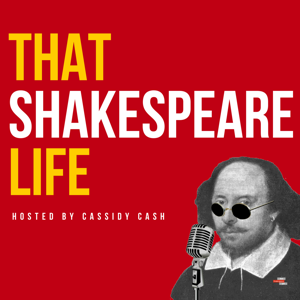
Hosted by Cassidy Cash, That Shakespeare Life takes you behind the curtain and into the real life of William Shakespeare.

More shows like That Shakespeare Life

HistoryExtra podcast by Immediate

HistoryExtra podcast

3,178 Listeners

Gardeners' Corner by BBC Radio Ulster

Gardeners' Corner

102 Listeners

Folger Shakespeare Library: Shakespeare Unlimited by Folger Shakespeare Library

Folger Shakespeare Library: Shakespeare Unlimited

823 Listeners

Sidedoor by Smithsonian Institution

Sidedoor

2,228 Listeners

The English Heritage Podcast by English Heritage

The English Heritage Podcast

229 Listeners

Tudors Dynasty & Beyond by RedTop Media / Rebecca Larson

Tudors Dynasty & Beyond

749 Listeners

Historic Royal Palaces Podcast by Historic Royal Palaces

Historic Royal Palaces Podcast

470 Listeners

The Ancients by History Hit

The Ancients

3,346 Listeners

The Rest Is History by Goalhanger

The Rest Is History

15,575 Listeners

Gone Medieval by History Hit

Gone Medieval

1,889 Listeners

Not Just the Tudors by History Hit

Not Just the Tudors

2,050 Listeners

Lexicon Valley by Lexicon Valley

Lexicon Valley

577 Listeners

Short History Of... by NOISER

Short History Of...

2,829 Listeners

Betwixt The Sheets: The History of Sex, Scandal & Society by History Hit

Betwixt The Sheets: The History of Sex, Scandal & Society

1,384 Listeners

What Did You Do Yesterday? with Max Rushden & David O'Doherty by Keep It Light Media

What Did You Do Yesterday? with Max Rushden & David O'Doherty

215 Listeners