That Shakespeare Life

That Shakespeare Life

By Cassidy CashSociety & CultureHistory
Download on the App Store

That Shakespeare Life episodes

  • Cony Trapper with Ari Friedlander
    There were several pamphlets published during Shakespeare's lifetime featuring a menacing giant rabbit, sometimes even wielding a sword and looking very scary. It would be easy to think this character the pamphlet calls a "cony catcher" was invented for marketing purposes, except that we see the phrase "cony catcher" come up several times throughout Shakespeare's plays including Merry Wives of Windsor, Taming of the Shrew, and even in Henry VI Part 3. We can see from the passing references Shakespeare's writes that a cony is a word for a rabbit, and it follows then that a catcher of conies is one who catches rabbits, but then why is the rabbit being used in early modern England as a fierce sword wielding villain? There are so many cultural questions to unpack with this symbol and that's why today our guest and author of a new book about the Cony Catcher and other Shakespearean criminals and malcontents, Ari Friedlander, is here to take us through what we should understand when we discover rabbits running rampant in Shakespeare's plays.

    Hosted on Acast. See acast.com/privacy for more information.

    25 min
  • Father Christmas with Elizabeth Norton

    It's Christmastime again this year and our thoughts are full of sugar plums, candy canes, and hopefully some beautiful winter snow. Growing up children of the 20-21st century are very familiar with the concept of Father Christmas or Santa Claus as he's become known today who brought gifts to good children each Christmas Eve. For William Shakespeare, however, the characters and particularly the understanding of Father Christmas would have been quite different. You see, William Shakespeare did not have Santa Claus and Father Christmas. There was one Christmas carol from the mid-15th century that described "Sir Christmas" that travelled around announcing the birth of Christ and offering drinks to passersby. There's another record from the mid-15th century that describes a traditional Christmas battle between Christmas and Lent during which a parade of the months of the year culminates in the presentation of the King of Christmas riding a horse decorated with tinfoil. These 15th century images of Christmas and the personification of the season come well before Shakespeare's lifetime and the strict idea we know as "Father Christmas" would not show up until after the Restoration in the mid-17th century. So what did England, and by proxy, Shakespeare, do to celebrate the holiday? Did Shakespeare have a Father Christmas? Here today to help us understand the holiday spirit and the role of characters like Father Christmas during Shakespeare's lifetime is our guest and historian Elizabeth Norton.

    20 min
  • Santa Claus did not exist for Shakespeare, but happily, Sir Christmas did
    It's Christmastime again this year and our thoughts are full of sugar plums, candy canes, and hopefully some beautiful winter snow. Growing up children of the 20-21st century are very familiar with the concept of Father Christmas or Santa Claus as he's become known today who brought gifts to good children each Christmas Eve. For William Shakespeare, however, the characters and particularly the understanding of Father Christmas would have been quite different. You see, William Shakespeare did not have Santa Claus and Father Christmas. There was one Christmas carol from the mid-15th century that described "Sir Christmas" that travelled around announcing the birth of Christ and offering drinks to passersby. There's another record from the mid-15th century that describes a traditional Christmas battle between Christmas and Lent during which a parade of the months of the year culminates in the presentation of the King of Christmas riding a horse decorated with tinfoil. These 15th century images of Christmas and the personification of the season come well before Shakespeare's lifetime and the strict idea we know as "Father Christmas" would not show up until after the Restoration in the mid-17th century. So what did England, and by proxy, Shakespeare, do to celebrate the holiday? Did Shakespeare have a Father Christmas? Here today to help us understand the holiday spirit and the role of characters like Father Christmas during Shakespeare's lifetime is our guest and historian Elizabeth Norton.

    Hosted on Acast. See acast.com/privacy for more information.

    20 min
  • Nutmeg: So Luxurious it was Given as a Christmas Gift to the Queen
    Shakespeare mentions the spice of nutmeg in his plays three times, once in Henry V to comment on the color of of this spice, once in Love's Labour's Lost to talk about a "gift nutmeg" which was a gift given at Christmas for the 16th century, and then again in The Winter's Tale when the clown lists nutmeg as one of the spices he needs to make warden pies, along with mace, dates, prunes, and raisins. Nutmeg not being native to England, it was not only a valuable spice that made a great gift that was popular for major celebrations like Christmastime, but it was a huge part of international relations for England because during the 1600s was when the Dutch were committing all manner of atrocities against England (and indeed the world), to maintain a monopoly on this particular spice. Here today to share with us the history of this spice and some popular recipes that used it from Shakespeare's lifetime is our friend, culinary historian, and returning guest to the show, Brigitte Webster.

    Hosted on Acast. See acast.com/privacy for more information.

    31 min
  • Nutmeg with Brigitte Webster

    Shakespeare mentions the spice of nutmeg in his plays three times, once in Henry V to comment on the color of nutmeg, once in Love's Labour's Lost to talk about a "gift nutmeg" which was a gift given at Christmas for the 16th century, and then again in The Winter's Tale when the clown lists nutmeg as one of the spices he needs to make warden pies, along with mace, dates, prunes, and raisins. Nutmeg not being native to England, it was not only a valuable spice that made a great gift that was popular for major celebrations like Christmastime, but it was a huge part of international relations for England because during the 1600s was when the Dutch were committing all manner of atrocities against England (and indeed the world), to maintain a monopoly on this particular spice. Here today to share with us the history of nutmeg and some popular recipes that used it from Shakespeare's lifetime is our friend, culinary historian, and returning guest to the show, Brigitte Webster.

    31 min
  • Eleanor of Aquitaine
    In Shakespeare's play, King John, Eleanor of Aquitaine is portrayed as "Queen Elinor," who is decrepit and old, but strong willed and highly intelligent. For many Shakespeareans, the real history of this extraordinary woman is confined to this portrayal in Shakespeare's works. Our guest this week, Alison Weir, joins the show to introduce us to the real history of Eleanor of Aquitaine not only as we remember her today, but to share with us what Shakespeare would have known about her, as well as what it is important to know about her real life when encountering Shakespeare's portrayal of her in his play.

    Hosted on Acast. See acast.com/privacy for more information.

    18 min
  • Sport fishing in Shakespeare's England
    William Shakespeare mentions fish over 70 times in his plays including certain kinds of fish like dwarfish, a finless fish, and even a dogfish. Types of fish, being a fishmonger, and applying all manner fish metaphors were a consistent theme in many of Shakespeare's works, which lead me to wonder about the role of fishing and fish in Shakespeare's lifetime for not only the individual who might have gone fishing for their food, but the role of commercial fishing in the economy of England during the 16-17th century. Here today to help us explore what kinds of fish were most popular, the representations of angling/fishing in print, and exactly how and where people would have caught fish for Shakespeare's lifetime, is our guest and author of The Poetics of Angling in Early Modern England, Myra Wright.

    Hosted on Acast. See acast.com/privacy for more information.

    28 min
  • Squanto with David and Aaron Bradford
    One of the heroes of American history and the story of the survival of the English colonists at Plymouth in the mid 17th century is a man named Squanto. His given name was Tisquantum, but he came to be known as Squanto. He was a native American interpreter and guide for early English colonists. While little is known about his early life, some scholars believe that he was taken from home to England in 1605 by George Weymouth and returned to his native homeland with explorer John Smith in 1614–15. His almost decade long residence in London coincides with when Shakespeare was writing plays about shipwrecked colonists encountering native tribes on mysterious far away islands. Our friends, and previous guests to the show for Thanksgiving last year (see that episode here) are father and son history team, David and Aaron Bradford.

    Hosted on Acast. See acast.com/privacy for more information.

    42 min
  • Gresham College with Valerie Shrimplin
    Thomas Gresham served as Royal Agent to the King t in England under Edward VI, Henry VIII, Mary, and Elizabeth I. A hugely influential man of his time, Thomas Gresham's legacy continues today at Gresham College, the university he founded in 1597 when William Shakespeare was 33 years old. Competing with the likes of Oxford and Cambridge at the time, Gresham College was unique not only because universities themselves were a new concept in England, but because Gresham College chose to teach students in English, whereas Latin was the accepted language of universities at the time. Here to share with us how Gresham College was founded, and what the first classes were like there, is our guest and professor at Gresham College, Valerie Shrimplin.

    Hosted on Acast. See acast.com/privacy for more information.

    29 min
  • Cesarean Section with Mary Fissell
    Famously in Shakespeare's play, Macbeth, the title character becomes convinced he cannot be killed because the witches tell him he cannot be killed a man "of a woman born." It is only when it is too late that Macbeth learns his nemesis, Macduff, was "from his mother's womb untimely ripped", in reference to a cesarean surgery, that Macbeth learns of his ultimate fate. Shakespeare's inclusion of cesarean section in his play comes at a time when medical science and religious doctrine were questioning the viability of this procedure in a heated public debate. In 1581, French surgeon Francois Roussett published "The Hysterotomotokie or Caesarian Birth" which argued women should have cesarean as a viable option for birth during difficult deliveries. His publication caused quite a stir in medical society, with surgeons across Europe speaking out publicly to condemn the very suggestion. The heated conversation traveled all the way to England where a man contemporary to William Shakespeare, named Simon Forman, would write about cesarean sections in his publication "Matrix and the Pain Thereof." True to form, it seems William Shakespeare's play, Macbeth, was full of poignant and extremely timely cultural references to a huge political debate that was happening right when the play was written. Here today to help us understand the history of cesarean sections during Shakespeare's lifetime and exactly how controversial it might have been to include cesarean sections in his play, is our guest, professor of the history of medicine and author of "Women, Health, and Healing in Early Modern Europe", Mary Fissel.

    Hosted on Acast. See acast.com/privacy for more information.

    23 min

About That Shakespeare Life

From the publisher's feed

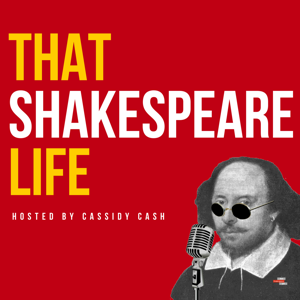
Hosted by Cassidy Cash, That Shakespeare Life takes you behind the curtain and into the real life of William Shakespeare.

More shows like That Shakespeare Life

HistoryExtra podcast by Immediate

HistoryExtra podcast

3,178 Listeners

Gardeners' Corner by BBC Radio Ulster

Gardeners' Corner

102 Listeners

Folger Shakespeare Library: Shakespeare Unlimited by Folger Shakespeare Library

Folger Shakespeare Library: Shakespeare Unlimited

823 Listeners

Sidedoor by Smithsonian Institution

Sidedoor

2,228 Listeners

The English Heritage Podcast by English Heritage

The English Heritage Podcast

229 Listeners

Tudors Dynasty & Beyond by RedTop Media / Rebecca Larson

Tudors Dynasty & Beyond

749 Listeners

Historic Royal Palaces Podcast by Historic Royal Palaces

Historic Royal Palaces Podcast

470 Listeners

The Ancients by History Hit

The Ancients

3,346 Listeners

The Rest Is History by Goalhanger

The Rest Is History

15,575 Listeners

Gone Medieval by History Hit

Gone Medieval

1,889 Listeners

Not Just the Tudors by History Hit

Not Just the Tudors

2,050 Listeners

Lexicon Valley by Lexicon Valley

Lexicon Valley

577 Listeners

Short History Of... by NOISER

Short History Of...

2,829 Listeners

Betwixt The Sheets: The History of Sex, Scandal & Society by History Hit

Betwixt The Sheets: The History of Sex, Scandal & Society

1,384 Listeners

What Did You Do Yesterday? with Max Rushden & David O'Doherty by Keep It Light Media

What Did You Do Yesterday? with Max Rushden & David O'Doherty

215 Listeners