That Shakespeare Life

That Shakespeare Life

By Cassidy CashSociety & CultureHistory
Download on the App Store

That Shakespeare Life episodes

  • Pirates and Privateers with James Seth
    From 1560 until her death in 1603, Queen Elizabeth employed a group of privateers to raid, pillage, and rob ships that were acting against English interests. This group of private sailors known as sea dogs included famous naval explorers like Sir Francis Drake who circumnavigated the world, and Sir Walter Raleigh who founded the colony of Roanoke and went looking for El Dorado, the city of gold. Reports of the sea dogs and other fantastic tales of naval adventures were cataloged in 16-17th century travel diaries along with the writings of professional travel writers, all of whom sent amazing stories of wild exploits back to England where playwrights like William Shakespeare were ready to include them on stage. Our guest this week, James Seth, is the author of Maritime Musicians and Performers on Early Modern English Voyages. James joins us today to share the history of Elizabeth's sea dogs, the musical entertainment that would have been available while traveling at sea, and exactly what real life maritime stories inspired characters from Shakespeare's plays.

    Hosted on Acast. See acast.com/privacy for more information.

    30 min
  • Pumpkins and The Great Pompion
    In November of 1621, English colonists celebrated what's known today in the US as The First Thanksgiving. Indian natives and English colonists gathered around a celebration of their first successful harvest in a new land. The bounty that this feast enjoyed included one of the staple foods of Thanksgiving that's become almost ubiquitous with Fall itself, and that's the pumpkin. Referred to as "pumpion" in Shakespeare's Merry Wives of Windsor, and as "pompion" in Love's Labour's Lost, this little squash may not have been used as a jack-o-lantern for Shakespeare's lifetime but the pumpkin nonetheless has a role to play in the life of William Shakespeare. Our guest this week is an expert in the history of pumpkins and the author of Pumpkin: The Curious History of an American Icon. This week we welcome Cindy Ott to the show to share with us the 16-17th century history of the pumpkin.

    Hosted on Acast. See acast.com/privacy for more information.

    19 min
  • Coffee and Tea for Shakespeare's Lifetime
    Coffee, tea, and chocolate may be regular items in the daily lives of the English today, but for Shakespeare these items were not on the everyday menu. In fact, drinking coffee or tea was seen with much superstition and hesitancy. While Shakespeare does mention "one poor penny worth of sugar-candy" in Henry V, he would not have been talking about chocolate. Confections like chocolate and drinking tea, along with coffee houses, would not become normal in England until after Shakespeare died in 1616. However, what we can see about these items in Shakespeare's lifetime is the process of caffeine arriving in England. It is during Shakespeare's lifetime that coffee, tea, and chocolate was this exotic sample of foreign lands being brough to Europe by various explorers and trading companies. Here today to share with us the history of coffee, tea, and chocolate and where they were at on their journey from obscurity to popular everyday kitchen staple is our guest, Elisa Tersigni.

    Hosted on Acast. See acast.com/privacy for more information.

    22 min
  • Waffles and Waffle Irons in 16th Century England
    In William Shakespeare's Henry V Part II, Scene 3, Pistol uses the phrase "men's faiths are wafer-cakes." Wafer cakes were thin baked breads that would eventually become what we know today as waffles. During the Renaissance and Middle Ages, specialty iron tongs were used to bake wafers that were served as a final blessing after the Eucharist in churches. The art of making waffles was so popular in the Netherlands that when the Pilgrims, who had spent some time in Holland, set sail for North America in 1621, it is believed that some of the Dutch who went with them took these wafer cakes on board. While waffles may not have been a staple breakfast food for Shakespeare's lifetime, it turns out the bard not only had waffles but they came in a surprising variety of shapes and recipes. Here today to share with us the Shakespearean history of wafer cakes and waffles is our guest and expert food historian, Sam Bilton.

    Hosted on Acast. See acast.com/privacy for more information.

    19 min
  • English Accents with Valerie Fridland
    One of the most common issues with Shakespare's plays is understanding the language. He used not only words that have fallen out of fashion for today's English language, but the pronunciation and even colloquial expressions, cultural references, and some jokes we find in the plays are all so far removed from the way we talk today that it can be hard to understand what's going on, especially if you're just trying to read the plays instead of seeing them performed. At least in the theater you have context clues to help you. If you are also someone who finds Shakespeare's language hard to follow, then not only are you in good company, but this is the episode for you. It's true that Shakespeare's language is difficult, and it turns out the history of linguistics and the development of the English language can explain why. During Shakespeare's lifetime is when English went through a major change called the Great Vowel Shift, and was being influenced by key events going on at the time. Here today to share with us how languages grow, and explain some of the phrases, words, and even pronunciation that was unique to English for Shakespeare's lifetime, is our guest and professor of linguistics in the English department at University of Nevada, Reno, Valerie Fridland.

    Hosted on Acast. See acast.com/privacy for more information.

    41 min
  • Acrobats and Tumblers with Clare McManus
    In Shakespeare's Love's Labour's Lost, he writes about a tumbler wearing colours in their hoop. This reference is to a specific act of theater performance called tumbling. If you've already studied the all-male stage we know Shakespeare had at his theater, you may be tempted to think that tumblers were men. However, as the research of the project Engendering the Stage aims to bring to light, historical records for Shakespeare's lifetime show that in terms of the theatre industry as a whole for the late 16th and early 17th century, theater performance was far from all male. In fact, women were not only prominent players in public performance, but they weren't entirely excluded on the basis of religion and morality, either, because we have records of distinguished women from one of the strictest religious sects in England, the Puritans, acting on stage in full costume. To help us unpack this conundrum and explore this world of the travelling street performers where elaborate and complicated feats of acrobatics, tight-rope walking, tumbling and even trapeze acts would have taken place using women at center stage, we welcome author of Women on the Renaissance Stage and contributor to the Engendering the Stage project, Professor Clare McManus.

    Hosted on Acast. See acast.com/privacy for more information.

    36 min
  • Sweetbreads with Neil Buttery
    When I'm not recording That Shakespeare Life, I'm usually researching for DIY History, my YouTube channel where I look into games, recipes, and crafts for Shakespeare's lifetime that you can do at home. In preparing a new episode, I was going through Hugh Plat's Good Housewives Jewel, a cookbook that was written in 1596-1597. One recipe that caught my eye called for "sweet bread." I ambitiously decided to try and make this recipe, thinking I would be diving into a cake, or perhaps some version of loaf bread. However, as I started to research the ingredients, I was surprised to discover this "sweet bread" wasn't bread at all but instead "sweet bread" was actually the 16th century phrase for the pancreas of a cow. Discovering that sweet bread was not at all a bread, but instead an organ meat, was the moment I decided we definitely needed to know more about this surprising food, and to do that, we needed to bring in an expert, which is why I reached out to our friend and returning guest to That Shakespeare Life, expert food historian, Neil Buttery,Neil joins us today to share the history and a few recipes for how to cook 16th century sweet bread.

    Hosted on Acast. See acast.com/privacy for more information.

    23 min
  • Susanna's Garden with Ailsa Grant Ferguson
    When you visit Stratford Upon Avon, you can stop in and see a place called Hall's Croft. It is right down the road from Shakespeare's Birthplace and is the house where William Shakespeare's oldest daughter, Susanna, lived with her husband, John Hall. John Hall was a physician in Stratford Upon Avon, and is thought to have influenced, if not outright advised, Shakespeare on the many uses of medicinal plants we see come up in his plays. A new study being led by our guest this week, Ailsa Grant Ferguson, not only aims to shed light on the kinds of plants that might have been used there at Hall's Croft, but looks to literally re-plant them. In a project funded by the Arts and Humanities Research Council, partnering with the Shakespeare Birthplace Trust in collaboration with the University of Brighton, Susanna's Garden project will plant a sensory, wellbeing garden based on the plants used for women's health by John Hall and probably Susanna in Stratford Upon Avon that includes the same plants Ailsa's research reveals would have been used there by the Hall family to treat family and friends in the bard's hometown. The exciting thing about this garden is not only the opportunity to see historic plants come literally back to life, but as Ailsa Grant Ferguson joins us today to share, this garden research project specifically explores Susanna's role in medical care as she worked alongside her husband as a healer.

    Hosted on Acast. See acast.com/privacy for more information.

    30 min
  • Armadillos with Peter Mason
    Armadillos are a fascinating animal, and for the 16th century they were an object of luxury. Many members of the nobility in 16th century England made a hobby out of collecting wild and exotic specimens of animals that were being discovered and brought to Europe by explorers, travelers, and naturalists who were keen to record all the world's animals. One animal that was new to Shakespeare's England during his lifetime was the armadillo. One prime example of the armadillo in the culture of the 16th century is the armadillo featured in a piece of embroidery by Mary Queen of Scots. Our guest this week, Peter Mason, writes about this specific armadillo in his article, Mary's Armadillo for New World Objects of Knowledge: A Cabinet of Curiosities. Peter joins us this week to share the history of the armadillo, where it came from originally, how it arrived in Europe, and the many difference variances from scales to fur that encompass the depictions of the armadillo we find from Shakespeare's lifetime.

    Hosted on Acast. See acast.com/privacy for more information.

    25 min
  • Curse Words with John Spurr
    Forsooth and by the saints, we are exploring curse words today from Shakespeare's lifetime. The changeover from Catholic to Protestant England may have changed the way people worshipped but it didn't change the strongly religious influence of the English language, including their swear words. Today our guest, John Spurr joins us to help us expolre all the expressions of emphasis, oath, and cursing that appear in Shakespeare's plays so that we can understand the history behind why they are there, what they mean, and what kinds of words were considered bad language for Shakespeare's lifetime.

    Hosted on Acast. See acast.com/privacy for more information.

    33 min

About That Shakespeare Life

From the publisher's feed

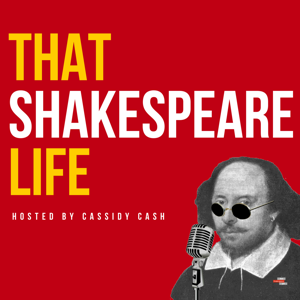
Hosted by Cassidy Cash, That Shakespeare Life takes you behind the curtain and into the real life of William Shakespeare.

More shows like That Shakespeare Life

HistoryExtra podcast by Immediate

HistoryExtra podcast

3,178 Listeners

Gardeners' Corner by BBC Radio Ulster

Gardeners' Corner

102 Listeners

Folger Shakespeare Library: Shakespeare Unlimited by Folger Shakespeare Library

Folger Shakespeare Library: Shakespeare Unlimited

823 Listeners

Sidedoor by Smithsonian Institution

Sidedoor

2,228 Listeners

The English Heritage Podcast by English Heritage

The English Heritage Podcast

229 Listeners

Tudors Dynasty & Beyond by RedTop Media / Rebecca Larson

Tudors Dynasty & Beyond

749 Listeners

Historic Royal Palaces Podcast by Historic Royal Palaces

Historic Royal Palaces Podcast

470 Listeners

The Ancients by History Hit

The Ancients

3,346 Listeners

The Rest Is History by Goalhanger

The Rest Is History

15,575 Listeners

Gone Medieval by History Hit

Gone Medieval

1,889 Listeners

Not Just the Tudors by History Hit

Not Just the Tudors

2,050 Listeners

Lexicon Valley by Lexicon Valley

Lexicon Valley

577 Listeners

Short History Of... by NOISER

Short History Of...

2,829 Listeners

Betwixt The Sheets: The History of Sex, Scandal & Society by History Hit

Betwixt The Sheets: The History of Sex, Scandal & Society

1,384 Listeners

What Did You Do Yesterday? with Max Rushden & David O'Doherty by Keep It Light Media

What Did You Do Yesterday? with Max Rushden & David O'Doherty

215 Listeners