That Shakespeare Life

That Shakespeare Life

By Cassidy CashSociety & CultureHistory
Download on the App Store

That Shakespeare Life episodes

  • Catherine de Medici with Estelle Paranque
    Married to Henry Valois, Catherine de Medici held considerable power and influence over the Valois Dynasty of France and was beloved of the Medici Dynasty in Italy. The year William Shakepseare was born, in 1564, Catherine de Medici offered her son, Charles IX, as a husband for Elizabeth I, and would go on to offer her other two sons, Francis and Henry, to Elizabeth I as well in a decades long effort to secure a political alliance through marriage with England. Staunchly opposed to marriage on the whole, Elizabeth I never did accept Catherine's sons as husbands, but the interactions and rivalry between these two powerful women was a mainstay over England for the formative years in Shakespeare's lifetime. Here today to help us explore the life of Catherine de Medici is our guest, historian, and author of the her latest book about Catherine de Medici called Blood, Fire, and Gold: The Story of Elizabeth I of England and Catherine de Medici , Dr. Estelle Paranque.

    Hosted on Acast. See acast.com/privacy for more information.

    36 min
  • Maps with Peter Barber
    Transoceanic travel was a staple of European endeavors for the 16-17th century, with both Elizabeth I and James I spending massive amounts of money and effort to work with trading companies and explorers who traveled to other continents for trade, commerce, and colonization during Shakespeare's lifetime. In order to reach these new and exotic places, as well as to be able to return again after the new places had been found, the sailors and explorers relied mainly on navigation by the stars and the wind to get to their destination. However, this time in history is when printed maps and manuscript charts started to be used as a fall back for navigation, and in some cases for political propaganda. It was the maps of John Smith that the Pilgrims consulted to get to the New World, and when Sir Francis Drake circumnavigated the globe in the 16th century, a hand illustrated map of his journey was created in the 1570s. Shakespeare references a "map of the world" in Henry V, and a "map of ports, piers, and roads" in Merchant of Venice, along with 14 other references to maps and "mappery" in his plays. Here this week to help us understand how mapmaking worked for Shakespeare's lifetime, exactly who it was that were employed as cartographers, and whether or not the maps sailors relied upon were accurate, is our guest and former Head of Map Collections at the British Library, Peter Barber.

    Hosted on Acast. See acast.com/privacy for more information.

    37 min
  • The First English Lottery with Elizabeth Norton
    William Shakespeare uses the word "lottery" in his plays 8 times, often referring to a reward that comes after taking a gamble. While we may be familiar with lotteries like the Powerball or Publishing Clearinghouse here in the United States, a ticket based lottery where people could pay money for a chance to win big was brand new for England in Shakespeare's lifetime. The first time England had seen a real lottery, was the first national lottery in 1567, instituted by Elizabeth I, when Shakespeare was just 3 years old. Here today to share with us how this lottery worked, who bought tickets, and who ultimately won it, is our guest, Elizabeth Norton.

    Hosted on Acast. See acast.com/privacy for more information.

    19 min
  • Medlars with Neil Buttery
    Five times in Shakespeare's works he refers to a specific plant called a Medlar. In As You Like It, Rosalind talks about grafting a medlar, Lucio talks about a rotten medlar in Measure for Measure, Mercutio uses the medlar tree to describe Romeo's state of mind in Romeo and Juliet and the last two references to medlars are found in Timon of Athens when Apemantus both presents a medlar for eating, and questions whether someone hates medlars. Whether or not we should hate or love the medlar fruit is the subject of our show today. Our guest this week and author at British Food History.com, Neil Buttery, is in the studio with us to share with us the history of this plant, what it looks and tastes like, as well as what it would have been used for in Shakespeare's lifetime.

    Hosted on Acast. See acast.com/privacy for more information.

    34 min
  • Banbury Cheese with Helen Forde
    In William Shakespeare's play, Merry Wives of Windsor, Bardolph declares "You Banbury Cheese!" as an insult. The reason this line is an insult is because for the life of William Shakespeare, Banbury England was famous for making a particular kind of cheese that was thinner on the rind than other cheese typical of the period. Therefore, calling someone a Banbury cheese was akin to calling them a string-bean, or saying they were too thin. It works especially well as a joke for Shakespeare in the play because the character Bardolph is insulting is named, as you might expect, Slender.The joke is a highly contemporary reference by Shakespeare and in order to better understand the history of Banbury England and their famous cheese, we have invited the chair of the Banbury Historical Society, Helen Forde, to visit with us today and explain what made Banbury cheese so unique for Shakespeare's lifetime.

    Hosted on Acast. See acast.com/privacy for more information.

    24 min
  • John Caius with Vivian Nutton
    John Caius was a prominent medical professional in the 16th century. A staunch adherent to the teachings of Galen, who himself was the ultimate authority on medical knowledge for close to 15 centuries. John Caius owned a copy of Galen's text and that original copy survives at Eton College, Berkshire, with Caius' notes and annotations there for review. Galen's work was essentially the Grey's Anatomy of its time and Caius' interest in Galen's work was not merely being a fan, but the doing of his due diligence in medical study. However, despite the evidence to suggest he was a pillar of medical knowledge in the 16th century, training major medical figures of the period, John Caius is accused even in his own time, of being too much of a traditionalist, unable to change and grow with the rapidly evolving mindset of his time period and was even held responsible for annoying Queen Elizabeth at a medical forum that took place at court the year Shakespeare was born. As a result, about 30 years after his death in 1573, William Shakespeare satirizes his namesake through the comedic French doctor of Dr. Caius in Merry Wives of Windsor. Here today to share with us the life and accomplishments of the real Dr. Caius, is our guest, Vivian Nutton.

    Hosted on Acast. See acast.com/privacy for more information.

    34 min
  • Transplant Surgery with Paul Craddock
    From blood transfusions to replacement of legs, during Shakespeare's lifetime was when medical science was trying to figure out the best way to replace broken or damaged body parts with transplants. Having only just discovered that the heart was a muscle, pumping at regular intervals, it was a revolution in medical science to consider each body part as a kind of piece in the mechanism that was the human body. We see these new concepts echoed in the work of our favorite playwright, William Shakespeare when characters like Hamlet and Titus Andronicus talk about the pulse keeping time and the heart beating outrageously. Our guest this week, Paul Craddock, has just published a book on the history of transplant surgery called Spare Parts, in which he details the advancements being made in the medical field during Shakespeare's lifetime. He joins us today to explain what kinds of surgeries were being done, who the famous players were in the medical community of the day, and exactly what materials they used to accomplish these, often macabre, medical marvels.

    Hosted on Acast. See acast.com/privacy for more information.

    36 min
  • William Adams with Timon Screech

    In the year 1600, when William Shakespeare was just 36 years old, William Adams became the first Englishman to reach Japan. Adams sailed as part of a 5-ship fleet employed for the expedition by a private Dutch company. Adams would serve in Japan under Shogun Tokugawa Ieyasu, helping to build the first Western Style ships in Japan, and later helping Japan establish trading factories with the Netherlands and England. While Adams held significant influence in Japan during his lifetime, what was most remarkable was the friendship he cultivated with Ieyasu that would last until Ieyasu's death.

    Here today to share with us the story of this incredible Englishman contemporary to Shakespeare is author of The Shogun's Silver Telescope: God, Art and Money in the English Quest for Japan, Timon Screech.

    Hosted on Acast. See acast.com/privacy for more information.

    41 min
  • Stephen Hopkins with Andrew Buckley

    On June 2, 1609, a ship named the Sea Venture set sail for Jamestown, Virginia. On the way, the ship was blown off course by a horrible hurricane. The storm badly damaged the ship and all hands onboard fought off the rising water until the ship ran aground on the island of Bermuda. After salvaging parts of the Sea Venture to build another ship, the stranded group set sail again for Jamestown, arriving in Virginia on May 10, 1610.

    News of the shipwreck and tales of the castaways traveled back to England, due in no small part to a publication by one Sea Venture traveler, William Strachey, who wrote dramatic tales about the adventure, including one incident in Bermuda involving an indentured servant named Stephen Hopkins who was accused of mutiny and narrowly escaped death.

    Stephen Hopkins not only survived the Sea Venture hurricane, but would travel 11 years later on the Mayflower as both a guide and the father to Oceanus, the only child born on the Mayflower while it was at sea. The dramatic life of Stephen Hopkins seems to have inspired our favorite dramatist, William Shakespeare for his play, The Tempest, and specifically the character of Stephano, which came to life in Shakespeare's performance just one year after the cast and crew of the Sea Venture landed in Jamestown.

    Our guest this week, Andrew Buckley, is descended directly from Stephen Hopkins and has just completed a documentary film on his life. Andrew joins us today to share the story of Stephen Hopkins and walk us through the evidence that suggests Shakespeare's character of Stephano might have been inspired by the real life of Stephen Hopkins.

    Hosted on Acast. See acast.com/privacy for more information.

    35 min
  • The Moon with Rachel Aanstad

    William Shakespeare uses the word "moon" over 160 times in his works, talking about the shape of the moon, the horns of the moon, and even traits of the moon like moonshine or moonbeam. For Shakespeare's lifetime, the moon held almost as prominent a place in life as the sun, with people planning their lives around the phases of the moon.

    Described using a variety of names including popular feminine names like Lucina, Diana, and Cynthia, the moon was personified with attributes like good manners, while being held responsible for bad things like aging or unpleasant weather. For early modern England, it was best to consult the location of the moon to determine the best time to do everything from bringing in the harvest to getting a haircut.

    Given the prominence of the moon and the pervasiveness of its place in the culture, understanding how it works and its attributes becomes essential to understanding plays like A Midsummer Night's Dream which mentions the word "Moon" close to 40 times and employs the moon, algon with madness, as a constant theme of the story.

    Our guest this week, Rachel Aanstad, writes about the place of the moon in the culture and mindset of 16th Century England in her Illustrated Handbook and Encyclopedia for A Midsummer Night's Dream. Today she joins us to explore the history and place of the moon and why it held such an important role in Shakespeare's lifetime.

    Hosted on Acast. See acast.com/privacy for more information.

    35 min

About That Shakespeare Life

From the publisher's feed

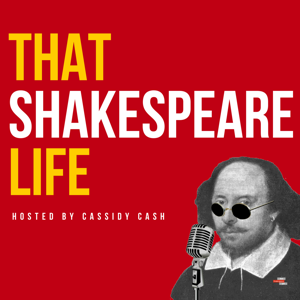
Hosted by Cassidy Cash, That Shakespeare Life takes you behind the curtain and into the real life of William Shakespeare.

More shows like That Shakespeare Life

HistoryExtra podcast by Immediate

HistoryExtra podcast

3,178 Listeners

Gardeners' Corner by BBC Radio Ulster

Gardeners' Corner

102 Listeners

Folger Shakespeare Library: Shakespeare Unlimited by Folger Shakespeare Library

Folger Shakespeare Library: Shakespeare Unlimited

823 Listeners

Sidedoor by Smithsonian Institution

Sidedoor

2,228 Listeners

The English Heritage Podcast by English Heritage

The English Heritage Podcast

229 Listeners

Tudors Dynasty & Beyond by RedTop Media / Rebecca Larson

Tudors Dynasty & Beyond

749 Listeners

Historic Royal Palaces Podcast by Historic Royal Palaces

Historic Royal Palaces Podcast

470 Listeners

The Ancients by History Hit

The Ancients

3,346 Listeners

The Rest Is History by Goalhanger

The Rest Is History

15,575 Listeners

Gone Medieval by History Hit

Gone Medieval

1,889 Listeners

Not Just the Tudors by History Hit

Not Just the Tudors

2,050 Listeners

Lexicon Valley by Lexicon Valley

Lexicon Valley

577 Listeners

Short History Of... by NOISER

Short History Of...

2,829 Listeners

Betwixt The Sheets: The History of Sex, Scandal & Society by History Hit

Betwixt The Sheets: The History of Sex, Scandal & Society

1,384 Listeners

What Did You Do Yesterday? with Max Rushden & David O'Doherty by Keep It Light Media

What Did You Do Yesterday? with Max Rushden & David O'Doherty

215 Listeners