That Shakespeare Life

That Shakespeare Life

By Cassidy CashSociety & CultureHistory
Download on the App Store

That Shakespeare Life episodes

  • The Ghost Stories of Anne Boleyn
    In Tudor England, it was a tradition to tell ghost stories to celebrate Christmas, particularly on Christmas Eve. One of the people about whom ghost stories might have been shared is none other than Anne Boleyn. If the legends are true, Anne Boleyn's ghost must be the most traveled ghost in Britain, with stories of her spirit wandering across the country in at least 7 different locations. These stories were told after Anne's death and survived not only through Shakespeare's lifetime but persist even today. Here today to tell us about some of these ghost stories, including ones that might have been told around the Christmas fireside for Shakespeare's lifetime is our guest, historian, and author of The Final Year of Anne Boleyn, Natalie Grueninger.

    Hosted on Acast. See acast.com/privacy for more information.

    26 min
  • Christmas Carols and Madrigals for Shakespeare's Lifetime
    During the reign of Elizabeth I, which was 1558-1603 and spans most of Shakespeare's lifetime, England was experiencing the English Renaissance, a time when all forms of art were seeing a shift in popularity, but music, in particular moved from being something you would hear only in a church to being popular at more secular events. In fact, not only did Elizabeth I herself enjoy playing music, but as an art form, music was widely applied in early modern plays, like those of William Shakespeare, for both comedies and tragedies as a way to heighten the drama, almost exactly like what you think of as a movie soundtrack today. While instrumental music like that of the viringal or the lute were popular, one particular form of vocal performance known as the madrigal rose to prominence in early modern England as an adaptation of earlier Italian poetry set to music, which English composers transformed into a uniquely English genre. The madrigal became a popular way to celebrate major events, including Christmas celebrations, for Shakespeare's lifetime. Here today to share with us the history of the madrigal is our guest, historian, and Early music specialist, Tasmin Lewis.

    Hosted on Acast. See acast.com/privacy for more information.

    35 min
  • Wool and Wool Sweaters in the 16th Century
    William Shakespeare's father, John Shakespeare, spent a great deal of time in trouble with the government over his illegal sale of wool. Several court documents show that John Shakespeare was investing in wool then selling it on to others. He didn't have a license to sell the wool, which is why he was so regularly in trouble. What the records of his dealings demonstrate is that the wool was valuable enough a commodity in England that John Shakespeare that he felt it was worth both the risk and the fines he had to pay, in order to deal in wool. Wool was one of England, and later the UK's, major exports, and Stratford Upon Avon, Shakespeare's hometown. was home to sheep farmers who produced the wool that could be sold internationally. In fact, some finished wool products like Monmouth caps, for example, were so well known for their quality, that they are even referenced by name in Shakespeare's play, Henry V, when Fluellen talks about wearing leeks in your Monmouth cap. Here today to tell us more about the wool industry, the farmers who were raising the sheep, products made of wool in the 16-17th century, and exactly why one should wear a leek inside your Monmouth cap, is our guest, Jane Malcolm-Davies.

    Hosted on Acast. See acast.com/privacy for more information.

    39 min
  • The Pilgrim Psalter, Book of Psalms, 1612
    The Pilgrim Psalter (originally titled "The Book of Psalms, Englished in Prose and Meter") was produced by Henry Ainsworth in 1612. Ainsworth was a Hebrew scholar and Bible teacher among the English Separatists in Amsterdam, Holland. The work is called a Psalter because it is a translation of the Hebrew Psalms which between 1010 and 930 BC during the time of David and his son Solomon. Ainsworth's translations of the Psalms are musical, set to tunes popular in Reformation era, and are remembered today for being remarkably faithful to the original Hebrew text. When the English Pilgrims fled to Holland in an attempt to escape religious persecution in England, they adopted this Psalter and they carried it with them on the Mayflower. Here today to share with us the history of the Pilgrim Psalter and the journey it took across the ocean at the start of the 17th century is our guest and historian of the 1616 Psalter, Mary Huffman.

    Hosted on Acast. See acast.com/privacy for more information.

    37 min
  • Table Manners for Shakespeare's England
    When we sit down to a formal dinner here in the United States, there are manners you are expected to follow like sit up straight, push your chair in, place your napkin in your lap. All of this small niceties are called collectively dining etiquette and they represent the rules for how we are to operate socially when eating a meal. Which begs the question: What about Shakespeare? When the bard sat down a meal with his friends, perhaps at the Mermaid Tavern, or even for a state dinner somewhere like Whitehall Palace, were there conventional behaviors he was supposed to follow when eating a table for a formal dinner? To find out Maura Graber, Director of the RSVP Institute for Etiquette is back with us again this week, to share the history of dining and proper behavior at the table for the 16th century.

    Hosted on Acast. See acast.com/privacy for more information.

    28 min
  • Napkins in Shakespeare's England
    Shakespeare's plays refer to a napkin at least 20 times, including As You Like It where Rosalind mentions a bloody napkin, in Hamlet the title character is offered a napkin to "rub thy brows." In Henry IV Part 1, Falstaff talks about someone's shirt being made of "two napkins" sewn together, Merry Wives of Windsor scorns the greasy napkin, while Othello complains that Desdemona's napkin is too small. When it comes to sizes, shapes, material, and uses for napkins in Shakespeare's lifetime, we are looking to Maura Graber, Director of the RSVP institute for Etiquette, and the founder of Etiquipedia, the online encyclopedia of Etiquette, to walk us through the history of napkins and their uses for Shakespeare's lifetime. Maura is here for two episodes with us on dining and etiquette for the 16th century. Today is Part 2 in our series with Maura on Table History, we'll have links to Part 1 in the show notes of the episode.

    Hosted on Acast. See acast.com/privacy for more information.

    24 min
  • The Legends and Folklore of Werewolves for 16th century England
    Far before the time of Shakespeare, there was a prevalent belief in the creatures known as werewolves, or lycanthrope, as they were called in the Ancient world. This belief saw a large increase by the 16th century, with people believing werewolves were humans capable of shape shifting into the form of a large and evil wolf, desiring to consume other humans, particularly children, by the light of a full moon. The legend of werewolves today is dismissed by the popular mindset and relegated to the halls of horror films, tv shows, and of course, Halloween costumes. However, in Shakespeare's lifetime, there was not only an established belief in actual werewolves, but documented cases of real people convicted of being werewolves, like the Werewolf of Dole in 1573, Peter Stumpp in 1589, and A Geneva man was convicted of killing 16 children when he had changed himself into a wolf on October 15, 1580, when Shakespeare was just 16 years old. Here today to share with us the history of the werewolf in Shakespeare's England, and details about some of the surviving documentation we have about real werewolf cases in Europe is our guest and author of Werewolves, Witches, and Wandering Spirits, Kay Edwards.

    Hosted on Acast. See acast.com/privacy for more information.

    41 min
  • The 16th Century Legend of Robin Hood
    William Shakespeare refers to the legend of Robin Hood in his play, As You Like it with the old Duke exiled to the Forest of Arden with a group of Merry Men who "live like the old Robin Hood of England" (Act I, scene i). In his play, The Two Gentlemen of Verona, Shakespeare again mentions the Robin Hood legend when an outlaw exclaims "By the bare scalp of Robin Hood's fat friar." The accompanying characters of the Robin Hood story find their place in Shakespeare's plays, when in Henry IV Part I and Henry IV Part 2 Falstaff talks about Maid Marian and Falstaff's companion Justice Silence sings a song about "And Robin Hood, Scarlet, and John." What these references tell us is that the legend of Robin Hood was an active part of the history of William Shakespeare and the pop culture of the time period to whom he was writing. But the legend of Robin Hood is quite fluid throughout history with it being used as a symbol for good as well as a symbol for insurrection and a general debate about who he was, whether he was based on a real person, and whether he was a hero or a villain. Here today to tell us about the history of Robin Hood from Shakespeare's lifetime is our guest and expert Robin Hood historian, Allen Wright.

    Hosted on Acast. See acast.com/privacy for more information.

    32 min
  • How Was the First Folio Physically Made?
    In the year 1623, close to a decade after William Shakespeare died, the First Folio was published, which is a collection of some of Shakespeare's plays selected by his friends and a group of business investors involved in the project. What makes it a Folio, as opposed to simply a book, is the way in which it is physically bound. Here today to help us explore the materials used in making the Folio, including details about the paper used and the intricate binding, along with how the plays were chosen that were included in the final publication, and what ultimately happened to the copies that were printed, is our guest and Head of the Printed Heritage Collections at the British Library, Adrian Edwards.

    Hosted on Acast. See acast.com/privacy for more information.

    35 min
  • Haunted Lover's Ballads
    ForShakespeare's lifetime, ghosts and spiritual manifestations were fixture in pop culture publications like songs, ballads, and of course, plays like Shakespeare's that feature ghosts such as Banquo, Hamlet's Father, and even a string of dead victims that visit Richard III on the eve of Battle in Shakespeare's Richard III. They were as haunting as ever in Shakespeare's lifetime, but what was the purpose, place, and reception of ghosts for Shakespeare's lifetime?Did people believe ghosts were real? As we head into October, the month of all things haunted and spooky, we are sitting down with our guest, Savannah Jensen, to explore not only what people believed about ghosts but one specific piece of 16th century popular culture where ghosts were a mainstay in Shakespeare's lifetime and that's the haunted lover's ballad, or songs written specifically for the lovers among us, and, surprisingly, featured ghosts as the main character

    Hosted on Acast. See acast.com/privacy for more information.

    22 min

About That Shakespeare Life

From the publisher's feed

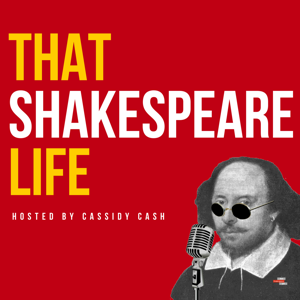
Hosted by Cassidy Cash, That Shakespeare Life takes you behind the curtain and into the real life of William Shakespeare.

More shows like That Shakespeare Life

HistoryExtra podcast by Immediate

HistoryExtra podcast

3,178 Listeners

Gardeners' Corner by BBC Radio Ulster

Gardeners' Corner

102 Listeners

Folger Shakespeare Library: Shakespeare Unlimited by Folger Shakespeare Library

Folger Shakespeare Library: Shakespeare Unlimited

823 Listeners

Sidedoor by Smithsonian Institution

Sidedoor

2,228 Listeners

The English Heritage Podcast by English Heritage

The English Heritage Podcast

229 Listeners

Tudors Dynasty & Beyond by RedTop Media / Rebecca Larson

Tudors Dynasty & Beyond

749 Listeners

Historic Royal Palaces Podcast by Historic Royal Palaces

Historic Royal Palaces Podcast

470 Listeners

The Ancients by History Hit

The Ancients

3,346 Listeners

The Rest Is History by Goalhanger

The Rest Is History

15,575 Listeners

Gone Medieval by History Hit

Gone Medieval

1,889 Listeners

Not Just the Tudors by History Hit

Not Just the Tudors

2,050 Listeners

Lexicon Valley by Lexicon Valley

Lexicon Valley

577 Listeners

Short History Of... by NOISER

Short History Of...

2,829 Listeners

Betwixt The Sheets: The History of Sex, Scandal & Society by History Hit

Betwixt The Sheets: The History of Sex, Scandal & Society

1,384 Listeners

What Did You Do Yesterday? with Max Rushden & David O'Doherty by Keep It Light Media

What Did You Do Yesterday? with Max Rushden & David O'Doherty

215 Listeners