
Sign up to save your podcasts
Or

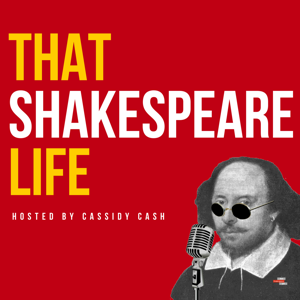


Grace Tiffany is a successful novelist, author, and professor of Shakespeare at Western Michigan University. Her first novel, My Father Had a Daughter, was published in 2003, and is a fictional tale about the life of Shakespeare’s second daughter Judith. While fictional, the book brings the historical facts about Judith Quiney to life on the pages of her book. Since her debut novel, Grace has completed 6 historical novels set in the Renaissance or Middle Ages and her work focuses primarily on Shakespeare. Her latest book, Gunpowder Percy, builds on the historical facts surrounding the 1605 Gunpowder Plot when Shakespeare was 41 years old. In addition to her novels, Grace has received numerous research and teaching awards for her creativity in the field of Shakespeare Studies. She has written numerous scholarly articles and monographs on Renaissance history and culture, with her work appearing in Shakespeare Studies, Texas Studies in Literature and Language, and The Renaissance Quarterly, among others. James Shapiro has called Grace’s book The Turquoise Ring, one of the six best creative adaptations of Shakespeare in history. Today, Grace is joining us to discuss the subject of her first novel, Judith Quiney, and take us inside the life of Shakespeare’s second daughter.
Today's guest knows better than most that when you study Shakespeare, you almost synonymously study 17th century theater. Ben Crystal is an actor, writer, producer, adventurer & explorer of original practices in Shakespeare, and was the Artistic Director at Passion in Practice, an original practice based theatre company specializing in performances that rework the speech, rehearsal techniques, and performance methods of Shakespeare's theatre. He joins us today to discuss original practice, and what the real role of understanding Shakespeare's perspective on theater does, and should, have on our modern performances today. PLUS: he tells us honestly that he, too, was one of those students who hated Shakespeare until the stage opened up a new perspective for him.
In this episode, I'll be asking Ben about:
Called "One of the most learned and devoted of Shakespeareans," by Harold Bloom, Dr. David Bevington is an American literary scholar who specializes in British drama of the Renaissance, and has edited and introduced the complete works of William Shakespeare in both the 29-volume, Bantam Classics paperback editions and the single-volume Longman edition. Dr. Bevington remains the only living scholar to have personally edited Shakespeare's complete corpus." He will be talking with us about Religion in the 16th Century. I will be asking him to offer a brief explanation of the state of Catholic vs Protestant in England during Shakespeare's lifetime, as well as what, if any, impact this climate had on the life and work of William Shakespeare himself.
Called "One of the most learned and devoted of Shakespeareans," by Harold Bloom, Dr. David Bevington is an American literary scholar who specializes in British drama of the Renaissance, and has edited and introduced the complete works of William Shakespeare in both the 29-volume, Bantam Classics paperback editions and the single-volume Longman edition. Dr. Bevington remains the only living scholar to have personally edited Shakespeare's complete corpus." He will be talking with us about Religion in the 16th Century. I will be asking him to offer a brief explanation of the state of Catholic vs Protestant in England during Shakespeare's lifetime, as well as what, if any, impact this climate had on the life and work of William Shakespeare himself.
In this week's episode, we talk with Pauline Montagna about the focus of an entire chapter in her latest book, Not Wisely But Too Well which makes the claim that Edward Alleyn, and not Shakespeare, was the upstart crow insulted famously by Robert Greene. Alleyn was a rival actr competing in the 16th century with Richard Burbage, Shakespeare's lead performer. Pauline joins us today to unpack her research into this controversial idea and share her argument in favor of Edward Alleyn. In this week's episode, I'll ask Pauline about: - who was Edward Alleyn? - Why was he Burbage's rival? Did they fight? - What makes you think he might have been the upstart crow? and more. Join us inside as we explore one of Shakespeare's acting contemporaries, Edward Alleyn.
In this week's episode, we talk with Pauline Montagna about the focus of an entire chapter in her latest book, Not Wisely But Too Well which makes the claim that Edward Alleyn, and not Shakespeare, was the upstart crow insulted famously by Robert Greene. Alleyn was a rival actr competing in the 16th century with Richard Burbage, Shakespeare's lead performer. Pauline joins us today to unpack her research into this controversial idea and share her argument in favor of Edward Alleyn.
In this week's episode, I'll ask Pauline about:
- who was Edward Alleyn?
- Why was he Burbage's rival? Did they fight?
- What makes you think he might have been the upstart crow?
and more.
Join us inside as we explore one of Shakespeare's acting contemporaries, Edward Alleyn.
Whenever Shakespeare's plays are performed, there are always legends and stories which come up right along with them. We have Macbeth and the Scottish Play, as well as Romeo and Juliet and the famous misconstrued couplet in the final scene. Over the years, some of these stories have grown into famous anecdotes that no one is really sure where they started. No one, at least, except Paul Menzer. This week at That Shakespeare Life, we are going to sit down with Paul Menzer, professor at Mary Baldwin University, to talk about the truth behind the legends connecting to Shakespeare's plays, Dr. Menzer is an expert on this particular topic because he literally wrote the book called Anecdotal Shakespeare. In this episode, I'll be asking Dr. Menzer about : >>Macbeth and why The Scottish Play became such an important theater legend. >>We'll talk about Cymbeline and why smaller plays lack such strong anecdotes, and >>you'll hear a story about Richard Burbage which has spanned the centuries attaching itself to actors playing Richard III for centuries.
In this episode I ask Dr. Bart Van Es, author, historian, and Professor in English at the University of Oxford, about Richard Burbage.
We explore the life of Richard Burbage, Shakespeare's leading actor and the first man to play the roles of Hamlet, Othello, and King Lear. You'll learn about what Richard Burbage looked like, his family, his hobbies, and how it was he and his father who really gave Shakespeare the foundation he needed to stand on when building a powerful career.
From the publisher's feed

3,175 Listeners

102 Listeners

823 Listeners

2,230 Listeners

229 Listeners

748 Listeners
470 Listeners

3,348 Listeners

15,571 Listeners

1,892 Listeners

2,047 Listeners

577 Listeners

2,834 Listeners

1,385 Listeners
215 Listeners