
Sign up to save your podcasts
Or



Based on Podcast App listening data
Rational, logical argument is often a recipe for losing debates today. Rather, winning battled depends heavily on emotional appeals and above all seizing the cultural high ground. James Davison Hunter showed the importance of networks and institutions at the cultural center in determining society outcomes.
The New Calvinism movement is an example of an instantiation of Hunter's idea, with celebrity preachers and other key figures creating networks and institutions to achieve power over their subdomain of Evangelicalism. The debates over the Statement on Social Justice show the futility of logical argumentation in the face of superior cultural power.
Those engaged in debates and disputes within the church and society must understand the full spectrum of considerations around power and persuasion, not just make logical arguments.
The Gospel Coalition is the flagship organization of the New Calvinism movement. They hold their major conference every two years in Indianapolis. Since I'm now back in Indy and they were meeting in person here despite Covid-19, I decided to attend and check it out.
This podcast was recorded in the middle of the conference to share a few observations about it, and the New Calvinism movement generally. The conference showcases two of the great strengths of the movement: its intellectual orientation (serious people talking seriously about serious things) and their excellence in public speaking.
For further reference:
Noah Smith on experts who lie: https://noahpinion.substack.com/p/yes-experts-will-lie-to-you-sometimes
My interview with sociologist Brad Vermurlen on New Calvinism: https://www.youtube.com/watch?v=eNA0ic1asbw
Subscribe to my newsletter: https://www.aaronrenn.com/
In their book Metaphors We Live By, George Lakoff and Mark Johnson noted how our language, and very way of perceiving the world, is saturated with metaphor. We use the metaphor "Love is war," for example, when describing someone as a relational "conquest."
Metaphors, analogies, etc. are a helpful and essential way of making sense of the world. But the metaphors we live by can, as with "love is war," import ways of thinking about issues that may not be entirely healthy.
In this podcast we examine metaphors used for understanding race relations in America, and how we might be able to positively reframe our challenges using a different metaphor for thinking about them.
Buy Metaphors We Live By: https://www.amazon.com/gp/product/0226468011/ref=as_li_qf_asin_il_tl?ie=UTF8&tag=theurban-20
Subscribe to my newsletter: https://www.aaronrenn.com/
In our 24x7 media and social media saturated world, it's very easy for us to spend too much time engaging in the controversies of the day and not focusing on what's important to our own long term agenda. It's said that the media can't tell you what to think, but they can tell you what to think about. Merely focusing on something elevates its importance in our mind. We need to be careful where we are putting our focus so that we don't end up letting the media subtly rewire our agenda without us even noticing it.
Subscribe to my newsletter: https://www.aaronrenn.com/
Our relationships in life can often be characterized as organic or inorganic, as naturally occurring or as artificial, consciously chosen or constructed. Organic relationship tends to represent strong ties, inorganic relationship weak ties. Inorganic relationships are very powerful, but often can't be relied on when we need them. Organic relationships are the foundational base of social capital.
More on community: https://socialsci.libretexts.org/Bookshelves/Sociology/Book%3A_Sociology_(Boundless)/17%3A_Population_and_Urbanization/17.04%3A_Urban_Life/17.4G%3A_Community
Studies from the JEC Social Capital Project: https://www.jec.senate.gov/public/index.cfm/republicans/socialcapitalproject
Alan Ehrenhalt's The Lost City: The Forgotten Virtues of Community in America: https://www.amazon.com/gp/product/0465041930/ref=as_li_qf_asin_il_tl?ie=UTF8&tag=theurban-20
Subscribe to my newsletter: https://www.aaronrenn.com/
People tend to look at the compositions of bodies like legislatures or boards of directors based on attributes like party affiliation or race and gender. But there are other characteristics like professional background, geographic origin, and educational experience that are often even more revealing of how people think about the world. This can give important insights into organizational dynamics.
Subscribe to my newsletter: https://www.aaronrenn.com/
This is the audio edition of Newsletter #50, all about online dating. It reviews the facts revealed through various studies of online dating markets. (This issue is very chart intensive, so it is worth looking at online even though I describe the contents of the charts in this audiocast.
I also discuss how online dating represents the "globalization" of the dating market, with similar impacts to economic globalization in producing high levels of inequality. And I note how the way these sites are skewed towards looks, and the dynamics of responses to women can make online dating an unfavorable environment to men who are not in the top 10-20% of men in terms of looks.
Online dating is a tool and there's no shame in using it. The point is that to make intelligent choices around online dating, we need to be aware of the dynamics of how it actually functions.
Subscribe to my newsletter: https://www.aaronrenn.com/
Our perception of time and relation to it radically shifts over the course of our lives. Our perception of the flow of time accelerates as we age, for example.
It's not until around age 35 that we get the ability to intellectually and emotionally relate to the future story arc of our lives. That's when we start being able to realize that not only have we changed in the past, we will continue to change in the future. This has profound consequences for our lives, including helping to drive the onset of the midlife crisis.
Also, our perception of events is heavily dependent on whether or not they are within our living memory. Any event within our living memory seems like it happened just yesterday, while any that happened before that seems like the distant past.
Subscribe to my newsletter: https://www.aaronrenn.com/
Conservatives have long rushed to the defense of institutions and people who are threatened, even when those people and institutions were hostile to Christianity. This was true even when conservatives were a minority movement despised by all the major organs of society. They defended the university administrators during the campus unrest of the 1960s, for example, at a time when the universities were very hostile to conservatism.
Christians also behave this way. It's rooted in an identification with the mainstream of society and its institutions. But Christianity today is socially marginalized and seen as a threat to the social order and the new public morality. In that environment, American Christians need to reconcile themselves to being a minority, and start acting like it. That means letting nature take it course with many of the problems of our society. Christians need to be willing to suffer for their beliefs. Now they have to be willing to let other people suffer for theirs.
Geoffrey Kabaservice, The Guardians - https://www.amazon.com/gp/product/B00LRXCF66/ref=as_li_qf_asin_il_tl?ie=UTF8&tag=theurban-20
Subscribe to my newsletter: https://www.aaronrenn.com/
In this episode I wrap up my series on conservatism, summarizing the previous installments and encouraging conservative Evangelicals to rethink their deal with the Republican Party. Evangelicals have been the largest and most loyal voting block of the Republican Party, but have not received a return commensurate with what they've brought to the table.
While the Democratic Party may not be a viable alternative, conservative Evangelicals need to force the Republican Party to reformulate itself to better align with Evangelical priorities. And to insist on having a genuine seat at the table in defining the conservative agenda.
NBER Paper" Does Private Equity Investment in Healthcare Benefit Patients? - https://www.nber.org/papers/w28474
Brian Alexander, Glass House - https://www.amazon.com/gp/product/1250165776/ref=as_li_qf_asin_il_tl?ie=UTF8&tag=theurban-20
Subscribe to my newsletter: https://www.aaronrenn.com/
From the publisher's feed
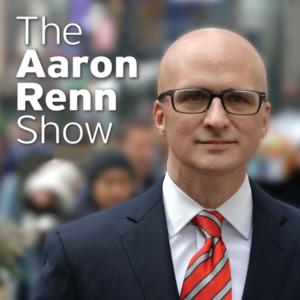
Aaron Renn's commentary and insights on our 21st century world, along with his conversations with some of the world's leading thinkers on the issues of today. Covering culture, media, economics,…
Ranked by our users in the last 21 days
8,585 Listeners
2,200 Listeners
1,673 Listeners
841 Listeners
7,110 Listeners

992 Listeners

1,096 Listeners
640 Listeners

1,387 Listeners
642 Listeners
983 Listeners

1,187 Listeners

499 Listeners
383 Listeners
186 Listeners