
Sign up to save your podcasts
Or

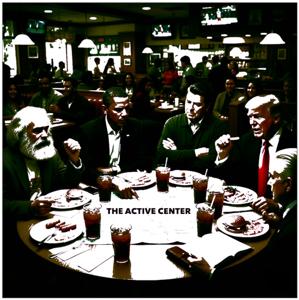


Social scoring is the systematic evaluation of an individual's character, behavior, and loyalty through the aggregation of digital data, which is then used to assign a "score" or classification. This metric directly determines a citizen's access to basic rights, opportunities, and services. At its core, social scoring represents the ultimate fusion of big data, artificial intelligence, and state or corporate authority to enforce behavioral conformity at scale.
While historically associated with science fiction, social scoring has transitioned into a powerful instrument of modern governance. In totalitarian states, it is used to preserve absolute political control. In democratic societies, it is emerging in more subtle, decentralized, or corporate-driven formats. This document explores the mechanics of social scoring, its applications in China, Iran, and Europe, and why the system fundamentally clashes with Western ideals of individualism and human freedom.
A social scoring system operates on a feedback loop of Surveillance, Evaluation, and Enforcement:
[Surveillance: IoT, Biometrics, FinTech, Social Media]
China’s Social Credit System (SCS) is the world’s most famous and structurally mature iteration of social scoring. Driven by the Chinese Communist Party (CCP), the SCS operates through a combination of municipal government initiatives and private corporate partnerships (such as Ant Group’s Sesame Credit).
Iran has adapted the principles of social scoring, bypassing financial metrics to focus strictly on ideological, religious, and political compliance. Rather than a slow-accruing credit score, the Iranian regime uses automated, real-time biometric social scoring to identify and punish moral and political deviance.
During and after the nationwide protests sparked by the death of Mahsa Amini, the Iranian government systematically overhauled its domestic surveillance apparatus to suppress dissent.
While Western democratic governments explicitly reject the overt state-run social credit models used by China, critics warn that a decentralized, corporate, and administrative variant of social scoring is quietly taking root in Europe.
In Europe, the mechanics of social scoring are often privatized. Tech giants, payment processors, and financial institutions increasingly act as moral arbiters of public behavior:
For corporations, ESG scoring operates exactly like a corporate social credit system. Financial institutions allocate capital based on a company's compliance with complex ideological and environmental benchmarks, forcing small businesses and suppliers to align with state-approved ethical goals to remain economically viable.
A significant escalation in European speech policing and administrative classification occurred when a Belgian court ruled that even "factually correct" statements can constitute criminal hate speech if they are judged to "incite hatred."
This landmark ruling arose during the second conviction of anti-migration activist Dries Van Langenhove. Following a university speech in Leuven where Van Langenhove linked mass migration to crime rates, the Belgian judiciary pursued criminal charges. According to official Belgian demographic and justice statistics (such as those from Statbel, which show that non-Belgian citizens make up roughly 12% of the population but consistently represent over 40% of the prison population, with foreign-born individuals accounting for over 50% of inmates in Brussels), the correlation between foreign backgrounds and specific crime metrics is a matter of public administrative record.
However, the presiding judge explicitly ruled that statistical accuracy is irrelevant under Belgian Anti-Racism Law:
"Even if all of the statements made by Van Langenhove are based on scientific evidence and statistics, it makes no difference to the criminal intent. Van Langenhove is not charged with spreading false information. He is charged with presenting facts in a way that incites hatred against persons on the grounds of one or more of the protected criteria in the Anti-Racism Law."
This case highlights a critical mechanism of Western "soft" social scoring: the selective criminalization of objective data to protect state policy.
By punishing citizens for communicating official, scientific, or government-compiled statistics, the state effectively enforces an ideological scoring system. To maintain a high "civic standing" and avoid criminal prosecution, individuals must self-censor and ignore empirical data in favor of state-sanctioned narratives.
Throughout several European cities, municipal pilots have experimented with "green points" or "civic reward" apps, rewarding citizens with public transit discounts for sorting trash, volunteering, or reducing their energy consumption.
The European Union has recognized the severe danger these trends pose. In the EU Artificial Intelligence Act, the European Parliament took a hard stance, placing an absolute ban on certain AI-enabled social scoring practices:
Despite this legislation, pressure remains from national security agencies lobbying for loopholes to use facial recognition, keeping Europe on a knife-edge between safety and total surveillance.
The fundamental architecture of social scoring is a direct assault on the philosophical foundations of Western civilization, specifically the twin pillars of individualism and freedom.
Western Value
Social Scoring Dynamic
The Philosophical Clash
Individualism
Collectivism & Conformity
Western thought views the individual as the primary moral agent, possessing inherent dignity independent of the state. Social scoring reduces the individual to a numerical variable, forcing them to conform to a state-defined standard of the "ideal citizen."
Inherent Liberty & Rights
Conditional Privileges
In the West, rights (speech, movement, property) are natural and inalienable. Under social scoring, rights are converted into temporary "privileges" that must be continuously earned through obedience and can be revoked by an algorithm at any time.
Presumption of Innocence
Preemptive & Algorithmic Guilt
The Western legal tradition guarantees due process and the presumption of innocence. Social scoring uses predictive AI to penalize behavior preemptively, denying individuals the right to face their accuser or appeal automated, faceless decisions.
The Right to Redemption
Permanent Digital Stigmatization
Western morality strongly emphasizes forgiveness, rehabilitation, and fresh starts (e.g., bankruptcy laws, expungement of criminal records). Social scoring creates a permanent, immutable digital footprint where past mistakes continuously compound to ruin an individual’s future.
By turning ethical behavior into a gamified quest for points, social scoring destroys true morality. In a free society, a citizen chooses to do good out of personal conscience or civic duty. Under a social scoring system, a citizen acts "virtuously" solely out of fear of systemic punishment or desire for algorithmic reward.
Ultimately, social scoring does not build a better society; it builds a prison of absolute compliance, replacing the erratic beauty of human freedom with the cold efficiency of machine control.
Hello, and thanks for listening to my podcast For years, my mission has been to foster a community around engagement, unique takes on interesting stories, and conversation. If you value what I do, please consider supporting me. I've started a GoFundMe to cover my production and operational costs, including those pesky social media fees. If you can’t contribute to my GoFundMe, I get it, but you can help me by subscribing to my account or sharing this particular story with friends and family that you think would appreciate it. Your contribution, big or small, helps me keep going. Thank you.
GO FUND ME
Both Adam Smith and Karl Marx viewed wealth accumulation as the primary driver of economic modernity. However, they fundamentally disagreed on who benefits from this accumulation.
While Smith saw wealth accumulation as an engine of mutual prosperity that lifts all boats, Marx viewed it as an inherent process of class exploitation where capitalists extract surplus value from the working class. Understanding these opposing frameworks clarifies the radically different solutions they proposed to address economic inequality and market failures.
Feature
Adam Smith (Classical Capitalism)
Karl Marx (Scientific Socialism)
View of Wealth
Total growth, progress, and prosperity of a nation.
Concentrated surplus value hoarded by the bourgeoisie.
Primary Driver
Self-interest, division of labor, and free exchange.
Exploitation of the proletariat's labor power.
Social Outcome
Mutual prosperity; naturally rising living standards.
Growing inequality, alienation, and class conflict.
Systemic Flaw
Monopolies, rent-seeking, and artificial trade barriers.
Inherent systemic crises, monopolies, and worker alienation.
Proposed Solution
Regulatory reform, market competition, and legal protections.
Systemic abolition of private property and communist revolution.
Adam Smith argued that a free-market capitalist system, driven by self-interest and guided by the "invisible hand," encourages saving, investment, and the division of labor.
"It is not from the benevolence of the butcher, the brewer, or the baker that we expect our dinner, but from their regard to their own interest."
— Adam Smith, The Wealth of Nations
Karl Marx viewed wealth accumulation not as a rising tide, but as a zero-sum process of concentration. He argued that the capitalist class (the bourgeoisie) accumulates wealth by exploiting the labor of the working class (the proletariat).
Because Smith and Marx identified entirely different root causes for economic instability and inequality, their prescriptions for fixing these issues were diametrically opposed.
Smith recognized that private interests, if left unchecked by competition, would attempt to form monopolies, manipulate prices, and lobby the state for special privileges. He did not advocate for a lawless market, but rather a fairly regulated market.
Marx believed that the contradictions of capitalism were structural and could not be patched over by reforms. Regulatory band-aids would only delay the inevitable collapse or protect the interests of the ruling class.
The debate between Smith’s reformist capitalism and Marx’s revolutionary socialism remains the defining intellectual axis of political economy.
Modern social democracies often attempt to build a bridge between these two thinkers, utilizing Smith's engine of market efficiency and wealth generation, while using heavy regulatory frameworks, progressive taxation, and social safety nets to combat the inequality and alienation that Marx so critically identified.
Hello, and thanks for listening to my podcast For years, my mission has been to foster a community around engagement, unique takes on interesting stories, and conversation. If you value what I do, please consider supporting me. I've started a GoFundMe to cover my production and operational costs, including those pesky social media fees. If you can’t contribute to my GoFundMe, I get it, but you can help me by subscribing to my account or sharing this particular story with friends and family that you think would appreciate it. Your contribution, big or small, helps me keep going. Thank you.
GO FUND ME
The news banner scrolled across my screen today with a quiet, devastating finality: Bob Horner, former Braves slugger and 1978 National League Rookie of the Year, has passed away at the age of 68. I sat there at my desk, staring at the digital text, feeling a familiar but sharpening ache in my chest. I am in my late fifties now. In the quiet ledger of my mind, I know, with a mathematical certainty I try not to dwell on, that I am closer to the end of my story than I am to its beginning. The horizon ahead is shorter than the long, sun-drenched road behind. When the heroes of your childhood start to slip away, it is never just about the loss of an athlete; it is about the quiet closing of another window to the world that made you.
For me, that world was 1978. It was the first baseball season I can remember with absolute clarity. I was a kid, just old enough to devour the daily box scores in the morning newspaper, my fingers stained with newsprint as I tracked batting averages, home run tallies, the Red Sox leading the Yankees by a million games in the American East standings as I left school for Summer Break, and of course following via box score or a small paragraph Pete Rose’s seemingly never-ending hitting streak.
Before 1978, baseball was a vague background noise of summer. But that year, the game became my religion. And Bob Horner was its sudden, thrilling lightning bolt.
To understand what Bob Horner meant to an elementary school kid in the summer of 1978, you have to understand how he arrived. He didn’t grind through the dusty outposts of the minor leagues. He didn’t ride buses through Toledo or Richmond. On June 6, 1978, the Atlanta Braves selected the stocky, blonde-haired third baseman from Arizona State University as the number-one overall pick in the draft. Ten days later, on June 16, he was standing at third base in Atlanta-Fulton County Stadium, batting cleanup in a Major League uniform.
It felt like a fairy tale. One week he was playing in the College World Series, and the next, he was facing big-league pitching. In his very first game, he stepped up to the plate and launched a home run off Hall of Famer Bert Blyleven. To my young mind, Horner was a real-life superhero. He possessed a thick, powerful build, deceptively athletic, and a swing that looked like it was designed to dent stadium seats.
That summer, he played in just 89 games but slugged 23 home runs, drove in 63 runs, and carried a .277 average, narrowly beating out a wizard shortstop named Ozzie Smith to win the National League Rookie of the Year award. He and Dale Murphy became a twin-engine powerhouse of hope for a Braves franchise that had spent years in the cellar under the eccentric ownership of Ted Turner. Horner was the prototype of the modern power hitter: fearless, aggressive, and capable of changing a game with a single flick of his wrists.
Born in Kansas and raised in Arizona, Bob Horner was destined for baseball royalty. At Arizona State University, he put together one of the most legendary collegiate careers in history. He belted 56 home runs over three seasons, an NCAA record that still stands as the ASU high-water mark. He led the Sun Devils to a national title in 1977, earning the College World Series Most Outstanding Player award, and in 1978, he became the inaugural winner of the Golden Spikes Award, given to the top amateur player in the nation.
His ten-year Major League career was a brilliant, if injury-plagued, masterclass in power. Over nine seasons with the Braves, he averaged over 25 home runs a year when healthy, reaching his peak in 1980 with 35 home runs and an All-Star selection in 1982.
He was a player who "built a career out of being first," as sportswriters noted. On July 6, 1986, he achieved one of baseball's rarest single-game feats, hitting four home runs in a single game against the Montreal Expos. He was only the ninth player since 1900 to do so.
When contract disputes and the shadow of owner collusion disrupted his career in 1987, he took his talents to Japan, signing a legendary deal with the Yakult Swallows. He became an overnight cultural phenomenon there, hit 31 home runs in just 93 games, and earned the nickname "Aka-Oni" (The Red Devil) for his fierce competitiveness. He returned to the States for one final season with the St. Louis Cardinals in 1988 before retiring at the incredibly young age of 31. Though injuries prevented him from reaching the Cooperstown Hall of Fame, he was enshrined in the inaugural class of the College Baseball Hall of Fame in 2006, forever remembered as one of the most feared hitters of his generation.
Hearing of his passing today pulls me backward into a sensory landscape that feels entirely foreign to the world we inhabit now. The summer of 1978 had a specific soundtrack and a particular hue.
On the AM radio, the Bee Gees dominated the airwaves with the lingering fever of Saturday Night Fever. Olivia Newton-John and John Travolta were singing "You're the One That I Want" from the Grease soundtrack, which was played at every pool party and backyard gathering. On television, we watched Three's Company, M*A*S*H*, and Happy Days.
It was a world of rotary phones mounted on kitchen walls with extra-long tangled cords, station wagons with wood-grain paneling and rear-facing seats, and the heavy plastic click of Star Wars action figures being battled in the dirt. There were no cell phones to distract us, no algorithms curating our attention, no endless feeds of outrage. If you wanted to know if your friend could play, you walked to their house and knocked on the screen door. If you wanted to see Bob Horner hit, you waited for the local broadcast to start if the Braves were in town, or you sat by the radio, listening to the crackle of the airwaves carrying the voice of the announcers through the warm summer night. If the Braves were not in town we waited for the NBC Saturday Game of the Week, ABC Monday Night Baseball or This Week in Baseball on Saturday for the previous week’s baseball highlights.
There is a strange, quiet transition that happens when you cross into your late fifties. You begin to look at your life not as an open-ended adventure, but as a completed shape that you are still polishing. You look in the mirror and see your parents' eyes looking back at you. Your knees ache when the weather changes, and you realize that the music you love is now played on "classic throwback" stations.
But more than the physical toll, it is the social landscape that shifts. 1978 was a time of immense, noisy warmth. My family back then was large, sprawling, and physically together. We didn’t send text messages to say "Happy Birthday"; we showed up.
I remember the chaotic Sundays of my childhood, brunches that stretched into the late afternoon, smoke rising from a charcoal grill at backyard BBQs, and houses filled to the brim for Thanksgiving and Christmas. The adults would sit around card tables, drinking coffee and laughing loudly, while us kids ran wild through the sprinklers or played pickup baseball in the street until the streetlights flickered on.
Today, that large family has thinned out. The grandparents are long gone; all of my aunts and uncles have followed. My Father has passed and now it’s just me and my Ma. My siblings and cousins are scattered across different time zones, living busy, fragmented lives behind glowing screens. We are polite, we are connected by group chats, but the physical, messy, loud togetherness of 1978 is a relic of a bygone era.
Losing Bob Horner today feels like losing another guardian of that sacred, simpler time. He represents the era when my parents were young and strong, when my family was intact and gathered under one roof, and when a summer afternoon felt like it could stretch on forever.
He was only 68 when he passed today, an age that used to seem ancient to a kid, but now feels far too young, far too close to my own vintage.
As I look out the window at the late afternoon sun, I can still picture him in my mind's eye: wearing that classic baby-blue Braves road uniform, dirt on his pants, waiting at third base under the warm Georgia sky. He is forever young, forever powerful, and forever a reminder of the sweetest summer of my life. Rest in peace, Bob. Thanks for the memories, and thank you for keeping 1978 alive for just a little bit longer.
Hello, and thanks for listening to my podcast For years, my mission has been to foster a community around engagement, unique takes on interesting stories, and conversation. If you value what I do, please consider supporting me. I've started a GoFundMe to cover my production and operational costs, including those pesky social media fees. If you can’t contribute to my GoFundMe, I get it, but you can help me by subscribing to my account or sharing this particular story with friends and family that you think would appreciate it. Your contribution, big or small, helps me keep going. Thank you.
GO FUND ME
This Memorial Day week, as the nation pauses to honor the ultimate sacrifice of the men and women who died defending American freedom, it is also a fitting moment to reflect on another profound dimension of American sacrifice and generosity: the staggering resources U.S. taxpayers have committed to uplift, integrate, and support their fellow citizens at home.
While the nation’s military conflicts have historically demanded immense human and financial capital, the domestic efforts to conquer poverty and achieve social integration since the mid-20th century represent an even larger financial commitment. Since 1964, U.S. taxpayers have invested an estimated $23 trillion into anti-poverty and integrationist programs. To put this monumental sum in perspective, this is roughly three times the direct inflation-adjusted cost of every single military war the United States has fought in its entire history, from the American Revolution to the present day.
To understand the sheer magnitude of America’s domestic investment, it must be measured against the financial costs of the nation’s battlefields. According to historical estimates and inflation-adjusted data from the Congressional Research Service and defense databases, the direct military costs of all major American wars from 1775 to the present total approximately $8 trillion (in constant modern dollars).
In contrast, the cumulative cost of the domestic "War on Poverty" and means-tested welfare programs since 1964 has reached an estimated $23 trillion.
Conflict
Years
Estimated Cost (Inflation-Adjusted to Modern Dollars)
Revolutionary War
1775–1783
~$3.3 Billion–$12 Billion
War of 1812
1812–1815
~$2.9 Billion
Mexican-American War
1846–1848
~$3.5 Billion
Civil War (Union & Confederacy)
1861–1865
~$155 Billion–$300 Billion
Spanish-American War
1898
~$14 Billion
World War I
1917–1918
~$380 Billion–$800 Billion
World War II
1941–1945
~$4.1 Trillion–$5.9 Trillion (The most expensive military war)
Korean War
1950–1953
~$675 Billion
Vietnam War
1965–1975
~$1.6 Trillion
Persian Gulf War (Desert Storm)
1990–1991
~$224 Billion
Post-9/11 Wars (Afghanistan & Iraq)
2001–2021
~$3.6 Trillion (Direct military operations)
TOTAL MILITARY WAR COSTS (1775–Present)
—
Approx. $7.5 Trillion to $8.5 Trillion
Note: These anti-poverty figures strictly include over 80 federal means-tested welfare programs (such as Medicaid, Food Stamps/SNAP, housing assistance, Head Start, and the Earned Income Tax Credit) and exclude non-means-tested "earned benefit" entitlement programs like Social Security and Medicare.
The philosophical and financial foundation of this domestic mobilization was laid in the mid-1960s. The architects of these programs viewed the campaign as a moral obligation equivalent to national defense.
On January 8, 1964, in his first State of the Union address following the assassination of John F. Kennedy, President Lyndon B. Johnson officially launched the initiative, framing it as an "unconditional" national struggle:
"This administration today, here and now, declares unconditional war on poverty in America. I urge this Congress and all Americans to join with me in that effort. It will not be a short or easy struggle, no single weapon or strategy will suffice, but we shall not rest until that war is won. The richest Nation on earth can afford to win it. We cannot afford to lose it."
On August 20, 1964, President Johnson signed the Economic Opportunity Act (EOA) of 1964, creating the Office of Economic Opportunity (OEO) and introducing foundational programs like Job Corps, Head Start, and VISTA. Upon signing the bill, Johnson remarked:
"On this occasion, the Dismal Science of Economics becomes a hope-filled science... For the first time in all the history of mankind, a great nation is able to make, and is willing to make, a commitment to eradicate poverty among its people."
Sargent Shriver, the first director of the Office of Economic Opportunity, emphasized that the multi-billion-dollar effort was designed to build self-sufficiency and integration, rather than permanent dependency. Speaking before Congress in 1964, Shriver stated:
"The War on Poverty is not a program to put more people on welfare. It is a program to get people off welfare. Our aim is not to make poverty more bearable, but to make it escapeable... We are offering a hand up, not a handout."
As the decades progressed, the rising costs and complex social outcomes of these programs prompted intense debate over their structure and efficacy. On January 25, 1988, during his State of the Union address, President Ronald Reagan famously offered a stark critique of the federal bureaucracy's approach:
"Some years ago, the Federal Government declared war on poverty, and poverty won. Today, the federal government has 59 major welfare programs spending practically $100 billion a year. And yet, the poverty rate is higher than it was in 1973... My friends, we can do better than this. We must reduce dependency."
This debate culminated on August 22, 1996, when President Bill Clinton signed the Personal Responsibility and Work Opportunity Reconciliation Act, fundamentally restructuring welfare by introducing work requirements and lifetime limits (TANF). Clinton declared:
"Today, we are ending welfare as we know it. But I hope this day will be remembered not for what it ended, but for what it began: a new day of hope, a new commitment to work, and a new opportunity for families to realize their dreams."
The staggering financial scale is distributed across a vast, complex web of federal and state programs designed to cover basic human needs, health, education, and economic integration:
As the conversation around historical injustices has evolved, historians, economists, and sociologists have increasingly analyzed the $23 trillion War on Poverty through the lens of historical redress. Specifically, this massive transfer of wealth functions as a monumental, practical form of de facto reparations for the legacy of slavery, Jim Crow, and the historical mistreatment of Native Americans.
This perspective forms a central pillar of modern analysis regarding how the United States has chosen to address its historical debts.
From its inception, the War on Poverty was explicitly intertwined with the Civil Rights Movement. The architects of the Great Society openly acknowledged that civil rights laws alone were insufficient to repair centuries of state-sanctioned oppression.
On June 4, 1965, in his historic Commencement Address at Howard University, President Lyndon B. Johnson articulated this exact philosophy, framing the upcoming economic mobilization as a moral necessity to rectify the lingering effects of slavery:
"You do not wipe away the scars of centuries by saying: Now you are free to go where you want, and do as you desire, and choose the leaders you please. You do not take a person who, for years, has been hobbled by chains and liberate him, bring him up to the starting line of a race and then say, 'you are free to compete with all the others,' and still justly believe that you have been completely fair... We seek not just freedom but opportunity. We seek not just legal equity but human ability, not just equality as a right and a theory but equality as a fact and equality as a result."
Alongside urban civil rights initiatives, the post-1964 era saw a parallel legislative shift toward correcting historical injustices against Native Americans. The federal government utilized poverty-reduction funds and self-determination acts to redirect resources toward tribal sovereignty and economic development:
Proponents of this view point out that the modern welfare state has acted as the most extensive and practical wealth-redistribution program in human history, targeted directly at those disadvantaged by historical systems of oppression:
Memorial Day is a solemn occasion to honor the brave service members who laid down their lives to protect the nation's security and constitutional ideals. The transition from honoring military sacrifice to acknowledging taxpayer-funded domestic generosity reveals a unique characteristic of the American republic:
The sheer scale of this domestic investment stands as an undeniable testament to the profound generosity of U.S. taxpayers. No other civilization in human history has dedicated such an immense portion of its national wealth to the preservation of life abroad and the eradication of misery at home.
Hello, and thanks for listening to my podcast For years, my mission has been to foster a community around engagement, unique takes on interesting stories, and conversation. If you value what I do, please consider supporting me. I've started a GoFundMe to cover my production and operational costs, including those pesky social media fees. If you can’t contribute to my GoFundMe, I get it, but you can help me by subscribing to my account or sharing this particular story with friends and family that you think would appreciate it. Your contribution, big or small, helps me keep going. Thank you.
https://gofund.me/e797bd2a0
Every year, as the late May sun begins to warm the American landscape, a familiar rhythm takes hold. Highways swell with millions of travelers, campgrounds fill with the scent of woodsmoke, and retail storefronts drape themselves in red, white, and blue. For the vast majority of our citizens, Memorial Day weekend is a joyous threshold, the unofficial gateway to summer, a much-needed respite from the grind of daily life, and a vital engine of our national commerce. We celebrate this freedom in the most American way possible: through movement, gathering, and the pursuit of happiness.
Yet, to understand the military mission and to truly respect the men and women who have worn the uniform, is to recognize that this lively weekend exists under a canopy of immense sacrifice. The peace and prosperity we enjoy are not natural constants; they are expensive commodities, purchased at a price that most of us will never have to pay. For a select few, this three-day weekend is not a vacation. It is a quiet, devastating anniversary. To look closely at Memorial Day is to confront a profound national paradox: the roaring macroeconomic celebration of our country’s freedom stands in sharp, painful contrast to the quiet, structural, and lasting financial trials borne by our Gold Star Families.
For the broader U.S. economy, Memorial Day weekend serves as a major commercial catalyst, driving billions of dollars in consumer spending. It marks the initiation of what economists refer to as the "summer spending surge," during which travel and tourism serve as a primary bellwether for consumer confidence. Industry data consistently projects massive travel volumes during this holiday window, often eclipsing 45 million Americans traveling 50 miles or more from home.
Because roughly 87% of these holiday travelers choose to drive, fuel spending spikes dramatically. During high-energy-cost cycles, the holiday weekend extracts a massive collective toll at the pump, with drivers spending up to $2 billion more on gasoline over this single weekend compared to standard spring baselines. Meanwhile, regional economies, from coastal marinas to state parks, rely on this surge to jumpstart their seasonal revenue, converting our national freedom of movement into vital liquidity for local businesses.
Yet, to appreciate the purpose of our armed forces is to know that our soldiers, sailors, airmen, and marines do not choose a life of service for personal enrichment. They sign a blank check to the republic, payable with their lives. When that check is cashed, the immediate emotional shock wave is unimaginable. But as the bugler’s final notes of Taps fade into the wind and the neatly folded flag is pressed into the hands of a grieving spouse, a second, quieter crisis begins. The family left behind must now learn to navigate a world where they have lost not only their emotional anchor, but also their primary livelihood, a shock that immediately strips an average of 60% of the household's active earning potential.
In the military community, we often speak of the "service of the whole family." This is not a platitude; it is an economic reality. Because of the transient nature of military life, characterized by frequent relocations and the unpredictable demands of deployments, military spouses face chronic underemployment. Indeed, military spouse unemployment historically hovers between 20% and 24%, nearly four to six times the national average. They routinely sacrifice their own career progression, professional licenses, and retirement contributions to support the service member’s mission. When a service member makes the ultimate sacrifice, the surviving spouse is often left to face a competitive, unforgiving civilian job market with a fragmented resume and the sudden, overwhelming responsibility of raising children alone.
This sudden loss of earning power is compounded by a housing system that, despite its best intentions, presents a steep financial cliff-edge. During active service, military families rely heavily on non-taxable allowances to survive, particularly the Basic Allowance for Housing (BAH). This housing subsidy is the bedrock of their financial stability. But when a tragedy occurs, a countdown begins. While the Department of Defense provides transitional housing or allowances for up to 365 days, these families must ultimately pack up their lives, vacate military quarters, and absorb the full cost of civilian housing. It is a transition where deep grief meets the immediate, practical terror of finding shelter in an increasingly expensive real estate market.
We, as a nation, have established safety nets to cushion this transition. However, the bureaucracy of these programs can be incredibly complex, and the resulting financial support rarely replicates the career trajectory of a rising active-duty service member:
The administrative lag between the cessation of active-duty pay and the initiation of these survivor benefits (DIC and SBP) can take weeks or even months. During this interim period, grieving families often face severe cash-flow crises, relying on non-profit military relief organizations to avoid credit delinquency. More fundamentally, these fixed benefits can never truly replace the lifetime wealth accumulation, promotional tracks, and civilian earning potential of a young service member whose life and career were cut short in their prime.
On the last Monday of May, these two economies collide in a stark national paradox. The commercialized activity of the holiday weekend stands in quiet juxtaposition to the ongoing socioeconomic challenges faced by the families of the fallen.
Economic Dimension
The General Consumer / Holiday Market
The Gold Star Family Economy
Short-Term Financial Focus
High discretionary spending on leisure, gasoline, short-term travel, and retail sales.
Financial adjustments, benefit navigation, and managing transitional housing timelines.
Long-Term Financial Outlook
Minor seasonal fluctuations; holiday spending is budgeted or absorbed as consumer debt.
Long-term wealth gap resulting from the permanent loss of the primary earner's lifetime income.
Employment Dynamic
Holiday weekend offers brief respite; employment remains stable for non-military.
Single-parent household; managing career gaps, high childcare costs, and spouse underemployment.
Federal/State Support
Minimal direct impact outside of typical public infrastructure and national holiday structures.
Heavy reliance on complex, bureaucratic federal benefit structures (VA, DoD) to avoid poverty.
Societal Role on Memorial Day
Driver of a multibillion-dollar economic weekend.
The human cost of the freedoms that enable such commercial prosperity.
This is the hidden ledger of our freedom. While the broader American economy experiences a multibillion-dollar holiday surge, with drivers spending billions on fuel to reach their destinations and retailers capitalizing on seasonal sales, Gold Star Families are quietly calculating how to stretch survivor benefits, cover single-parent childcare, and preserve what remains of their family’s future.
To truly honor our fallen heroes, our gratitude must extend beyond a moment of silence or a physical monument. We must recognize that the defense of our nation is a shared responsibility, and that the debt we owe to those who died in our place must be paid to the living they left behind. Real patriotism demands that we actively work to dismantle the structural financial barriers facing Gold Star Families.
This requires concrete systemic change:
As we enjoy the warmth of this Memorial Day, let us remember that our celebrations are a testament to the success of the military mission. The laughter at our barbecues and the bustling traffic on our highways are the very fruits of the security our fallen service members died to protect. But let us also resolve to look beneath the holiday’s commercial surface. May we commit ourselves to ensuring that those who have paid the highest price for our nation's prosperity are never left to navigate the financial aftermath of their sacrifice in the dark. Our honor as a people is ultimately measured by how we care for the families of those who gave their all.
Hello, and thanks for listening to my podcast For years, my mission has been to foster a community around engagement, unique takes on interesting stories, and conversation. If you value what I do, please consider supporting me. I've started a GoFundMe to cover my production and operational costs, including those pesky social media fees. If you can’t contribute to my GoFundMe, I get it, but you can help me by subscribing to my account or sharing this particular story with friends and family that you think would appreciate it. Your contribution, big or small, helps me keep going. Thank you.
GO FUND ME
Real estate investments can be a sound financial decision regardless of your lifestyle. Whether you prefer a hands-on or hands-off approach, real estate works through four primary strategies.
Consider the story of Craig, who bought his first home and saw its value quintuple in less than seven years. This experience led him to acquire several other properties. His success highlights the two primary ways real estate builds wealth:
Residential property is designed for individuals and families. The investor acts as a landlord, leasing the home to a tenant who pays monthly rent.
This involves properties like office buildings or large apartment complexes. While the concept is similar to residential (the investor is the landlord), the scale is much larger.
REITs are ideal for "hands-off" investors who do not wish to manage physical property. An REIT is a company that owns and operates commercial real estate using pooled investor money.
Flipping involves purchasing a property—often a foreclosure or a home priced below market value—performing renovations, and reselling it quickly for a profit.
While real estate can be lucrative, savvy investors must be aware of potential pitfalls:
Hello, and thanks for reading my story. For years, my mission has been to foster a community around engagement, unique takes on interesting stories, and conversation. If you value what I do, please consider supporting me. I've started a GoFundMe to cover my production and operational costs, including those pesky social media fees. If you can’t contribute to my GoFundMe, I get it, but you can help me by subscribing to my account or sharing this particular story with friends and family that you think would appreciate it. Your contribution, big or small, helps me keep going. Thank you.
GO FUND ME
The 2026 FIFA World Cup, running from June 11 to July 20, 2026, is projected to bring over 146,000 unique out-of-town international and domestic soccer fans to the Southern California region, with eight matches hosted at SoFi Stadium in Los Angeles. While Los Angeles County is the epicentre, the extreme price hikes, hotel capacity constraints, and traffic gridlock in LA present a massive opportunity for neighboring Orange County.
This report outlines how the City of Orange, CA can position itself within the "World Cup Corridor," leveraging its historic charm, proximity to Anaheim’s theme parks, and excellent transit infrastructure to capture significant economic spillover.
Updated economic impact studies show a substantial financial opportunity for Southern California:
No. Officially, the City of Orange does not have a publicly published, dedicated "World Cup 2026 Business Strategy." This is not a municipal oversight, but rather a calculated legal and financial reality. Under FIFA's strict intellectual property and licensing laws, only designated host cities and their official host committees (such as the Los Angeles World Cup 2026 Host Committee) have the legal right to use official trademarks, brand matches, or market municipal events under the "World Cup" banner.
As Kathryn Schloessman, President & CEO of the Los Angeles Sports & Entertainment Commission, remarked regarding regional integration:
"Hosting the FIFA World Cup 2026 isn't just about hosting eight matches at SoFi Stadium, it's about using the tremendous media attention generated to highlight all the opportunities for community engagement throughout our region... by creating accessible fan experiences."
However, because Orange is outside of Los Angeles County, it does not receive direct allocation from the host committee's $26 million community champion grants or official fan zones. Therefore, the city's strategy is informal and reactive, relying on local business associations, chambers of commerce, and hoteliers to implement grass-roots "workarounds" to capture the overflow.
While the city cannot legally spend tax dollars on official "FIFA" branding, it sits directly in the sweet spot of the Anaheim-SoCal transportation corridor. Below is a granular breakdown of the potential fiscal gains for the City of Orange:
Because of its massive resort district and 20,000+ hotel rooms, Anaheim will naturally capture the largest share of Orange County's hospitality spillover. However, the City of Orange can secure highly profitable secondary "corridor" revenue.
Economic Metric
City of Anaheim (Projections)
City of Orange (Projections)
Hotel Room Inventory
~22,000 rooms
~2,200 rooms (focused along I-5 / Main St / Tustin St)
Projected Occupancy (June-July)
92% – 95%
84% – 88% (up from standard 72% summer baseline)
Average Daily Rate (ADR)
$280 – $340
$195 – $230
Transient Occupancy Tax (TOT) Rate
15%
10%
Projected TOT Revenue Yield
$7.5M – $9.2M (Incremental: +$2.8M)
$550,000 – $680,000 (Incremental: +$180,000)
Projected Sales Tax Revenue
$1.8M – $2.4M (Restaurants/Retail)
$120,000 – $180,000 (Focus on Old Town & Outlets)
Projected Gas Tax Allocation Increase
Minor regional bump
$15,000 – $22,000 (Highways 55, 22, & I-5 corridors)
Total Direct Fiscal City Benefit
$9.3M – $11.6M
$685,000 – $882,000
Mega-sporting events introduce a unique economic phenomenon known as the "displacement effect" (or crowding-out), alongside standard tourism growth.
Because Orange hotels do not carry the premium "Disneyland walking-distance" tax, they can market themselves as the "Value and Authenticity Alternative."
Because the City of Los Angeles and the LA Host Committee hold the official local FIFA host city licenses, the City of Orange cannot use official trademarks, logos, or terminology (e.g., "World Cup 2026," "FIFA," or "SoFi Stadium matches") in its public-facing marketing.
Instead of using protected terms, the City of Orange and local business associations should adopt high-association, generic phrasing:
Old Town Orange is uniquely positioned to capture fans looking for a charming, walkable, European-style plaza to enjoy pre- and post-match dining.
Traffic between Orange County and Inglewood (SoFi Stadium) during the tournament will be highly congested. Orange must market itself as the transit-friendly alternative.
To capture the massive overflow of tourists staying in Anaheim, the City of Orange must make itself highly visible to those visitors.
By utilizing its natural transit advantages, historic dining appeal, and proximity to major Southern California tourist nodes, the City of Orange can quietly generate close to $1 million in direct tax revenues and drive over $10 million in local business transactions during this historic summer tournament.
Hello, and thanks for listening to my podcast For years, my mission has been to foster a community around engagement, unique takes on interesting stories, and conversation. If you value what I do, please consider supporting me. I've started a GoFundMe to cover my production and operational costs, including those pesky social media fees. If you can’t contribute to my GoFundMe, I get it, but you can help me by subscribing to my account or sharing this particular story with friends and family that you think would appreciate it. Your contribution, big or small, helps me keep going. Thank you.
GO FUND ME
Scarcity is a fundamental economic principle that highlights the limited nature of resources in the face of unlimited wants. For Anaheim, the 2026 World Cup will bring this principle to the forefront. While the city itself won't host matches, its position as a major hospitality destination means it will absorb a large portion of the overflow tourism from nearby Inglewood.
Key resources that will become scarce include:
From Anaheim's perspective, a hypothetical cost-benefit analysis of the World Cup's effects would weigh the potential economic gains against the operational and social costs.
Potential Benefits:
Potential Costs:
The multiplier effect explains how an initial injection of money into an economy circulates and generates a larger, cumulative impact. In Anaheim's case, the money spent by World Cup visitors will not just be a one-time transaction.
For example, a family of four from another country stays in an Anaheim hotel and spends money on their room, meals at local restaurants, and souvenirs.
Each dollar spent by a visitor is re-spent multiple times within the local economy, generating a ripple effect of economic activity and benefiting a wide range of businesses and workers beyond the initial point of sale.
The sudden and significant increase in visitors due to the World Cup will be a classic example of a demand shock. The demand curve for goods and services in Anaheim will shift dramatically to the right.
The consequence is that locals and regular visitors will have to pay more for services or face a reduced availability of these resources.
Opportunity cost is the value of the next-best alternative that must be forgone when a choice is made. For Anaheim, the decision to manage the World Cup's effects involves several opportunity costs.
In essence, by preparing for and managing the World Cup's spillover effects, Anaheim is choosing to forgo the benefits it could have received from these alternative uses of its resources.
Hello, and thanks for listening to my podcast For years, my mission has been to foster a community around engagement, unique takes on interesting stories, and conversation. If you value what I do, please consider supporting me. I've started a GoFundMe to cover my production and operational costs, including those pesky social media fees. If you can’t contribute to my GoFundMe, I get it, but you can help me by subscribing to my account or sharing this particular story with friends and family that you think would appreciate it. Your contribution, big or small, helps me keep going. Thank you.
GO FUND ME
So, I’m assessing and grading student work at my desk in my high school “gov” class, and I see an “upcoming alert” on my computer that Trump is going to be talking about his FIFA World Cup Task Force, three-quarters of my class are Latino and rabid “futbol” fans, so I cut the incidental background 80’s classroom music, fire up the LCD projector and show the “Live Now” feed as the students are working. As Trump is talking about calling the game soccer or futbol, he and Gianni Infantino, the FIFA President, have a lighthearted “back and forth” about the name of the game. I ask my predominantly Latino students, “Why do Americans call futbol, soccer? All of a sudden, my classroom loses their ability to speak, so I ask again, can any of you explain to me as if I’m a 5-year old, why Americans call the game soccer, I get nothing. So, I tell them the price of their silence is that I’m going to drop into a potential rabbit hole and then I’m going to report back to them. They stare back at me with indifference and playful contempt and into the Internet I went. Hey, Google…“why do americans call it soccer and not futbol?”
Then like Danny Elfman’s Jack Skellington character, in the What’s This? scene, in the movie “The Nightmare Before Christmas,” I am blown away from what my humble research has yielded.
The word “soccer” is a source of “linguistic distinction,” particularly between the United States and the majority of the world, where the sport is known as “football,” or “futbol” when one hablas the Espanol. There are interesting and unique historical and cultural factors that led to the prevalence of “soccer” in American English. Essentially, it came from the need to differentiate between association football and the indigenously developed and immensely popular sport of American football, or “futbol Americano.”
The term “soccer” did not originate in the United States. It emerged in England in the late 19th century as a colloquial abbreviation of “association football.” British students at the time had “a thing” for shortening words and adding the “-er” suffix, a twist on the second syllable of “association,” resulting in “assoc” becoming “soccer.” So, in theory, we’re saying “soccer” wrong, it should be, phonetically “So-sure,” right? Nonetheless, back to the history lesson, this terminology helped to distinguish the sport from other forms of “football” prevalent in England, such as rugby football. Ironically, while the term originated in England, its usage gradually declined there during the 20th century, as “football” became the standard designation for association football.
Across the Atlantic, the landscape of football was evolving differently. The United States developed its own form of football, derived from a combination of rugby and early versions of association football. This sport, characterized by its emphasis on running, tackling, and the use of an oval-shaped ball, gained immense popularity and cultural significance, eventually becoming known simply as “football” within the American context.
This variance in terminology created a unique situation in the United States. With “football” firmly established as the name for the American gridiron sport, a different term was needed to refer to association football. Introduced to the U.S. through immigrants and sports enthusiasts in the late 19th century, and while the name of the first American to offer a grand gesture and say, “Ladies and Gentlemen, I give to you, and your children after you..the game…the game of Soccer!,” is unknown, “Soccer” provided a clear and convenient way to avoid confusion. The term’s adoption was further solidified by the official name of the sport’s governing body in the U.S., which, for a significant period, incorporated the word “soccer.”
The first governing body for soccer in the United States was the American Football Association (AFA), founded in 1884. It was established to maintain uniformity in rules and promote the sport’s organized growth. Later, in 1913, the United States Football Association (USFA) was formed, eventually becoming the United States Soccer Federation (USSF). Throughout the 90-year history of U.S. Soccer, the organization has been known by three different names: U.S. Football Association — 1913–1944, U.S. Soccer Football Association — 1945–1973, U.S. Soccer Federation — 1974-Current.
The persistence of “soccer” in American English reflects the historical development of both sports within the country. The dominance of American football necessitated a distinct term for the globally popular sport, and “soccer,” already in existence, filled that role effectively. While the increasing popularity of the sport in the U.S. and the influence of global media may lead to a more frequent understanding and use of “football” in the American context, “soccer” remains the most used and widely understood term.
The use of “soccer” in the United States is not a rejection of the term used elsewhere, but rather a product of a specific historical and cultural context, and yet even more proof of American Exceptionalism (sarcasm). It simply started from the need to separate association football from American football, a sport that had already claimed the unqualified term “football.” The term “soccer,” although of British origin, became the standard in the U.S. and continues to be used.
Hello, and thanks for listening to my podcast For years, my mission has been to foster a community around engagement, unique takes on interesting stories, and conversation. If you value what I do, please consider supporting me. I've started a GoFundMe to cover my production and operational costs, including those pesky social media fees. If you can’t contribute to my GoFundMe, I get it, but you can help me by subscribing to my account or sharing this particular story with friends and family that you think would appreciate it. Your contribution, big or small, helps me keep going. Thank you.
GO FUND ME
The roar of the crowd, the vibrant colors of national flags, and the beautiful game itself are iconic hallmarks of the FIFA World Cup. Beyond the sporting spectacle, however, lies a significant economic engine, and the upcoming 2026 tournament, co-hosted by the United States, Canada, and Mexico, is poised to unleash a substantial wave of economic activity and job creation within the US. Projections indicate that the event will generate billions of dollars in economic output, bolster tourism, and create hundreds of thousands of employment opportunities across various sectors, leaving a lasting impact on the host nation.
In 2018, during Donald Trump’s first term as U.S. President, the United States, Canada, and Mexico secured the joint bid to host the 2026 FIFA World Cup. Trump actively supported the bid, engaging with FIFA President Gianni Infantino and U.S. Soccer President Carlos Cordeiro, and establishing a task force to aid in event planning. Trump expressed confidence, at the May 7th press conference, in hosting “the biggest, safest, and most extraordinary soccer tournament in history.” President Trump also suggested that allowing Russia, who is banned from participating in FIFA events, to participate could be “a good incentive” to end the Ukraine conflict. Trump also highlighted the economic benefits and global attention the World Cup would bring to the US, noting the large viewership and the significance of hosting such a major event alongside the Olympics and the nation’s 250th anniversary.
The sheer scale of the FIFA World Cup guarantees a considerable boost to the United States’ Gross Domestic Product (GDP). A comprehensive study conducted by FIFA and the World Tourism Organization (WTO) estimates a potential contribution of up to $17.2 billion to the US GDP. This injection of capital stems from various avenues, including direct spending by tourists, investments in infrastructure, and the overall economic activity spurred by the event. Furthermore, the global economic uplift associated with the tournament is projected to reach a staggering $40.9 billion, highlighting the immense international financial implications of this sporting mega-event. The gross output for the US is also forecast to reach $30.5 billion, underscoring the extensive economic transactions anticipated across industries.
Delving deeper into regional impacts, individual host cities within the United States are bracing for a significant influx of economic activity. The Dallas-Fort Worth metropolitan area, for instance, anticipates a direct economic impact ranging from $1.5 billion to $2.1 billion. Similarly, Los Angeles County projects a total economic impact exceeding $594 million, while Houston is operating with a placeholder estimate of $1.5 billion for its potential gains. In the Pacific Northwest, Seattle and King County are looking at a minimum economic generation of $929 million. These figures underscore the localized benefits that hosting World Cup matches can bring, revitalizing regional economies through increased commerce and investment.
A crucial component of this economic surge is the anticipated increase in tax revenue for host cities and states. The influx of tourists and the heightened economic activity will naturally lead to greater tax collection. Los Angeles County alone estimates an additional $34.9 million in tax revenue, funds that can be reinvested in public services and infrastructure. The allure of the World Cup is a powerful magnet for tourism, both domestic and international. Millions of fans are expected to converge on the host cities, leading to a surge in spending on accommodation, dining, transportation, retail, and entertainment. The sale of match tickets is also projected to be substantial, potentially surpassing $500 million across all three host countries, further fueling the economic engine.
Beyond the direct financial benefits, the 2026 FIFA World Cup is expected to be a significant catalyst for job creation across the United States. The FIFA-WTO study forecasts the generation of approximately 185,000 full-time equivalent (FTE) jobs within the US. On a global scale, the tournament is projected to underpin nearly 824,000 FTE jobs, demonstrating its far-reaching impact on employment. These job opportunities will span a wide range of sectors, directly and indirectly related to the event.
Host cities are already anticipating a significant boost in employment within key industries. The hospitality sector, encompassing hotels and accommodation providers, will require additional staff to cater to the influx of visitors. Restaurants, cafes, and other food and beverage establishments located near stadiums and tourist hotspots will also see increased hiring. The demand for transportation services, including public transit, ride-sharing, and airport personnel, will similarly create new job opportunities. Ensuring the safety and security of the event will necessitate the recruitment of a larger security force. Furthermore, infrastructure projects and stadium improvements undertaken in preparation for the World Cup will generate employment in the construction sector. Finally, retail businesses are expected to hire more staff to cater to the increased consumer demand. Specific projections for individual cities further illustrate this trend. Seattle anticipates the World Cup will support 20,762 full-time and part-time jobs in King County, while a study in Cincinnati estimated the creation of approximately 3,087 jobs in the region from hosting just four matches.
The 2026 FIFA World Cup holds immense promise for the United States, extending far beyond the excitement on the pitch. Projections indicate a substantial economic windfall, with billions of dollars expected to be generated in GDP and gross output. Host cities stand to benefit significantly from increased tourism, tax revenue, and a revitalization of their local economies. Crucially, the tournament is also anticipated to create hundreds of thousands of jobs across various sectors, providing a significant boost to employment figures nationwide. While these figures are projections and the ultimate impact may vary, the 2026 FIFA World Cup is undeniably poised to be a powerful economic and employment driver for the United States, leaving a lasting legacy that extends well beyond the final whistle.
Hello, and thanks for listening to my podcast For years, my mission has been to foster a community around engagement, unique takes on interesting stories, and conversation. If you value what I do, please consider supporting me. I've started a GoFundMe to cover my production and operational costs, including those pesky social media fees. If you can’t contribute to my GoFundMe, I get it, but you can help me by subscribing to my account or sharing this particular story with friends and family that you think would appreciate it. Your contribution, big or small, helps me keep going. Thank you.
GO FUND ME