
Sign up to save your podcasts
Or

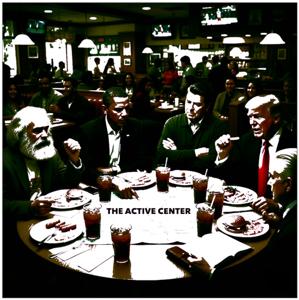


The history of the last century has been a titanic struggle between two irreconcilable visions of humanity. Traditionally, May Day has been used by various far-left, anti-American, movements to celebrate the "proletariat" and the rise of socialist ideals; however, for the citizens of the free world, this day should instead be a solemn occasion for observation and education. It should be a day spent understanding the hideous human conditions brought forward by Marxism and the regimes inspired by its tenets, a time to reflect on the staggering cost of trading individual sovereignty for state-mandated collectivism.
On one side stands the Classical Liberal tradition, which states that all men are created equal and endowed by their Creator with certain unalienable rights, chief among them Life, Liberty, and the pursuit of Happiness and Property. On the other stands the Marxist-Leninist project, an ideology that perceives the individual as a mere instrument of the state, to be molded, used, or discarded in the pursuit of a collective utopia. When we examine the ledger of the last 126 years, the evidence is not merely clear; it is harrowing.
The most fundamental right, the right to life, was the first casualty of the Marxist century. As the political scientist R.J. Rummel documented in his seminal studies on "Democide," absolute power is a primary cause of mass murder. Rummel’s work, alongside the monumental research of Stéphane Courtois and his team in The Black Book of Communism, reveals a global death toll that staggers the imagination, estimated between 85 million and 100 million victims. This was not the accidental byproduct of war, but a systematic campaign against humanity. In China alone, approximately 65 million lives were extinguished, many during the "Great Leap Forward," a period where the abolition of private property rights and forced collectivization transformed the nation into a graveyard. In the Soviet Union, some 20 million perished under the boot of a state that viewed the starvation of the Ukrainian peasantry, the Holodomor, as a necessary step in the liquidation of class enemies.
Yet, the carnage was not confined to the largest powers; the ideology’s rejection of individual worth was global in its application. In Cambodia, the Khmer Rouge’s attempt to enforce a radical agrarian collective resulted in the "Killing Fields," where between 1.5 and 2 million people—nearly a quarter of the entire population, were slaughtered or starved. North Korea’s regime, through decades of political purges, labor camps, and a policy-driven famine in the 1990s, claimed another 2 million lives. Across the Eastern Bloc, roughly one million dissidents and "class enemies" were executed in nations like Poland, Hungary, and Romania for the crime of desiring liberty. In Africa and Central Asia, the story was much the same: 1.7 million died in Ethiopia under the "Red Terror" and policy-induced famines of the Derg regime, while 1.5 million perished in Afghanistan following Marxist purges and the subsequent Soviet-Afghan War. Even in Latin America and Vietnam, hundreds of thousands more were sacrificed in re-education camps and guerrilla conflicts, proving that wherever the state sought to subsume the individual, the result was a rhythmic and predictable tally of death.
Liberty, too, was systematically dismantled, as the Marxist state asserted a total claim over the body and movement of the individual. This "enslavement" of entire populations was manifested through state-mandated labor systems and the draconian restriction of movement. Between 1930 and 1953, the Soviet Gulag system saw approximately 18 million people pass through its gates; at any given time, 2 million souls were held in forced labor camps, their lives consumed by the industrial and mining appetites of the USSR. In China, the "Laogai," explicitly meaning "reform through labor," has processed tens of millions of prisoners since 1949, with some estimates suggesting a peak population of 10 million simultaneous captives. This legacy of bondage persists in North Korea’s Kwalliso, where 80,000 to 120,000 people are currently held in political prison camps, performing forced manual labor in mines and farms. Beyond the camps, the "Iron Curtain" served as a broader instrument of enslavement for the 130 million people of the Eastern Bloc. By denying the right to emigrate, forcing the collectivization of land, and asserting absolute state control over all employment, these regimes proved that when the individual’s right to his own person is denied, the nation itself becomes a prison.
The Classical Liberal understands that property rights are not merely about material wealth; they are the essential safeguard of freedom. Without the right to own the fruits of one's labor, the incentive to innovate and the ability to flourish vanish. The economic data from the Maddison Project provides a stark "Great Divergence" that serves as a controlled experiment in human history, measuring the profound cost of Marxist policies by comparing socialist nations to their capitalist counterparts. We see this most clearly in the division of Germany; by 1990, East Germany, burdened by central planning, possessed a GDP per capita only 30% to 40% of its free-market counterpart in the West, despite both having started from a similar baseline. On the Korean peninsula, the contrast is even more divine: as of 2023, a South Korea that embraced property rights and trade is roughly 30 to 50 times wealthier than a North Korea where the state controls every grain of rice. Economists further estimate that had China adopted market reforms in 1950 rather than 1978, its GDP might have been four to five times larger by the turn of the century. The "lost GDP" of these "lost decades" represents a theft of human potential on a scale that is nearly impossible to calculate, representing trillions of dollars in missing medical advancements, infrastructure, and personal fulfillment.
Beyond direct executions, Marxist regimes experienced a "silent" death toll due to the failure of state-run universal healthcare systems to keep pace with global medical advancements. Historical data shows that while life expectancy in Marxist states improved post-WWII due to basic sanitation, it began to stagnate or decline in the 1960s and 70s, a phenomenon known as the "State Socialist Mortality Syndrome." While Western life expectancy continued to rise by approximately 4–5 years per decade, progress in the Eastern Bloc stalled, leading to a six-year gap between East and West European men by the late 1980s. This was a direct result of a lack of innovation; because healthcare was treated as a "consumption branch" rather than a productive sector, research and development lagged. The USSR and its satellites lacked modern diagnostic equipment, advanced oncology treatments, and cardiovascular medications common in the West. Furthermore, the promise of "free" care often existed only on paper, as access to high-quality care or innovative drugs frequently required informal payments or high-ranking party status. The opportunity cost of this denied progress is measured in the millions of avoidable deaths from cancer, heart disease, and infant mortality. That this was a failure of the system rather than the culture is proven by the aftermath: following the collapse of these regimes, life expectancy in countries like Slovakia and Poland surged, rising up to seven years in a single generation, correcting the "excess mortality" previously caused by state inefficiency.
The verdict of history is written in the blood of 85 to 100 million victims and the poverty of billions more across over 30 affected nations. The data provided by researchers like Courtois, Rummel, and the economic historians of the Maddison Project serves as a grim monument to the failure of the collectivist ideal, which in its pursuit of equality achieved only a 60% to 90% loss in economic growth relative to market peers and a historical aggregate of 40 to 60 million people enslaved in labor systems. It reinforces the timeless truth of the Classical Liberal tradition: that any system which seeks to "liberate" the collective by shackling the individual will inevitably end in tyranny, stagnation, and a 4 to 7-year decline in life expectancy compared to free peoples.
Therefore, May Day 2026 should be a day in which we in the free world observe, study, and reaffirm our allegiance to our current Constitutional Republic and social contract which protects our God-given rights to life, liberty, and the pursuit of happiness and property. The only path to true human flourishing lies in the protection of those unalienable rights that no government has the authority to grant, and no ideology has the right to take away.
God Bless America on this May Day 2026.
Hello, and thanks for listening to my podcast For years, my mission has been to foster a community around engagement, unique takes on interesting stories, and conversation. If you value what I do, please consider supporting me. I've started a GoFundMe to cover my production and operational costs, including those pesky social media fees. If you can’t contribute to my GoFundMe, I get it, but you can help me by subscribing to my account or sharing this particular story with friends and family that you think would appreciate it. Your contribution, big or small, helps me keep going. Thank you.
GO FUND ME
Being a political moderate in California often feels like watching a slow-motion train wreck from the center of the tracks. Nowhere is this more apparent than in our state’s water management, a system defined by northern abundance, southern demand, and a mid-state bureaucracy that seems designed to produce more lawsuits than liquid. For those of us who prioritize government efficiency and pragmatic results over ideological purity, the current state of affairs isn't just frustrating; it’s a failure of our basic social contract.
The core of the problem isn't a lack of water; it’s a lack of will and efficiency. We are told by Sacramento that we must let our lawns die and shower with buckets because we are in a "permanent drought." Yet, during heavy precipitation events, our agricultural leaders in the Central Valley watch in horror as 95% of the water collecting in the Sacramento-San Joaquin Delta is flushed directly into the sea. Farmers like Jason Giannelli point out that our massive pumps are often curtailed to 20% capacity due to regulatory frameworks. While protecting the Delta Smelt is a noble environmental goal, the centrist asks: Why haven't we modernized our infrastructure to allow for both environmental protection and water capture?
The answer, sadly, is a decade of bureaucratic stall tactics. In 2014, we, the voters, passed Proposition 1, authorizing $7.545 billion to fix this very problem. We were promised $2.7 billion in new storage, specifically for "public benefits" like Sites Reservoir. A decade later, not a single major surface reservoir has broken ground. We are stuck in a cycle of "conditional funding," endless environmental reviews, and a failure to secure non-state financing. For a centrist, this is the definition of government inefficiency: we have the money, we have the mandate, and we have the water during storm flushes, but we lack the ability to move a shovel.
This inefficiency has deadly consequences. The January 2025 Los Angeles wildfires were a wake-up call that "regional supply" means nothing if your local pipes are failing. While regional reservoirs were at healthy levels, hydrants in the Palisades Highlands ran dry. The local system collapsed under a pressure spike four times the normal rate. Adding insult to injury, the 117-million-gallon Santa Ynez Reservoir sat empty and offline for over a year just for a cover repair. Whether a full reservoir would have "changed the outcome" is debated by experts, but for the taxpayer, it is an inexcusable symbol of a system that is falling apart while we argue over the details.
The average citizen is then hit with the "Paradox of Conservation." We do our part, we conserve, we cut back, and our reward is a higher water bill. Because 80% of a utility's costs are fixed (infrastructure, debt, maintenance), lower usage means lower revenue, which necessitates rate hikes to keep the pipes from bursting. We are paying more for less, all while facing a $50 billion infrastructure investment gap that Sacramento seems content to bridge with more bond measures rather than streamlined project delivery.
So, where do we go? The conservative demands deregulation; the liberal demands "toilet-to-tap" and the dismantling of dams. The centrist demands efficiency.
We need a moderate, risk-sharing approach that stops viewing water as a zero-sum game between a fish and a farm. We need:
California is a state of immense wealth and natural bounty. It is time our government stopped managing scarcity and started managing our resources with the efficiency we pay for. We don't need more "perspectives," we need the water we were promised in 2014.
Hello, and thanks for listening to my podcast For years, my mission has been to foster a community around engagement, unique takes on interesting stories, and conversation. If you value what I do, please consider supporting me. I've started a GoFundMe to cover my production and operational costs, including those pesky social media fees. If you can’t contribute to my GoFundMe, I get it, but you can help me by subscribing to my account or sharing this particular story with friends and family that you think would appreciate it. Your contribution, big or small, helps me keep going. Thank you.
GO FUND ME
I have spent my entire life, as a child and now as a public school educator believing in a simple, steady trajectory: that the United States, though flawed, was moving toward the "Dream" of racial integration socially, politically, and economically. I am a member of Generation X, a generation that came of age when the integrationist ideal fell within our grasp. We didn't just hope for a post-racial society; we were building one in our classrooms, our sports teams, and our neighborhoods.
I was in kindergarten and early elementary school in the early 1970s and can remember the “anti-discrimination” lessons at school and in the commercials as we watched our afterschool afternoon cartoons. I remember one PSA in particular that showed a grandfather with his grandson fishing on a boat, and the grandson talking about his “Jewish friend,” and the grandfather telling his grandson that he is “prejudiced” because he is identifying his friend as Jewish rather than simply his friend. We were being lovingly raised and conditioned to believe in the virtues of meritocracy and colorblindness.
I can remember watching the Cincinnati Reds, the Big Red Machine, playing baseball in the middle to late ‘70s, and being fans of Pete Rose, Johnny Bench, Joe Morgan and Tony Perez. They were great baseball players playing for one of the premier baseball teams of all-time. Although we saw color, and knew of “race in America” to some degree, we didn’t see it as an identifier of being a member of an oppressor/oppressed social construct. We just saw great baseball players who got to the top of their profession based on merit and the right to equal opportunity, and as kids, we wanted to emulate them. Today, kids are being conditioned to acknowledge Pete Rose and Johnny Bench’s privilege and Joe Morgan and Tony Perez as under-represented members of a marginalized class. What a sad path today’s children are being led.
However, as I look at the federal indictment handed down against the Southern Poverty Law Center (SPLC) in April 2026, I am filled with a profound and sickening sense of betrayal. It appears that while we were working to put out the fires of ignorance, those who claimed to be our greatest allies were secretly holding the matches.
To understand my anger, you have to understand where we were. In the 70s, 80s, and 90s, the progress was palpable. We were moving away from the overt, systemic hatred of the past. Racism was becoming a social death sentence; it was retreating into the shadows because we, as a collective, had decided it had no place in our future.
I can remember watching the Cincinnati Reds, the Big Red Machine, playing baseball in the middle to late ‘70s, and being fans of Pete Rose, Johnny Bench, Joe Morgan and Tony Perez. They were great baseball players playing for one of the premier baseball teams of all-time. Although we saw color, and knew of “race in America” to some degree, we didn’t see it as an identifier of being a member of an oppressor/oppressed social construct. We just saw great baseball players who got to the top of their profession based on merit and the right to equal opportunity, and as kids, we wanted to emulate them. Today, kids are being conditioned to acknowledge Pete Rose and Johnny Bench’s privilege and Joe Morgan and Tony Perez as under-represented members of a marginalized class. What sad times.
In the ‘80s we were blessed to listen to the best era of American music. We listened to Phil Collins, Madonna, Whitney Houston, Tina Turner, Gloria Estefan, Boy George, Van Halen, Los Lobos, Michael Jackson, Prince and a list of other great, unique, and talented musicians and artists. White, black, latino, gay, and binary…we didn’t care. We liked the music, the looks, and we made those artists extremely wealthy by buying concert tickets, albums, and merchandise such as t-shirts. Although we could identify people by their skin color, gender, and sexual orientation, we just didn’t care, we loved their music, style, and creativity based on merit. That’s the foundation of “colorblindness.”
In the 90’s we saw Black excellence thrive from Michael Jordan leading the Chicago Bulls to the greatest win/loss record ever in the 1995-96 NBA season and eventually win 6-world championships to General Colin Powell lead and become a major voice for the United States military during and after the Gulf War. We witnessed Dr. Mae Jemison become the first Black American woman in space in 1992 aboard the Shuttle Endeavour. We bought tickets to the movies to watch Denzel Washington, Whoopi Goldberg, and Cuba Gooding Jr. win academy awards for their performances on the silver screen. By the 1990s, the number of affluent African-American families, defined as having incomes over $50,000, increased from 266,000 in 1967 to over 1 million by 1989. There are roughly 1.7–1.8 million Black millionaires today, this represents over 50-fold growth in the past four decades.
I could see the social, political, cultural, and economic success of Black America over the course of my lifetime, it was palpable. This social and cultural growth mindset was the foundation of my youth and the pillars upon which I built my adulthood.
As an educator, my mission was to ensure that every student, regardless of their background, saw themselves as an integral part of the American tapestry.
We were winning. But apparently, for the SPLC, "winning" was a threat to the bottom line.
The DOJ indictment, announced by Acting Attorney General Todd Blanche and FBI Director Kash Patel, reveals a gutless betrayal of the Civil Rights mission. The organization is charged with 11 counts of wire fraud, bank fraud, and money laundering, not because they were fighting hate, but because they were allegedly funding it to stoke the fears of donors.
The specifics are enough to make any integrationist fume:
The SPLC didn’t just monitor the fire in Charlottesville; the indictment suggests they helped pay for the wood and the kerosene. They needed a spectacle of hate to justify their "Hate Map" and to keep the millions flowing from terrified citizens and corporations like Apple.
The economic impact of this deception is staggering. In the wake of Charlottesville, an event the SPLC allegedly helped facilitate through its informants, donations skyrocketed. Their endowment ballooned to over $730 million. This is blood money. It is money taken from people who genuinely wanted to help, only to have it used to pay the salaries of Klansmen and neo-Nazis through shell companies like "Fox Photography" and "Rare Books Warehouse."
This isn't just financial fraud; it is a moral crime against the progress of this nation. By manufacturing the narrative that the United States is an "inherently racist nation," these activists have undone decades of hard-won social cohesion. They have convinced a new generation that the Dream is a lie, all to ensure that their "partisan smear machine" remains profitable.
As someone who has stood at the front of a classroom for decades trying to erase the lines that divide us, I demand that those responsible be held to account. The names in the indictment are just the beginning. We must expose every far-left "activist" who chose a paycheck over the peace of our communities.
The march toward the Dream is unsteady enough without supposed allies tripping us from behind. To stoke the fires of racial tension for financial gain is a gutless, hollow expression of greed. The rise of far-left critical theory and its insular and Marxist inspired anti-Americanism must be challenged on the merits. We must return to the path of true integration and cast out the far-left social arsonists who have profited from our pain.
Hello, and thanks for listening to my podcast For years, my mission has been to foster a community around engagement, unique takes on interesting stories, and conversation. If you value what I do, please consider supporting me. I've started a GoFundMe to cover my production and operational costs, including those pesky social media fees. If you can’t contribute to my GoFundMe, I get it, but you can help me by subscribing to my account or sharing this particular story with friends and family that you think would appreciate it. Your contribution, big or small, helps me keep going. Thank you.
GO FUND ME
The California Fast Food Council, established through the landmark Assembly Bill 1228 (AB 1228) and signed into law in late 2023, represents a significant shift in the state's approach to labor regulation. At the heart of this legislative experiment is the mandate for a $20-per-hour minimum wage for fast-food workers—a rate that took effect on April 1, 2024, and stands significantly higher than the standard state minimum wage. From a centrist perspective, the creation of this council and the $20 wage floor reflect a direct response to the rising cost of living and a recognition of the sector’s large, often vulnerable workforce. However, it also raises immediate and difficult questions about market intervention: how can the state improve worker livelihoods without triggering a cascade of unintended economic consequences, such as accelerated automation, reduced operating hours, or price hikes that disproportionately affect low-income consumers? By granting the council the power to adjust wages and workplace standards for an entire industry, California has created a powerful regulatory body that must now navigate the delicate balance between social equity and the economic vitality of a sector characterized by high-volume, low-margin operations.
The council's mandate is significant and multifaceted. It is charged with setting standards for wages, working conditions, and training within the fast-food industry, including the authority to adjust the minimum wage annually by the lesser of 3.5% or the annual change in the Consumer Price Index (CPI). As the council looks toward 2026, its agenda is increasingly focused on the sustainability of the initial $20-per-hour floor. A primary item for 2026 is the deliberation over a potential cost-of-living adjustment (COLA) that could see the wage rise closer to $21 per hour to account for persistent inflation that has eroded the purchasing power of the 2024 gains. Beyond wages, the 2026 roadmap includes drafting new sector-specific health and safety standards, particularly concerning workplace violence prevention and heat illness protocols—issues that labor advocates argue are unique to the high-stress, fast-paced environment of quick-service restaurants. This level of intervention in the market is not without controversy. While advocates argue it is necessary to protect workers and ensure fair labor practices, others express concern about the cumulative burden of these regulations on small-scale franchisees who are already grappling with increased ingredient and energy costs.
The composition of the Fast Food Council is a key factor in this debate. The council includes representatives from various stakeholders: business owners, workers, and union representatives, along with a neutral chairperson. This structure is intended to ensure that decisions are informed by a range of perspectives.
The current voting members of the council and their political affiliations (where known) include:
The inclusion of non-voting members from agencies like the Governor’s Office of Business and Economic Development (GO-Biz) and the Department of Industrial Relations (DIR) further adds to the complexity of the council's deliberations.
The process by which individuals become members of the council is entirely centralized through the executive branch, specifically through gubernatorial appointment by Governor Gavin Newsom. While AB 1228 mandates that the council be composed of specific interest groups, including employees, advocates, and franchisees, the Governor retains the ultimate authority to select which specific individuals fill those seats. This centralization has drawn sharp criticism from fiscal conservatives and political moderates, who point to the fact that nearly every voting member with a known party affiliation is a registered Democrat. Critics argue that by failing to appoint a single fiscal conservative or a registered Republican to the board, the Governor has created an ideological echo chamber. There is a growing concern that without moderate voices to push back against aggressive labor proposals, the council is inherently biased toward the left or even the far-left. Skeptics maintain that this "one-sided" recruitment ensures the council acts as a rubber stamp for organized labor's agenda rather than serving as a truly neutral body capable of weighing the economic risks of rapid wage inflation and regulatory expansion.
A crucial aspect of the Fast Food Council is the system of checks and balances designed to prevent any single interest from dominating its actions. These include balanced representation, a legislative framework, public meetings, political oversight, legal challenges, and limitations of authority. However, many centrists and industry analysts argue that these supposed safeguards have already failed to prevent a "worst-case scenario" for the state's most vulnerable employees. Since the legislation was fast-tracked, reports have surfaced indicating that the industry has seen the loss of approximately 18,000 jobs as businesses have struggled to absorb the sudden 25% increase in labor costs. For working-class and low-income families, this displacement negates the theoretical benefits of a higher wage floor. Critics point out that the legislative framework failed to include "off-ramps" or economic triggers that would pause wage hikes if job losses reached a certain threshold. Instead of acting as a moderating force, the oversight mechanisms appeared unable to address the reality of franchisees cutting staff, reducing hours to part-time status, or closing locations entirely to remain solvent. This job contraction suggests that the "checks" in place were insufficient to protect the very individuals the law was intended to help.
The effectiveness of these checks and balances remains a subject of intense, ongoing debate characterized by fundamentally different views on economic justice and market reality. On one side, labor advocates and progressive members of the council argue that any initial job losses are a temporary "correction" in a sector that has long relied on exploited labor; they contend that a more stable, better-paid workforce will ultimately lead to higher productivity and lower turnover. On the other side, business groups and centrist economists point to a "decoupling" of California’s fast-food prices from the rest of the nation as proof of the council's distorting effect. They argue that the council ignores the nuances of the franchise model, where individual owners, often immigrants or multi-generational families, cannot simply "absorb" costs like a multinational corporation. This debate is further complicated by disagreements over data: while the DIR tracks raw employment numbers, industry skeptics argue these figures fail to capture the thousands of "ghost" jobs, shifts that were never scheduled or positions left unfilled through attrition. This lack of consensus on the actual state of the industry has led to a breakdown in trust, with critics viewing the council's public hearings as mere formalities for pre-determined, left-leaning policy outcomes.
Ultimately, the California Fast Food Council stands as a polarizing case study in modern labor policy. While the intentions behind AB 1228 were rooted in the desire to lift workers out of poverty, the real-world results have validated the cautionary maxim of economist Milton Friedman, who famously argued that "one of the great mistakes is to judge policies and programs by their intentions rather than their results." In the case of the California fast-food industry, the results suggest a growing disconnect between intent and impact. The reported loss of 18,000 jobs represents a significant blow to the very working-class and low-income demographics the policy aimed to support. Furthermore, the current state of the industry is defined by soaring prices for consumers and a pervasive "shrinking" of opportunity for those who remain employed, as hours are cut and responsibilities are consolidated to offset the $20-per-hour floor. For a centrist observer, the success of the council should not be measured by the moral weight of its goals, but by its ability to reverse these negative trends. Unless the council can address the reality of job displacement and the burden on small franchisees, it risks becoming a cautionary tale of how top-down market interventions can inadvertently harm the economic vitality and stability of the communities they were designed to serve.
Hello, and thanks for listening to my podcast For years, my mission has been to foster a community around engagement, unique takes on interesting stories, and conversation. If you value what I do, please consider supporting me. I've started a GoFundMe to cover my production and operational costs, including those pesky social media fees. If you can’t contribute to my GoFundMe, I get it, but you can help me by subscribing to my account or sharing this particular story with friends and family that you think would appreciate it. Your contribution, big or small, helps me keep going. Thank you.
GO FUND ME
In April 2026, the United States Department of Justice (DOJ) unsealed a federal indictment against the Southern Poverty Law Center (SPLC), charging the organization with 11 counts of wire fraud, bank fraud, and conspiracy to commit money laundering. The central allegation is that the SPLC defrauded donors by secretly funneling over $3 million to the very extremist leaders and organizations it claimed to be dismantling, including significant funding provided to a primary organizer of the 2017 "Unite the Right" rally in Charlottesville.
The indictment highlights a significant ideological shift within the SPLC, particularly following the 2019 firing of co-founder Morris Dees. Under subsequent leadership, including Interim CEO Bryan Fair and recent directors of the Intelligence Project, the organization has transitioned from its original mission of civil rights litigation into what critics and the DOJ describe as a "partisan smear machine."
The DOJ and congressional oversight committees have identified several key areas where the SPLC’s radical shift has manifested:
The indictment alleges that the SPLC actively sought to monopolize the "fight against racism" by marginalizing and "canceling" anyone outside of its radical far-left orbit:
The charges were announced by Acting Attorney General Todd Blanche and FBI Director Kash Patel. While the SPLC as a corporate entity is the primary defendant, the indictment references several high-level internal figures and external informants:
The DOJ alleges that between 2014 and 2023, the SPLC used donor funds to pay informants and "field sources" (the "Fs") through shell companies such as "Fox Photography" and "Rare Books Warehouse."
Entity/Event
Alleged SPLC Payment
Timeframe
National Alliance (Informant F-9)
Over $1,000,000
2014–2023
Unite the Right Organizer (Informant F-37)
Over $270,000
2015–2023
Aryan Nations Affiliate
Over $300,000
2014–2020
KKK Members (Former)
Over $73,000
Total Period
American Front President
$19,000
Total Period
The indictment provides a timeline suggesting that the SPLC’s financial involvement in Charlottesville was not merely passive observation, but a catalyst for the violence that resulted in the death of Heather Heyer.
The federal indictment argues the SPLC is legally culpable for the violence and subsequent death through several mechanisms:
The SPLC has vowed to "vigorously defend" itself, claiming the charges are politically motivated. However, the details regarding the funding of Charlottesville organizers suggest a deep misalignment between the organization's public mission and its covert operations, raising fundamental questions about the commodification of racial tension and the organization's direct role in a tragedy that claimed an innocent life.
Hello, and thanks for listening to my podcast For years, my mission has been to foster a community around engagement, unique takes on interesting stories, and conversation. If you value what I do, please consider supporting me. I've started a GoFundMe to cover my production and operational costs, including those pesky social media fees. If you can’t contribute to my GoFundMe, I get it, but you can help me by subscribing to my account or sharing this particular story with friends and family that you think would appreciate it. Your contribution, big or small, helps me keep going. Thank you.
GO FUND ME
In the popular imagination, California’s water crisis is often reduced to a binary struggle: a choice between the needs of the environment and the survival of the agricultural industry. This tension is frequently distilled into provocative statistics, most notably the claim that the state "wastes" 80% of the water it catches by allowing it to flow into the Pacific Ocean. However, beneath this rhetoric lies a deeply complex reality defined by geography, aging infrastructure, and a legal landscape that struggles to keep pace with a changing climate.
The perception of "waste" is the first hurdle in understanding the state’s distribution system. In reality, approximately 50% of California’s total water supply is legally and biologically mandated for environmental flows. These are not merely aesthetic allocations; they serve critical functions. Instream flows support endangered species like the Delta Smelt and Chinook Salmon, while massive volumes are required to push back saltwater intrusion from the Pacific. Without this constant pressure of fresh water, the Sacramento-San Joaquin Delta, the hub of the state’s water system, would become too saline to support the very farms and cities that rely on its pumps.
Of the water that is successfully diverted for human use, agriculture accounts for nearly 80%, with urban centers consuming the remaining 20%. While urban use has steadily decreased due to successful conservation efforts, agriculture remains the primary consumer, fueling a Central Valley that is globally unmatched in productivity but politically sensitive regarding its massive water footprint.
The most heated point of contention today is the "95% vs. 50%" paradox. Central Valley farmers frequently observe that during massive storm events, the Delta pumps are restricted to just 20% of their operational capacity, resulting in 95% of that specific "pulse flow" being flushed into the sea. Meanwhile, the state defends its actions by citing a long-term annual average of 50% environmental allocation. Both groups are technically correct, but they are looking at different windows of time. The state’s figure represents a yearly balance across all conditions, while the farmers’ figure captures the system's inability to seize moments of sudden, overwhelming abundance.
This disconnect highlights the true systemic failure: California’s infrastructure is optimized for a climate that no longer exists. The state lacks the storage and conveyance capacity, such as modern reservoirs and groundwater recharge sites, to capture short-duration, high-intensity storms. Consequently, when a storm hits during a critical regulatory window, such as a salmon migration, the water cannot be legally or physically diverted, and it must be allowed to flow to the ocean.
These technical failures inevitably bleed into the political arena. In 2020, the Trump administration attempted to shift the balance through a revised Biological Opinion (BiOp), which aimed to ease pumping restrictions and increase deliveries to the south. This federal intervention was met with immediate resistance; the State of California and various environmental groups filed lawsuits to block the implementation, arguing that the new rules violated the Endangered Species Act. The resulting legal gridlock meant that the older, more protective rules remained in place, effectively decreasing the water available for human diversion compared to the federal government's original intent.
The debate over California’s water distribution is a symptom of an inflexible system pushed to its limits. Whether through "intentional regulatory flushing" or political litigation, the outcome remains the same: a cycle of scarcity that persists even in times of rain. Solving this crisis will require more than just a victory in court or a change in administration; it will require a fundamental modernization of infrastructure to capture the volatile extremes of a 21st-century climate.
Hello, and thanks for listening to my podcast For years, my mission has been to foster a community around engagement, unique takes on interesting stories, and conversation. If you value what I do, please consider supporting me. I've started a GoFundMe to cover my production and operational costs, including those pesky social media fees. If you can’t contribute to my GoFundMe, I get it, but you can help me by subscribing to my account or sharing this particular story with friends and family that you think would appreciate it. Your contribution, big or small, helps me keep going. Thank you.
GO FUND ME
Moderator: Welcome to our debate on California's fiscal policy. The state boasts the highest income, sales, and gas taxes in the nation, yet faces an exodus of residents and businesses. We will address two questions: First, are these high taxes hindering economic expansion and deterring young families? Second, should Proposition 13, the bedrock of California property law, be repealed or reformed?
To understand the arguments presented, it is essential to know the fundamental philosophies driving each participant's view on taxation, government spending, and capital:
DONALD TRUMP (Business Magnate, Populist Conservative): Look, this is a very simple thing. California is a disaster, an absolute disgrace. The highest taxes—highest!—in the country. They’re driving out the job creators, the smart people, the people who actually pay for everything. Businesses are leaving for Texas and Florida, where the taxes are low and the regulation is minimal. When I was in charge, we cut taxes tremendously, and the economy boomed. Newsom and Obama, they want to take your money and spend it on things nobody needs. If you want young families to move to California, you don't tax them out of a home; you make it possible to hire people, build things, and keep your hard-earned money. It's common sense. It's a tremendous mistake.
GAVIN NEWSOM (Current Governor of California, Progressive Democrat): Mr. Trump, with all respect, you mistake correlation for causation. People are leaving California primarily because of the cost of housing—a crisis fueled by decades of under-building—not because of the top-tier income tax bracket, which only affects the wealthiest 1% of earners who, by the way, are driving the world's 5th largest economy. Our high revenues are investments. They fund the world-class public education, the climate solutions, and the safety nets that make California the global center of innovation and optimism. What you call a "disaster," I call a commitment to shared prosperity. You want Texas wages for California services, and that math simply doesn't add up.
RONALD REAGAN (40th U.S. President, Supply-Side Conservative): Governor Newsom, what you call "investment," I call “confiscation” and what I see is as the relentless expansion of the state apparatus. High marginal tax rates—which California specializes in—do not just affect the "wealthy." They affect the entrepreneur who decides not to take a risk, the doctor who decides not to work extra hours, and the engineer who relocates their intellectual capital to a state that respects their effort. Taxes are not merely a means of revenue for the government; they are a penalty on worker production. We saw in the 1970s that high taxes did not lead to prosperity; they led to stagnation and flight. The best social program, as I always said, is a job, and California's current tax regime is discouraging the very creation of those jobs.
BARACK OBAMA (44th U.S. President, Progressive Centrist): I appreciate the historical context, President Reagan, but we have to recognize the world has changed. The structural issues in California—the lack of affordable housing, the infrastructure needs, the legacy of inequality—demand robust, collective investment. Our tax system, particularly the income tax, is progressive. It ensures that those who have benefited most from the innovative ecosystem that California has fostered contribute their fair share to maintaining it. The debate isn't whether taxes matter; it's what we get for those taxes. We cannot fix homelessness, climate change, or crumbling infrastructure on a budget designed for 1978. Young families want great schools, safe neighborhoods, and climate resilience, and those things are funded by revenue.
ADAM SMITH (Classical Economist, Author of The Wealth of Nations):
Gentlemen, we must look to first principles. The high taxes currently levied in California violate my second and third maxims: certainty and convenience. When taxes are so high that they actively induce the emigration of capital and labor, they become inefficient—they destroy the very source of the revenue they seek to draw upon. The state's appetite for revenue acts as a great discouragement to industry. Further, the complexity and high rates in the income and sales tax structure distort the natural direction of capital flow. A simple, low, and uniform tax, proportionate to the income a man enjoys under the protection of the State, is always preferable to this dizzying array of punitive levies.
KARL MARX (Communist Philosopher, Author of Das Kapital): This entire conversation is a farce. High taxes, low taxes—it is all mere window dressing on the inherent exploitation of the capitalist system. Mr. Trump wishes to lower taxes so the bourgeois can retain a larger share of the surplus value extracted from the workers. Governor Newsom wishes to raise taxes to fund superficial reforms that pacify the masses but leave the fundamental structure of capital and wage-slavery intact. The worker's meager income is perpetually consumed by rent and commodity prices, regardless of the state's tax rate. The problem is not the rate of the tax; the problem is the system of private ownership that allows one class to extract the wealth created by another. Abolish capital, and this debate on tax percentages becomes immediately irrelevant.
Moderator: Proposition 13 caps property tax at 1% of the purchase price and limits annual increases to 2% until the property is resold. Opponents argue it starves local government and disproportionately benefits long-term commercial owners. Proponents call it the indispensable shield for homeowners. Should Prop 13 be repealed or reformed?
RONALD REAGAN: Proposition 13 is the great expression of the taxpayer revolt against an overreaching government. It is more than a tax policy; it is a declaration of economic freedom. It ensures that no Californian—especially the elderly and those on fixed incomes—will ever be taxed out of their homes by rising property values. To repeal it is to invite the financial chaos and government rapaciousness of the 1970s back into our lives. Any attempt to introduce a "split roll" to raise business taxes is a backdoor repeal that will simply result in higher costs passed directly on to consumers and struggling businesses. Protect Prop 13 at all costs.
GAVIN NEWSOM: Prop 13 has become an engine of inequality that starves our communities. It has created a fundamental imbalance where a business that purchased its property in 1980 is paying a fraction of the property tax of a new, small business that purchased property last year. This is not fair, and it starves local governments and schools. I support a targeted, commercial-only reform—a "split roll"—that preserves the constitutional protections for homeowners and family farms, while requiring large corporations to pay their fair share based on current market value. We must reclaim the local control and funding needed to address our infrastructure and educational deficits.
DONALD TRUMP: A "split roll" is a bad, bad idea. It's a socialist attack on business stability. These commercial properties are the engines of the California economy! You raise their taxes, they don't just "pass the cost" on—they fire people, they move headquarters, they stop investing. It’s a direct tax on jobs. Prop 13 protects the long-term stability needed for big investments. Newsom’s plan is just another way to get his hands on money so he can waste it. Keep Prop 13 intact; it’s a tremendous deal for America, and it keeps some stability in this crazy state. And believe me, if they eliminate Prop 13, you'll see even less housing. The huge tax hikes on land and new commercial development will kill the incentive to build the apartments and homes California desperately needs.
BARACK OBAMA: The structural rigidity created by Prop 13 is undeniable. When you lock in property assessments for decades, you create a system that is profoundly unfair to newcomers, businesses, and, most importantly, the public education system. The revenue base for our schools, which should be local and robust, has been held hostage for fifty years. Reforming the commercial property component is a pragmatic, centrist solution. It respects the spirit of protecting the long-term homeowner while restoring the necessary financial capacity for local communities to invest in the next generation. It is about equity and restoring democracy to local finance.
ADAM SMITH (Classical Economist, Author of The Wealth of Nations): From a purely economic perspective, Proposition 13 is an anomaly—a distortion that confuses the market. By decoupling the property tax assessment from the property's true market value, it has artificially constrained supply and rewarded incumbency over efficiency. It subsidizes long-term holders, whether they be homeowners or large corporations, by punishing new entrants and new investment. The ideal tax is neutral, treating all capital equally. Proposition 13 is the very definition of a non-neutral, market-distorting intervention. It must be reformed to align property assessments with market realities, restoring efficiency and fairness to the tax base.
KARL MARX: The debate over Proposition 13 is the perfect illustration of how the ruling class maintains its control. This "revolt" was not about the worker; it was about the property-owning bourgeois protecting their accumulated capital from the state's minor attempt at redistribution. Whether the assessment is based on 1975 values or current values, the property itself remains a tool for the exploitation of the landless proletariat, who must pay exorbitant rent to the owners whom Prop 13 protects. The repeal or reform of Prop 13 merely shuffles the deck chairs on the sinking ship of capitalism. The true solution is the collective ownership of all land and property, eliminating both the rentier and the need for a property tax entirely.
Moderator: A fascinating look into the fundamental ideological chasm on the role of government and capital in California's economy. Thank you, gentlemen.
End of Debate
Hello, and thanks for listening to my podcast For years, my mission has been to foster a community around engagement, unique takes on interesting stories, and conversation. If you value what I do, please consider supporting me. I've started a GoFundMe to cover my production and operational costs, including those pesky social media fees. If you can’t contribute to my GoFundMe, I get it, but you can help me by subscribing to my account or sharing this particular story with friends and family that you think would appreciate it. Your contribution, big or small, helps me keep going. Thank you.
GO FUND ME
Vehicle Purchase Price: $25,000 (New Car)
This document breaks down the estimated sales tax and first-year registration fees for a $25,000 vehicle purchased in Texas compared to California.
Sales tax is calculated based on the state rate plus any applicable local (county/city) taxes.
State
State Sales Tax Rate
Max Combined Sales Tax Rate (State + Local)
Tax on $25,000 (State Only)
Tax on $25,000 (Max Combined)
Estimated Sales Tax Range
Texas
6.25%
Up to 8.25%
$1,562.50
$2,062.50
$1,562.50 – $2,062.50
California
7.25%
Up to ~10.50%
$1,812.50
$2,625.00
$1,812.50 – $2,625.00
Registration fees are comprised of fixed fees (base, CHP, etc.) and variable fees (based on vehicle value).
Texas fees are generally fixed or based on weight class, not vehicle value.
Fee Component
Amount
Notes
Base Registration Fee
$50.75
For cars and light trucks.
Local Fee (Varies by County)
Up to $20.00
Fee set by county commissioners.
Processing/Handling Fee
$4.75
State mandated.
Inspection Replacement Fee
Varies
Initial fee for new car (two-year inspection) may apply.
Estimated Total Range
~$70 – $80+
The final amount depends heavily on county-specific fees.
California fees are significantly influenced by the vehicle's value.
Fee Component
Amount for $25,000 Car
Notes
Base Registration Fee
$65.00
Standard fee.
Vehicle License Fee (VLF)
$162.50
Calculated at 0.65% of the vehicle's value.
Transportation Improvement Fee (TIF)
$65.00 to $129.00
Tiered fee based on vehicle value.
California Highway Patrol (CHP) Fee
~$29.00
Supports CHP operations.
County/District Fees
Varies (e.g., $7 to $50+)
Additional local fees for air quality/transit.
Estimated Total Range
$250 – $480+
The actual cost will be higher than Texas' due to the value-based fees (VLF and TIF).
Hello, and thanks for listening to my podcast For years, my mission has been to foster a community around engagement, unique takes on interesting stories, and conversation. If you value what I do, please consider supporting me. I've started a GoFundMe to cover my production and operational costs, including those pesky social media fees. If you can’t contribute to my GoFundMe, I get it, but you can help me by subscribing to my account or sharing this particular story with friends and family that you think would appreciate it. Your contribution, big or small, helps me keep going. Thank you.
GO FUND ME
Text Generated by Gemini Ai and Guided by David Sepe
Moderator: Welcome to this historic debate on economic philosophy. Today, we contrast two powerful approaches to prosperity and growth: Supply-Side Economics, championed by former President Ronald Reagan, and Keynesian Economics, favored by former President Barack Obama.
Ronald Reagan:
"Governor Obama, it’s good to be here. My economic philosophy, often called 'Reaganomics,' was simple: the government is not the solution to our problem; the government is the problem. We came into office facing 'stagflation,' high inflation and high unemployment. The tired, big-spending Keynesian model had failed us.
We answered with Supply-Side policies: bold tax cuts for individuals and businesses, deregulation, and restrained growth in non-defense spending. The results? From 1982 to 1990, the economy experienced its longest peacetime expansion on record. We created over 20 million jobs, inflation was brought to its knees, and, yes, we cut tax rates dramatically. This was the 'high tide' that lifted all boats. When you reduce the tax burden, you incentivize work, saving, and investment. This increased supply of goods and services is what creates real, sustainable growth and rising wages for all Americans. Furthermore, our necessary investment in a strong military, government spending, yes, but vital, put unsupportable pressure on the Soviet Union, leading to its eventual, peaceful dissolution and securing a generation of global stability. That was an investment that paid the highest possible dividend."
Barack Obama:
"President Reagan, I respect your legacy and your optimism, but the history of our economy, especially in times of crisis, shows the limits, and dangers, of your 'trickle-down' theory. I took office in 2009 facing the worst economic crisis since the Great Depression. The financial system was frozen, and unemployment was soaring. Waiting for tax cuts for the wealthy to slowly 'trickle down' to the struggling middle class was not an option.
We needed immediate, aggressive action to spur demand, the core principle of Keynesian economics. My administration implemented the American Recovery and Reinvestment Act, a vital stimulus package focused on tax relief, unemployment benefits, and necessary public investments in infrastructure and clean energy. Was it government spending? Absolutely. Did it work? It stopped the free-fall, saved the auto industry, and laid the groundwork for the longest streak of private sector job creation in American history. We created nearly 16 million jobs and cut the unemployment rate in half. The idea that a massive tax cut for corporations is the most effective way to help a waitress in Cleveland or a construction worker in California is, frankly, a fundamentally flawed theory that has not worked for the middle class over the past few decades. Prosperity is built from the middle-out, not the top-down."
Ronald Reagan:
"Governor, you call it 'trickle-down,' but that is a pejorative invented by our opponents. I call it common sense and economic reality. When you cut the marginal income tax rate from 70% to 28%, as we did, you don't just help 'the wealthy.' You unleash the entrepreneurial spirit of America. The small-business owner expands. The inventor takes a risk. New businesses are formed, and they need workers, creating new jobs, which drives down unemployment. This competition for labor is precisely what forces wages up for all Americans, including the middle class. In fact, I would argue that my tax cuts didn't just help the middle class, they actively grew it. Studies show that between 1982 and 1989, nearly half of the jobs created were in middle-and high-paying sectors, enabling millions of working-class families to move into higher income brackets. We saw poverty rates fall dramatically from their early 80s peaks, demonstrating true upward economic mobility enabled by growth and incentive.
The dramatic drop in inflation under my watch, from double digits down to around 4%, was a massive benefit to every single working family, protecting the value of their paycheck. The tax cuts, coupled with deregulation, didn't just enrich the few; they laid the groundwork for a massive expansion of prosperity that benefited most demographics in this country. A growing pie means a larger slice for everyone."
Barack Obama:
"President Reagan, your tax cuts did coincide with a strong recovery, but the evidence is now undeniable: they also marked the beginning of decades of rising income inequality, where the gains went overwhelmingly to the very top. The 'high tide' was great for the yachts, but it barely wet the rowboats.
My fundamental disagreement with your model is this: in a recession, a tax cut for a millionaire is likely to go into savings or overseas investment. A dollar spent on an unemployed worker's family through extended benefits, or on a local road repair project, is a dollar that is immediately injected into the economy. That is the necessary demand-side stimulus that puts people back to work right now.
Furthermore, we cannot sustain an economy purely on supply-side tax cuts while starving the public investments that create long-term supply, investments in education, scientific research, and infrastructure. Your policies led to a massive increase in the national debt, an imbalance we had to address even as we fought the Great Recession. I believe in an economy where everyone plays by the same rules, and where we invest together in the ladders of opportunity for the next generation. That is a better path to shared and lasting prosperity than waiting for crumbs to fall from the top table."
Ronald Reagan:
"Let me be clear, Governor. I am not against all government spending, only wasteful spending. The central fight of my time was against the 'Evil Empire,' the Soviet Union. My administration recognized that winning the Cold War required strength, not just diplomacy. We launched the largest peacetime military buildup in American history.
This massive expenditure, a key element of government spending, was a strategic economic weapon. It forced a command economy, already crippled by socialist planning, to try and keep pace with a free-market power. The Soviet system could not bear that burden. So, yes, we used the engine of American government spending on defense to create a technological and economic challenge that proved fatal to the Soviet totalitarian state. Furthermore, this strategic spending, especially in research and development, often has vast commercial implications. Much of the digital technology we recognize today, including the foundational research that led to the Internet and cell phones, emerged from these necessary military and defense investments, proving that the government can indeed be the catalyst for technological breakthroughs that ultimately benefit every American consumer and entrepreneur. This investment in freedom was a profound success, proving that when government spending is purposeful, strategic, and focused on its core constitutional duties, like national defense, it can be an overwhelmingly positive force in the world."
Also, as it relates to your misguided belief that the “high tide” was only great for the yachts, the reality is that when a millionaire uses the extra capital from a tax cut to purchase a yacht, that demand doesn't simply vanish. That money directly creates thousands of skilled jobs in boatyards, the welders, the plumbers, the electricians, the engine mechanics, and the painters. These are all high-value, livable-wage trades that benefit working families immediately.
Barack Obama:
"President, you are right that strategic spending is important. But the spending that defined my time was a necessary national defense against economic collapse. The Great Recession was an immediate crisis caused by a lack of regulation and a bubble built on risky financial behavior.
My administration's response, a fundamentally Keynesian one. was precisely what the moment demanded. The stimulus was not just 'spending'; it was a targeted injection of capital to prevent total economic failure. We followed that with the Dodd-Frank reforms to install new 'rules of the road' for Wall Street, preventing the next crisis. And in the face of deep Republican opposition to further job creation measures, we pursued policies that still fostered consistent job growth.
The key difference, sir, is that my plan was not about cutting taxes for the wealthy and hoping for the best. It was about actively stabilizing a broken system, investing in the long-term competitiveness of our people and infrastructure, and ensuring that the rewards of recovery were felt by the middle class. The result was a dramatic recovery in the job market, a restored auto industry, and millions of Americans gaining health insurance. That success, built from the middle out, proves that a more balanced, demand-side approach is not only necessary during a crisis but is the best way to secure a future of broadly shared American prosperity."
Moderator: President Reagan and President Obama, thank you both for this insightful debate on the core principles that have shaped the American economy.
Hello, and thanks for listening to my podcast For years, my mission has been to foster a community around engagement, unique takes on interesting stories, and conversation. If you value what I do, please consider supporting me. I've started a GoFundMe to cover my production and operational costs, including those pesky social media fees. If you can’t contribute to my GoFundMe, I get it, but you can help me by subscribing to my account or sharing this particular story with friends and family that you think would appreciate it. Your contribution, big or small, helps me keep going. Thank you.
GO FUND ME
The transformation from a state of managed chaos to one of restored order is rarely quiet, and the current efforts to recover the "lost" children of the previous administration are no exception. For those of us who value the rule of law and the fundamental duty of a sovereign nation to protect the vulnerable, the recent progress made by the Trump administration since January 2025 is a welcome correction to years of systemic, almost calculated, negligence. Since the inauguration of President Trump in January 2025, the Department of Homeland Security (DHS) and Immigration and Customs Enforcement (ICE) have prioritized the location of unaccompanied migrant children (UACs) who were unaccounted for during the Biden-Harris administration. Yet, the successes of the current Trump administration is being ignored by the mainstream media.
The statistics are as staggering as they are sobering. A 2024 DHS Office of Inspector General (OIG) report and subsequent congressional testimony established that during the previous administration, approximately 320,000 to 450,000 children were "unaccounted for" within the U.S. interior. We began 2025 facing a humanitarian crisis of the Biden-Harris administration's making: a "lost" population of unaccompanied migrant children (UACs) who had effectively vanished into the American interior. Under the Biden-Harris "open border" framework, the southern border was transformed into a conveyor belt for cartels, with the Border Patrol forced into the role of a government-funded transit service for human traffickers. These children were often released to "unvetted" sponsors due to policies prioritizing processing speed over security. Data shows that roughly 11% of sponsors (over 11,000 cases) received no background checks or fingerprinting. By the time President Trump returned to office, over 291,000 of these children had never even been issued a court date, making them "ghosts" in a system that had ostensibly promised them sanctuary but delivered them to unvetted sponsors and labor exploiters.
Since the inauguration, in January of 2025, the shift in momentum has been palpable. Under Secretary Kristi Noem and Border Czar Tom Homan, federal agents have moved from rhetoric to results. By July 2025, 13,000 children had been recovered. By November of 2025, 24,400 children confirmed being located in-person. As of January 2026, over 145,000 of these missing children have been located and accounted for. This was not achieved through passive paperwork, but through grit and high-intensity enforcement. Operations like Metro Surge in Minnesota alone located 3,364 children, while Operation Northern Lights rescued dozens more across the Southeast, some as young as 18 months old. The HHS Backlog Initiative has cleared 65,000 ignored reports, yielding over 4,000 investigative leads into the dark reality of human trafficking.
The administration has shifted focus toward Transnational Criminal Organizations (TCOs) like Tren de Aragua (TdA), which utilized the "open border" period to establish human trafficking cells in major U.S. cities. It is here that the mainstream media’s silence is most deafening.
While newsrooms spent years ignoring the warnings of whistleblowers regarding unvetted NGOs and the exploitation of the UAC program, they now remain remarkably tepid in reporting the liberation of these children. There is a profound lack of objective coverage regarding the reality of the "Worst of the Worst" (WOW) list, a database of the most dangerous criminal aliens, including pedophiles and gang leaders from organizations like Tren de Aragua (TdA) and MS-13, who are finally being purged from our communities.
Federal authorities have publicly cited the following individuals for their roles in child exploitation and trafficking: Kentakumar "Ken" Chaudhari & Rashmi Ajit Samani, arrested in August 2025 for operating a trafficking ring involving 10 children across Omaha, Nebraska. Luis Jesus Acosta Gutierrez, a suspected member of Tren de Aragua, was arrested in December 2025 after resisting federal agents; involved in smuggling and exploitation. Jozias Natanael Carmona-Pena, a convicted child predator who had previously been released into the community; apprehended in late December 2025 after a multi-week search. Mahad Abdulkadir Yusuf, a convicted sex offender arrested in Minneapolis; federal agents noted that an apartment manager attempted to shield him from ICE during the raid. Rafael Alberto Cadena-Sosa, a Mexican national arrested for leading a sex-trafficking ring in Miami that lured girls from Mexico with false job promises.Gerson Emir Cuadra Soto (alias "Fantasma"), an MS-13 leader and hitman wanted for multiple homicides; arrested in the U.S. during enforcement sweeps. Jose Ordaz-Sanchez, convicted in Dallas (March 2026) for aggravated sexual assault of a child. Gabriel Garcia-Tapia, convicted in Washington state (March 2026) for child molestation and incest.
The names of those brought to justice should be lead stories, not buried in local police blotters. These are not "non-criminal" migrants, as some outlets would have you believe, but high-tier threats that the current administration is jailing or deporting at a rate approaching 3,000 arrests per day.
The "Worst of the Worst" (WOW) designation is a specific classification used by the Trump administration to prioritize the arrest and removal of the most dangerous criminal illegal aliens. In December 2025, DHS launched the WOW.DHS.GOV public database to provide transparency on these enforcement actions. The WOW list is reserved for individuals with criminal histories involving crimes against children, including child rapists, pedophiles, and child pornographers. Violent crimes, murderers, kidnappers, and those involved in aggravated assault or armed robbery. Gang leadership, active members and leaders of Transnational Criminal Organizations (TCOs) such as Tren de Aragua (TdA), MS-13, Sinaloa Cartel, and 18th Street Gang. National security threats, known or suspected terrorists and those associated with foreign terrorist organizations (FTOs).
The administration has characterized the previous border policy as an "Uber service" for cartels, noting that current enforcement has ended the "release and run" cycle. However, significant work remains to fully resolve the backlog of criminal cases and missing persons. As of April 2026, the WOW.DHS.GOV database continues to feature approximately 20,000 "public-facing" criminal targets. Officials note this is only a subset of the total; ICE continues to pursue tens of thousands of additional individuals with violent convictions or gang ties who remain at large in the U.S. interior. Senior advisers have set an enforcement goal of a minimum of 3,000 arrests per day to clear the most dangerous criminal cases by the end of the fiscal year.
Yet, as a centrist committed to results over optics, I recognize that the mission is far from over. With roughly 175,000 to 300,000 children still unaccounted for, many living with "ghost sponsors" who provided fake identities, with fake addresses, during the 2021-2024 period. The search must continue with even greater intensity. The 670,000 deportations carried out in 2025 are a strong start, but they represent the clearing of a massive backlog of neglect. HSI expects the remaining recoveries to be the most difficult, requiring high-intensity door-to-door investigations and forensic data analysis to track down unvetted placements.
The current administration has demonstrated that when the law is applied consistently and the border is secured, the incentives for human trafficking begin to evaporate. It is time for the media to set aside its partisan discomfort and acknowledge the moral necessity of this operation. Recovering these children and removing the "Worst of the Worst" is not a matter of politics; it is a matter of basic civilizational duty.
Hello, and thanks for listening to my podcast For years, my mission has been to foster a community around engagement, unique takes on interesting stories, and conversation. If you value what I do, please consider supporting me. I've started a GoFundMe to cover my production and operational costs, including those pesky social media fees. If you can’t contribute to my GoFundMe, I get it, but you can help me by subscribing to my account or sharing this particular story with friends and family that you think would appreciate it. Your contribution, big or small, helps me keep going. Thank you.
GO FUND ME