
Sign up to save your podcasts
Or

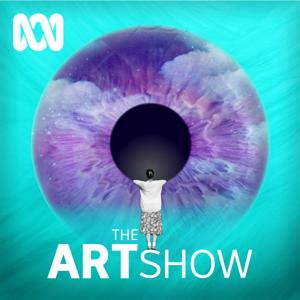


Nicolas Rothwell writes at the edges of things. He's twice won the Prime Minister's Literary Award — for both fiction and non-fiction — and his work slides between both registers: fiction brushes against fact, philosophy slips into story.
His latest novel, Yilkari: A Desert Suite, written with his wife, Alison Nampitjinpa Anderson, takes readers deep into the Western Desert, showing how Country makes art, how absence reveals, and how silence can heal.
Rothwell reflects on his autodidactic approach to art and on the tension between concealment and revelation in the work from the Western Desert.
William Yang's photographs are part memoir, part invitation. Queer lives, Asian faces, vanished places — all lit with the soft glow of attention.
For writer and broadcaster Benjamin Law discovering Yang's work felt uncanny. Like recognition. Like fate. The sense that someone, somewhere, had lived a version of his life and turned it into light.
For Law, it wasn't just admiration. It was kinship. Two queer Asian men from regional Queensland. Two artists drawn to thresholds: of identity, of family, of desire, of home.
This week on The Art Show, we explore what it means to feel seen in someone else's work, and the unexpected communion that can follow.
In 2020, Aperture magazine invited Garth Greenwell to write about Mark Armijo McKnight's photographs. The images immediately captivated him, offering new possibilities for thinking and feeling.
Their work meets in shared spaces: the erotic, the poetic, desire and restraint, silence and shadow; both illuminating queer lives with honesty and complexity.
What began as an assignment deepened into a deep, loving friendship, one that continues to reshape and expand their inner and outer worlds.
Scott Burton made art that touched the body before the mind. But like so many artists and men of his generation, he died of AIDS in 1989.
Before he passed, he willed everything to the Museum of Modern Art — his work, his archive, his name — what followed was a slow erasure.
Now, journalist Julia Halperin explores how Burton's legacy, once forgotten, is being reclaimed.
And Janet Dawson, at 90, is presenting her first major retrospective at AGNSW. Curator Denise Mimmocchi asks us to look again at Dawson's luminous, layered world
Children live in a world not quite built for them and, for a long time, galleries were no exception. No touching. No talking. Just stand and receive.
But, something is changing. Across Australia, galleries are beginning to meet children where they are — not just as visitors, but as artists in their own right.
Tamsin Cull, head of public engagement at QAGOMA and Lilly Blue, head of learning and creativity research at AGWA, talk about children's creativity, and how galleries are being transformed by it.
With just a few lines and strokes, picture books hold whole worlds: joy and sorrow, memory and wonder. They can be stark, fun and beautiful, all at once.
This week on The Art Show, we're celebrating the picture book as a subtle, serious art form — where image meets poetry and artists speak, not just to children, but to the child still inside us.
Illustrator and writer Tull Suwannakit, Wiradjuri artist, writer and poet, Jazz Money, and artist and painter Jason Phu take us into their worlds.
Five Acts of Love, now on at the Australian Centre for Contemporary Art, isn't a show about romance.
It's about love when it's fierce, when it's fragile; when it lives inside grief, memory, resistance, and revolution.
The practices of Megan Cope and Ali Tayhori stretch across Country, history, family and faith, reminding us that love isn't always gentle, but it's always alive.
When artists step into the theatre, the stillness of the studio meets the breath of the stage. And audiences, perhaps without even knowing, lean in.
Illume is one of those collaborations, where Goolarrgon Bard visual artist Darrell Sibosado and Bangarra Dance Theatre's Artistic Director, Wirangu and Mirning woman, Frances Rings have made something luminous.
In this work, light is used as more than illumination: it's a character in the performance. Darrell and Frances explore how the show brings Country to the stage and how they integrated light into the show without overwhelming the performers.
Yolŋu Power: The Art of Yirrkala, at the Art Gallery of New South Wales, is not just an art exhibition, but a field of ancestral presence.
It's a space of authority and deep listening that shows what art can be when it is inseparable from land, from water, from Law, and from the unbroken chain of Yolŋu knowledge.
It's also the featured Winter exhibition at the Art Gallery of NSW, an important acknowledgement that Australian art is worthy of standing alongside the impressionist and modernist masterpieces at other state galleries.
Yinimala Gumana, Gunybi Ganambarr, and Will Stubbs share their knowledge
For much of the last century, in museums, the works of Aboriginal and Torres Strait Islander artists were treated as something outside the main story — consigned to a footnote of history or a side room in major galleries.
A new exhibition at the Potter Museum of Art wants to put the record straight.
Titled 65,000 Years: A Short History of Australian Art, it puts — front and centre — the remarkable work of Indigenous artists and places them in conversation with the colonial art that often treated them as subjects, rather than as equals.
Co-curator Shanysa McConville explores the exhibition and the history that lies behind it.
From the publisher's feed

202 Listeners

102 Listeners

94 Listeners

1,736 Listeners

814 Listeners

757 Listeners
44 Listeners

57 Listeners
45 Listeners
235 Listeners

210 Listeners

319 Listeners

946 Listeners
19 Listeners

147 Listeners

10 Listeners

195 Listeners

114 Listeners
536 Listeners

365 Listeners

238 Listeners

1,008 Listeners

53 Listeners