
Sign up to save your podcasts
Or

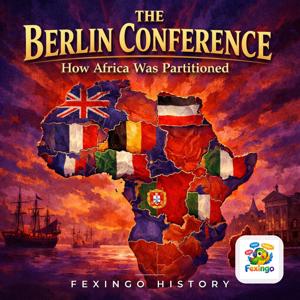


While the General Act of Berlin established rules for trade and navigation, King Leopold II of Belgium carved out a personal fiefdom known as the Congo Free State. This episode explores how the 'effective occupation' clause was twisted into a system of forced labor to extract rubber and ivory. We examine the role of the Force Publique, the brutal methods used to meet extraction quotas, and the resistance led by figures like Nzinga Ndolu Jaga. By the time international outcry forced reforms in the early 1900s, the human cost had already reached catastrophic levels. Lucas and Luna trace the economic machinery behind the empire, moving beyond diplomatic maps to the visceral reality of the forest floor.
#CongoFreeState #KingLeopoldII #ForcedLabor #RubberTerror #ForcePublique #BerlinConference #EffectiveOccupation #NzingaNdoluJaga #CongoRiver #StanleyPool #InternationalAfricanAssociation #HumanRightsHistory #ColonialAfrica #BelgianEmpire #LeopoldCity #ScrambleForAfrica #History #FexingoHistory #Podcast
Keep every episode free: buymeacoffee.com/fexingo
We often think of the Berlin Conference as a moment where European powers simply drew lines on a map, ignoring African realities. But behind the grand halls of Germany’s Foreign Office in late 1884 and early 1885, Chancellor Otto von Bismarck was playing a dangerously delicate game. He wasn’t just dividing territory; he was trying to prevent war between his own rivals—France, Britain, and Germany—while simultaneously opening doors for Belgian King Leopold II to claim the Congo. This episode explores the specific diplomatic maneuvers Bismarck used to balance these competing interests, including his surprising support for free trade in the Congo Basin versus his protectionist stance elsewhere. We look at how the concept of effective occupation was weaponized not just against African nations, but among European competitors, and how Bismarck’s personal distrust of colonial expansion clashed with the economic pressures pushing his ministers toward empire. It’s a story of realpolitik, backroom deals, and the unintended consequences of a man who wanted peace but created chaos.
#BerlinConference #OttoVonBismarck #KingLeopoldII #CongoFreeState #Realpolitik #EffectiveOccupation #GeneralActOfBerlin #ColonialHistory #GermanEmpire #DiplomaticHistory #ScrambleForAfrica #JulesFerry #HenryMortonStanley #InternationalAfricanAssociation #FrancoPrussianWar #EuropeanImperialism #19thCenturyPolitics #FexingoHistory
Keep every episode free: buymeacoffee.com/fexingo
In this episode, we explore the human machinery behind the partition of Africa. While previous episodes covered mapmakers and African diplomats, we focus on the European powers themselves. We examine Otto von Bismarck’s role as host and arbitrator, his desire to avoid war in Europe at the expense of Africa. We discuss the General Act of Berlin and its clauses on free trade and effective occupation. We look at how King Leopold II manipulated the process for personal gain in the Congo. We also consider the impact on indigenous populations who were erased from these discussions. This is a story about diplomacy, greed, and the long shadow of 1884.
#BerlinConference #OttoVonBismarck #KingLeopoldII #PartitionOfAfrica #GeneralActOfBerlin #CongoFreeState #EuropeanColonialism #AfricanHistory #Diplomacy #Imperialism #1884 #ScrambleForAfrica #GermanEmpire #Belgium #France #UnitedKingdom #FexingoHistory #HistoryPodcast #EffectiveOccupation
Keep every episode free: buymeacoffee.com/fexingo
While history often portrays the 1884–1885 Berlin Conference as a mere partitioning of a blank map, this episode reveals the fierce diplomatic and military resistance that preceded European claims. We explore how African states like Zulu, Asante, and Ethiopia actively engaged in treaty negotiations to preserve sovereignty, only to face betrayal when European powers ignored local realities. Through the lens of Emperor Menelik II’s strategic diplomacy and the Zulu Kingdom’s initial leverage, we uncover how African leaders understood the game of international law long before colonization fully took hold. This conversation moves beyond the mapmakers’ lines to examine the treaties signed in blood and ink, the broken promises of 'effective occupation,' and the tragic irony that African agency was recognized just enough to be exploited, but not enough to be respected. Listeners will encounter specific figures like Bismarck’s envoys, the Treaty of Wuchale, and the complex web of alliances that defined late 19th-century geopolitics.
#BerlinConference #AfricanHistory #Colonialism #MenelikII #ZuluKingdom #AsanteEmpire #EthiopianResistance #Imperialism #TreatyOfWuchale #OttoVonBismarck #EffectiveOccupation #ScrambleForAfrica #Diplomacy #19thCentury #AfricanSovereignty #FexingoHistory #HistoryPodcast #PostColonial
Keep every episode free: buymeacoffee.com/fexingo
Episode 242 shifts focus from the diplomats in the room to the cartographers outside it. While Otto von Bismarck and European leaders negotiated borders over dinner, men like Richard Kiepert of the Deutsche Geographische Gesellschaft were redrawing the African continent using pencil and paper. This episode explores how these mapmakers turned vast, lived-in landscapes into geometric abstractions, enforcing the principle of effective occupation through lines that ignored rivers, ethnic groups, and trade routes. We look at the specific tools they used, the errors that became international law, and how a lack of on-the-ground verification allowed European powers to claim territories they had never truly visited. By examining the gap between the ink on the map and the reality on the ground, we see how colonial boundaries were not discovered, but invented.
#BerlinConference #RichardKiepert #DeutscheGeographischeGesellschaft #ColonialAfrica #CartographyHistory #EffectiveOccupation #ScrambleForAfrica #OttoVonBismarck #GeneralActOfBerlin #AfricanBorders #ImperialHistory #MapMakers #EuropeanColonialism #HistoricalGeography #CongoFreeState #WissmannExpedition #KongoStaat #FexingoHistory
Keep every episode free: buymeacoffee.com/fexingo
While Otto von Bismarck and European diplomats carved up the continent in 1884, a quiet but crucial negotiation was happening on the ground. This episode explores how African leaders like Sultan Barghash bin Said of Zanzibar and King Mlapa III of Togoland navigated the General Act of Berlin. We examine the specific diplomatic maneuvers used by Ewe chiefs and Swahili traders to protect their sovereignty against the doctrine of effective occupation. Through the lens of Gustav Nachtigal’s reports and the forgotten correspondence of Samba Laobe, we uncover how local power structures were erased by European mapmakers like Richard Kiepert. The conversation highlights the agency of African statesmen who attended preliminary talks or sent envoys, challenging the myth that Africa was merely a passive recipient of colonial borders. By focusing on the Benin Bronzes dispute and the division of the Ewe people between Gold Coast and Togoland, we reveal the human cost of cartographic violence. This story brings to light the sophisticated political systems that existed before the partition, offering a nuanced view of resistance and adaptation during the Scramble for Africa.
#BerlinConference #GeneralActOfBerlin #SultanBarghash #KingMlapaIII #GustavNachtigal #EwePeople #Togoland #Zanzibar #RichardKiepert #EffectiveOccupation #ColonialHistory #AfricanDiplomacy #ScrambleForAfrica #OttoVonBismarck #BeninBronzes #Cartography #FexingoHistory #HistoryPodcast #Decolonization
Keep every episode free: buymeacoffee.com/fexingo
We’ve talked about the rubber terror in the Congo and the forgotten African delegates at the table, but we haven’t fully examined the cartographic violence that turned a continent into a puzzle. This episode focuses on the German geographer Richard Kiepert and the Deutsche Geographische Gesellschaft, whose maps didn't just record borders—they created them through the fiction of 'effective occupation.' We look at how straight lines cut across complex ethnic landscapes like the Ewe people, ignoring local realities for the sake of European diplomatic convenience. You will hear about the specific mechanisms of this erasure, from the Wissmann Expedition to the way colonial administrators used these arbitrary lines to justify conquest. It is a story about how geometry became a weapon of empire, reshaping the political map of Africa overnight and leaving scars that still influence modern geopolitics.
#BerlinConference #RichardKiepert #DeutscheGeographischeGesellschaft #EffectiveOccupation #ColonialBorders #AfricanHistory #Cartography #GermanEmpire #WissmannExpedition #EwePeople #Togoland #KingMlapaIII #GustavNachtigal #PartitionOfAfrica #ScrambleForAfrica #MapMaking #FexingoHistory #History
Keep every episode free: buymeacoffee.com/fexingo
We often think of the 1884-85 Berlin Conference as a meeting of European powers drawing lines on a map, but that narrative erases the African leaders who actually attended. This episode explores the presence and agency of delegates like Sultan Barghash bin Said of Zanzibar, King Mlapa III of Aného, and Samba Laobe from Dahomey. While European historians long dismissed them as mere observers, recent archival work reveals they were active negotiators fighting for recognition under the General Act of Berlin’s principle of effective occupation. We look at how these diplomats navigated the complex political landscape, attempting to leverage European rivalries to protect their sovereignty. By examining the specific interactions between figures like Gustav Nachtigal and local rulers, we uncover a more nuanced history of resistance and diplomacy that challenges the traditional 'scramble' myth.
#BerlinConference #AfricanHistory #SultanBarghash #KingMlapaIII #Dahomey #Zanzibar #GeneralActOfBerlin #EffectiveOccupation #Colonialism #AfricanDiplomacy #GustavNachtigal #Aného #Togoland #GoldCoast #FexingoHistory #HistoryPodcast #Imperialism #ScrambleForAfrica
Keep every episode free: buymeacoffee.com/fexingo
In this episode, we look at the legal mechanics of the partition rather than the personalities. We examine how the General Act of Berlin established the principle of effective occupation, a doctrine that shifted colonial power from mere coastal treaties to actual administrative control on the ground. Lucas walks us through the diplomatic tensions between Britain, France, Germany, and Portugal, particularly focusing on the conflicting claims in the Congo Basin and East Africa. Luna asks about the immediate consequences for African societies as borders were drawn without regard for existing political structures. We discuss specific figures like Jules Ferry and Otto von Bismarck, but more importantly, we analyze the bureaucratic machinery that turned vast territories into numbered zones of influence. This is not just about maps; it is about the sudden, violent restructuring of governance and trade routes across the continent. You will learn why the conference failed to prevent war despite its intentions, and how the concept of effective occupation became a weapon used by European powers to justify invasion. We also touch upon the role of the International African Association and how humanitarian rhetoric was often a thin veil for economic ambition.
#BerlinConference #ScrambleForAfrica #GeneralActOfBerlin #EffectiveOccupation #ColonialHistory #AfricanPartition #OttoVonBismarck #JulesFerry #CongoBasin #EastAfricaColonization #EuropeanImperialism #1884History #ColonialBorders #AfricanDiplomacy #GermanColonies #FrenchWestAfrica #BritishEmpire #HistoryPodcast #FexingoHistory
Keep every episode free: buymeacoffee.com/fexingo
For decades, the narrative of the 1884–1885 Berlin Conference has been dominated by European diplomats: Otto von Bismarck, Hermann von der Heydt, and their cartographers drawing lines across a map they barely understood. But this episode reveals that the room was not entirely empty of African presence. We explore the diplomatic missions from Zanzibar and Dahomey, specifically Sultan Barghash bin Said and King Mlapa III of Aného, who traveled to Europe seeking recognition of their sovereignty. While official records often erase them or relegate them to footnotes, archival evidence suggests they engaged in real negotiation, presenting petitions and demanding respect for existing treaties. Through the eyes of German consul Gustav Nachtigal and local interpreters like Samba Laobe, we reconstruct the moments where African agency clashed with imperial ambition. This is a story about the friction between formal diplomacy and colonial reality, highlighting how African leaders tried to use the conference’s own rules to protect their lands before the scramble for territory turned into outright conquest.
#BerlinConference #AfricanHistory #SultanBarghash #KingMlapaIII #OttoVonBismarck #HermannVonDerHeydt #GustavNachtigal #Zanzibar #Dahomey #Aneho #GeneralActOfBerlin #EffectiveOccupation #Colonialism #AfricanDiplomacy #SambaLaobe #Kolbe #FexingoHistory #19thCenturyHistory #History
Keep every episode free: buymeacoffee.com/fexingo
From the publisher's feed