
Sign up to save your podcasts
Or

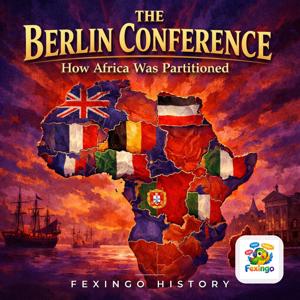


In Episode 220 of our Berlin Conference series, we follow the improbable career of Henri Laperrine, a French officer who spent two decades crossing the Sahara with the Tuareg, learning their language, and negotiating peace where his predecessors had only fought. Laperrine's story is one of deep respect and tragic misunderstanding: he knew the Kel Ahaggar better than any European, yet his mission ultimately served a colonial project that would upend their world. We explore his meetings with the amenokal Moussa ag Amastan, his obsession with wells and maps, and the strange friendship that grew between conqueror and conquered. We also look at the Tuareg's own perspective — their poetry, their codes of honour, and the quiet resistance that outlasted Laperrine's peace. Through eyewitness accounts and Tuareg oral tradition, we see a man caught between two worlds, whose legacy is still debated in the dunes of the Ahaggar.
#HenriLaperrine #Tuareg #KelAhaggar #Sahara #BerlinConference #ColonialHistory #MoussaAgAmastan #Ahaggar #FrenchEmpire #Desert #OralHistory #Resistance #19thCentury #20thCentury #Africa #Exploration #History #FexingoHistory
Keep every episode free: buymeacoffee.com/fexingo
Episode 219 of The Berlin Conference digs into the scramble for the Kamerun coast, where a fragile German protectorate collides with the palm oil trade and the ambitions of the Royal Niger Company. Lucas and Luna revisit the 1884 treaties that put Gustav Nachtigal on the ground, the Douala rulers who signed away sovereignty, and the shifting frontier that later became Cameroon. Along the way, they trace how effective occupation played out in practice, how the British and French pushed back on German claims, and how the border hardened into the line we know today. With a focus on the coast rather than the inland highlands, this episode fills a gap in the series, offering a close look at the diplomatic maneuvers and local politics that shaped a modern nation. Tune in for a fresh angle on a familiar story, told with the show's signature warmth and clarity.
#BerlinConference #Kamerun #Cameroon #GustavNachtigal #RoyalNigerCompany #Douala #PalmOil #EffectiveOccupation #Colonialism #ScrambleForAfrica #GermanEmpire #BritishEmpire #FrenchColonial #TreatyOf1884 #History #FexingoHistory #AfricanHistory #Podcast
Keep every episode free: buymeacoffee.com/fexingo
Lucas and Luna look at the scramble for West Africa's coastline, specifically the little-known story of how Cameroon's borders came to be. From the early German protectorate to the Anglo-German agreement of 1913, they explore the on-the-ground reality of effective occupation, the role of explorer Gustav Nachtigal, and the often absurd process of dividing land that neither European power had fully mapped. The episode touches on the Bakweri people's resistance, the influence of the Royal Niger Company, and the surprising fate of the German colony after World War I. Without skipping over the human cost, Lucas shows how the Berlin Conference's principles played out far from the conference table, in the mangroves and mountains of the coast.
#BerlinConference #Kamerun #Cameroon #GustavNachtigal #RoyalNigerCompany #AngloGermanAgreement #EffectiveOccupation #Bakweri #GermanColonialism #ScrambleForAfrica #MountCameroon #WestAfrica #History #FexingoHistory #ColonialBorders #WorldWarI #Douala #Buea
Keep every episode free: buymeacoffee.com/fexingo
In this episode, Lucas and Luna explore a road not taken at the Berlin Conference — the possibility of a Tuareg confederation under French protection. They revisit the Ahaggar, the Kel Ahaggar, and the amenokal Moussa ag Amastan, who negotiated with French officer Henri Laperrine. They discuss how the French nearly created a 'Tuareg state' in the Sahara, what that would have meant for the region, and why it never happened. Along the way, they touch on tifinagh script, the role of the imajeghen, and the legacy of these decisions for modern Tuareg communities. A thoughtful episode about colonial contingency and the shaping of Saharan identities.
#BerlinConference #Tuareg #Ahaggar #KelAhaggar #MoussaAgAmastan #HenriLaperrine #Sahara #FrenchColonialism #ColonialBoundaries #Tifinagh #Amenokal #Imajeghen #ColonialPolicy #AfricanHistory #19thCentury #20thCentury #History #FexingoHistory
Keep every episode free: buymeacoffee.com/fexingo
In this episode, Lucas and Luna explore the story of Mount Cameroon, the towering volcano that became a crucial landmark for European powers carving up West Africa at the Berlin Conference. They discuss the mountain's role as a navigational beacon for explorers, the contested boundary between British Nigeria and German Kamerun, and the surveying expeditions that risked their lives to map its slopes. The episode also touches on the local Bakweri people's relationship with the mountain, the legend of the ghost of Sir Harry Johnston, and how the mountain's crater lake became a pawn in colonial geopolitics. A fresh angle on the conference's legacy, focusing on the physical geography that shaped the borders instead of the usual political maneuvering.
#BerlinConference #MountCameroon #Kamerun #Nigeria #Bakweri #HarryJohnston #ColonialAfrica #Volcano #CraterLake #WestAfrica #Geopolitics #Exploration #Surveying #Borders #History #FexingoHistory #Podcast #Africa
Keep every episode free: buymeacoffee.com/fexingo
Before the General Act of Berlin, European maps of the Niger River were a tangled mess of guesswork, rumor, and deliberate deception. In this episode, Lucas and Luna follow the Niger's cartographic saga from ancient Greek speculation to the epic expeditions of Mungo Park and the Lander brothers, and the strange tale of a 'mountain of gold' that never existed. They explore how the river's true course was finally charted, and how those phantom maps shaped the claims that European powers would later make at the conference table. With a detour through the Royal Niger Company's chartered rule under George Taubman Goldie, they uncover how a river's geography became a tool of empire—and how the Niger's own people, from the Hausa states to the Igbo hinterland, were erased from the map even as their lands were divided.
#NigerRiver #MungoPark #Landers #RoyalNigerCompany #GeorgeTaubmanGoldie #BerlinConference #Cartography #Exploration #HausaStates #Igbo #EffectiveOccupation #ScrambleForAfrica #19thCentury #Africa #History #FexingoHistory #Colonialism #RiverExploration
Keep every episode free: buymeacoffee.com/fexingo
In this episode, Lucas and Luna trace the improbable career of George Taubman Goldie, the man who single-handedly cornered the Niger River for Britain and turned a trading company into a colonial empire. From his early life in the Isle of Man to his ruthless maneuvering against French rivals, Goldie's story reveals how the Berlin Conference's 'effective occupation' rule was bent, broken, and weaponized. We explore the Royal Niger Company's private army, the treaty-signing expeditions that coerced hundreds of African rulers, and the infamous 1897 Benin Punitive Expedition that Goldie's policies enabled. Along the way, we meet the brass plaques looted from Benin City, the African brokers who profited, and the British officials who later distanced themselves from Goldie's methods. A tale of ambition, violence, and the arbitrary lines that still shape West Africa today.
#GeorgeTaubmanGoldie #RoyalNigerCompany #BerlinConference #NigerRiver #EffectiveOccupation #BeninExpedition #BeninBronzes #ColonialAfrica #ScrambleForAfrica #IsleOfMan #NigeriaHistory #PalmOilTrade #BritishEmpire #AfricanHistory #Colonialism #History #FexingoHistory #WestAfrica
Keep every episode free: buymeacoffee.com/fexingo
In Episode 213, Lucas and Luna step back from the conference rooms of Berlin to follow a different kind of frontier: the ground beneath the cartographers' pens. They trace the work of George Taubman Goldie, the man who consolidated British control over the Niger River and whose Royal Niger Company became a model for imperial expansion. But the episode's heart is the story of a French surveyor, Captain Émile Gentil, whose 1895-1897 expedition across the Sahara and into the Lake Chad basin—guided by Tuareg leaders like Moussa ag Amastan—filled in one of the last blank spaces on the colonial map. Along the way, Lucas explains how the Berlin Act's 'effective occupation' clause turned exploration into a legal race, how African guides and porters shaped European knowledge, and how the measurement of longitude and latitude became an act of possession. The conversation closes with a reflection on what it means to map a place that was never empty to begin with. Specific names, dates, and instruments—like the theodolite and the sextant—anchor the story, reminding us that every line on a map was once a person walking, measuring, and often misjudging what they saw.
#BerlinConference #ÉmileGentil #EffectiveOccupation #RoyalNigerCompany #GeorgeTaubmanGoldie #LakeChad #SaharaExpedition #TUAREG #MoussaAgAmastan #ColonialCartography #Theodolite #Sextant #AfricaHistory #Imperialism #19thCentury #History #FexingoHistory #Podcast
Keep every episode free: buymeacoffee.com/fexingo
In this episode, Lucas and Luna step back from the conference tables of Berlin to follow a French officer who spent years crossing the Sahara with Tuareg caravans. Captain Henri Laperrine didn't just map the desert — he lived it, learning the language of the Kel Ahaggar, sharing their tents, and eventually becoming the first commander of the camel corps that would police the new colonial frontier. We trace Laperrine's path from the Saharan oases to his friendship with the amenokal, or Tuareg chief, Moussa ag Amastan, and the strange alliance that helped France claim the Ahaggar mountains. But we also look at what Laperrine's work cost: the Tuareg's independence, their raiding economy, and their place in a world of borders they never drew. Through Laperrine's own letters and the oral histories of the Kel Ahaggar, we see how one man's respect for the desert's people could not stop the machinery of empire. And we end with Laperrine's final mission, a plane crash in the desert he knew so well, and the question of whether any map can truly hold a place like the Sahara.
#HenriLaperrine #Tuareg #KelAhaggar #Sahara #MoussaAgAmastan #BerlinConference #FrenchColonialism #CamelCorps #AhaggarMountains #Amenokal #Tifinagh #DesertHistory #ColonialAfrica #EffectiveOccupation #History #FexingoHistory #SaharanPeoples #FrenchEmpire
Keep every episode free: buymeacoffee.com/fexingo
In this episode of Fexingo History, Lucas and Luna return to the cartographic chaos of the 1884–85 Berlin Conference, zooming in on a phantom that haunted European mapmakers for decades: Lac Ptolémée, a vast lake that appeared on maps of the Sahara but never existed on the ground. They trace its origins to ancient Greek geographers, its revival in 19th-century exploration, and its final erasure by French expeditions. The story follows explorer Georges Révoil, who searched for the lake in the 1880s and found only the arid Ténéré, and later French officers like Henri Laperrine, who mapped the Tuareg homelands and confirmed the lake's absence. Along the way, they discuss how phantom geography shaped colonial boundaries, the role of indigenous knowledge in correcting European errors, and the lasting impact of these imaginary places on modern borders. The episode also reflects on the broader lesson: how maps can mislead as much as they guide, and how the ghosts of old maps still influence how we see Africa today.
#BerlinConference #LacPtolémée #GeorgesRévoil #HenriLaperrine #Tuareg #Sahara #Ténéré #PhantomLake #Cartography #ColonialHistory #AfricanHistory #Exploration #EffectiveOccupation #19thCentury #Mapmaking #History #FexingoHistory #Geography
Keep every episode free: buymeacoffee.com/fexingo
From the publisher's feed