
Sign up to save your podcasts
Or

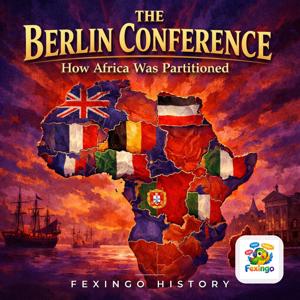


In the years after the Berlin Conference, European mapmakers chasing the 'Lac Ptolémée' — a phantom lake that never existed — redrew the Sahara's borders and set the stage for a century of conflict. This episode follows French explorer Georges Révoil and the Tuareg guides who led him across the Ténéré, the azalai salt caravans that linked Agadez to Ghadames, and the Amenokal of the Kel Ahaggar who held a French officer named Henri Laperrine in a grip that defined the region's fate. Révoil's maps, based on Tuareg oral geography and his own misreadings, haunted the Anglo-French boundary commissions that carved up the Chad basin decades later, leaving borders that still ignore human and ecological realities. With a nod to the General Act of Berlin's effective occupation clause, we see how a lake that was never there became a diplomatic fixture — and how the Tuareg, who knew the land perfectly, were erased from the very maps that decided their future.
#BerlinConference #GeorgesRévoil #LacPtolémée #Tuareg #Sahara #AngloFrenchBoundary #ChadBasin #EffectiveOccupation #ColonialCartography #Azalai #Agadez #Ghadames #HenriLaperrine #KelAhaggar #GermanColonialism #AfricaHistory #History #FexingoHistory
Keep every episode free: buymeacoffee.com/fexingo
In this episode, Lucas and Luna explore a puzzle from the Berlin Conference era that has puzzled historians for over a century: the phantom Lake Ptolemy. In the late nineteenth century, European explorers and cartographers, relying on ancient Greek geographer Claudius Ptolemy's maps, believed a vast lake existed deep in the Sahara, fed by the Niger River. French explorer Georges Révoil and others set out to find it, mapping instead the seasonal azalai salt routes of the Tuareg and the shifting dunes of the Ténéré. The episode traces how this cartographic myth, stemming from a misinterpretation of Ptolemy's work, led to diplomatic tensions between France and Britain as they divided West African territories. It also examines the real people who knew the desert best—the Tuareg, whose knowledge of wells, water, and trade routes was ignored by the mapmakers in Berlin. Through the story of the missing lake, Lucas and Luna reveal how the Berlin Conference's mapmakers, with incomplete knowledge, drew borders that still shape Africa today. A rich tale of exploration, error, and the limits of European knowledge.
#BerlinConference #LakePtolemy #Sahara #Tuareg #GeorgesRevoil #ClaudiusPtolemy #ScrambleForAfrica #Exploration #Cartography #19thCentury #Africa #FrenchEmpire #BritishEmpire #NigerRiver #Tenere #Colonialism #History #FexingoHistory
Keep every episode free: buymeacoffee.com/fexingo
In this episode of Fexingo History, Lucas and Luna turn to a people often overlooked in the story of the Berlin Conference: the Tuareg of the Sahara. While European diplomats in Berlin drew lines across maps, the Tuareg were building a confederation that stretched from the Ahaggar Mountains to the Sahel. We follow the French colonial officer Henri Laperrine, who abandoned his first post in Algeria to live among the Tuareg, learning their language and customs. We explore the Tuareg's mastery of the desert, their complex social hierarchy, and their resistance to French rule, culminating in the bloody Battle of Tit in 1902. Along the way, we encounter the shifting alliances of the Tuareg confederations—the Kel Ahaggar, the Kel Adrar, the Iullemeden—and the devastating impact of colonial boundaries on their nomadic way of life. This is a story about how the Berlin Conference's paper decisions reached far beyond the coasts and rivers, into the heart of the Sahara, where borders meant little to those who crossed them freely.
#Tuareg #Sahara #BerlinConference #HenriLaperrine #BattleOfTit #KelAhaggar #KelAdrar #Iullemeden #Ahaggar #Sahel #ColonialAfrica #FrenchEmpire #Resistance #NomadicLife #DesertHistory #History #FexingoHistory #ScrambleForAfrica
Keep every episode free: buymeacoffee.com/fexingo
Lucas and Luna follow cartographer Georges Révoil through the Sahara's dead ends as he hunts for Lake Ptolemy, the phantom sea that haunted 19th-century maps. Along the way, they unravel how the Berlin Conference's principle of 'effective occupation' turned rumor into legal title, nearly giving France a lake that didn't exist. A story of faded expedition journals, Tuareg guides, and a measurement error that shaped borders for a century.
#GeorgesRévoil #LakePtolemy #Sahara #Tuareg #Cartography #EffectiveOccupation #BerlinConference #ScrambleForAfrica #PhantomLake #FrenchEmpire #19thCentury #Exploration #History #Africa #Colonialism #Maps #Desert #FexingoHistory
Keep every episode free: buymeacoffee.com/fexingo
In this episode, we explore how the Berlin Conference's arbitrary border drawing split the Ewe people between Togoland and the Gold Coast, creating a lasting ethnic partition that would shape Ghana and Togo's histories. We trace the Ewe's pre-colonial social structures, the 1884 treaty with Gustav Nachtigal that established German Togoland, and the Anglo-French boundary commissions that drew lines through Ewe villages. We examine the 1919 British Mandate referendum, the 1956 Ewe plebiscite, and how leaders like Sylvanus Olympio campaigned for unification. We reflect on the Ewe's continued cross-border ties and the broader legacy of colonial borders that divided African societies. Join us as we uncover the human cost of map-making.
#BerlinConference #EwePartition #Togoland #GoldCoast #GustavNachtigal #SylvanusOlympio #Plebiscite1956 #ColonialBorders #EthnicPartition #GeneralAct1885 #EffectiveOccupation #AngloFrenchBoundary #GermanColonialism #BritishMandate #Togo #Ghana #BorderDrawing #History
Keep every episode free: buymeacoffee.com/fexingo
In this episode, Lucas and Luna dig into a strange footnote of the Berlin Conference era: the phantom claims European powers made to the remote kingdom of Wadai, deep in the Chad Basin. While diplomats drew lines across maps, the actual conquest of Wadai fell to a French officer named Émile Gentil, who carved out a colony with a handful of Senegalese tirailleurs and a steamboat named the Léon Blot. They explore how the Anglo-French Declaration of 1899, which supposedly settled the Sahara frontier, left Wadai's fate ambiguous, and how a local ruler, Sultan Doudmourrah, held out against French expansion for over a decade. Lucas explains why Wadai's story matters for understanding the gap between paper claims and ground-level reality, and how the resulting boundary disputes still echo in Chad's modern borders. It's a tale of maps, misdirection, and the limits of 'effective occupation.'
#BerlinConference #ScrambleForAfrica #Wadai #Chad #ÉmileGentil #SultanDoudmourrah #AngloFrenchDeclaration #effectiveOccupation #FrenchColonialEmpire #ColonialAfrica #19thCentury #LakeChad #History #FexingoHistory #Colonialism #AfricanHistory #PowerPolitics #PaperBorders
Keep every episode free: buymeacoffee.com/fexingo
In this episode, Lucas and Luna explore how the Berlin Conference's 'effective occupation' rule transformed African economies through the introduction of colonial currencies. They focus on the German East Africa Company's rupie, the British West African pound, and the French franc's role in Algeria, tracing how these monetary systems replaced indigenous currencies like cowrie shells and manillas. The discussion highlights the resistance to colonial coinage—from the Maji Maji Rebellion to the 1911 money riots in German East Africa—and the lasting impact on modern African economies. Specific attention is given to the case of German East Africa, where the company's attempt to impose the rupie clashed with local exchange systems and sparked violent opposition, despite the region's abundant natural resources like sisal and rubber. By examining the economic logic behind imperial expansion and the human costs of monetary control, the episode reveals a lesser-known dimension of the Scramble for Africa, one that continues to influence debates about sovereignty and development today.
#BerlinConference #ColonialCoinage #GermanEastAfrica #EffectiveOccupation #Rupie #CowrieShells #Manillas #MajiMaji #Sisal #RubberTrade #MonetaryHistory #AfricaHistory #Imperialism #19thCentury #ScrambleForAfrica #FexingoHistory #History #EconomicHistory
Keep every episode free: buymeacoffee.com/fexingo
In 1884, European powers met in Berlin to carve up Africa. But one man—Leopold II of Belgium—manipulated the conference so effectively that he ended up with a personal empire, the Congo Free State, which he ran as his own private fiefdom. This episode unpacks Leopold's diplomatic cunning, his use of Henry Morton Stanley and Pierre Savorgnan de Brazza, and how the General Act of Berlin legitimized his brutal rule. We trace the origins of Leopold's ambition, his connections with the United States and Great Britain, and the devastating consequences for the people of the Congo. Join Lucas and Luna as they explore the backroom deals and high-stakes negotiations that set the stage for decades of exploitation.
#LeopoldII #CongoFreeState #BerlinConference #ScrambleForAfrica #HenryMortonStanley #PierreSavorgnanDeBrazza #EffectiveOccupation #GeneralActOfBerlin #Colonialism #19thCenturyHistory #Belgium #AfricanHistory #Imperialism #Diplomacy #History #FexingoHistory #PoliticalHistory #EuropeanColonization
Keep every episode free: buymeacoffee.com/fexingo
In this episode, Lucas and Luna delve into the forgotten story of the Anglo-French Boundary Commission, the team of surveyors and soldiers who, in the decades after the Berlin Conference, actually drew the lines that divided West Africa between Britain and France. From the Sahara's shifting sands to the Niger River's bend, they trace how a handful of men with sextants and treaties carved out modern Burkina Faso, Niger, and Ghana's northern territories. The episode reveals the chaos behind the 'effective occupation' doctrine, the contested Lake Chad region, and the barely-surviving expeditions through hostile terrain. It's a tale of mapmaking under fire, where a few square miles could spark diplomatic crises, and where local rulers traded land for protection even as their sovereignty was erased. A must-listen for anyone curious how Africa's borders were truly drawn.
#BerlinConference #AngloFrenchBoundaryCommission #EffectiveOccupation #ScrambleForAfrica #WestAfrica #ColonialBoundaries #SaharaDesert #NigerRiver #LakeChad #HistoryOfMapping #19thCentury #Colonialism #BurkinaFaso #Niger #Ghana #BritishEmpire #FrenchColonialEmpire #FexingoHistory
Keep every episode free: buymeacoffee.com/fexingo
In this episode, Lucas and Luna step back from the map-drawing and the carve-ups to focus on the man who actually hosted the Berlin Conference: Otto von Bismarck, Germany's first chancellor. They explore how a statesman who famously dismissed colonialism ('maps of Africa are fine, but my map of Europe lies here') ended up convening the conference that set the rules for the Scramble. The conversation ranges over Bismarck's motivations, his diplomatic balancing act between the great powers, and his eventual turn to modest colonial acquisitions in Africa, including Togoland and Kamerun. Lucas digs into the irony: the conference was meant to prevent conflict and establish 'effective occupation,' yet it legitimized Leopold II's brutal Congo Free State, which Bismarck privately distrusted. They also touch on Bismarck's fall from power and how his successors abandoned his careful caution, helping to pave the way for the crises of the early twentieth century. Along the way, they reflect on how a single diplomat's pragmatism shaped a continent's destiny — and ask whether the conference's legacy might have been different had Bismarck remained at the helm.
#BerlinConference #OttoBismarck #ScrambleForAfrica #ColonialHistory #HistoryOfDiplomacy #EffectiveOccupation #LeopoldII #CongoFreeState #GermanColonialism #Togoland #Kamerun #1884 #1885 #Realpolitik #EuropeanImperialism #AfricaPartition #FexingoHistory #History
Keep every episode free: buymeacoffee.com/fexingo
From the publisher's feed