
Sign up to save your podcasts
Or

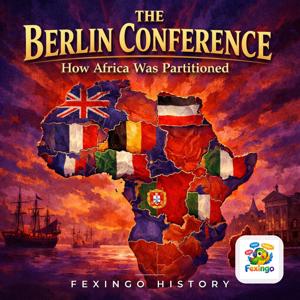


In this episode of Fexingo History, Lucas and Luna explore the often-overlooked partition of Togo during the Berlin Conference era. They delve into the unlikely story of how a small sliver of West Africa became German Togoland, and how its colonial history diverged sharply from the violent conquests seen elsewhere. The conversation covers Gustav Nachtigal's treaty with King Mlapa III in 1884, the diplomatic maneuverings between Britain, France, and Germany over the Togo coast, and the peculiar 'model colony' reputation Togoland earned under German rule. Lucas explains the role of the hinterland expeditions, the construction of the Togo-Borgu railway, and how Togoland's strategic position made it a pawn in the wider Scramble. They also reflect on the legacy of the German colonial period, the subsequent Anglo-French mandate partition after World War I, and how Togo's story challenges simplified narratives of African partition. Along the way, they touch on the Kamerun border dispute, the Aneho and Lome settlements, and the reasons why Togo remains a fascinating case study in colonial history.
#Togoland #BerlinConference #GermanColonialism #GustavNachtigal #KingMlapa #ScrambleForAfrica #WestAfrica #Lome #AngloFrenchMandate #ModelColony #TogoBorguRailway #HinterlandExpeditions #1884Treaty #GermanEmpire #BritishGoldCoast #FrenchTogo #WorldWarI #History #FexingoHistory
Keep every episode free: buymeacoffee.com/fexingo
In 1898, two European empires nearly went to war over a muddy outpost on the White Nile. Captain Jean-Baptiste Marchand led a ragged column of Senegalese tirailleurs across 3,000 miles of uncharted Africa to claim Fashoda for France. At the same time, British General Horatio Kitchener was steamrolling south from Egypt after crushing the Mahdist state at Omdurman. When their forces met at Fashoda (Kodok), the two officers shared tea while their governments in Paris and London teetered on the brink of conflict. This episode tells the story of that extraordinary encounter — the grueling march, the tense negotiations, and the diplomatic resolution that reshaped Africa's partition. We explore how the Berlin Conference's principle of 'effective occupation' turned into a real-world test, and how Britain's naval supremacy ultimately forced France to back down, redrawing the map of northeastern Africa. Featuring the roles of Lord Salisbury, Théophile Delcassé, and the forgotten African soldiers who made these expeditions possible.
#FashodaIncident #ScrambleForAfrica #JeanBaptisteMarchand #HoratioKitchener #WhiteNile #Omdurman #FrenchColonialEmpire #BritishEmpire #EffectiveOccupation #BerlinConference #Sudan #Kodok #LordSalisbury #ThéophileDelcassé #TirailleursSenegalais #MahdistState #History #FexingoHistory
Keep every episode free: buymeacoffee.com/fexingo
In July 1884, as the Berlin Conference was still deliberating in its opening weeks, German explorer Gustav Nachtigal slipped into the Bight of Biafra and began signing treaties with Duala chiefs on the Cameroon coast. This episode unpacks how the conference's doctrine of 'effective occupation' enabled Germany to snatch one of the most valuable stretches of West Africa from under the noses of the British and French. We follow the manoeuvres of King Ndumbé Lobe Bell, the hesitant British consul Edward Hewett, and the Hamburg trading firm Woermann that bankrolled the German push. From the palm-oil rivers of the Douala estuary to the highlands of Mount Cameroon, we trace how a few hastily-inked documents redrew the map — and how the Duala people's subsequent resistance and tragic fate echoed through the colonial era. The partition of Africa was not just a grand chessboard in Berlin; it was a ground-level scramble of rival agents, local alliances, and broken promises that still resonates in Cameroon's anglophone-francophone divide today.
#BerlinConference #Cameroon #GustavNachtigal #Duala #KingNdumbéLobeBell #ScrambleForAfrica #GermanColonialism #Kamerun #Woermann #EffectiveOccupation #ColonialHistory #EdwardHewett #BritishEmpire #FrenchColonial #AfricanResistance #1884 #History #FexingoHistory
Keep every episode free: buymeacoffee.com/fexingo
The Berlin Conference of 1884-85 laid down the rules for Europe's partition of Africa, but on the ground, African rulers fought back with everything they had. In this episode, we focus on one of the most defiant: King Behanzin of Dahomey (modern Benin). As French colonial forces pushed inland from the coast, Behanzin mobilized his kingdom's renowned all-female military corps, the Agojie—often called the Dahomey Amazons—and fought a bitter, two-year war from 1892 to 1894. We explore the strategic brilliance of Behanzin's guerrilla tactics, the key battles of Dogba and Cotatou, the burning of the royal palace at Abomey, and the ultimate surrender and exile of a king who refused to bow to the French tricolor. We also examine how the 'effective occupation' principle from Berlin was used to justify France's conquest, and how Dahomey's resistance became a symbol of African resilience against the scramble. Through the eyes of Behanzin, his generals, and the Agojie, we see a story not of passive victimhood, but of a sophisticated kingdom fighting for its sovereignty against overwhelming odds.
#Behanzin #Dahomey #BerlinConference #ScrambleForAfrica #AmazonWarriors #Agojie #FrenchColonialWars #KingBehanzin #Abomey #GeneralDodds #BattleOfDogba #BattleOfCotatou #WestAfrica #Benin #ColonialResistance #1892 #History #FexingoHistory
Keep every episode free: buymeacoffee.com/fexingo
In the wake of the Berlin Conference, the principle of 'effective occupation' fueled a race for Africa's interior. One of the most dramatic and brutal episodes unfolded in Katanga, a copper-rich kingdom in central Africa ruled by the Nyamwezi trader-king Msiri. As King Leopold II of Belgium and Cecil Rhodes's British South Africa Company both laid claim to the region, a small expedition led by Canadian-born British officer William Stairs was dispatched to bring Katanga under Congo Free State control. When Msiri refused to submit, a tense confrontation ended with his execution by a Belgian officer, Bodson. This episode explores the ruthless logic of the Scramble, the fate of African sovereigns who resisted, and how Katanga's mineral wealth shaped colonial borders. Lucas and Luna discuss the Stairs Expedition's journey, the political maneuvering behind the claims, and the aftermath that saw Katanga absorbed into the Congo Free State. They also reflect on the human cost of partition, from Msiri's death to the region's long-term exploitation.
#BerlinConference #Katanga #Msiri #ScrambleForAfrica #CongoFreeState #LeopoldII #CecilRhodes #StairsExpedition #BelgianColonialHistory #AfricanResistance #History #FexingoHistory #EffectiveOccupation #YekeKingdom #CentralAfrica #CopperBelt #19thCentury #Colonialism
Keep every episode free: buymeacoffee.com/fexingo
This episode zooms in on the rivalry between French explorer Pierre Savorgnan de Brazza and Henry Morton Stanley as they raced to claim the Congo Basin for their patrons—France and King Leopold II of Belgium. We trace Brazza's 1880 treaty with Chief Makoko of the Tio people, which gave France a foothold on the north bank of the Congo River, and the diplomatic firestorm it ignited at the Berlin Conference of 1884-85. How did the conference's principle of 'effective occupation' favour Leopold's International Association while carving out a separate French Congo? And what became of the kingdoms and communities caught between these competing colonial ambitions? We also discuss the long shadow of this partition: the modern border between Congo-Brazzaville and the Democratic Republic of the Congo. With Lucas and Luna as your guides, this is a story of treaties, bluff, and the drawing of lines that still shape Africa today.
#BerlinConference #PierreSavorgnanDeBrazza #HenryStanley #CongoRiver #TreatyOfMakoko #KingLeopoldII #ScrambleForAfrica #FrenchCongo #CongoFreeState #EffectiveOccupation #Brazzaville #Colonialism #TioPeople #FranciscoDeBrazza #AfricaPartition #Diplomacy #History #FexingoHistory
Keep every episode free: buymeacoffee.com/fexingo
The Berlin Conference of 1884-85 is often remembered for carving up Africa, but few know the backroom deals that decided who controlled the Niger River. In this episode, Lucas and Luna dive into the role of George Goldie and his United African Company in securing British dominance over the Lower Niger, while France claimed the Upper Niger. They explore how the principle of 'effective occupation' was applied on the ground, the brutal palm oil trade that fueled the scramble, and how the Berlin Act's promise of free navigation was quickly sidelined by corporate monopolies. From Goldie's treaty-making with local chiefs to the seeds of the Fashoda Incident, this is a story of how a river became a pawn in Europe's imperial chess game. Tune in for a deep dive into one of the Berlin Conference's most consequential yet overlooked chapters.
#BerlinConference #NigerRiver #RoyalNigerCompany #GeorgeGoldie #ScrambleForAfrica #Colonialism #EuropeanImperialism #ImperialHistory #AfricaHistory #EffectiveOccupation #BerlinAct #UnitedAfricanCompany #PalmOil #1884 #1885 #NigerDelta #History #FexingoHistory
Keep every episode free: buymeacoffee.com/fexingo
In this episode of the Berlin Conference series, we explore the Battle of Adwa, the decisive Ethiopian victory over Italy in 1896 that preserved Ethiopian independence and shattered the myth of European invincibility. We delve into the Treaty of Wuchale, where a mistranslation allowed Italy to claim a protectorate over Ethiopia; Emperor Menelik II's shrewd diplomacy, including his purchase of modern arms from France and Russia; and his meticulous military preparations that united Ethiopia's fractious nobility. The battle itself on March 1, 1896, near the town of Adwa, saw well-armed Ethiopian forces under Ras Alula Engida and other commanders overwhelm a divided Italian army under General Oreste Baratieri. We discuss the aftermath: Italy recognized Ethiopia's sovereignty in the Treaty of Addis Ababa, and Ethiopia remained independent until the Second Italo-Ethiopian War in 1935. Learn how this single battle reshaped the colonial map and inspired anti-colonial movements across Africa.
#BattleOfAdwa #MenelikII #Ethiopia #Italy #OresteBaratieri #RasAlula #TreatyOfWuchale #ScrambleForAfrica #Colonialism #March1st1896 #Adwa #EthiopianEmpire #Tigray #ItalianColonialism #AfricanResistance #History #FexingoHistory #Decolonization
Keep every episode free: buymeacoffee.com/fexingo
In this episode of Fexingo History, Lucas and Luna explore the remarkable story of Samori Ture, the Mandinka leader who built a powerful empire in West Africa and fought the French for over a decade during the Scramble for Africa. Learn about his early life as a trader turned warrior, his creation of a professional army called the Sofa, and his strategic use of guerrilla warfare and scorched-earth tactics against the French colonial forces. We examine the key battles, including the siege of Bissandugu, and the eventual fall of his Wassoulou Empire in 1898. A tale of resistance, resilience, and the human cost of European imperialism during the Berlin Conference era.
#SamoriTure #MandinkaEmpire #Wassoulou #BerlinConference #ScrambleForAfrica #FrenchColonial #Sofa #WestAfrica #Resistance #Imperialism #Guinea #Mali #IvoryCoast #19thCentury #History #FexingoHistory #AfricanHistory #ColonialResistance
Keep every episode free: buymeacoffee.com/fexingo
Before E.D. Morel and Roger Casement, an African American historian named George Washington Williams became the first to publicly denounce King Leopold II's atrocities in the Congo Free State. In 1890, Williams traveled to the Congo Basin, witnessed forced labor and brutal violence, and wrote an open letter to Leopold accusing him of 'crimes against humanity' — a phrase Williams coined. This episode explores Williams's journey, his findings, and why his warning went largely unheeded for over a decade. We look at the political climate of the Berlin Conference's aftermath, the role of the Congo Free State's early administration, and how Williams's report prefigured the later international scandal. A story of courage, morality, and the slow machinery of justice.
#GeorgeWashingtonWilliams #CongoFreeState #LeopoldII #BerlinConference #CrimesAgainstHumanity #OpenLetter #Boma #StanleyPool #CongoRiver #BelgianAtrocities #Antislavery #AfricanAmericanHistory #1880s #1890 #Colonialism #History #FexingoHistory #ScrambleForAfrica
Keep every episode free: buymeacoffee.com/fexingo
From the publisher's feed