
Sign up to save your podcasts
Or

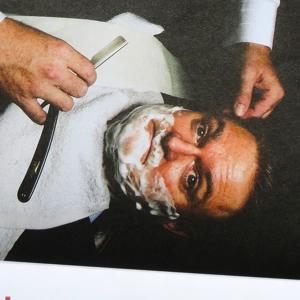


Alberto Manguel is an Argentine-born writer, translator, and editor, and the author of many books of both non-fiction, including A History of Reading (1996), The Library at Night (2007) and Homer's Iliad and Odyssey: A Biography (2008); and fiction ( News From a Foreign Country Came , 1991). We met at the Kingston WritersFest; I asked him to recount some of his favourite experiences in bookstores and libraries around the world.
First he pointed out that libraries and bookstores, in spite of their being public places, are really private spaces that each reader makes his or her own home: a sort of autobiography, where the books that interest you contain words that mirror your own experience. We talk about a Tel Aviv bookstore he visited 60 years ago, bookshop stickers, the reconstructed library of Aby Warburg in Hamburg, and treasures found by chance in used bookstores on Avenida Corrientes in Buenos Aires. Manguel's novel A Return, sketches the character of one of the old booksellers on this street.
Herman Melville lived at Arrowhead (so named because of arrowheads found nearby during planting season) from 1850–1863, during which time he wrote some of his best known works: Moby-Dick, The Confidence-Man, and The Piazza Tales, a short story collection named after his porch, of which he wrote:
Now, for a house, so situated in such a country, to have no piazza for the convenience of those who might desire to feast upon the view, and take their time and ease about it, seemed as much of an omission as if a picture-gallery should have no bench; for what but picture-galleries are the marble halls of these same limestone hills?—galleries hung, month after month anew, with pictures ever fading into pictures ever fresh.
Built in the 1780s as a farmhouse, it was located adjacent to property owned by Melville's uncle Thomas, who Melville visited in his youth. He purchased the property in 1850 with borrowed money and spent the next twelve years farming and writing. Money problems forced him to sell the property to his brother, and return to New York City in 1863 whereupon he eventually found work as a customs inspector.
The house remained in private hands until 1975, when the Berkshire County Historical Society acquired it and some of the original 160-acre property. The Society restored most of the house to Melville's period and operates it as a house museum; it is open to the public during warmer months.
I visited Arrowhead recently to learn more about why Arrowhead should be on all Literary tourists' bucketlists. Here's my conversation with Executive Director Betsy Sherman
The Mount is a historic site and a cultural center inspired by the passions and achievements of Edith Wharton. Designed and built by Wharton in 1902, the house embodies the principles outlined in her influential book, The Decoration of Houses (1897). The property includes three acres of formal gardens designed by Wharton, who was also an authority on European landscape design, surrounded by extensive woodlands. Programming at The Mount reflects Wharton's core interests in the literary arts, interior design and decoration, garden and landscape design, and the art of living. Annual exhibits explore themes from Wharton's life and work.
In the summer of 2010, The Mount launched Berkshire WordFest, a gathering of writers and readers staged in one of the most beautiful settings in the Berkshires.
I met with Kelsey Mullen, Education and Public Programs Coordinator at the Mount, to ask her why the Literary Tourist might want to venture into this neck of the woods.
From 1959-1964, McClelland and Stewart published a run of poetry books written by Irving Layton, designed by Frank Newfeld, edited by Claire Pratt, and often illustrated with photographs by Sam Tata. They turned out to be among Layton's most famous and influential titles ( A Red Carpet for the Sun [1959], The Swinging Flesh [1961], Balls for a One-Armed Juggler [1963], and The Laughing Rooster [1964]).
Cameron Anstee, proprietor of Apt 9 Press and a PhD student in the English Department at the University of Ottawa recently delivered a paper at a Canadian Literature Symposium. It examined the relationship between Layton, Newfeld, and Jack McClelland and positioned it as central to the formation both of a visible canon of Canadian Literature in the 1950s and 1960s, and of Layton's particular public image. The paper looked at Layton's complicated relationship with the Canadian reading public and emerging Canadian literary establishments through a close reading of the book objects. It also considered how Layton was 'branded', the role that Frank Newfeld played in this, and the poet's conflicted responses to Newfeld's designs.
This from the Yale University Library website: "William Reese '77 is an antiquarian bookseller living in New Haven, CT. His firm, William Reese Company, founded in 1975 when he was a sophomore, is one of the leading rare book dealers in the world, specializing in Americana, travels and voyages, and literature. He has been active with the Yale Library for many years, funding a number of fellowships in the Beinecke Library. Bill served on the committee to raise funds for the Irving S. Gilmore Music Library and contributed, with his family, the Jackson Family Rare Book Room there, named in honor of his grandfather, John Day Jackson, Class of 1890, who gave Yale its first music library.
Bill has also given Yale major collections of 20th-century writers such as Robert Graves and Siegfried Sassoon, as well as books and manuscripts ranging from 18th-century Louisiana to the diary of an interned Japanese-American in World War II. He has also curated four major exhibitions in the Beinecke Library, including their Columbian Quincentenary exhibition in 1992, and the show honoring Paul Mellon's bequest to the Beinecke Library in 2002, both commemorated with published catalogs. He has also funded Beinecke publications such as the recently published Alfred Stieglitz–Georgia O'Keefe correspondence, funded cataloguing initiatives in the Map Collection, and underwritten Yale staff members attending the Rare Book School. Bill has also served on the committee to award the undergraduate book- collecting prize for thirty years. Bill has worked with many book libraries throughout the country on issues of collection development, security, and fund-raising. He serves on the Council of the American Antiquarian Society and the board of the Library of America."
Shanty Bay Press was established in Shanty Bay, Ontario, in 1996 as a private press devoted to publishing livres d'artistes in which the texts and the illustrations accompanying them would have equal weight in the design of the books.
The press is a partnership: the type-setting, presswork and binding are the work of Janis Butler, the illustrations are by Walter Bachinski, and the editorial, design and publishing decisions are shared. The press's equipment includes a Vandercook SP20, Vandercook Universal 1, double crown Washington hand press (1836),an etching press, and a growing collection of type.
I visited the Press to talk with its proprietors, starting with Walter Bachinski. We cover a lot of ground, including personal history, the history of the press, fine press book illustration, design and composition, love of books and book collecting.
I attended the Kingston WritersFest and interviewed some great authors about 'place' and its relationship to their work. Here I talk with Thomas King about native myth, possibility in storytelling, his love of the Alberta Landscape - especially that which surrounds Lethbridge - and those novels of his which best capture the essence of this spectacular place.
Jack Kerouac is an American icon thanks to his novel On the Road (1957). During the late 1950s, he and fellow members of the Beat generation captured something essential about the American psyche, defining a desire to break away from conformity in search of an alternative form of self-fulfillment. As William S. Burroughs once put it On the Road "sold a trillion Levis and a million espresso machines, and also sent countless kids on the road" (Charters, 1991, xxviii).
One of those kids was Ottawa native Rod Anstee who, at age 16, hitch-hiked across the continent, part of a life-long relationship he formed with Kerouac that involved collecting his books and letters, connecting with Beat authors, and writing a bibliography.
I met with Rod at his home to get the story; to trace the arc of his collecting experience; to understand as best I could, the core anatomy of a book collector.
Alexander Monker is an Ottawa-based collector of Canadian poetry. I met recently with him to talk about his passion for these and other books, and to get some advise on the art of book collecting.
We also talk about, among other things, the kindness and knowledge of used/antiquarian booksellers, misspelled book titles online, the Contact, Gaspereau and Apt. 9 Presses, buying what you love, Anglo-Irish novelist Charles Lever, Walter Scott, buying duplicate copies of books for trade, learning all you can about your specialty areas, and sending books to poets for their signatures. Plus many other great book collecting tips.
Abigail Rorer is a wood engraver, and the proprietor of The Lone Oak Press which publishes limited edition, fine press books using...letterpress & wood engraving.
One of Abigail's most delightful books is Mimpish Squinnies: Reginald Farrer's Short Guide to Worthless Plants. "Reginald Farrer (1880–1920) was a British plantsman, plant explorer, & prolific writer who was one of the first to promote rock gardening and alpine plants. The text of Mimpish Squinnies consists of fourteen plant descriptions from Farrer's The English Rock Garden and are of plants that he particularly disliked and described as only he could, with humor, wit, acerbity and anthropomorphism. The title of the book, Mimpish Squinnies, uses two of the many, almost nonsense, words that Farrer employs in some of his descriptions. Accompanying the text are fourteen full-color plant portraits using his descriptions as inspiration along with the structure of the actual plant plus a portrait of Farrer with a short biographical note."
Please listen to our conversation about what Abigail does, how she does it, and why she loves it.
From the publisher's feed