
Sign up to save your podcasts
Or

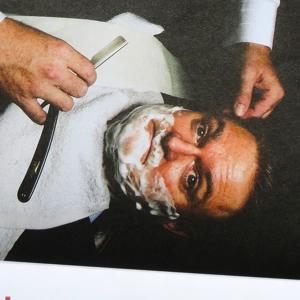


George Saintsbury (23 October 1845 – 28 January 1933), though a prolific and influential British literary critic in the late 1800s, is today perhaps best known as the author of a book on wine called Notes on a Cellar-Book (1920). According to Prof. Nicholas Margaritis, Saintsbury deserves a larger modern audience. Why? Listen to his explanation.
Lionel Trilling (1905 – 1975) is one of the best known U.S. critics of the twentieth century. A Professor of Literature and Criticism at Columbia University from 1931 - 1975, his teachings focused primarily on the relationships between literature, culture and politics. His first and best known collection of essays, The Liberal Imagination, was published in 1950.
I met with David Southward, a Senior Lecturer at the University of Wisconsin - Milwaukee, in Gatineau, Quebec at the ACTC Annual Conference to discuss Trilling and his approach to literary criticism.
"Longinus" is the name given to the unknown literary critic/author who wrote 'On the Sublime' an essay written around 100 CE that examines the work of more than 50 ancient authors. In the essay - of which only an extended fragment remains - Longinus talks of the sublime as a state that reaches "beyond the realm of the human condition into greater mystery." How do authors produce this state in themselves, in their work, in their readers? How do we know it when we see it? Longinus gives us his take on the topic.
Prof Edwin Conner presented a paper on Longinus at the Association for Core Texts and Courses (ACTC) Conference held recently in Ottawa. I talk to him here about Longinus's criteria for judging whether or not a work is sublime.
Quantum Theatre was founded in Pittsburgh in 1990 by Karla Boos. Her goal was to create a company that incorporated world culture and international trends. Quantum has been a nurturing home for Boos' evolution as an artist and for the hundreds of collaborators that have created Quantum's work. These artists draw upon the resources of image, world languages, mixed media, and the power of non-traditional performance sites. Unique to the region, Quantum's productions are staged in places that aren't theatres. They have become a reflection of Pittsburgh itself, expressing the varying character of the city in places ranging from grand museums to the least likely abandoned industrial sites.
Boos often directs, acts and writes for the company. She played a lead role in a play I watched called Dream of Autumn by world renowned Norwegian playwright Jon Fosse. I met Boos after her intense performance to talk about Quantum, Fosse and the play.
Emilio Gil is a graphic designer, and founder of Tau Design a firm that pioneered design services, institutional communications, and the creation and development of visual corporate identity programs in Spain. He trained at the SVA (School of Visual Arts) in New York under professors Milton Glaser, James McMullan and Ed Benguiat, and studied curating at Central St. Martins in London.
For his 1995 book 'Un toro negro y enorme' (An enormous black bull) Gil won the Laus de Oro award for Editorial Design, the Donside award, and the Certificate of Excellence from the Type Directors Club of New York.
He teaches in the Santillana Training Publishing Master's program and is a professor at the University of Salamanca, the University Carlos III and at the University Europea, all in Madrid.
In addition to having curated several important exhibitions on the history of graphic design in Spain, he is author of Pioneers of Graphic Design in Spain (Index Book, 2007. Edition in the USA, Mark Batty Publisher), and co-author of The Beauty of Things (Gustavo Gili, 2007). He has been president since June 2009 of AEPD (Spanish Association of Design Professionals).
I met with Emilio in his offices in Madrid to discuss some of the great Spanish modern book designers, including Manolo Prieto and Daniel Gil.
Strange Victories: Grove Press, 1951-1985 was a major exhibition about the Grove Press that ran at the Special Collections Research Center, Syracuse University Library in Syracuse.
Grove was founded by Barney Rosset in 1951 and is one of the world's great twentieth-century avant-garde publishing houses. It's credited with having introduced many important international authors to American readers during the postwar period.
The exhibition traced the history of the Press from its involvement in national censorship trials, to publication of politically-engaged works such as The Wretched of the Earth, Red Star over China, and The Autobiography of Malcolm X, and the scandalous and very profitable, "Victorian Library."
Grove not only challenged social mores, equality rights, and freedom of expression laws, it also "aggressively deployed savvy marketing strategies, became embroiled in labor union battles, floundered in its own success, and offended the sensibilities of not only "squares," but feminists, Marxists, academics, and many others. Strange Victories tells the complicated story of Grove's many literary and political achievements, whose profound influence on American culture endures today."
I met with co-curator Lucy Mulroney while the exhibit was taking place.
Mark Tredinnick, winner of the Montreal Poetry Prize (2011) and the Cardiff Poetry Prize (2012), is the author of The Blue Plateau, Fire Diary, and nine other acclaimed works of poetry and prose. He lives in the highlands southwest of Sydney, Australia.
Tredinnick is "one of our great poets of place—not just of geographic place, but of the spiritual and moral landscapes as well," according to Judith Beveridge. Of "Walking Underwater", which won the Montreal Prize in 2011, Andrew Motion wrote: "This is a bold, big-thinking poem, in which ancient themes (especially the theme of our human relationship with landscape) are re-cast and re-kindled. It well deserves its eminence as a prize winner."
I met with Mark in Ottawa after his appearance at Versefest to talk about, among other things, Japanese water-colours, light, falling water, geography, rain, longing, rhythm, speech, connection, sense making, the shadows that words cast, language as being, the weather, lipstick and pigs.
Waiting for the Barbarians is a novel written by the South African-born Nobel laureate J. M. Coetzee. Published in 1980 it won the James Tait Black Memorial and Geoffrey Faber Memorial Prizes for fiction. The book's title comes from a poem by Greek-Egyptian poet Constantine P. Cavafy. American composer Philip Glass wrote an opera based on the book which premiered in 2005.
In August 2012, the Baxter Theatre in Cape Town presented Alexandre Marine's stage adaptation of the novel. The production ran in Montreal at the Segal Centre for Performing Arts early in 2013. I met with the play's Canadian-South African producer Maurice Podbrey at his home in Montreal to talk about the play, the novel, Coetzee, South Africa, Barbarians and the challenges of adapting books for the stage.
I met with Canadian poet/critic Michael Lista several months ago to discuss the state of poetry reviewing in Canada, the need for honesty in criticism, and his take on poet/philosopher Jan Zwicky's essay "The Ethics of the Negative Review," in which she defends her practice, while review editor in the 1990s of The Fiddlehead literary journal, of not publishing negative reviews.
Buckle up and enjoy the ride.
Robert Fowler has had a distinguished career as a Canadian diplomat and public servant. From 1989 - 1995 he was deputy minister of National Defence; from 1995 - 2000, Canada's ambassador to the United Nations, and, following that, ambassador to Italy from 2000-2006. Over the years he has served as foreign policy advisor to three Prime Ministers, and as Personal Representative for Africa.
On Dec. 15, 2008, when he was in Niger as special envoy to the United Nations responsible for reconciling rebel and government forces, Fowler and his assistant Louis Guay, were kidnapped and held captive for 130 days by regional members of al-Qaeda. He tells the story of this ordeal in his book A Season in Hell. We talk about it and, among other things, Coleridge's 'Rime of the Ancient Mariner', sanity, religious fanaticism, mental illness, the Newtown massacre, and the clear and present threat posed to Mali, and Africa, by al-Qaeda.
From the publisher's feed