
Sign up to save your podcasts
Or

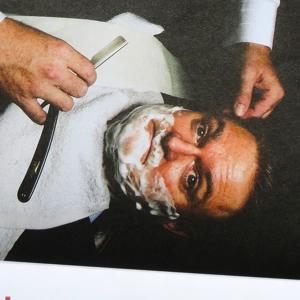


Joseph Boyden (born 31 Oct 1966) is, Wikipedia tells us, a Canadian novelist and short story writer.
"He grew up in Willowdale, North York, Ontario and attended the Jesuit-run Brebeuf College School." His father Raymond Wilfrid Boyden, was a medical officer who was awarded the Distinguished Service Order and was the highest-decorated medical officer of World War II.
Of Irish, Scottish and Métis decent, Boyden writes about the First Nations heritage and culture. Three Day Road, is a novel about two Cree soldiers serving in the Canadian military during World War I. It was inspired by Ojibwa Francis Pegahmagabow, the legendary First World War sniper. Boyden's second novel, follows the story of Will, son of one of the characters in Through Black SpruceThree Day Road. It won the Giller Prize.
He studied creative writing at York University and the University of New Orleans, and subsequently taught in the Aboriginal Student Program at Northern College. He divides his time between Louisiana, where he and his wife, Amanda Boyden, are writers in residence, and Northern Ontario."
We met recently in Ottawa to talk about his contribution to Penguin's Extraordinary Canadians series, Louis Riel & Gabriel Dumont (apologies for all the background clammer. It recedes a bit after the first few minutes).
Adrian Harrington is a noted antiquarian bookseller who specializes in first editions by Winston Churchill, Arthur Conan Doyle, Graham Greene, J.K.Rowling and, particularly, Ian Fleming. He is a Past President of the Antiquarian Booksellers Association (ABA), 2001–2003, and the immediate past President of the International League of Antiquarian Booksellers (ILAB). He has exhibited at major international book fairs around the world, and for the past decade has Chaired Britain's leading rare book event, the summer ABA Book Fair at Olympia, London.
We met late last year at the Toronto Antiquarian Bookfair to talk about the challenges that face the antiquarian book trade, notably an aging book collecting and bookseller population, and the closures of many bricks and mortar stores. I start off by asking Adrian what ILAB and others are doing to try to improve the situation.
Richard Charkin began his career in 1972 as Science Editor of Harrap & Co. He has since held many senior positions in the publishing world with companies such as Pergamon Press, Oxford University Press, Reed International/Reed Elsevier, and Current Science Group. At Macmillan Publishers Limited he served as Chief Executive Officer and Executive Director of Verlagsgruppe Georg von Holtzbrinck. He was also Chairman of Macmillan India Ltd.
In 2007 he was appointed Executive Director of Bloomsbury Publishing Plc. with responsibility for operations worldwide, spearheading growth through acquisitions, new publishing and international expansion. He's also a damned fine blogger, and a captivating raconteur.
I met Richard at his home in London. We talked in his garden - in competition with the occasional helicopter and airplane - about, among other things, what he considers to be the biggest challenges facing book publishing, and those publishers who he thinks have best met them.
Born in the mind of John Randle at the age of 14 when he first entered his school's press room, the Whittington Press started life in a disused cottage.
Its first book, Richard Kennedy's A Boy at the Hogarth Press, was printed on weekends during 1971-1972 on an 1848 Columbian.
Matrix - the Randles' revered annual publication on fine press printing - started out as a planned slim volume of some thirty two pages saddle stitched into stiff covers; the objective was for it to serve as " a means of seeing in print a few short pieces which would not in themselves justify the production of individual titles, but which together might make a worthwhile publication." Matrix 1 grew to seventy two pages, and had to be square backed.
With it the Randle's created an environment in which "author, artist and printer, punch-cutter and type-caster "can work separately and together to both nurture and explore each others' skills. The revered annual provides an important platform for typographical dialog among and between fine press aficionados on both sides of the Atlantic Ocean. I met John Randle recently in his repurposed gardener's cottage to talk about his Press, his calling, and his thoughts about the practice of fine press printing.
W. Gordon Graham was born ninety some years ago in Scotland. He attended university in Glasgow and after graduation enlisted in the army; he was awarded the Military Cross and Bar for active service in Burma. He started his postwar career as a freelance newspaper correspondent in Bombay writing for, among other publications: Business Week, Chemical Engineering Record, the Christian Science Monitor, and the Glasgow Herald. In 1950 he started augmenting his journalist's income with part-time work as a College and Trade Traveller for the McGraw-Hill Book Company. Six years later he was appointed their International Sales Manager, based in New York. He subsequently moved to London to run McGraw-Hill's European and the Middle Eastern book business. In 1974 he left the company to become Chairman and Chief Executive of Butterworths, where he oversaw a tenfold increase in turn over.
He 'retired' in 1990, at which time he became the founder-editor of LOGOS, The Professional Journal of the Book World. I had the privilege of interviewing Gordon Graham at his home in England. Among other things we spoke about his legendary career, and those qualities he thinks best characterize great publishers.
The Golden Cockerel Press is one of most important, productive English private presses in the history of fine printing. In 2002 Oak Knoll Press and the British Library co-published the first extensive study of the Golden Cockerel. Written by Roderick Cave, the book is based on interviews and the Press' widely-scattered archives. Responsible in large part for a revival in wood-engraving, Golden Cockerel Press books published between 1920-1960 contain the work of brilliant practitioners such as Robert Gibbings (who owned the Press throughout much of the 20s), Eric Gill, David Jones, Agnes Miller Parker, Eric Ravilious, and John Buckland-Wright. The Press' literary achievement was also significant; it published original manuscripts by writers such as H.E. Bates, A.E. Coppard and T.E. Lawrence.
I met with Roderick Cave at the British Library to discuss the works and history of The Golden Cockerel Press.
Richard Greene's Boxing the Compass recently won the Governor General's Award for English Poetry.
Here's how the jury saw it:
"Richard Greene's Boxing the Compass leaves us feeling unmoored, adrift across time and voice. The matchless long poem at its heart pulls us back to our always-moving selves, on an always-moving earth. We follow him in his offbeat but strangely familiar travels."
Here's my review of the book in the Globe and Mail
Originally from St. John's, Newfoundland, now living in Cobourg, Ontario, Richard is not only a poet, he's also a biographer, critic and professor of English at the University of Toronto. He edited Graham Greene: A Life in Letters (2007) and has written a biography of British poet Edith Sitwell. Boxing the Compass is his third collection of poetry.
"Dianne Warren is best known for her short stories and plays. One of her three published plays, Serpent in the Night Sky, was a GG finalist in 1992, and she has written several radio dramas for CBC. She has published three short story collections – one of which, Bad Luck Dog (1993), won three Saskatchewan Book Awards. Her stories can also be found in numerous anthologies, journals and magazines. A long-time resident of Saskatchewan, she brings to her writing an honest portrayal of people in rural communities, conveying their subtle complexities and deep attachments to family farmland. Dianne Warren was born in Ottawa, and is currently living in Regina."
So says the Canada Council. Here's what Dianne has to say about her 2010 Governor General's English Fiction Award winning novel Cool Water
Iain Stevenson has worked with Longman, Macmillan, Pinter, Leicester University Press, Wiley, and The Stationery Office. In 1986 he founded the environmental publisher Belhaven Press. He created the award winning MA in Publishing Studies at City University London and was a Professor in the Department of Journalism and Publishing there between 1999 and 2006. He is active on the governing and advisory board of the Publishers Association.
Current research is centred upon the history of British publishing and the applications of new technology in publishing, especially e-books and alternatives to the printed monograph in academic and scholarly communication. We met at his offices (which occasionally sound as if they're under siege) to talk about his excellent new book, Book Makers: British Publishing in the Twentieth Century, published by British Library.
Alexander MacLeod was born in Inverness, Cape Breton and raised in Windsor, Ontario. His award-winning stories have appeared in a variety of leading journals, some have been selected for The Journey Prize Anthology. He holds degrees from the University of Windsor, the University of Notre Dame, and McGill. He currently lives in Dartmouth, Nova Scotia and teaches at Saint Mary's University in Halifax. Light Lifting, his first book, a collection of short stories, has been shortlisted for Canada's Giller Prize.
We met to discuss the work, specifically 'Miracle Mile', the collection's first story. Our conversation touches on technique and themes, the search for significance and meaning, disciplines, how, why and what people care about, and the use of metaphor and pace.
Alexander MacLeod photo by Heather Crosby.
From the publisher's feed