
Sign up to save your podcasts
Or

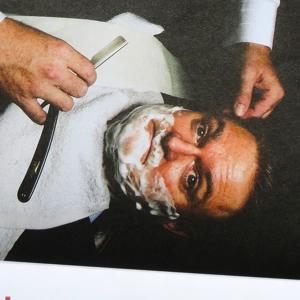


Publisher and book collector David R. Godine is the founder and president of a small, independent, eponymous publishing house, located in Boston, Massachusetts. It produces between twenty and thirty titles per year and maintains an active reprint program.
Bio: After receiving degrees from Roxbury Latin School, Dartmouth College, and Harvard University, Godine worked for Leonard Baskin, the renowned typographer and printmaker, and master printer Harold McGrath. Going solo in 1970, from the confines of a deserted barn, using his own presses, Godine printed his first books. Most were letterpress, limited editions, printed on high-quality paper. In 1980, the company initiated its children's program. A number of these books have become classics. The company has also published two important series: Imago Mundi, a line of original books devoted to photography and the graphic arts; and Verba Mundi, featuring the most notable contemporary world literature in translation. In 2002, Godine bought most of Black Sparrow Books's backlist.
2010 marked the fortieth anniversary of Godine's multiple award-winning publishing enterprise. We met recently in his office to talk about those books he's most proud of having published, about the books he is, as a collector, most proud to own, and about how best one might go about collecting the Godine imprint.
Listen for the church bells.
Elke and Tim Inkster have made an important and enduring contribution to Canadian literature. In 1974 they founded The Porcupine's Quill (PQL), a publishing house based in Erin, Ontario. Renowned for excellence in design and production, and for taking risks with new, unpublished authors, the firm has helped kick-start the careers of many of Canada's best known writers . PQL publications have won numerous awards and serve as an example to the world of Canadian publishing excellence.
Its first title came off the press in 1975: Brian Johnson's only book of poems, Marzipan Lies. Brian Johnson is currently the film critic for Maclean's and "claims to have met Mick Jagger of the Rolling Stones, twice!" (almost certainly an in-joke here that I'm not privy to). Many of the early titles were slim volumes written by poets Tim Inkster had met as a student at the University of Toronto — amongst them Ed Carson who until recently was President of Penguin Canada, and Brian Henderson who is currently the publisher at Wilfred Laurier University Press.
I met the Inksters recently in the garden behind their Press House. It butts up against the West Credit River, where this little critter spent most of the morning chopping and hauling lumber from one bank to the other.
While he was doing this Tim and I made our way back into the press room to talk about the history of The Porcupine's Quill and how to go about collecting its books. During this discussion we hit on how market forces often influence appearance: namely glossy versus matte finished covers. It was here that Tim got into describing the difficulties he's encountered dealing with Chapters, Canada's one and only big box bookstore.
Collector, bibliographer, and typographer Mark Samuels Lasner is Senior Research Fellow at the University of Delaware Library and a recognized authority on the literature and art of the late Victorian period. A graduate of Connecticut College, he is the author or co-author of among other works, The Bookplates of Aubrey Beardsley (Rivendale Press, 2008), A Bibliography of Enoch Soames (Rivendale Press, 1999), The Yellow Book: A Checklist and Index (Eighteen Nineties Society, 1998), A Selective Checklist of the Published Work of Aubrey Beardsley (Thomas G. Boss Fine Books, 1995), and England in the 1890s: Literary Publishing at the Bodley Head ( Georgetown U Press, 1990).
His articles and notes have appeared in the Book Collector, Browning Institute Studies, Notes and Queries, and other journals. He has organized or co-curated exhibitions across the United States.
I met with Mark in St. Petersburg, Florida to discuss the history of The Bodley Head and how one might best go about collecting work produced by this publisher.
Prof. David Staines is a Canadian literary critic, university professor (English at the University of Ottawa), writer, and editor. He specializes in three literatures: medieval, Victorian and Canadian. He is editor of the scholarly Journal of Canadian Poetry (since 1986) and general editor of McClelland and Stewart's New Canadian Library series (since 1988). His essay collections, include The Canadian Imagination (1977), a book that introduced Canadian literature and literary criticism to an American audience, plus studies on Morley Callaghan and Stephen Leacock.
But it's not for any of this (save a defense of Callaghan in the face of John Metcalf's condemnations) that I sought Prof. Staines' company. Rather it's because he co-edited Northrop Frye on Canada (University of Toronto, 2001). Frye, Canada's most celebrated literary theorist, a man many hold responsible for the dearth of evaluative analysis in Canadian criticism; a man whose thoughts and person Staines knows (and knew) very well; is the reason we met.
Please listen to a conversation that reveals the author of Fearful Symmetry and The Anatomy of Criticism as a surprisingly self contradictory critic; speaks to the remarkable talent of Alice Munro and Canada's current stock of strong fiction writers; outlines criteria for acceptance into the New Canadian Library; and identifies some of the best Canadian novels.
Today, the thriving company maintains an inventory of about 23,000 titles. Specialties include books about bibliography, book collecting, book design, book illustration, book selling, bookbinding, bookplates, children's books, Delaware books, fine press books, forgery, graphic arts, libraries, literary criticism, marbling, paper making, printing, publishing, typography & type specimens, and writing & calligraphy – plus books about the histories of all of these fields.
I met with Bob to talk about the story of his company, about his love of books, of A. Edward Newton, of traveling the globe to meet fellow bibliophiles, and of visiting used bookstores.
Richard Holloway is a Scottish writer/broadcaster and former Bishop of Edinburgh in the Scottish Episcopal Church who was educated at Kelham Theological College and the Union Theological Seminary, New York City. Between 1959 and 1986 he was curate, vicar and rector at parishes in England, Scotland and the United States. He then became Bishop of Edinburgh, a position he resigned from in 2000.
Now an outspoken commentator on religious belief in the modern world, he is author of more than 20 books, well-known for his support of liberal causes, including human rights for gays and lesbians in and outside of the church. Holloway lives in Edinburgh with his American-born wife Jean. They have three adult children.
We talk here about Between the Monster and the Saint, as he puts it: 'a gradual plea for self awareness and forgiveness, and through this, tolerance and compassion toward others.
Poet, playwright and novelist Adam Thorpe was born in Paris in 1956 and grew up in India, Cameroon and England. After graduating from Magdalen College, Oxford, in 1979, he started a theatre company and toured villages and schools before moving to London where he taught Drama and English Literature. Thorpe lives in France with his wife and three children. His most recent books are a collection of short stories, Is This The Way You Said? (2006); a poetry collection, Birds with a Broken Wing (2007); and the novels The Standing Pool (2008) and Hodd (2009) in which he depicts Robin Hood as a glorified 13th century gangster surrounded by a group of psychopathic thugs, desperate men preying on the innocent.
We talked recently in Toronto at the IFOA, about the Robin Hood myth, and our apparent need to create heroes to address injustice, to express indignation, and right the wrongs of an unjust world. In the conversation we riff off William Flesch's contention that fiction satisfies our desire to see the good vindicated and the wicked get their 'comeuppance.'
"Good reviewing," writes Carmine Starnino in the not-to-be-missed introduction to his A Lover's Quarrel Essays and Reviews, "... reviewing that believes in literary failure – is invaluable because by calling one poem good and another less good, and adducing clear reasons for those claims, it offers one writerly interpretation of a particular achievement, and invites the reader to sympathetically tag along; his or her senses momentarily borrowing the reviewer's responses."
We met in a somewhat echoey corner of the National Gallery in Ottawa to hold This Way Out up to scrutiny, naming names: which of his poems are good, which bad. In addition: who are the best and worst contemporary Canadian poets. Listen as we walk the walk of A Lover's Quarrel.
Photo credit: Gaspereau Press
"The Quill & Brush was established in 1976 as an outgrowth of a part-time business run by Allen and Patricia Ahearn who started collecting and cataloging books in the early 1960s. The Ahearns have over 45 years of experience in the field. At present the Quill & Brush is operated by Allen and Pat and their two daughters, Beth Fisher and Sue Regan.
The Quill & Brush specializes in first editions of literature, mystery/detective fiction and poetry, as well as collectible books in all fields. The firm focuses mainly on books published from the middle of the 19th century to the present. Their stock of over 15,000 books is housed in a beautiful library in the Ahearns' home, nestled in the woods at the base of scenic Sugarloaf Mountain in Maryland…"
…which is where we met to talk about ebooks and their impact on the future pricing of collectible books, about collecting what others don't; first books; Larry McMurtry, best used book selling practices and much more.From the publisher's feed