
Sign up to save your podcasts
Or

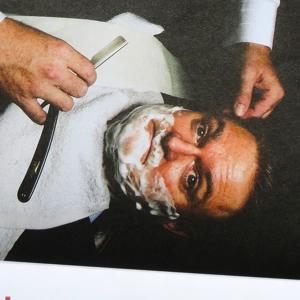


Nicholson Baker is an American writer of fiction and non-fiction. As a novelist he often focuses on describing the minute physical detail of our surroundings, straws and escalators for example, writing on provocative topics such as voyeurism, phone sex and planned assassination. Enthusiasts laud his ability to explore and illuminate the human psyche, critics call him a boring gadfly. Much of his non-fiction deals with the printed word, how it's presented, stored, consumed.
We talk here about the future of the book, ebooks, the ipad, the Kindle, Brodart dust jacket covers, Daniel Dafoe, bloggers, the CIA, weapons scientists at the Library of Congress, letterpress printing and the pulling of books off shelves.
Writer/comedian A. L. Kennedy lives and works in Glasgow and is a Fellow of the Royal Society of Literature. In 2003 she was nominated by Granta magazine as one of 20 'Best of Young British Novelists'. Her novel Day (2007), won the Costa Book of the Year Award. She reviews and contributes to most of the major British newspapers, and has been a judge for both the Booker Prize for Fiction (1996) and The Guardian First Book Award (2001).
Her first book, Night Geometry and the Garscadden Trains (1990), a bleak collection of short stories, won several awards including the Mail on Sunday/John Llewellyn Rhys Prize, a Scottish Arts Council Book Award and the Saltire Society Scottish First Book of the Year Award. Other short story collections include Now That You're Back (1994) and Original Bliss (1997), and her novels include: Looking for the Possible Dance (1993); So I Am Glad (1995), winner of the Encore Award, which focuses on child sexual abuse and its consequences in adulthood; and Everything You Need (1999), the story of a middle-aged writer living on a remote island and his attempt to build a relationship with his estranged daughter. We met at the International Festival of Authors in Toronto to talk about humour, the buzz of post-suicide attempts, living as if you are going to die, self esteem, making other worlds, changing reality, fictional rehearsals, Buster Keaton hats, the physicality of great comic actors, storytelling and investing in lies, Lolita, Nicola Six, Shakespeare, Hamlet, Yann Kott, Benny Hill, Blazing Saddles, freedom and child molestation.A small college cannot hope to have a large library, but if it sets to work along the right lines it may aspire to the possession of a fine one… A book may be a thing of beauty, and an example of a great craft which we must not allow to die. The means of craft and the aspiration toward beauty live on in our College library.
— Robertson Davies, the Founding Master
Since its inception in 1963, the Library at Massey College has developed special collections in the History of the Book as well as supporting a working nineteenth-century hand printing shop.
The holdings of books and manuscripts include material on the history of printing, papermaking, bookbinding, palaeography, calligraphy, type design, book collecting, and bibliography. The examples of book production range from the fifteenth century to the present, with a particular strength in nineteenth century colour printing and publishers' bookbindings represented in the Ruari McLean Collection. The collections also include the papers of Canadian graphic designer Carl Dair. In 1981, the Library was named for the Founding Master of the College, Robertson Davies, and contains editions and translations of his writings.
At the time of this interview Marie Korey was Librarian at The Robertson Davies Library. She is a leading authority on the history of the book. We met to talk about collecting books in this field.
I assume the role of a rich (difficult) book collector (easy) with a passion for books about books (very easy) who retains Marie to help him acquire the best of the best possible books and materials found in this category.
Here are a few of the 'essential' titles mentioned by Marie:
Bury, Richard de (1287-1345) Bishop of Durham, wrote "Philibiblon" which survives in many manuscript copies as well as printed editions.
"Dialogue" on Calligraphy and Printing in the sixteenth century, attributed to Christopher Plantin; this contains one of the earliest descriptions of typefounding. There was a facsimile done, with an English translation by Ray Nash published in 1964 under the title: Calligraphy & Printing in the sixteenthe century. Dialogue attributed to Christopher Plantin.
Moxon, Joseph (1627-91), hydrographer, instrument maker, author and printer. He began publishing his "Mechanick Exercises" in monthly parts in 1677; the second volume, issued in 1683-84, was devoted to printing and type-founding. It is the first comprehensive manual on the subject in any language.
Bosse, Abraham. Traicté des manieres de graver en taille douce. Paris, 1645. Early manual on copperplate engraving.
Senefelder, Alois. A complete course of lithography. London: Printed for R. Ackerman, 1819.
"Robert Fulford is a Toronto author, journalist, broadcaster, and editor. He writes a weekly column for The National Post and is a frequent contributor to Toronto Life, Canadian Art, and CBC radio and television. His books include Best Seat in the House: Memoirs of a Lucky Man (1988), Accidental City: The Transformation of Toronto (1995), and Toronto Discovered (1998)." This is how the man describes himself on his website. I'd only add that I think he is the best of his kind.
I sat down with him at his home in Toronto to talk about his long, distinguished career as a Canadian critic/journalist, and about evaluative criticism and what matters most in a book.
Kevin Gilmartin is a professor of English at California Institute of Technology, and visiting professor at the Centre for Eighteenth Century Studies at York University in England. He is the author of Print Politics: The Press and Radical Opposition in Early Nineteenth-Century England (Cambridge, 1996) and Writing against Revolution: Literary Conservatism in Britain, 1790-1832 (Cambridge, 2007), and the co-editor with James Chandler of Romantic Metropolis: The Urban Scene of British Culture, 1780-1840 (Cambridge, 2005). His essays have appeared in such journals as Studies in Romanticism, ELH, and The Journal of British Studies, and in several essay collections. His research interests include Romantic literature, the politics of literary culture, the history of the periodical press and of print culture, and intersections between literary expression and public activism.
We talk at length about 18th century British essayist/critic William Hazlitt.
Richard Coxford is the former proprietor of Bytown Bookshop in Ottawa, Canada. He has been collecting fine/press books for many years. We talk here about their history, and the joys and challenges of hunting them down.
Richard Landon is Director of the Thomas Fisher Rare Book Library and Professor of English. He has taught courses on aspects of the history of the book and bibliography for many years in the University of Toronto's Graduate Department of English and the Faculty of Information. Among his publications are Bibliophilia Scholastica Floreat (2005), Ars Medica (2006), 'Two Collectors: Thomas Grenville and Lord Amherst of Hackney' in Commonwealth of Books (2007), 'The Elixir of Life: Richard Garnett, the British Museum Library, and Literary London' in Literary Cultures and the Material Book (2007), and articles in the History of the Book In Canada (2004-2007).
We met in his office to talk about his career, the role of a rare books librarian, the Encyclopédie, changes that have occurred in the market place, collecting as scholarship, Charles Darwin, Galileo, Copernicus, the future of the Thomas Fisher collection, ebooks, books about books, unpublished medieval texts and limitless collecting possibilities.
In 1841 Thomas Babington Macaulay observed that "it is good that authors should be remunerated; and the least exceptionable way of remunerating them is by a monopoly. Yet monopoly is an evil. For the sake of the good we must submit to the evil; but the evil ought not to last a day longer than is necessary for the purpose of securing the good."
In his new book Moral Panics and the Copyright Wars, highly regarded copyright lawyer Bill Patry concurs with Macaulay, arguing that 'copyright should last only as long as is necessary to ensure that works that would not have been created but for the incentive of copyright are created.'
The book at once demonstrates how copyright is a utilitarian government program – not a property or moral right - and deplores the manner in which debate has deteriorated into a battle between oversimplified metaphors; language which demonizes everyone involved – pirates and orphans alike. This has led to bad business and bad policy decisions. "Unless we recognize that the debates over copyright are debates over business models," says Patry, "we will never be able to make the correct business and policy decisions."
A former copyright counsel to the U.S. House of Representatives, policy adviser to the Register of Copyright, law professor and author of the definitive 'Patry on Copyright', the man, currently copyright counsel to Google, is a centrist and advocate of balanced copyright laws, and, perhaps most significantly, the owner of a kickin' pair of running shoes
Moral Panic concludes with a call not for strong or weak copyright laws but more effective ones, designed to maximize the creation of new works and learning, and minimize obstacles which prevent others from accessing and building upon them.
Listen here as Patry, speaking as a concerned, informed citizen not as a Google employee, works his way out from Macaulay's lucidity, a sampling of which I cite to start off our conversation
Copyright activist, speaker, teacher (how about 'speacher'…or 'spreacher'), columnist, science fiction novelist, short story writer, co-editor of Boing Boing, and the very manifestation of articulate dynamism, Cory Doctorow was in Ottawa to promote his novel Little Brother. a fast paced, current-day 1984-like polemic calling for teens to subvert security measures, especially those used by governments that claim to "defend my freedom by tearing up the Bill of Rights."
As Austin Grossman puts it in the New York Times:
MY favorite thing about "Little Brother" is that every page is charged with an authentic sense of the personal and ethical need for a better relationship to information technology, a visceral sense that one's continued dignity and independence depend on it: "My technology was working for me, serving me, protecting me. It wasn't spying on me. This is why I loved technology: if you used it right, it could give you power and privacy…Little Brother argues that unless you're passably technically literate, you're not fully in command of those constitutionally guaranteed freedoms — that in fact it's your patriotic duty as an American to be a little more nerdy."
I'm clearly not nerdy enough… incarcerated I am, in fact, by technological illiteracy…incapacitated too…neither machine I used to record my conversation with Cory worked for the full duration of our encounter…they did however capture enough, thankfully, to provide his engaging take on the future of the book, the seeds of its destruction…and mention of a guy with a lemon up his nose.
(For discussion of copyright, please listen to a giant in the field, Bill Patry here).
From the publisher's feed