
Sign up to save your podcasts
Or



Welcome to the second series of The Bibliotherapists, and our FINAL episode, featuring MATT TRINETTI, a community builder, publisher, TED talker and the cofounder of London Writers’ Salon & Writers' Hour - aka the friendliest corner on the internet for writers.
A must-listen for aspiring writers and people considering a new adventure.
-
🎧 5 takeaways from our conversation with Matt
1. Writing as a Tool for Self-Discovery
Matt shares how journaling and writing helped him process grief, burnout, and career confusion, ultimately leading to personal breakthroughs.
“We all have something to say. The act of saying it is what changes us.”
2. Permission to Call Yourself a Writer
He encourages everyone to drop the imposter syndrome and claim their creative identity simply by showing up.
3. Community is Everything
The success of the London Writers’ Salon proves that while writing is often a solitary act, writing in community transforms the experience.
4. The Myth of Motivation
You don’t need to feel inspired to write; consistency, ritual and accountability matter more than fleeting passion.
“When you show up consistently to your writing, you show up more honestly in your life.”
5. Everyone Has a Story Worth Telling
Matt urges listeners to honour their unique perspectives, reminding us that “your story could be the light someone else needs.”
-
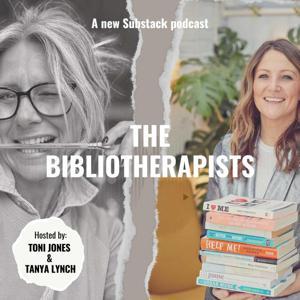
The Bibliotherapists is a podcast celebrating the healing power of words, hosted on - and featuring writers and creatives from - the Substack platform.
Find Matt on Substack > https://substack.com/@matttrinetti
Read the Writer's Hour Magazine > https://writershour.substack.com/
Toni (The Shelf Help Clubhouse) on Substack > https://shelfhelpclub.substack.com/
Tanya (withEase) on Substack > https://tanyalynch.substack.com/
WATCH THE VIDEO
Video recordings of The Bibliotherapists interviews are available exclusively to our Substack subscribers.
Welcome to the second series of The Bibliotherapists, and our seventh episode, featuring Jennie Godfrey, the Sunday Times bestselling author of The List of Suspicious Things.
This is a lovely conversation on reinvention, recovery, and the power of words to change lives (our own and others).
🎧 5 takeaways from our conversation with Jennie
1. It’s Never Too Late to Begin
Jennie started writing her debut novel aged 49, after leaving a corporate HR role. Her midlife reinvention led to a Sunday Times number-one bestseller.
“I realised I prefer uncertainty to unhappiness.”
2. There are Commonalities Between the Writing and the Recovery Process
The Artist’s Way (which encourages a spiritual approach to overcoming creative blocks) was a transformative tool for Jennie (also in recovery), helping her unlock creativity, reconnect with herself, and build a sustainable writing practice.
3. Substack as a Creative Lifeline
After the success of her first book left her frozen with pressure, writing weekly on Substack was a way to unlock writer’s block, find her voice again, and begin novel number two.
4. Writing = Discipline + Joy
Jennie treats writing like a job, but also calls it her ‘treat’. Her routine includes early morning journalling and meditation, and bedtime reading.
“Reading is how I soothe myself. Writing is how I make sense of it all.”
5. Fiction as Comfort
From To Kill a Mockingbird to comforting Yorkshire dialect in The Secret Garden, Jennie’s favourite books have offered escape, identity, and connection.
-
The Bibliotherapists is a podcast celebrating the healing power of words, hosted on - and featuring writers and creatives from - the Substack platform.
Find Jennie on Substack > https://substack.com/@jenniegodfrey
Toni (The Shelf Help Clubhouse) on Substack > https://shelfhelpclub.substack.com/
Tanya (withEase) on Substack > https://tanyalynch.substack.com/
WATCH THE VIDEO
Video recordings of The Bibliotherapists interviews are available exclusively to our Substack subscribers.
Welcome to the second series of The Bibliotherapists, and our sixth episode, featuring Stacey Heale, a writer, speaker, curator, fashion academic, and campaigner known for her honest discussions on womanhood, grief, and rebuilding after loss.
This is a (surprisingly?) uplifting conversation about life, love and rebuilding.
🎧 5 takeaways from our conversation with Stacey
1. Grief is a Portal, Not a Problem to Solve
Stacey shares how the death of her husband Greg reshaped her entire identity and how grief became a teacher, not just a wound.
“If we can feel deeply, we can connect deeply.”
2. Words Save Lives
Through journalling, reading and speaking, Stacey learned to give voice to pain and help others feel less alone in theirs.
3. There’s Healing Power in Telling the Truth
Stacey’s writing is raw and real. She speaks to the unspeakable in a way that creates space for healing and community.
4. You Don’t Need to ‘Get Over’ Grief
Stacey rejects the notion of closure, instead advocating for grief literacy, compassion and continuing bonds with the people we’ve lost.
“Love never ends. It just changes shape.”
5. You Can Be Broken and Beautiful
Amidst profound loss, Stacey found strength, creativity and a deeper connection to herself and her daughters.
-
The Bibliotherapists is a podcast celebrating the healing power of words, hosted on - and featuring writers and creatives from - the Substack platform.
Find Stacey on Substack > https://chaoticheartsclub.substack.com/
Toni (The Shelf Help Clubhouse) on Substack > https://shelfhelpclub.substack.com/
Tanya (withEase) on Substack > https://tanyalynch.substack.com/
WATCH THE VIDEO
Video recordings of The Bibliotherapists interviews are available exclusively to our Substack subscribers.
Welcome to the second series of The Bibliotherapists, and our fifth episode featuring Helen Marie, a professional therapist sharing thoughts from the therapy room.
This episode is a must-listen for anyone feeling overwhelmed, depleted and/or disconnected and looking for tools to soothe.
🎧 5 takeaways from our conversation with Helen
1. Regulation is the Foundation of Everything
Helen explains how nervous system dysregulation lies at the heart of burnout, anxiety, people-pleasing and shame, and why addressing this from a place of safety needs to come first.
2. Boundaries are Acts of Self-Love
Helen reminds us that saying no, prioritising ourselves, and protecting our peace isn’t selfish, and that these things are essential for healing and wholeness.
“Boundaries are the gateway to self-worth.”
3. Rest is a Right, Not a Reward
The therapist challenges the hustle paradigm, inviting us to embrace stillness and softness as powerful antidotes to survival mode.
4. Self-Abandonment is Learned (and that means it is UNlearnable)
Many women are conditioned to disconnect from themselves. In this conversation Helen offers gentle tools to rebuild that trust and return to the body,
“Healing doesn’t mean you never get triggered—it means you know how to return to yourself.”
5. Healing is a Remembering
Through tools like therapy, embodiment and inner reparenting, Helen invites clients/readers/listeners to come back to who they are.
-
The Bibliotherapists is a podcast celebrating the healing power of words, hosted on - and featuring writers and creatives from - the Substack platform.
Find Helen on Substack > https://substack.com/@helenmaries
Toni (The Shelf Help Clubhouse) on Substack > https://shelfhelpclub.substack.com/
Tanya (withEase) on Substack > https://tanyalynch.substack.com/
WATCH THE VIDEO
Video recordings of The Bibliotherapists interviews are available exclusively to our Substack subscribers.
Welcome to the second series of The Bibliotherapists, and our fourth episode featuring Donna Lancaster, an author, life transitions coach, group facilitator and spiritual mentor with 36 years experience.
This episode is a balm for anyone navigating loss, longing or big life transitions.
🎧 5 takeaways from our conversation with Donna
1. Grief is Not a Problem—It’s a Process
Donna reframes grief not as something to ‘get over’ but as a sacred and essential emotional passage that connects us to our deepest selves.
“Grief is sacred. It’s the price we pay for loving.”
2. Emotional Literacy is Radical Self-Care
Donna invites us to reconnect with our feelings through practices like breathwork, ritual, journaling and crying.
3. The Power of Community in Healing
Her work on The Bridge is rooted in the belief that healing happens when we’re witnessed, supported and held by others who’ve walked similar paths.
4. Women and Shame
She explores how generations of women have inherited shame around voice, expression, desire and softness, and shares ideas on how we can reclaim our wholeness.
“We don’t need fixing—we need feeling.”
5. You Don’t Need to Be Fixed
The most powerful message of all: healing isn’t about changing who you are, it’s about remembering who you were before the world told you to shrink
-
The Bibliotherapists is a podcast celebrating the healing power of words, hosted on - and featuring writers and creatives from - the Substack platform.
Find Donna on Substack > https://donnalancaster.substack.com/
Toni (The Shelf Help Clubhouse) on Substack > https://shelfhelpclub.substack.com/
Tanya (withEase) on Substack > https://tanyalynch.substack.com/
WATCH THE VIDEO
Video recordings of The Bibliotherapists interviews are available exclusively to our Substack subscribers.
It's a new series of The Bibliotherapists, and for our third episode we're joined by Daisy Buchanan, award-winning author, journalist, podcaster and writing coach.
In this uplifting conversation, Daisy talks about the healing power of fiction, the joy of reading as ritual, and how she uses books to support her mental health.
🎧 5 takeaways from our conversation with Daisy
1. Books Can (should!) Be a Daily Act of Self-Care
Daisy shares how fiction helps soothe her anxiety and why she reads first thing each morning to calm her ‘flashing and beeping brain.’
2. Fiction is Powerful—and also Practical
Stories help us process emotion, build empathy, and activate creativity. Daisy champions binge-able novels as a way to feel better fast.
“Your attention span will grow with reading—but only if you let it.”
3. Bibliotherapy Can Come in All Forms
During lockdown, Daisy rediscovered the joy of reading fiction via the bestselling family saga, The Cazalet Chronicles, proving the right book at the right time can be transformative.
4. Addiction, Anxiety, and Attention
Daisy draws parallels between sobriety, phone addiction, and our fractured attention spans, suggesting that books are the ‘fibre’ our brains need.
“The iPhone is the great unquittable. Books are my antidote.”
5. You Don't Need to Be Perfect, Just Start
Whether it’s running, writing, or reading, Daisy reminds us to drop perfectionism and shares the ‘rule of three’ (one good session in three is enough to build a life-changing habit).
-
The Bibliotherapists is a podcast celebrating the healing power of words, hosted on - and featuring writers and creatives from - the Substack platform.
Find Daisy on Substack > https://substack.com/@creativeconfidenceclinic
Toni (The Shelf Help Cluhouse) on Substack > https://shelfhelpclub.substack.com/
Tanya (withEase) on Substack > https://tanyalynch.substack.com/
WATCH THE VIDEO
Video recordings of The Bibliotherapists interviews are available exclusively to our Substack subscribers.
Hello Shelfies,
I’m trying something new for summer, a time when lots of us are busy doing lots of things that hopefully support our self health (social, physical, emotional, spiritual) but don’t necessarily support live self-help events.
For the next few months some of our Mondays will feature pre-recorded author events that you can watch/do in your own …
It's a new series of The Bibliotherapists, and for our second episode we are joined by Sam Baker; journalist, author, broadcaster, professional bookworm and creator of The Shift.
Having spent decades in magazine land, today Sam, 59, is known for ‘endlessly banging the drum for women in midlife and beyond’.
🎧 5 takeaways from our conversation with Sam
1. Midlife Can Be a Catalyst
Sam challenges the narrative of decline and instead urges us to embrace midlife as an opportunity to reset, redefine and reclaim personal power.
2. Menopause is a Mental Health Issue
From brain fog to burnout, Sam shares how hormonal shifts in her late 40s impacted her identity, confidence and career.
“I thought I’d be running the world by 50. Instead, I was on the floor.”
3. Rest is Revolutionary
After a 20-year career in magazines, Sam hit a wall, forcing her to reevaluate rest, and understand that stepping back to breathe wasn’t weakness, but the beginning of a new way forward.
4. There’s No One Way to Be a Woman Over 40
Through her podcast and book, The Shift, Sam amplifies the voices of all kinds of women navigating midlife with authenticity.
“Midlife is not a crisis. It’s a chance to ask: who am I now?"
5. Books as Tools for Change
From memoirs to novels and feminist essays, Sam believes the right book at the right time can change your entire mindset — especially when navigating big transitions.
-
The Bibliotherapists is a podcast celebrating the healing power of words, hosted on - and featuring writers and creatives from - the Substack platform.
Find Sam on Substack > https://theshiftwithsambaker.substack.com/
Toni (The Shelf Help Cluhouse) on Substack > https://shelfhelpclub.substack.com/
Tanya (withEase) on Substack > https://tanyalynch.substack.com/
WATCH THE VIDEO
Video recordings of The Bibliotherapists interviews are available exclusively to our Substack subscribers.
It's a new series of The Bibliotherapists, and for our first episode we are joined by Clover Stroud, a bestselling author who writes on the way life feels.
Clover writes about the big stuff - creativity, grief, joy, motherhood, sex, death - as well as life’s small but meaningful moments.
🎧 5 takeaways from our conversation with Clover
1. Grief as Catalyst for Creativity
Clover’s writing often emerges from personal loss (people, places, identity). She believes grief isn’t something to avoid, but something that can transform and expand us.
2. The Power of Saying Yes
Her work is also very much a celebration of life in all its mess and majesty. Even in pain, the writer finds ways to say yes to love, art, motherhood and being fully human.
“I want to say yes to life. That’s the message in everything I write.”
3. Writing as Spiritual Practice
For Clover, writing is not just craft—it’s communion.
4. Motherhood and Sisterhood in Full Colour
Clover speaks candidly about the beauty, exhaustion, wildness and transformation that comes with losing her mother, raising five children and grieving her sister.
“I write about the things I don’t understand in order to try and understand them.”
5. There’s No Map, Only The Work
Clover urges aspiring writers to stop waiting for permission. The only way forward, she says, is to show up for The Work and let the words take shape.
-
The Bibliotherapists is a podcast celebrating the healing power of words, hosted on - and featuring writers and creatives from - the Substack platform.
Find Clover on Substack > https://substack.com/@cloverstroud
Toni (The Shelf Help Cluhouse) on Substack > https://shelfhelpclub.substack.com/
Tanya (withEase) on Substack > https://tanyalynch.substack.com/
WATCH THE VIDEO
Video recordings of The Bibliotherapists interviews are available exclusively to our Substack subscribers.
From the publisher's feed

12,840 Listeners

5,100 Listeners
1,220 Listeners
52 Listeners
0 Listeners