
Sign up to save your podcasts
Or



Based on Podcast App listening data
Watch the full uncut interview HERE: https://thebrinkpodcast.substack.com
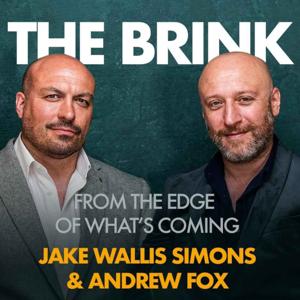
In this episode of The Brink, Andrew and Jake are joined by former US Special Representative for Iran Elliott Abrams for a wide-ranging conversation on the aftermath of the Iran war, Donald Trump’s foreign policy, and the future of American power in the Middle East.
We examine the state of Iran’s nuclear programme after the 12-day war and ask whether the current negotiations are simply delaying the problem rather than solving it. Abrams warns that any sanctions relief risks strengthening the regime while doing little to address its missiles, proxy militias, or long-term ambitions.
The conversation also explores Hezbollah, Lebanon, and the wider collapse of Iran’s so-called Ring of Fire following October 7th. Abrams argues that while Israel severely weakened Iran’s regional network, the underlying threat remains unresolved unless the regime itself is ultimately confronted.
We also discuss Donald Trump’s approach to power and foreign policy. From the Strait of Hormuz crisis to Venezuela, NATO, and Ukraine, Abrams reflects on Trump’s strengths, weaknesses, and governing style, including the lack of long-term strategic planning inside the administration.
Finally, we look ahead to the future of American politics, the battle between traditional conservatives and the MAGA movement, and whether figures like Marco Rubio or JD Vance could define the next era of the Republican Party.
Don't forget to check out our merch store: https://www.thebrinkmerch.com/
Chapters
00:00 Introduction
04:55 Iran's Proxy Militia and Regional Dynamics
10:09 Nuclear Deal and Missile Concerns
15:12 Proxy Militia and Lebanon's Role
20:31 Economic Impact and Sanctions Relief
25:50 Trump's Negotiation Strategy and Military Planning
30:50 Lessons Learned and Future Prospects
35:50 Venezuela and Trump's Legacy
Hosted on Acast. See acast.com/privacy for more information.
Watch the full uncut interview HERE: https://open.substack.com/pub/thebrinkpodcast/p/the-brink-in-somaliland-rageh-omar?r=63dafp&utm_campaign=post&utm_medium=web&showWelcomeOnShare=true
In this episode of The Brink, Andrew and Jake are joined by journalist and broadcaster Rageh Omaar for a conversation from Hargeisa on the extraordinary story of Somaliland and why this unrecognised state is suddenly becoming one of the world’s most important geopolitical flashpoints.
We explore Somaliland’s history as a former British protectorate, its brutal war for independence from Somalia, and how it rebuilt itself into a relatively stable and democratic country despite receiving almost no international recognition. Rageh explains why Somaliland sees itself as a nation that has been unfairly locked out of the international system, even while functioning more effectively than many recognised states.
The conversation then turns to the historic decision by Israel to formally recognise Somaliland in December 2025. Rageh discusses why the move transformed Somaliland’s international profile overnight and why relations between Somaliland and Israel have developed so warmly despite Somaliland being a deeply conservative Muslim society.
We also examine the wider geopolitical battle unfolding across the Horn of Africa. From China and Turkey’s growing influence in Somalia and Djibouti to the strategic importance of the Bab el-Mandeb shipping route, we discuss why global powers are increasingly focusing on Somaliland and whether Britain is making a major strategic mistake by failing to recognise it.
Finally, we discuss Somalia’s ongoing instability, the threat posed by Al Shabaab, the role of the Somaliland diaspora in rebuilding the country, and why Somaliland could become one of the West’s most important allies in Africa in the years ahead.
Don't forget to check out our merch store: https://www.thebrinkmerch.com/
Chapters
0:00 Introduction
4:47 Historical Context and Geographic Setting of Somaliland
7:26 Somaliland's Struggle for Independence and International Recognition
13:24 Israel's Recognition of Somaliland and Its Implications
18:58 Strategic Interests and Diplomatic Challenges
27:56 Somaliland's Relationship with Other Countries and International Recognition
35:19 Britain's Role and the Future of Somaliland's Recognition
43:53 The Impact of Recognition on Somaliland's Future
45:32 The Future of Somaliland's Relationship with Israel and Other Countries
Hosted on Acast. See acast.com/privacy for more information.
Watch the full uncut interview HERE: https://open.substack.com/pub/thebrinkpodcast/p/the-real-reason-british-politics?r=63dafp&utm_campaign=post&utm_medium=web&showWelcomeOnShare=true
In this episode of The Brink, Andrew and Jake are joined by broadcaster and journalist Julia Hartley-Brewer.
The discussion begins with the mounting pressure on Keir Starmer, with Julia arguing that his leadership has exposed deeper systemic failures across British politics. From Brexit and the civil service to taxation, public services, and political leadership, we explore why trust in both Labour and the Conservatives has collapsed so dramatically.
The conversation then turns to the media and the cultural establishment. Julia reflects on her career in British journalism and explains why she increasingly found herself at odds with elite opinion on issues like Brexit, lockdowns, net zero, and gender ideology. We examine whether legacy media has lost public trust and what has filled the vacuum online.
A major focus of the episode is anti-Semitism and the war in Israel. Julia shares her experience visiting Israel after October 7th, including visits to the Nova festival site and communities attacked by Hamas. She explains why the trip profoundly affected her understanding of the conflict and why she believes much of the Western public has been misled about Israel by media narratives and political activism.
Finally, we discuss the future of British politics, the rise of Reform, and whether the country is entering a period of deeper instability and fragmentation.
Don't forget to check out our merch store: https://www.thebrinkmerch.com/
Chapters
00:00 Intro
03:35 Keir Starmer and Labour
07:18 What’s wrong with UK politics
17:44 What a “truth-telling” PM would say
23:20 Julia’s media career and outsider role
30:00 Media bias and clickbait culture
38:38 Extremism, antisemitism and protests
41:36 Julia’s Israel trip and what Britain can learn
Hosted on Acast. See acast.com/privacy for more information.
Watch the full uncut interview HERE: https://open.substack.com/pub/thebrinkpodcast/p/i-was-no-friend-of-israel-then-i?r=63dafp&utm_campaign=post&utm_medium=web&showWelcomeOnShare=true
In this episode of The Brink, Andrew and Jake are joined by Claire Fox for a wide-ranging conversation on Britain’s political realignment, the rise of populism, free speech, and the cultural fallout from October 7th.
Fox argues that both Labour and the Conservatives have become increasingly detached from ordinary people, creating the conditions for populist movements to surge across Britain. From Brexit and the financial crash to identity politics and the decline of national pride, we explore why so many voters feel alienated from the political establishment.
The discussion also examines censorship and self-censorship across universities, public institutions, and politics. Fox warns that ideological conformity and fear of social punishment are reshaping public life, while identity politics and multiculturalism have weakened a shared sense of citizenship.
The conversation then turns to the aftermath of October 7th and the rise of anti-Semitism in Britain. Fox reflects on how her own views on Israel changed over time and argues that hostility toward Israel increasingly reflects a deeper crisis within Western societies themselves.
A provocative and timely discussion about Britain’s future, democratic change, and the growing battle over national identity and free speech.
Don't forget to check out our merch store: https://www.thebrinkmerch.com/
Hosted on Acast. See acast.com/privacy for more information.
Watch the full uncut interview HERE: https://open.substack.com/pub/thebrinkpodcast/p/weve-got-to-fight-back-katharine?r=63dafp&utm_campaign=post&utm_medium=web&showWelcomeOnShare=true
In this episode of The Brink, Andrew and Jake are joined by Katharine Birbalsingh to discuss education, culture and the pressing crisis facing young people today.
Their conversation begins with a fundamental question: what is education truly for? She warns that many in the West underestimate the profound impact schools and wider culture have on younger generations’ attitudes and behaviours.
The discussion then shifts to the modern classroom. We explore how schools have become battlegrounds for broader cultural debates, influenced by political activism, ideological sway and evolving curricula. Birbalsingh contends that a shift away from discipline, tradition and moral clarity is having serious consequences for academic standards, behaviour, mental health and social cohesion.
From the influence of smartphones and social media to the decline of parental authority and the rise of online radicalisation, it examines why many young people feel anxious, confused and increasingly detached. Birbalsingh stresses that without strong guidance from schools and families, children are vulnerable to harmful influences.
Finally, the conversation expands to some of Britain’s most contentious issues, including identity, gender, anti-Semitism and integration. Drawing on her experience leading one of the country’s most talked-about schools, Birbalsingh offers a stark warning: unless parents and society take decisive action, these issues will continue to fester.
Don't forget to check out our merch store: https://www.thebrinkmerch.com/
Hosted on Acast. See acast.com/privacy for more information.
In this episode of The Brink, Andrew and Jake are joined by Daniel Hannan for a wide-ranging conversation on freedom, identity, and the political challenges facing Britain today.
The discussion begins with a debate around freedom of worship and the place of Islam in a liberal society. We explore how questions of integration, national security, and cultural confidence are increasingly colliding in modern Britain.
The conversation then turns to the deeper causes behind social division. From economic stagnation to a loss of national identity, we examine why trust in institutions has eroded and how this creates fertile ground for both extremism and political fragmentation.
We also discuss the state of British politics under Keir Starmer, with a sharp critique of what Hannan describes as managerial leadership and a lack of clear direction.
Finally, the conversation widens to the global stage. We examine the impact of Donald Trump on Western alliances, the growing threat posed by Iran, and the risk of nuclear proliferation in an increasingly unstable world.
Watch the full uncut interview HERE: https://open.substack.com/pub/thebrinkpodcast/p/can-the-west-survive-its-own-tolerance?r=63dafp&utm_campaign=post&utm_medium=web&showWelcomeOnShare=true
Don't forget to check out our merch store: https://www.thebrinkmerch.com/
Chapters
00:00 Introduction
03:52 Challenges of Integration and National Security
08:40 Historical Parallels and Integration Efforts
18:48 Economic and Social Factors Influencing Extremism
26:29 Keir Starmer's Leadership and Management Style
30:58 The Impact of Trump on Global Conservatism
43:12 The Role of the US in British Foreign Policy
Hosted on Acast. See acast.com/privacy for more information.
In this episode of The Brink, Andrew is joined by Lebanese historian and political analyst Makram Rabah for a deep dive into Hezbollah, Iran’s regional influence, and the fragile state of Lebanon.
The conversation explores how Hezbollah has evolved from a militant group into a dominant political and military force within Lebanon, and what that means for the country’s sovereignty. Rabah explains how Hezbollah operates not just as a proxy of Iran, but as a parallel state, shaping institutions, security, and everyday life.
We examine the wider regional picture, from Iran’s strategic ambitions to the role of proxy warfare across the Middle East. Rabah argues that Lebanon has effectively become a frontline in a much larger geopolitical struggle, with consequences that extend far beyond its borders.
The discussion also turns to the internal collapse of Lebanon itself. From economic breakdown to political paralysis, Rabah outlines how corruption, sectarianism, and external influence have hollowed out the state, leaving ordinary citizens to bear the cost.
Finally, we ask what comes next. Is there a path back to sovereignty for Lebanon, or has the balance of power shifted too far? And what does this mean for Israel, the wider region, and the future of Western policy in the Middle East?
A sharp and sobering conversation on power, proxy conflict, and the realities shaping the modern Middle East.
Watch the full uncut interview HERE: https://open.substack.com/pub/thebrinkpodcast/p/hezbollah-is-the-enemy-of-humanity?r=63dafp&utm_campaign=post&utm_medium=web&showWelcomeOnShare=true
Don't forget to check out our merch store: https://www.thebrinkmerch.com/
Hosted on Acast. See acast.com/privacy for more information.
Watch the full and ad-free interview HERE: https://open.substack.com/pub/thebrinkpodcast/p/whos-the-real-winner-air-marshal?r=63dafp&utm_campaign=post&utm_medium=web&showWelcomeOnShare=true
In this episode of The Brink, Andrew and Jake are joined by Air Marshall Edward Stringer, for a timely and wide-ranging conversation on Iran, NATO, and the future of Western power.
We explore the question at the heart of today’s conflicts: who is actually winning? Against the backdrop of rising tensions with Iran and a shifting global order, Stringer challenges the idea that military strikes alone can deliver lasting outcomes, arguing that without a clear political end state, even successful operations risk achieving very little.
The discussion looks at the limits of air power and modern warfare, and why technological superiority is no substitute for coherent strategy. Stringer explains how interventions can shape events in the short term, but cannot create stability on their own, raising serious questions about recent Western actions in the Middle East.
We also examine the state of NATO and Western defence more broadly. Stringer warns that capabilities have declined significantly, with the UK and its allies falling behind in readiness and resilience, even as threats become more immediate and complex.
Finally, the conversation turns to the bigger picture. From Iran and global energy security to the role of allies and so-called middle powers, this episode asks whether the West is entering a period of strategic drift and what it would take to reverse that trajectory.
A clear-eyed and thought-provoking discussion on war, power, and the future of the West.
Don't forget to check out our merch store: https://www.thebrinkmerch.com/
Chapters
00:00 Introduction
02:36 Stringer’s Military Background & Experience
05:04 The Libya Campaign Explained
07:51 Libya: Did Air Power Really Work?
09:00 Why You Can’t “Bomb Your Way To Victory”
15:39 Iran Today: What Does “Success” Look Like?
19:26 Was War With Iran Inevitable?
20:16 Can Air Power Ever Deliver Regime Change?
25:51 Trump’s War Rhetoric & Its Consequences
28:07 Social Media, War & Political Messaging
31:21 The Problem With US Global Leadership
35:49 Has The US Always Controlled NATO?
38:07 Europe’s Military Weakness Explained
40:31 Will Things “Go Back To Normal” After Trump?
41:57 A Fundamental Shift In Global Power
43:26 Has The UK Fallen Behind On Defence?
Hosted on Acast. See acast.com/privacy for more information.
In this episode of The Brink, Andrew and Jake discuss modern feminism, anti-Semitism, and the contradictions in contemporary culture with journalist and academic Zoe Strimpel.
Strimpel shares her shocking experience visiting an anti-Semitic art exhibit in Margate, describing the disturbing imagery and rhetoric. She challenges the artist, raising questions about political expression, hate, institutions, and the normalisation of extreme ideas.
The conversation explores how modern feminist movements have evolved and sometimes lost sight of their original aims. Strimpel argues that while feminism has made gains, its contemporary form is entangled with identity politics, victimhood narratives, and ideologies that undermine individual agency and social cohesion. The episode examines how these ideas intersect with attitudes towards Israel, the West, and liberal democracy.
A central theme is the paradox of modern progressive movements: how feminist strands that claim to champion women’s rights can align with ideologies and regimes that oppose them. Strimpel traces a recurring pattern of anti-Semitism within feminist spaces, arguing that this is not new but increasingly visible.
The conversation explores deeper cultural questions, such as the decline of family formation, changing attitudes to relationships and sexuality, and whether modern societies can sustain long-term fulfilment. Strimpel challenges assumptions about power, freedom, and gender, arguing that Western liberalism, despite its flaws, remains the most successful framework for human flourishing, especially for women.
Watch the full uncut interview HERE: https://open.substack.com/pub/thebrinkpodcast/p/why-do-feminists-have-a-problem-with?r=63dafp&utm_campaign=post&utm_medium=web&showWelcomeOnShare=true
Chapters
00:00 Introduction
02:59 Inside the Gallery: “This Was Next Level”
05:21 Nazi Imagery and Blood Libels
07:46 Confronting the Artist and Crowd Intimidation
10:41 Calling the Police and Institutional Failure
13:37 Civil Society Complicity and Cultural Silence
17:55 Why Progressive Women Support Hamas
20:42 Feminism and Jihadism: An Impossible Alliance
21:06 The History of Anti-Semitism in Feminism
23:24 Class, Elites and Anti-Jewish Sentiment
24:17 Why Moral Clarity on Israel Is Rejected
25:00 Identity Politics and the Corruption of Feminism
27:46 Cognitive Dissonance in Western Activism
28:28 The “Problem With Women” in Modern Politics
31:54 Victimhood Culture and Feminist Identity
33:01 Hypocrisy in Modern Feminism
36:55 The Backlash to Good Slut
37:56 Bonnie Blue and the Limits of Liberal Society
40:07 Sexual Freedom vs Social Collapse
41:40 Family, Community and the Future of Society
Hosted on Acast. See acast.com/privacy for more information.
Watch the full uncut interview HERE: https://open.substack.com/pub/thebrinkpodcast/p/what-would-thatcher-do-iran-islam?r=63dafp&utm_campaign=post&utm_medium=web&showWelcomeOnShare=true
In this episode of The Brink, we sit down with Charles Moore, former editor of The Daily Telegraph and The Spectator, and the definitive biographer of Margaret Thatcher, to examine a West in crisis.
With geopolitical tensions rising, the transatlantic alliance under strain, and Britain facing deep internal divisions, Moore offers a sweeping diagnosis of where things have gone wrong and what might come next.
The conversation begins with one of the most difficult and urgent questions facing Europe today: how Islam fits within Western societies. Moore reflects on decades of thought on the subject, arguing that the challenge is not simply demographic, but philosophical, rooted in unresolved tensions between religion, state, and pluralism. From integration and extremism to the failures of government policy, he lays out why current approaches may be empowering the wrong voices.
We then turn to British politics, where the collapse of trust in the main parties has given rise to insurgent movements on both left and right. Moore explains why this fragmentation is both understandable and dangerous, and why populist parties often diagnose problems better than they solve them.
The discussion also explores the weakening of the transatlantic relationship in the age of Trump, the rise of ideological extremes in American politics, and the growing confusion in the information age, where truth, propaganda, and narrative increasingly blur together.
This is a wide-ranging and deeply thought-provoking conversation about identity, leadership, and the future of the West.
Don't forget to check out our merch store: https://www.thebrinkmerch.com/
Chapters
00:00 Introduction
01:42 Why the Public No Longer Believes the Establishment
03:58 The Rise of Ideology Over Evidence
06:12 How Elite Institutions Became Politicised
08:47 The Media’s Role in Shaping Public Narrative
11:05 Truth vs Narrative: What Changed?
13:26 Social Media, Censorship and Information Control
15:52 The Expert Class and the Illusion of Authority
18:34 Covid, Groupthink and Institutional Failure
21:06 The Incentives That Drive Bad Decisions
23:41 Why Dissent Is Shut Down
26:12 Identity Politics and Institutional Capture
29:05 How Bureaucracies Protect Themselves
32:18 Political Leadership and Failure of Accountability
35:44 The Consequences for Democracy
39:12 Immigration, Culture and Social Fragmentation
42:36 Economic Stagnation and Policy Failure
46:18 Britain vs the United States: A Growing Divide
Hosted on Acast. See acast.com/privacy for more information.
From the publisher's feed
Hosted on Acast. See acast.com/privacy for more information.
Ranked by our users in the last 21 days
207 Listeners

2,178 Listeners
370 Listeners
53 Listeners
91 Listeners
617 Listeners

167 Listeners

1,188 Listeners
669 Listeners
218 Listeners
241 Listeners
456 Listeners
92 Listeners
6 Listeners

915 Listeners