
Sign up to save your podcasts
Or



Based on Podcast App listening data
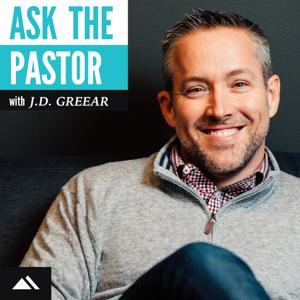
In this final edition of Ask the Pastor’s Greatest Hits, Pastor J.D. talks about the pain of unanswered prayer and the realities of prayer for the Christian.
A glimpse inside this episode:
This is a tricky question. I’ve often heard that behind every question is a questioner. When we’re dealing with unanswered prayer, the Bible has a lot to say. But the heart of the questioner matters a lot here. More often than not, when someone asks me about unanswered prayer, it’s not an academic question for them. It’s a question coming from a place of deep hurt. They asked God for healing in their life—and it didn’t happen. They asked God to reconcile a relationship—but the other person still left. They asked God to work in their kid’s life—but it’s been years and there’s no sign of that child returning.
So first off, I want to say, when it seems like God isn’t answering prayer, that’s legitimately painful. It makes us question God’s goodness. It makes us wonder if he’s real. Those are the kinds of doubts that all of us, at one point or another in our walk of faith, deal with. I’ve wrestled with them. Every great saint has wrestled with them. So if you’re in that spot, don’t despair. Walk through that difficult question with God.
And here, I think, is the best road forward: If we’re walking in fellowship with the Spirit, there isn’t technically any such thing as unanswered prayer. (Now, this is different than the way God responds to those outside of Christ: He may hear them, but he hasn’t promised to.) With believers, though, the Apostle John reminds us, “This is the confidence we have before him: If we ask anything according to his will, he hears us. And if we know that he hears whatever we ask, we know that we have what we have asked of him” (1 John 5:14–15). If we are walking with God, we can be sure we have his ear.
Whatever your situation, whatever your request, if you are God’s child, he’s listening.
Now, does that mean he says “Yes” to everything you ask? Of course not. At times, since God’s wisdom is so much greater than our own, he re-directs our answer. Or he sometimes tells us to wait. Or sometimes he simply says, “No.”
But saying “No” doesn’t mean he’s being cruel. As Jesus taught, a good father gives his children food like eggs and fish, not dangerous animals like scorpions and snakes (cf. Luke 11:12–13). The point is that even earthly parents withhold things from their children—but that withholding is a result of their love, not a lack of it.
Sometimes the exercise of God’s love means he gives us what we would have asked for if we knew what he knew. (I think I first heard that from Tim Keller.) What feels like unanswered prayer is actually God answering according to the wisdom and love of the Father.
In this edition of Ask the Pastor’s Greatest Hits, Pastor J.D. shares how God called him to the mission field before calling him to be a pastor of a church that sends and supplies the mission field in extravagant ways.
A glimpse inside this episode:
When God called me to be a pastor, he did so by first calling me to the mission field. I spent the first two years of my ministry as a church planter among Muslims overseas. God never relinquished that call to missions; he showed me that my role in it is to be a part of a church that sends and supplies the mission field.
Even though my primary role in the Great Commission is now as an equipper, it is always such a joy to get back on the front lines. Sure, it can be frustrating not being able to speak the language. But I share Christ more, person to person, in a two-week span than I probably do the entire rest of the year here in the States. It is my identity there, the entire reason I had go short term now. So when an opportunity comes up, I simply share the gospel. I wasn’t “Pastor J.D.” there. I was just “J.D. the guy talking about Jesus.” I want that to last: I want to just be the “Jesus guy” even here.
In this edition of Ask the Pastor’s Greatest Hits, Pastor J.D. talks how to live in the world but not of the world.
A glimpse inside this episode:
Who do you feel the closest kinship with? Who do you spend most of your time with? The lesson from Lot’s life is that you have to make up your mind from the beginning: Who do you really want to be? If it’s with the world, go there 100%. If it’s with God, go with him 100%.
What do you love? What does that say about what your heart really desires?
Are you trying to get as close to the world as you can without becoming it?
So how can I be around “Sodom” but not make the mistake Lot did? It has to do with who you choose to make your close friends and your community. Those are the ones you become like—just like Proverbs 13:20 tells us.
The most miserable person in the world is the half-committed Christian.
In this edition of Ask the Pastor’s Greatest Hits, Pastor J.D. talks about whether the legal use of marijuana is wise or helpful for Christians.
A glimpse inside this episode:
In the past, this was an easy enough question, because marijuana was illegal. It wasn’t a “gray area” for Christians. The drug was illegal, so it was off-limits to those who are “subject to the governing authorities” (Rom. 13:1). But as recreational marijuana becomes legal in more states, some Christians are having conversations about whether there could be an acceptable use.
One deeper issue: the effects of marijuana work against the kind of community we should seek in the body of Christ.
In Ephesians, Paul contrasts being drunk with wine vs. filled with the Spirit. That’s not an accidental comparison. Both are ways you deal with stress and problems. Wine (and we could add marijuana) dull your awareness of reality. The Spirit heightens your awareness of an alternate reality–the promises of the gospel and the sovereignty of God. And you speak those to one another in the church, in psalms and hymns and spiritual songs.
In this edition of Ask the Pastor’s Greatest Hits, Pastor J.D. shares four important things to keep in mind when responding to instances of sexual abuse.
A glimpse into this episode:
This is an extremely important question, so much so that after becoming SBC president, the first thing I did was appoint a Sexual Abuse Advisory Group to lead our denomination. They have been leading in dozens of ways—one of the biggest is they’re developing a curriculum to help churches answer this very question. Churches should be a safe haven for the vulnerable, so we need to do everything we can to make our churches safe for survivors and safe from abuse.
A few preliminary thoughts:
This is just the start of an answer, but here are four important things to keep in mind:
This may be the least understood aspect of sexual abuse—it results in a huge loss of voice for the victim. Abuse is usually followed by threats not to say anything, and that’s usually what happens.
What you need to know is that the first time you hear about an instance of abuse, chances are the person talking to you has been carrying this for years. They’ve been terrified about what people will think. They’ve assumed they wouldn’t be believed. To speak up takes bravery.
Now, there are important responses and action steps after you hear of abuse. But don’t be so quick to rush to the action step that you forget your first response—listening to a person, made in God’s image, reveal one of the most hurtful experiences of their lives. Listen, listen, listen.
This is not a “Matthew 18” situation. This is a “Romans 13” situation. Because certain sins are not only immoral; they are also illegal. This is never clearer than in the case of sexual abuse against minors.
If you know of sexual abuse against a minor, no matter who you are, no matter who they are, your first response is to alert the authorities. Call CPS or call the police. You may not know all of the best next steps. But they do, and you need to bring them in. The safety of more children than you know may be on the line.
Statistics here are horrifying. Those who abuse minors don’t just do it once or twice. They do it repeatedly, even after they’ve been caught (if given the opportunity). So if you know about one case, you need to see that as dozens of more potential cases. This isn’t a gray area: Bring in the authorities.
We need to reject any understanding of grace that puts the vulnerable in harm’s way by giving abusers a chance to do it again
If someone has disclosed to you, that’s an honor. And you will have a key role in their healing process. But you need to know you shouldn’t be shouldering this alone.
Questions are going to come up—pretty early—that are best processed through a counseling relationship. So one of the best things you can do for a victim is to get them connected to a counselor. This isn’t a handoff—you need to remind the victim that you are still there and want to process everything with them—but it allows other people more trained in abuse care to do what they do best.
Conclusion: It’s a gospel issue
In this edition of Ask the Pastor’s Greatest Hits, Pastor J.D. talks about some key advantages and disadvantages to each type of schooling and how Scripture guides our decision-making.
A glimpse inside this episode:
My friend Joby Martin says if you want some entertainment, get a home-school mama and a public school mama together and ask what the best educational approach is and then just get some popcorn and sit back and prepare for a UFC bout.
First, Romans 14. Chapter 14 and the first half of 15 are one extended discussion about how to get along with people in the church who disagree with you on something you feel passionate about.
Second: We’ve done all three: private school, home school, and public school and saw advantages in each.
Third, I’ll say: It really is ‘by kid.’
What are advantages to private/home schooling?
What are disadvantages to private/home schooling?
Every kid is different.
Show Notes:
Lean not on your ability as a parent; lean on God’s grace as the hope for your child.
As always, don’t forget to rate and review this podcast!
Find Pastor J.D. on Twitter, Instagram, and Facebook.
Show Notes:
God cares more for our kids than we do and he can pursue our kids in ways that we can’t.
Lean not on your ability as a parent; lean on God’s grace as the hope for your child.
As always, don’t forget to rate and review this podcast!
Find Pastor J.D. on Twitter, Instagram, and Facebook.
Pastor J.D. answers a question about what it really means to be a Christian.
Show Notes:
Jesus came to seek and save the lost, which means we should live our lives as disciple-making disciples.
Find Pastor J.D. on Twitter, Instagram, and Facebook.
This summer we are looking at some of the most popular Ask the Pastor episodes over the years. This week, Pastor J.D. answers the question of whether or not you can lose your salvation.
Show Notes:
As always, don’t forget to rate and review this podcast!
Find Pastor J.D. on Twitter, Instagram, and Facebook.
From the publisher's feed
Ranked by our users in the last 21 days

3,936 Listeners

1,451 Listeners

1,458 Listeners

4,753 Listeners

525 Listeners
1,291 Listeners
1,419 Listeners

5,400 Listeners

1,054 Listeners

765 Listeners

1,562 Listeners

4,382 Listeners
2,097 Listeners

345 Listeners

79 Listeners