
Sign up to save your podcasts
Or

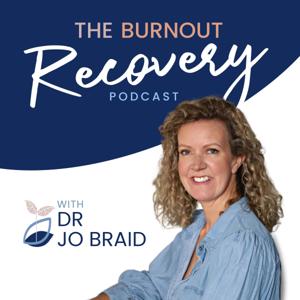


Your phone doesn't need to ring for it to cost you. In this episode, Dr Jo Braid shares a moment from her own coaching session when one glimpse of a lit-up screen quietly pulled her out of the room, and what the neuroscience says about why that happens.
This episode covers:
Reflection question: When was the last time a phone glance pulled you out of something that mattered, and what did it actually cost you?
Action step: Choose one recurring commitment this week and put your phone on Do Not Disturb. Properly off, not just silenced.
Connect with Dr Jo Braid: Instagram/Facebook: @burnoutrecoverydr LinkedIn: Dr Jo Braid Newsletter: The Sunday Long Game — drjobraid.com/subscribe Produced by @propodcaststudio. Supported by MIGA.
See omnystudio.com/listener for privacy information.
You can know every script. You can know that no is a full sentence. And you can still say yes — because some quieter part of you doesn't believe you're allowed to say no. This week Jo goes underneath the boundaries series to look at the self-esteem doing the real work behind every hard conversation.
THE SIGNAL
→ Self-esteem = your satisfaction, confidence and self-respect. Not fixed — trainable, like any other skill.
→ Four scenarios where it shows up: family, patients, colleagues, yourself.
→ A script is only half the equation. Words + self-esteem, not words instead of self-esteem.
→ Boundaries have two parts: the request, and the consequence.
→ The neuroscience: social disapproval activates the same pathway as physical pain (Eisenberger, UCLA). That's why willpower alone doesn't hold a boundary — but the circuitry is trainable.
→ Counterintuitive truth: weak boundaries look like closeness. Healthy ones are what actually build trust.
THE RESET
→ Family: practise one small no this week, no justification, no rush to fill the silence.
→ Patients: "I want to give this the time it deserves — let's book you back in." Protecting quality of care, not abandoning it. → Colleagues: before saying yes, try "let me check and come back to you."
→ Yourself: end each day this week noticing where you spoke to yourself in a tone you'd never use with a colleague.
Pick one scenario. Practise one boundary. Write down what you notice afterwards — that's your evidence file.
RESOURCES
No Is a Full Sentence, Jo's boundary scripts resource, is live now: drjobraid.com/store
The Sunday Long Game newsletter: drjobraid.com/subscribe
IG/FB: @burnoutrecoverydr | LinkedIn: Dr Jo Braid
See omnystudio.com/listener for privacy information.
You cut your hours to protect your time, and that protected time can become the most raided time in your week.
Dr Jo Braid shares what a real, full Monday looks like (home visit, clinical letters, her own coaching session, a board meeting) and why chosen switching feels like a rhythm while imposed switching feels like being pecked at.
IN THIS EPISODE:
THE RESEARCH: Shanafelt et al., Mayo Clinic Proceedings, 2016: emotional exhaustion and cutting hours (correlation, not causation) Micek et al., JAMA Network Open, 2023: part-time physicians and inbox time (US, one health service)
TRY THIS: THE PROTECTED DAY CHARTER
THIS WEEK
CONNECT: Instagram/Facebook: @burnoutrecoverydr
LinkedIn: drjobraid The Sunday Long Game (weekly newsletter): drjobraid.com/subscribe
Boundary Scripts for Clinicians: drjobraid.com/store
Be human first, everything else will follow.
See omnystudio.com/listener for privacy information.
Episode 200. That's the number today — but this one isn't really about the number.
Four years ago, I started this podcast while on the inaugural Australian Clinical Entrepreneur Program, wanting to share coaching tools without anyone needing to be in a formal coaching relationship.
Today's episode is a thank you to everyone who's pressed play since — and a reminder of what this whole thing was actually for. Burnout isolates us. It pulls us out of community right when we need it most. This podcast has always been a vehicle for something simple: helping people feel heard, and helping people learn to hear each other.
In this episode:
A reflection question: when did someone last make you feel like a person, not a job title — and could you be that for someone else this week?
Thank you for being part of this. It only exists because you keep listening — and sending it to someone else who needed it.
Connect with me: IG/FB: @burnoutrecoverydr LinkedIn: Dr Jo Braid Weekly newsletter, The Sunday Long Game: drjobraid.com/subscribe
See omnystudio.com/listener for privacy information.
Registrar to consultant, the job changes shape. Less doing, more being. So why do so many of us keep doing all of it anyway?
A coaching story about chasing a patient's scan, a waiting room, and the guilt of asking someone else to help — and why that guilt is worth pushing through.
THE SIGNAL 🩺 Patient sent back to the waiting room while the scan gets tracked down — laborious, repeated, patient after patient
🎯 "Top of registration": Sinsky & Bodenheimer on redistributing tasks to reduce burnout
🧠 The real cost of task-switching between admin and clinical thinking
😬 Why delegating can feel like guilt, not relief — and what that guilt is actually protecting THE RESET
✅ Sort your task list: "only I can do this" vs "this just always defaulted to me"
✅ Name the guilt out loud when you hand something off
✅ Run a Top of Registration Audit for one day
✅ Delegate one task this week, guilt and all The doing crowds out the being. Hand some of the doing back.
🔗 Get the words for the moment: No Is a Full Sentence, at drjobraid.com/store
📩 The Sunday Long Game, my weekly newsletter: drjobraid.com/subscribe
📱 Instagram/Facebook: @burnoutrecoverydr
💼 LinkedIn: Dr Jo Braid This episode is supported by MIGA www.miga.com.au
See omnystudio.com/listener for privacy information.
If you're still contactable, are you actually on leave? A watched moment on a family holiday — one work email, and the mood shifted for everyone.
This episode looks at why accessibility during leave costs more than we think, and what to actually put in place before you go.
THE SIGNAL
📧 One out-of-hours email, and the holiday brain switches off
🧠 Allostatic load: your body doesn't always know "quick" from "urgent"
🔬 Sinsky et al, JAMA Network Open 2024: inbox coverage predicts real detachment
🏥 Stanford Medicine wellbeing data: 100% found an Out of Office best-practice doc helpful; 77% found a "life outside work" grand rounds moment helpful
THE RESET
✅ Name one delegate before you leave, not as you're walking out the door ✅ Update your out-of-office with their contact, not just "I'll reply when I'm back"
✅ Separate work email/phone — a physical barrier beats willpower
✅ Bring the culture piece to your team, not just yourself
Hope is not a boundary. A named delegate is.
🔗 Get the words for the moment: No Is a Full Sentence, at drjobraid.com/store
📩 The Sunday Long Game, my weekly newsletter: drjobraid.com/subscribe
📱 Instagram/Facebook: @burnoutrecoverydr 💼 LinkedIn: Dr Jo Braid
This episode is supported by MIGA. www.miga.com.au
See omnystudio.com/listener for privacy information.
In tennis, the ball is either in or out. No apology required. So why does saying no in real life feel so much harder?
This episode kicks off a new 10-part series on boundaries — why they're so hard to hold, and how to actually do it, at work and at home.
THE SIGNAL
🎾 In or out: clear, certain, no apology needed
🧠 Why ambiguity drains your prefrontal cortex
💭 The Zeigarnik effect: unset boundaries = active cognitive load
😬 The apology loop, and why it's a threat response, not politeness
THE RESET
✅ Notice the apology loop before you try to change it
✅ The Line Audit: find where the rule is actually unclear
✅ One breath, one pause, before you answer a request
✅ Practise one boundary this week — no apology attached
No is a full sentence. In or out. That's it.
🔗 Grab the boundary scripts you need in the moment: No Is a Full Sentence, at drjobraid.com/store
📩 Get The Sunday Long Game, my weekly newsletter: drjobraid.com/subscribe
📱 Instagram/Facebook: @burnoutrecoverydr
💼 LinkedIn: Dr Jo Braid
This episode is supported by MIGA. www.miga.com.au
See omnystudio.com/listener for privacy information.
Why does the same boundary tool work brilliantly for one person and fall flat for the next? In this episode Dr Jo Braid unpacks why recovery strategies aren't one-size-fits-all, and how to stop forcing yourself into someone else's system.
Prompted by a recent workshop with a room of physios and occupational therapists, where one manager's search for focus time revealed just how differently people respond to the same list of tools: a closed door, a sign, headphones, do not disturb. All valid. None universal.
Jo breaks down why strategy adherence depends on fit, not discipline, drawing on implementation science, occupational context across academic, clinical and business roles, and stress neuroscience from Dr Amy Arnsten's work at Yale. Then she runs the four pillars, Mindset, Support, Movement, Sleep, through a personality lens so you can find the version that's actually yours.
This episode closes out The High Performer's Paradox series.
You'll learn:
– Why a recovery tool you've abandoned might be wrong for you, not a discipline failure
– How academic, clinical and business burnout profiles differ
– The neuroscience of why unfamiliar strategies are harder to sustain under stress
– How to adapt one pillar this week to actually fit your wiring
Connect with Jo:
IG/FB: @burnoutrecoverydr
LinkedIn: Dr Jo Braid Newsletter,
The Sunday Long Game: https://drjobraid.com/subscribe
New:
12 Boundary Scripts — real language for the moments you know you should say no. $47, or upgrade to the video masterclass for $97. drjobraid.com/store
Produced by Propodcaststudio. Supported by MIGA.
See omnystudio.com/listener for privacy information.
Your team can't help how they feel walking into an uncertain situation. But you have enormous influence over what you bring into the room.
In this episode, Jo shares a real story from ward cover — a complex new patient, a team already bracing for the next few weeks, and the deliberate choice to show up supported rather than depleted. She unpacks why leader regulation is contagious (literally, neurologically), and gives you a practical way to lead through uncertainty without performing false confidence.
You'll learn:
Why emotional contagion means your mood shapes your team before you say a word
The neuroscience of co-regulation and why a steady leader calms an uncertain room
A four pillars approach to protecting your own wellbeing before a known hard stretch, not after
A simple way to name uncertainty out loud that builds trust instead of eroding it
Leaders need to be well to lead well. This episode shows you what that actually looks like.
Resources mentioned:
No Is a Full Sentence — 12 boundary scripts for clinicians, $47 (video masterclass upgrade $97): drjobraid.com/store
The Sunday Long Game newsletter: drjobraid.com/subscribe
Connect with Jo:
Instagram/Facebook: @burnoutrecoverydr
LinkedIn: Dr Jo Braid
This episode is supported by MIGA.
See omnystudio.com/listener for privacy information.
What if the thing standing between good results and a thriving team is just one letter?
This week I'm joined by Tracey Ezard — author, facilitator, and creator of Ferocious Warmth — who I met on faculty at a Women in Leadership course in Prato, Italy. Tracey has spent two decades studying what separates great teams from ones that just get by, working across health, education and hospitality.
We talk about:
The "drop one letter" shift — why "I'd like to challenge our thinking" lands completely differently to "your thinking," and the neuroscience of why it lowers defensiveness instead of raising it
The Two Rs: why chasing results without relationship skills caps your outcomes, and what changes when you build both
Why "doctor" already means "leader" — whether you feel ready for that title or not
How multidisciplinary case conferences either open people up or shut them down, and the small, specific things senior clinicians do that make the difference
Early warning signs of leadership burnout, and why energy management matters as much as time management
Leadership as your "second profession" — and how much time you're actually investing in it
Tracey's non-negotiable self-care practice (hint: it involves stairs)
Tracey's story is a brilliant reminder that leadership skill isn't separate from clinical skill — it's part of the job description, whether or not it was ever taught.
Resources:
Connect with Tracey: LinkedIn (Tracey Ezard) and https://www.traceyezard.com/
Grab a copy of Ferocious Warmth: https://www.traceyezard.com/books/ferocious-warmth/
As always, if this episode lands, share it with a colleague who needs to hear it — and I'll catch you next week.
See omnystudio.com/listener for privacy information.
From the publisher's feed
Welcome to The Burnout Recovery Podcast, where we're creating a global movement to keep healthcare professionals thriving in the careers they love.
I'm Dr Jo Braid, your host and The Burnout Recovery Doctor. Whether you're a med student just starting out, an allied health professional at the point of care, or a seasoned doctor feeling the weight of the system - this podcast is your lifeline back to sustainable practice.
Here's what I know: when one healthcare professional recovers from burnout and builds a sustainable career, the ripple effect reaches patients, families, colleagues, and communities around the world. That's the power of change where it matters most.
In each episode, you'll discover evidence-based strategies and real-world tools to not just survive healthcare, but to thrive in it. Because the world needs you healthy, energized, and passionate about the work that called you here in the first place.
This isn't just about individual recovery - it's about transforming healthcare from the inside out, one professional at a time.
Ready to be part of the solution? Let's dive in.
Ranked by our users in the last 21 days

156 Listeners
588 Listeners
20 Listeners
20 Listeners

19,271 Listeners
69 Listeners