
Sign up to save your podcasts
Or

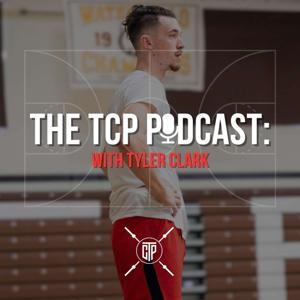


This episode features Jason Pellum, assistant coach and recruiting coordinator for Brown University Women’s Basketball, whose path into coaching is unlike almost anyone’s. Jason barely played high school basketball, hit a late growth spurt in college, and walked into an open campus tryout at UConn with nothing to lose — and made it. That launched a run as a practice player for UConn men’s basketball during their 2014 national championship season and for Geno Auriemma’s 2016 national champion women’s program, along with stints on the 2016 USA Olympic practice squad and as a practice player for the Connecticut Sun. From there he moved into coaching as a video intern at UConn, then worked his way up at Boston University from video coordinator to director of operations to assistant coach before landing at Brown.
The conversation explores what it’s like to learn the game “thrown into the fire” as a scout player, what Jason took from Kevin Ollie’s energy and Geno’s obsession with detail, and why automating your daily routine frees you up to handle the hard moments. Jason shares practical career advice for young coaches — be a star in your role, tell people your goals, and put in the time outside your nine-to-five — before diving into his player development philosophy. He and Tyler dig into the Inner Game of Tennis, chasing a feeling over technical shooting cues, a simple “don’t land in front of the three-point line” constraint that fixed a wing’s transition three, how Brown builds decision-making and individual constraints into every group workout, and how the staff uses player development plans to guide players through the off-season.
Timestamps
12:18 — Intro and guest background
13:52 — Life as a UConn practice player
15:04 — Barely playing in high school and making UConn at an open tryout
16:58 — Learning the game as a scout player: sink or swim
18:14 — Learning X’s and O’s on the women’s side under Geno Auriemma
20:50 — Lessons from Kevin Ollie and Geno
24:12 — Automating your day to reduce decision fatigue
28:24 — Starting as a video intern at UConn
30:09 — Learning to watch film and give your coach what they need
33:40 — Being a star in your role while still growing
34:13 — Why you should tell people your goals
38:03 — Putting in the time outside your nine-to-five
40:43 — Player development influences: Keith Porter and Brianna Finch
43:45 — Brown’s department-wide buy-in to CLA
45:57 — The Inner Game of Tennis: learning happens in discomfort
47:09 — Getting thrown into the fire as a coach: running BLOB offense
48:11 — Feel images and learning by watching
50:10 — Chasing a feeling over technical shooting cues
53:42 — “Don’t land in front of the three-point line”: fixing a transition three
55:32 — Coaching ego and using fewer words
56:41 — Decision-making in every Brown group workout
57:58 — Manipulating constraints in live play
1:00:29 — Playing free: creating advantages through principles of play
1:02:41 — Taking away tendencies to widen a player’s options
1:03:31 — “Constrain to afford”
1:04:52 — Player development plans and the three anchors
1:05:36 — The “curse of the Ivy”: trusting players in the off-season
1:07:18 — Self-scouting reports for players and staff
1:09:51 — Where to find Jason and closing thoughts
Resources & Links
Free Resources: https://byanymeanscoaches.com/resources
Claim 10% off Platform: https://platform.byanymeanscoaches.com/?ref=tc
Books: https://byanymeanscoaches.com/blueprint-book
Retreat: https://byanymeanscoaches.com/retreats
If you enjoyed this conversation with Jason Pellum, check out these episodes next:
Ryan Marchand’s Journey From Video Coordinator to Professional Head Coach
https://www.buzzsprout.com/1911095/episodes/19741873-ryan-marchand-s-journey-from-video-coordinator-to-professional-head-coach
Jae Taft (@coachjaetaft) Talks Coaching Girls/Women With Confidence Not Fear, Journey From One Client To Her Own Facility, The Mental Game And Much More!
https://www.buzzsprout.com/1911095/episodes/19742065-jae-taft-coachjaetaft-talks-coaching-girls-women-with-confidence-not-fear-journey-from-one-client-to-her-own-facility-the-mental-game-and-much-more
G-League, Capital City Go-Go, Coach Max Hooper: Talks Elite Shooters, Player Development At The Highest Level, Using The CLA, Coaching In The G-League and more
https://www.buzzsprout.com/1911095/episodes/19741713-g-league-capital-city-go-go-coach-max-hooper-talks-elite-shooters-player-development-at-the-highest-level-using-the-cla-coaching-in-the-g-league-and-more
This episode features Jae Taft, founder of Vision Basketball Academy in Denver, Colorado, and a player development coach who trains young female athletes with a faith-based mentorship approach. Jae opens up about her college playing career — a promising freshman start at an NAIA program derailed by illness and lost playing time, followed by a transfer to a Division II school that only deepened a cycle of trying to "prove herself." That pressure eventually led her to step away from the game entirely. When COVID hit, a conversation with her father sparked the idea to launch an online training business; she started with a single client over FaceTime and has since grown that into a full gym and a growing online presence.
The conversation covers a lot of ground: how Jae rebuilt her identity outside of basketball performance; why the coaching pivot felt like a less natural path for her as a woman than it often does for men; and her core training philosophy of "teaching skills, not drills," built around live, representative play rather than isolated reps. She and Tyler dig deep into gender differences in coaching — the concept of giving young female athletes "permission" to play freely and make mistakes, what it takes for a man to coach women and girls well, and how creating a genuinely safe environment gets the best out of any athlete. She closes by sharing the real, unfiltered challenges of entrepreneurship — imposter syndrome, comparison, and financial risk — along with concrete advice for anyone looking to open their own training facility.
Timestamps
15:46 — Intro and guest background
16:57 — Jae's NAIA-to-D2 transfer story begins
17:47 — Freshman year: promised the point guard job, then got sick
19:19 — Transfer to D2; the pressure to prove herself continues
20:19 — Stepping away from basketball during COVID
21:19 — Her dad's idea: launching an online training business 2
2:28 — Landing her first client
22:58 — Where the "need to prove myself" mindset came from 2
6:48 — Finding identity beyond basketball performance
28:49 — Why coaching is a less natural pivot for women than men
31:04 — Faith, family, and stepping into the calling
35:05 — From one online client to owning a gym in Denver
35:58 — Coaching influences: "teach skills, not drills"
37:12 — Game development training vs. drill mastery
39:20 — Why representation matters more than isolated reps
40:58 — Gender differences in coaching: freedom vs. robotic compliance
45:30 — Where the need for "permission" comes from
48:02 — Girls get coached too much, and rarely get free play
50:55 — Should men coach women and girls?
53:28 — Understanding emotional differences in coaching young women
55:16 — Giving players permission to make mistakes
57:15 — The core principle: be a good person, care about the athlete
59:36 — Transitioning to the entrepreneurship conversation
1:00:17 — Imposter syndrome as a gym owner
1:01:20 — Dealing with comparison to other trainers
1:02:39 — The financial risk of going independent
1:04:13 — Trusting the calling through "valley seasons"
1:07:25 — Actionable advice for opening a gym
1:10:39 — Where to find Jae and closing thoughts
Resources & Links
Free Resources: https://byanymeanscoaches.com/resources BAM Coaches Platform: https://platform.byanymeanscoaches.com/#/platform Books: https://byanymeanscoaches.com/blueprint-book
If you enjoyed this conversation with Jae Taft, check out these episodes next:
Gabe Macias (@gametimeelitetraining) talks skills training, building a clientele, finding a gym, creating a culture and more https://www.buzzsprout.com/1911095/episodes/10554225-gabe-macias-gametimeelitetraining-talks-skills-training-building-a-clientele-finding-a-gym-creating-a-culture-and-more
BJU MBB Tony Miller on Culture, Analytics, Player-Led Basketball and Shot Selection https://www.buzzsprout.com/1911095/episodes/19459642-bju-mbb-tony-miller-on-culture-analytics-player-led-basketball-and-shot-selection
G-League Coach of the Year, Vitor Galvani, on Why Player Development Isn't Linear, G-League Practices, Being Where Your Feet Are and Much More https://www.buzzsprout.com/1911095/episodes/19047395-g-league-coach-of-the-year-vitor-galvani-on-why-player-development-isn-t-linear-g-league-practices-being-where-your-feet-are-and-much-more
This episode features Ryan Marchand, a head coach whose career has taken him from an unpaid coaching internship in the G League's earliest days to head coaching jobs across Vietnam, Taiwan, and Japan. After graduating from San Jose State and getting rejected by every D1 program he applied to, Marchand broke in through a Bakersfield Jam internship during the NBA lockout, then spent seven-plus years cycling through lower-level NBA and G League video and assistant roles — including turning down a paid Minnesota Timberwolves video job and instead working for free under Bill Peterson with the Erie Bayhawks just to get on the floor as a coach. Since COVID, he's built his career overseas, taking his first head coaching job in Vietnam and coaching most recently in Taiwan and Japan.
The conversation covers a lot of ground: breaking out of the "just a video guy" label early in his career; how working with a performance psychologist for the past four years has shaped both his coaching and his life; and how he builds team identity and a shared language across wildly different rosters, cultures, and rule sets. From there, Marchand dives into the tactical side — contrasting NBA and international rules on spacing and post play, the non-traditional stats his teams track (paint touches, deflections, closeout/contain rates), and how he sets team goals from day one. He closes with a detailed breakdown of his fast-paced offensive philosophy — from D'Antoni-inspired possession pacing to transition spacing, respacing after drives, option cutting, and giving skilled players the freedom to read and adapt within structure.
Timestamps
00:00 — Pre-show catch-up: Ryan's Taiwan/Japan schedule and off-season
02:09 — Checking in on interview boundaries and international coaching restrictions
04:41 — Intro and guest background
05:30 — Ryan's path from D1 rejections to a Bakersfield Jam internship and Timberwolves video job
07:57 — The "tech nerd" label and breaking out of the video coordinator box
10:59 — Betting on himself: working for free under Bill Peterson, then landing the Iowa Wolves assistant title
14:16 — Perspective on developing staff now as a head coach
17:33 — The "two teams": empowering players and coaches without confusing empowerment for delegation
19:28 — Working with a performance psychologist
22:43 — Building a team's on-court identity across different countries and rule sets 26:09 — NBA vs. international rules: spacing, defensive three, and post-up overuse 28:38 — Where analytics fit into coaching decisions
33:05 — Tracking paint touches in the G League and beyond
35:04 — Tracking deflections and hands-up defensive activity
35:59 — Tracking closeout/contain percentages on downhill drives
39:03 — Setting team goals from day one (the Belichick approach)
42:05 — D'Antoni's "7 seconds or less" and the 7-10-7 possession framework
43:15 — Practice drills using shortened shot clocks to force pace
44:56 — Tyler's inverted transition-incentive drill from a college coaching stop 46:43 — "Kill them with layups": transition spacing and shooting bigs
50:19 — Respacing after a drive
51:57 — Cutting to space vs. cutting to the basket
53:21 — Option cutting and giving players freedom to read the defense
55:26 — Countering defenses with no defensive three-second rule overseas
58:53 — Don Nelson's offensive framework and ball movement for rebounding position
1:00:45 — Developing adaptable, conceptual players
1:02:17 — Why live reps outweigh individual work, small-group work, and film 1:03:11 — Giving players freedom within coverage (Steph Curry screen example) 1:05:47 — Trusting player instincts (Jrue Holiday example)
1:08:26 — The give-and-take of coaching adaptable players
1:09:47 — Closing thoughts and where to find Ryan
Resources & Links
Free Resources: https://byanymeanscoaches.com/resources BAM Coaches Platform: https://platform.byanymeanscoaches.com/#/platform Books: https://byanymeanscoaches.com/blueprint-book
If you enjoyed this conversation with Ryan Marchand, check out these episodes next:
Andrew Antelidze on Scouting, Tactics, and Earning Your Seat at the EuroLeague Table https://www.buzzsprout.com/1911095/episodes/19415404-andrew-antelidze-on-scouting-tactics-and-earning-your-seat-at-the-euroleague-table
G-League Coach of the Year, Vitor Galvani, on Why Player Development Isn't Linear, G-League Practices, Being Where Your Feet Are and Much More https://www.buzzsprout.com/1911095/episodes/19047395-g-league-coach-of-the-year-vitor-galvani-on-why-player-development-isn-t-linear-g-league-practices-being-where-your-feet-are-and-much-more
Alessandro Nocera on Building More Conceptual Players https://www.buzzsprout.com/1911095/episodes/19331880-alessandro-nocera-on-building-more-conceptual-players
This episode features Max Hooper, a coach whose career has taken him from Division I shooting specialist to some of the highest levels of professional basketball. Hooper became a viral name in college basketball during the 2015–16 season at Oakland University, where he took 257 three-point attempts (shooting nearly 45%) while playing alongside NBA draft pick Kay Felder. Since then he's built a coaching résumé spanning Brewster Academy, an associate/video coordinator role with the Bubble-era Lakers, an assistant and head video coordinator stint with the Dallas Mavericks (including a 2022 Western Conference Finals run and a 2024 Finals appearance), and most recently a season as head coach of the Texas Legends in the G League. Hosts Tyler Clark and Coleman Ayers dig into his full journey as a player, shooting specialist, player development coach, and first-time head coach.
The conversation covers a lot of ground: what elite, high-volume shooting workouts actually looked like for Hooper in college; the "scientist vs. artist" spectrum of how great shooters think about their own mechanics; and the mental side of being a shooter — building the kind of bulletproof confidence that survives a cold streak. From there the discussion shifts to player development philosophy, with Hooper offering a detailed, practical breakdown of how he's applied the Constraints-Led Approach (CLA) at every level of his career — from freelancing with college players to justifying and "masking" CLA principles inside NBA and G League team structures. He closes by getting into an underexplored topic for head coaches: how to develop and empower your own coaching staff, especially in an environment like the G League where the roster (and sometimes the staff) turns over constantly.
Timestamps:
00:52 — Pre-show catch-up and Max's job search update
05:56 — Intro and guest background
07:51 — Max's 257-three-point-attempt season at Oakland
12:14 — The responsibility behind a shooter's green light
13:20 — A D1 shooter's daily training schedule
16:33 — Adding randomness and decision-making to shooting workouts
17:56 — Why even elite shooters still use cookie-cutter reps
19:33 — Learning from Korver, Duncan Robinson, Troy Daniels, Anthony Morrow, Klay Thompson
24:04 — The "scientist vs. artist" shooter archetypes
30:27 — Knowledge of vs. knowledge how; shooting coaches doing more harm than good
33:48 — Building a bulletproof shooter's mindset
39:36 — Leading the person first (Jamarion Sharp example)
42:52 — The emotional side of player development
44:08 — Building the Mavericks' player development structure
49:34 — Implementing CLA as a player, then as a coach
50:43 — Finding the "appropriate challenge point"
52:41 — Justifying player development methods at the NBA level
54:07 — Mavs example: "Luca passing" vs. "Kyrie passing" drills
55:15 — Translating CLA into NBA coverage language
56:23 — Blending CLA with player and coach buy-in
59:10 — Progressive constraints: bingo cards and scoring systems
1:01:00 — Meeting players where they're at with CLA
1:04:22 — Should the defense know the constraint?
1:05:12 — Intentional CLA vs. CLA as a buzzword
1:07:05 — Individualizing constraints within one group workout
1:08:19 — The three levels of CLA
1:09:08 — Team-wide constraints with the Legends
1:13:11 — Trusting players to think critically
1:16:27 — CLA in high-turnover (G League) vs. stable programs
1:20:10 — How much time a head coach should spend developing staff
1:22:27 — Building an onboarding process for new players
1:26:42 — Coaching adaptability under fast-changing circumstances
1:28:20 — The head coach as "the glue" of the organization
1:29:25 — Empowering young assistants (shoutout to Sharon Dorsey Walker, Doug Levy)
1:33:39 — Closing thoughts
Resources & Links:
Free Resources: https://byanymeanscoaches.com/resources BAM Coaches Platform: https://platform.byanymeanscoaches.com/#/platform Books: https://byanymeanscoaches.com/blueprint-book
If you enjoyed this conversation with Max Hooper, check out these episodes next:
G-League Coach of the Year, Vitor Galvani, on Why Player Development Isn't Linear, G-League Practices, Being Where Your Feet Are and Much More https://www.buzzsprout.com/1911095/episodes/19047395-g-league-coach-of-the-year-vitor-galvani-on-why-player-development-isn-t-linear-g-league-practices-being-where-your-feet-are-and-much-more
Individualizing Group Workouts https://www.buzzsprout.com/1911095/episodes/19111270-individualizing-group-workouts
What Science Says About Shooting Through Fatigue https://www.buzzsprout.com/1911095/episodes/19032348-what-science-says-about-shooting-through-fatigue
In this solo episode, Coleman Ayers challenges the basketball world's obsession — and oversimplification — of pre-practice and pre-game warm-ups, arguing the term itself undersells what those first 10-15 minutes can accomplish. Coleman makes the case for reframing "warm-ups" as "primers," explaining that language shapes how coaches, players, and parents perceive and invest in that time. He breaks priming down into three distinct categories — resistance, coordination, and cognition — and unpacks the neuroscience behind each one.
Coleman walks through why resistance-based primers (like partner pushing battles) trigger a fight-or-flight response that gets athletes physically primed far faster than traditional jogging or static stretching, why coordination-based primers should feel intentionally awkward to activate the cerebellum's prediction-error system, and why cognitive primers — built around decision-making and dual-task loading — tune athletes' focus rather than just their arousal. He closes by tying all three together through the lens of the inverted-U arousal curve, offering coaches a practical framework for dosing primers based on the task, the athlete, and whether it's a practice day or a game day.
Timestamps
00:00 – Intro and rant on the word "warm-ups"
00:42 – Why "primer" is a better term than "warm-up"
01:50 – Language matters: primer vs. warm-up connotations
03:05 – Limitations of the standard dynamic warm-up
04:28 – Introducing the three primer categories: resistance, coordination, cognition
05:26 – Category 1: Resistance primers explained
06:13 – The science: threat signal and adrenal response
07:25 – Why the body reacts to force, not social framing
09:05 – Habituation and the need for novelty
09:37 – Instability and unpredictability vs. static resistance tools
11:26 – Time efficiency of resistance-based priming
12:55 – Long-term training effects of resistance primers
14:03 – Intermuscular coordination under unpredictable load
14:51 – Arousal as an inverted U: matching primer type to task
17:06 – Practical guidance: dosage on game days vs. practice days
18:04 – Category 2: Coordination primers explained
19:17 – Co-contractions and the "parking brake" effect
20:55 – Reciprocal inhibition and rhythmic movement
21:31 – The cerebellum as a forward-prediction model
23:41 – Why awkwardness is the sign of a good coordination primer
24:31 – Analogy: driving a familiar route vs. a new one
25:39 – Practical coordination primer examples
26:45 – Category 3: Cognitive primers explained
27:31 – The locus coeruleus and "tuning the radio" analogy
28:59 – Decision points and why most warm-ups skip them
29:29 – Dual-task loading as a diagnostic and training tool
32:16 – Individualizing primers by athlete archetype
33:00 – Closing thoughts and where to learn more
Resources & Links
Free Resources: https://byanymeanscoaches.com/resources
BAM Coaches Platform: https://platform.byanymeanscoaches.com/#/platform
Books: https://byanymeanscoaches.com/blueprint-book
If you enjoyed this episode, here's three more that we think you may like!
The Science Behind How We ACTUALLY Learn
Another Coleman solo deep dive into the neuroscience of motor learning — pairs naturally with the cerebellum/prediction-error concepts covered in the coordination primer section.
https://www.buzzsprout.com/1911095/episodes/19384708
What Science Says About Shooting Through Fatigue
Coleman breaks down a research study on how fatigue disrupts coordination and timing — a direct extension of the coordination-primer science in this episode.
https://www.buzzsprout.com/1911095/episodes/19032348
Degrees of Freedom: The Hidden Key to Better Basketball Coaching
A Coleman solo episode on motor learning and coordination that complements the "freezing/unfreezing" ideas touched on in the coordination primer discussion.
https://www.buzzsprout.com/1911095/episodes/19111236
In this solo episode, Coleman Ayers shares a "coaches' meeting" style breakdown on trainability in younger athletes, roughly beginners through 15-year-olds. He reframes the goal of youth development away from "what can we add to their game now" and toward priming athletes to learn, grow, and adapt for years down the line. The episode moves through the qualities and coaching practices Coleman's staff has been prioritizing this summer in their gym.
Coleman opens with problem-solving as the foundation, breaking it into tactical, perceptual-motor, and social/emotional problems, and explains how a constraints-led approach naturally builds better problem solvers. From there he covers five more pillars of trainability: a healthy relationship with failure, curiosity through divergent training, adaptability to different environments, exposure to differential coaching styles, and teaching players to own their own development. He closes by tying it all back to general coordination, arguing that athletes who sample widely and learn to solve problems early become the ones who keep improving long after they leave the gym.
00:00 – Welcome back and update on Coleman's summer training grind
01:22 – Topic intro: trainability in younger athletes
02:17 – Shifting focus from "what can we add now" to "how do we prime them for later"
02:45 – Area 1: Problem solving
04:20 – Three buckets of problems: tactical, perceptual-motor, social/emotional
07:41 – Using the constraints-led approach to build problem solvers
10:15 – Balancing prescription with problem-solving in motor development
11:02 – Building social and emotional problem-solving through daily challenges
13:41 – Area 2: Relationship with failure
15:40 – How coaches' reactions condition athletes' relationship with failure
16:25 – Area 3: Curiosity and divergent training
19:23 – Area 4: Adaptability to different environments
20:40 – Area 5: Differential coaching — exposing athletes to varied coaching styles
22:08 – Area 6: Teaching players to own their own development
23:20 – Using the optimal zone of improvement with players
26:19 – Closing thoughts: general coordination and building the late bloomer
Resources & Links
Free Resources: https://byanymeanscoaches.com/resources
BAM Coaches Platform: https://platform.byanymeanscoaches.com/#/platform
Books: https://byanymeanscoaches.com/blueprint-book
Keep Listening
What Exactly IS The Constraints-Led Approach (CLA)?
Coleman leans heavily on CLA throughout this episode as the engine for problem-solving — this is the primer episode on what CLA actually is and isn't.
https://www.buzzsprout.com/1911095/episodes/19251025
Individualizing Group Workouts
Another Coleman solo episode digging into player "North Stars" and individual constraints — a natural extension of the trainability framework covered here.
https://www.buzzsprout.com/1911095/episodes/19111270
4 Player Development Concepts I've Been Using This Summer
Coleman's real-time look at this same summer training block, covering fatigue shooting, hybrid games, and individual constraints in practice.
https://www.buzzsprout.com/1911095/episodes/19331801
In this episode, Tyler Clark and Coleman Ayers sit down with Dr. Tony Miller, head men's basketball coach at Bob Jones University in Greenville, South Carolina, where he has taught for 20 years and served on staff since the program's intercollegiate launch in 2012. Tony brings a teacher's lens to coaching, discussing how his background in secondary education shapes the way he thinks about player learning, classroom management principles applied to the court, and the balance between "old school" influences like Coach K and John Wooden and "new school" concepts from Alex Sarama and Chris Oliver. The conversation covers identity, both for players and coaches, the challenge of building culture quickly given roster turnover from the transfer portal, and what it means to run a truly player-led program.
The back half of the episode dives deep into Tony's analytics-driven approach to shot selection, including his "5-7-9" shot rating system and the "sevens for 70" practice game he uses to teach shot quality. He also unpacks his program's core values (character, competitiveness, connectedness), his approach to individual meetings and recruiting fit, and closes with a reflection on Bob Ritchie's "person development over player development" philosophy and what legacy really means beyond wins and awards.
Timestamps
0:00 — Introduction to guest Tony Miller, head coach at Bob Jones University
0:50 — Merging the classroom and the court: Tony's background as a teacher
6:57 — Filtering information overload post-COVID and knowing who you are as a coach
11:02 — Getting the most out of individual players within a team setting
19:49 — Identity — helping players and coaches figure out who they are
26:47 — Balancing team culture with individual expression
31:51 — Empowering players to problem-solve ("figure it out")
36:14 — Intentionality in practice design and managing controlled chaos
43:43 — Individual development within the team system
49:32 — Letting players surprise you — positionless development
53:44 — Building team culture fast through individual conversations and analytics
1:02:31 — Shot selection analytics: the "5-7-9" shot rating system and "sevens for 70"
1:11:38 — Generating advantage shots with a different roster every year
1:22:12 — Bob Ritchie's "person development over player development" and legacy
1:26:35 — Closing thoughts and where to find Tony Miller
Resources & Links
Free Resources: https://byanymeanscoaches.com/resources
BAM Coaches Platform: https://platform.byanymeanscoaches.com/#/platform
Books: https://byanymeanscoaches.com/blueprint-book
Keep Listening
G-League Coach of the Year, Vitor Galvani, on Why Player Development Isn't Linear, G-League Practices, Being Where Your Feet Are and Much More
Another head coach interview covering player ownership, balancing structure with freedom, and long-term development over short-term results — themes that run throughout the Tony Miller conversation.
https://www.buzzsprout.com/1911095/episodes/19047395
Alessandro Nocera on Building More Conceptual Players
A coach interview exploring conceptual, principles-based offense and adapting philosophy to personnel — a natural pairing with Tony's system-plus-freedom approach to advantage creation.
https://www.buzzsprout.com/1911095/episodes/19331880
Stuart Armstrong on Talent Identification, Development, Ecological Dynamics and much more
Digs into coach education, athlete identity, and building intuition-driven decision-makers — echoes Tony's emphasis on questioning players and developing independent thinkers.
https://www.buzzsprout.com/1911095/episodes/18955528
In this episode, Tyler Clark and Coleman Ayers sit down with Andrew Antelidze, a 25-year-old assistant coach and scout with BC Žalgiris in the EuroLeague. Originally from the Republic of Georgia, Andrew broke into professional basketball through a connection he built while working with the Georgian national team, eventually earning a role under head coach Andrea Trinchieri before expanding his responsibilities under Rokas Masoulis. At just 23, he joined the Žalgiris organization and has since been part of one of the club's most historic seasons, finishing fifth in the EuroLeague.
The conversation covers a wide range of tactical ground, from video coordination and scouting philosophy to offensive frameworks, defensive analytics, and practice structure. Andrew shares how Žalgiris built their offense around first-eight-second and last-eight-second shot principles, why tagging up has been a staple of their defense for three seasons, and how they use energy charts and smart fouling metrics to drive physicality. The episode closes with an honest discussion about player development constraints in European basketball, the challenge of developing players during a nine-month season, and what it takes for a young coach to earn and keep a seat at an elite table.
Timestamps
Andrew joins; background and connection to Žalgiris
Catching up on Žalgiris's fifth-place EuroLeague finish and Francisco's season
13:20 — Pre-interview check: topics that are and aren't off-limits
13:24 — Andrew's interest in scouting and X's and O's over individual development
13:20 — Intro: Andrew Antelidze, assistant coach and scout, BC Žalgiris
13:25 — Career path: from Georgian national team to Žalgiris youth academy at 23
13:26 — How Coach Trinchieri found Andrew and gave him his first staff opportunity
13:27 — Role as video coordinator: responsibilities, late nights, learning on the fly
13:28 — How scouting work was divided among assistants; using SportsCode
13:29 — Film breakdown philosophy: how much detail depends on the head coach
13:30 — Clip limits for opposing players; protecting player mental energy before games
13:31 — Two coaching philosophies: Masoulis's tendency-based coverage vs. Trinchieri's team defense
13:32 — Using video individually vs. globally; assigning assistants to specific players
13:35 — Analytics and film working together: how numbers validate the message
13:37 — "Points before bonus" metric: using smart fouling as a physicality benchmark
13:38 — Individual analytics: tracking player tendencies and progress on specific skills
13:39 — Tagging up: three seasons of use, how Andrew measures it via wing offensive rebounding rates
13:40 — Tyler shares his experience implementing tagging up at the college level
13:41 — Andrew's Summer League experience with the Warriors and their aggressive crash philosophy
13:42 — Transition: defensive personnel and what "defensive skill" actually means
13:43 — Roster-based approach to defense: Trinchieri vs. Masoulis system contrast
13:44 — Defensive skill defined: anticipation, screen navigation, staying attached to shooters
13:46 — Energy charts: deflections, charges, and and-ones tracked and posted publicly
13:47 — Creating defensive incentive: meals and prizes for leaders on the energy charts
13:48 — Non-traditional tracking: defensive lineups, matchup planning, analytics team role
13:49 — Toughest EuroLeague guards: Mike James, Eli Cobo, Tamir Blatt
13:50 — Underrated tough matchups: FS and Maccabi's system; Cabarell as a standout player
13:51 — What makes American imports successful in EuroLeague: defense first, value possessions
13:53 — Why Žalgiris overachieved: roster chemistry, hunger, and organizational stability
13:55 — Late-season run to fifth place; Fenerbahçe turning it up in the quarterfinals
13:56 — Growing up in Georgia; basketball not culturally prominent; uncle who played D1 and pro ball
13:58 — Teammates Mamu (Raptors) and Goga (Orlando); Lithuanian basketball culture connection
13:59 — Georgian coach Manu Sharmarko Ishuli now at Monaco; pride in Georgian representation
14:00 — Offensive keys this year: multiple ball handlers, Francisco, Nigel Williams-Goss, Malalo
14:01 — First-eight-second and last-eight-second shot framework
14:02 — Giving players freedom within a structure; what that actually means
14:03 — Two-possession analytics: why the gray area (8–16 seconds) is the least efficient window
14:04 — Shot quality by player: Francisco's rim-or-three profile; Nigel's mid-range game
14:05 — Early threes and corner threes as non-negotiables
14:06 — How they generated open looks: ATO plays, drag screens, Iverson and loop actions
14:07 — Coverage-specific preparation: attacking hedge, playing against drop, reacting to switching
14:08 — Simultaneous weak-side actions to open the paint; terminology: "out" or "rocket" screens
14:09 — Practice structure with two days to prepare for a game
14:10 — Practice template: weight room, driving kick drill, 90 shooting competition, handicap 3-on-2
14:11 — Two scrimmage blocks: playing against opponent's defense, then running opponent's sets
14:12 — Day-before-game practice: same structure, reduced minutes, non-contact if one day out
14:13 — How detailed they get in scrimmage: pennies on shooters, personnel-specific defensive plans
14:17 — Giving players a defensive plan B for specific opponents (e.g., blitzing Mike James iso)
14:18 — Player development limitations in European basketball: staff ratio, time constraints
14:19 — "Maintenance" sessions for players with limited minutes; EuroLeague staffing vs. NBA
14:20 — Coleman on using games as development: domestic league reps, film with visualization
14:21 — Development mindset: learning to affect games vs. chasing skill reps
14:24 — Player mindset and keeping a notebook; EuroLeague as a veterans league
14:28 — NIL and why European players are increasingly interested in the college route
14:31 — Closing advice for young coaches: patience, professionalism, energy, relationships, passion
Resources & Links
Free Resources: https://byanymeanscoaches.com/resources
BAM Coaches Platform: https://platform.byanymeanscoaches.com/#/platform
Books: https://byanymeanscoaches.com/blueprint-book
Keep Listening
Alessandro Nocera on Building More Conceptual Players
Another EuroLeague coach with deep tactical perspective — Alessandro breaks down dynamic vs. static 1v1, conceptual offense, and practice design across elite international settings.
https://www.buzzsprout.com/1911095/episodes/19331880
Thomas Pennellier talks Paris & Bonn Basketball, Designing Game-Like Practices & True Transfer
A European staff coach conversation focused on representative learning and what preparation for high-level opponents actually looks like in practice design.
https://www.buzzsprout.com/1911095/episodes/18724187
Jota Cuspinera on Spacing, Simplicity & Offensive Freedom
Jota's framework for principles-based offense and player freedom maps directly to what Andrew described with Žalgiris's "first-eight, last-eight" structure and giving players room to operate within a system.
https://www.buzzsprout.com/1911095/episodes/18772044
In this solo episode, Coleman Ayers pulls directly from his BAM Coaches Certification to deliver a deep dive into how human beings actually learn motor skills. Coleman opens by challenging the concept of "muscle memory", arguing that coaches who can't explain learning beyond that phrase are essentially designing practice on folk theory. What follows is a thorough, accessible breakdown of the neuroscience behind skill acquisition, told through analogies that make the science stick.
Coleman walks through three distinct learning systems running simultaneously in the brain, the Calibrator, the Slot Machine, and the Dirt Path, and explains why over-relying on any one of them limits player development. He unpacks how skills migrate through different regions of the brain as they become more automatic, why sleep is where real consolidation happens, and why the distinction between performance and learning is one of the most important, and most overlooked, concepts in coaching. The episode closes with a clear case for why messier, more variable practice consistently produces better long-term skill transfer than clean, blocked repetition.
Timestamps
00:57 — Why "muscle memory" is a flawed framework for understanding learning
01:33 — Language shapes how we perceive skill-building
01:55 — What is the brain actually building when you learn a skill?
04:11 — The brain as a prediction machine: shooting a jump shot explained
05:28 — The beginner vs. expert simulator
05:58 — Error as the engine of learning
06:40 — Perception-action coupling: skill is movement glued to perception
07:12 — Walking down stairs in the dark: removing perception breaks the skill
08:57 — Action capacity: why isolated work still has value
10:28 — Movement vocabulary: stocking the shelves vs. using the words in a sentence
11:06 — The error of mistaking isolated movement for the finished skill
11:53 — Three learning systems running simultaneously in the brain
12:20 — System 1: The Calibrator (cerebellum) — fine-tuning through sensory error
12:55 — Why the Calibrator learns narrowly and why gym shooters can't shoot in games
13:27 — System 2: The Slot Machine (basal ganglia) — dopamine and reward
13:48 — Calibrator vs. Slot Machine: steering vs. thumbs up/down
14:33 — System 3: The Dirt Path — raw repetition, neurons that fire together wire together
15:18 — The grain of truth inside muscle memory
15:49 — Repeating a broken jump shot: paving a highway to a bad habit
16:16 — The cost of only understanding one learning system
16:54 — How skills physically relocate in the brain as they become automatic
17:22 — Stage 1: Prefrontal cortex — conscious, effortful learning
18:10 — Learning to shoot left-handed as an example of the early stage
18:38 — Stage 2: Smoothing — skill moves deeper, less conscious attention required
19:07 — Stage 3: Automatic — skill lives in deep motor centers, thinking brain is free
19:50 — Why automaticity matters: freeing the thinking brain to read the game
20:14 — What happens when a coach yells cues during a game: dragging skills backward
20:43 — The mechanism behind choking explained
21:49 — How the brain stores learning: wet cement, not instant saving
22:15 — Sleep does real work — players can improve overnight with no extra practice
22:50 — Performance vs. learning: why in-session improvement isn't the whole story
23:37 — The most important warning: looking good at rep 400 is the least trustworthy sign of learning
24:29 — Defining transfer and retention
26:10 — Block vs. variable practice: Player A vs. Player B
27:10 — Why almost everyone coaches in blocks
27:50 — Random practice looks worse but produces better long-term results
28:26 — Desirable difficulty: harder is the point
29:02 — When blocked practice is appropriate: conscious phase, brand new skills
30:02 — Practical desirable difficulties: interleaving, varying conditions, spacing
31:23 — Pulling back feedback: the more you correct, the more dependent players become
31:54 — Why practice shooters often struggle in games: the Calibrator's narrow tuning
33:20 — Closing summary: three systems, brain relocation, sleep consolidation, transfer and retention
34:55 — Science has known this for decades — and many coaches still ignore it
Resources & Links
Free Resources: https://byanymeanscoaches.com/resources
BAM Coaches Platform: https://platform.byanymeanscoaches.com/#/platform
Books: https://byanymeanscoaches.com/blueprint-book
Keep Listening
4 Player Development Concepts I've Been Using This Summer
Coleman takes these motor learning principles off the page and into live sessions — covering fatigue shooting, hybrid games, individual constraints, and the block-to-variable spectrum. The practical companion to this episode.
https://www.buzzsprout.com/1911095/episodes/19331801
What Exactly IS The Constraints-Led Approach (CLA)?
This episode builds directly on what Coleman introduces here — how practice environments should be designed to challenge the prediction machine, not just groove it. A natural next listen.
https://www.buzzsprout.com/1911095/episodes/19251025
3 Things Coaches Say That Hurt Players
Coleman applies the neuroscience from this episode to coaching communication — specifically why internal cues like "snap your wrist" disrupt the automatic systems this episode explains, and what to say instead.
https://www.buzzsprout.com/1911095/episodes/18841689
Tyler Clark sits down with Alessandro Nocera, an Italian basketball coach serving as individual player development coach at Saski Baskonia (EuroLeague) and head coach of the Italian U15 National Team. Alessandro's perspective has been shaped by six transformative years in the Spanish basketball system, which he credits with fundamentally reshaping how he sees and teaches the game.
The conversation covers Alessandro's core offensive philosophy — dynamic vs. static one-on-one play and what it means to make decisions before the catch, not after. From there, Tyler and Alessandro dig into conceptual offense design, practice structure across different contexts, balancing offense and defense in limited time, the role of video and staff, and the deeply human side of coaching — adapting to every player and team as individuals.
Timestamps
15:01 — Alessandro's background and introduction
16:49 — Nike, Jordan Brand, Jr. NBA, UEFA license, and connection to Alex Sarama 17:28 — Dynamic vs. static 1v1: the foundational offensive concept
18:02 — Why stopping the ball kills the advantage
18:51 — Making decisions before the catch, not after
19:41 — Why static players fail to maximize potential at high levels
21:41 — Never play with two feet on the ground
22:30 — Teaching peripheral vision from a young age
23:30 — Why NBA players almost never catch with two feet
25:21 — Stampede actions and why they appear in every NBA action
25:50 — Soccer's influence on reading the game
26:27 — Messina and Consolini's influence on Alessandro's philosophy
27:11 — Guards and wings must always know where the 4 and 5 are
29:16 — How video accelerates learning in modern players
30:10 — Structuring development sessions across different contexts
32:30 — Building fundamentals from the game out: CLA with constraints, then on-air detail
33:25 — Evolving from drilling all day to surfing the fundamental spectrum
36:28 — Adapting to individual players: variability vs. focused repetition
37:27 — There's no system for everything — read the player and the game
38:45 — Adapting your philosophy entirely to your personnel
40:34 — Empathy in coaching: where art meets science
41:19 — Conceptual offense: what it is and what it isn't
44:10 — Alessandro's offensive structure: fast break in five, attack off every catch 46:10 — Run in five — all five players sprint immediately on possession
47:07 — Three core principles: spacing reads, zero-second decisions, inside-outside
48:05 — Rebounding as a habit, not a mindset
48:47 — Defensive philosophy: press the ball, cross steps, zero distance
49:16 — Triggers are secondary when your principles are locked in
51:53 — How to select triggers: analyze personnel and fit the action to the player 54:45 — Why coaches misunderstand conceptual offense as "just playing"
55:06 — Alessandro's team passes beautifully without ever formally training passing
56:47 — One rule: one-on-one always, one against two is a turnover
57:51 — Alessandro always used small-sided games — CLA before he had the language
59:52 — Classic constraint: 5v5 inside the three-point line
01:00:44 — Italian coaching school: Messina and Cremolini's influence
01:01:19 — Cremolini's CLA with 7-year-olds: teaching the layup without saying "layup"
01:04:20 — Weak hand constraint: score with the weak hand = double points 01:05:23 — Competition makes everything more natural
01:05:57 — The spy drill: players coach each other
01:07:52 — Messina's 10 drills, defensive footwork, and connecting 1v1 to 5v5 01:09:24 — Why defense doesn't get enough attention
01:10:05 — 50% of the game is defense — why is practice 90% offense?
01:11:15 — Defense is repetition — spend the time, get the result
01:12:39 — Staff dedicated to defense while you run offense — and vice versa 01:13:45 — The 11-man drill problem: nobody corrects the defense
01:15:55 — 3v2 and 4v3 as the best drills for ball pressure and collaboration 01:16:54 — For AAU coaches with one hour: cut everything to live play
01:17:46 — No assistant? Make a player responsible for defense
01:19:33 — National team efficiency: every second counts
01:21:09 — Creating late-game situations in practice
01:21:57 — Feedback: short, direct, stay focused on your one goal
01:23:38 — How video amplifies coaching before and after practice
01:25:14 — Coaching on the fly: assistants stay active, feedback without stopping play
01:27:45 — Extra work beyond practice is what separates good teams from great ones
01:30:26 — Lead with example: if you ask extra work, put it in yourself
01:31:03 — Watching game film in role-based groups — players present what they see
01:33:27 — Player accountability on the floor wins games without a coach present 01:34:07 — When players teach each other, they remember
01:37:05 — Follow Alessandro: @coach_Nochera on Instagram
Resources & Links
Free Resources: https://byanymeanscoaches.com/resources BAM Coaches Platform: https://platform.byanymeanscoaches.com/#/platform Books: https://byanymeanscoaches.com/blueprint-book
Keep Listening
If you loved this conversation with Alessandro, here are three episodes you won't want to miss:
Jota Cuspinera on Spacing, Simplicity & Offensive Freedom Another elite European mind breaking down what conceptual, principles-based offense really looks like in practice. Jota's three spacing principles and question-based coaching method pair perfectly with Alessandro's dynamic 1v1 philosophy. 🔗 https://www.buzzsprout.com/1911095/episodes/18772044
Thomas Pennellier talks Paris & Bonn Basketball, Designing Game-Like Practices & True Transfer Thomas Pennellier is a disciple of Thomas Iisalo — a name Alessandro referenced directly in this episode. This conversation dives into representative learning, ecological dynamics, and what it means to design practices that truly show up in games. 🔗 https://www.buzzsprout.com/1911095/episodes/18724187
Stuart Armstrong on Talent Identification, Development, Ecological Dynamics and much more Alessandro's discussion on scouting late bloomers and looking beyond current ability maps directly to this one. Stuart Armstrong's talent equation and long-term development framework is the perfect follow-up listen. 🔗 https://www.buzzsprout.com/1911095/episodes/18955528
From the publisher's feed
The By Any Means Coaches Podcast: Exploring the Science, Art, and Culture of Modern Coaching.
The BAM Coaches Podcast takes coaches inside the evolution of player…

30,210 Listeners

95 Listeners
221 Listeners

13,994 Listeners
515 Listeners
303 Listeners
253 Listeners
1,147 Listeners
42 Listeners
65 Listeners
7 Listeners