
Sign up to save your podcasts
Or

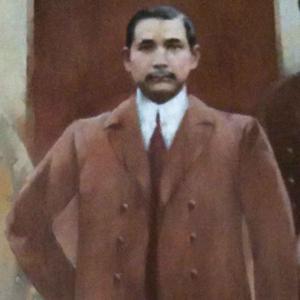


Mao had long desired revolution to peace. Even as a student, he wrote of his desire for the destruction of the old universe.
Thanks to his teacher Yang Changji, he met early leaders of the Communist Party, got a job as a junior librarian in Beijing and met his second wife. Yang Kaihui fell deeply in love with Mao and stayed loyal to him, even after Mao left her and took a new wife. She preferred to be executed than to renounce Mao.
Mao felt ignored by the urban intellectuals at Peking University. Later, those intellectuals and students who had travelled to France and Moscow, controlled the Communist Party of China. Many of them believed urban workers were key to the Chinese Revolution. They started putsches trying to capture key Chinese cities. Those efforts failed and even more urban communists were captured and eliminated.
Gu Shunzhang, head of the Communist Secret Service was arrested and chose to collaborate and revealed the names and locations of key Communists. Ho Chi Minh of Vietnam was arrested and deported. Others were killed, including the Secretary General of the Chinese Communist Party. Li Lisan was blamed for this failures.
Mao Zedong survived in Jiangxi and Fujian provinces by leading Soviets there. He led investigations into local conditions, including in Xunwu, before land redistributions. Mao came to understand in detail the peasant situation, who were the revolutionary classes and who were the true counterrevolutionaries.
At times Mao and his group called other Communists counterrevolutionaries and engaged in purges. They were not alone. This was a challenging time for Communists.
They benefited from the KMT armies being distracted. First by the Central Plains War and then by Japan's invasion of Manchuria. Efforts by Chiang Kai-shek to eliminate the Communists would have to wait.
Image: "Burning up Land Deeds by Gu Yuan (1919-1996)" by lukenotskywalker60 is licensed under CC BY 2.0.
Note from the host: AI was used in this episode to dramatize some voices from quotes I selected using the sources listed in my sources section.
You can support this show through Buy me a coffee. https://www.buymeacoffee.com/thechineserevolution
Hosted on Acast. See acast.com/privacy for more information.
Chiang Kai-shek used strong-armed tactics to fundraise for his army and government. Kidnapping, ransoms and execution were part of his tactics. He allied with the Green Gang of Shanghai, as did the French authorities.
Shanghai businessmen were kidnapped and held for ransom unless they bought Nanjing's bonds during the Northern Expedition.
T.V. Soong found a better way to sell Chinese bonds. He increased the interest rate. He also abolished the likin system in areas under Nationalist control, gained control over Chinese tariffs and negotiated the return of some Boxer Indemnity funds. But he made Japan his enemy and annoyed Chiang by pushing back against the constant demands for more money for the KMT's armies. He was forced out in favour of his brother-in-law H.H. Kung, who understood his job as Finance Minister was to provide Chiang with money for the military regardless of the cost.
Deng Yanda and the Provisional Action Committee of the Guomindang offered an alternative to Chiang's leadership. It sought mass appeal by organizing students, peasants and workers. It also gained supporters who had graduated from the Whampoa Military Academy. An insurrection was planned and Commander Chen Cheng appeared ready to bring Deng to power. But instead he was arrested and executed.
This was the final straw for Song Qingling, the widow of Sun Yat-sen and sister of T.V. Soong. She had already supported the USSR when it invaded Manchuria in a dispute over the China Eastern Railway. Now she asked a Comintern representative to join the Communist Party. They preferred her to be outside the party, criticizing the Nationalists as a disgruntled ex-KMT member. But she received secret agent training and was loyal to the Communist Party of China until her death, when she was rewarded with a party membership on her deathbed.
Note from the host: AI was used in this episode to dramatize some voices from quotes I selected using the sources listed in my sources section.
Image: "File:Teng-Jan-dah - (Deng Yanda ) 1927.jpg" by Chinarail2 is licensed under CC BY-SA 4.0.
Hosted on Acast. See acast.com/privacy for more information.
After the Northern Expedition, the Guomindang (KMT) ejected Communists from the Nationalist Party. The Communist Party of China had no army.
Zhou Enlai had inserted Communists into the Nationalists' Army and the Nanchang Uprising was a coup planned to carve a Red Army out from the Guomindang's troops. It succeeded and they briefly formed a Revolutionary Committee in Nanchang and He Long took command. They retreated before Zhang Fakui could attack them.
While Moscow hoped they would march south and support the Canton Commune, instead they headed south east to Shantou, along the coast. The hoped for resupply ship from Russia never arrived and the Red Army troops were scattered.
Zhu De, future Commander-in-Chief of the People's Liberation Army, survived by assuming a fake name and briefly joining the Nationalist Army again and pretending to be loyal. Then he and his troops escaped north and formed Soviets and burned villages under orders of the Communist Party. He then joined forces with Mao Zedong.
Mao had already been in the Ridge of Wells area along with the remainder of troops from the unsuccessful Autumn Hills Uprising. Mao had joined forces with bandits and then taken over those gangs and absorbed them. His forces were raiding and looting from "the rich", which included farmers with a few hens.
Mao and Zhu and 3000 troops then moved in 1929 before Chiang Kai-shek's troops could capture them. These early days for the Red Army and for Mao's leadership in the countryside held plenty of lessons. They were surviving and learning.
Image: "People's Liberation Army" by Kent Wang is licensed under CC BY-SA 2.0.
Hosted on Acast. See acast.com/privacy for more information.
Chiang Kai-shek (Jiang Jieshi) wanted to shrink the Chinese armies following the Northern Expedition. However, the warlords wouldn't agree without a fight. The result was the War of the Central Plains when Chiang defeated the warlords who had helped him win the Northern Expedition. One by one and then as a group they resisted his efforts to assert Nanjing's control over the provincial and regional armies.
Thanks to the classic Chinese Empty Fortress Strategy, the Nationalists were able to deter Li Zongren from taking the underdefended Wuhan. They then got between his columns and interrupted his supply lines. This allowed the KMT to win the southern campaign and to move troops north to then push Yan Xishan and Feng Yuxiang back.
Over 1 million soldiers fought in the war and the casualties were about 300,000 dead, injured or captured. Chiang Kai-shek was able to overcome a three front war and emerge dominant, better able to turn his attention from Warlords to the Communists and to Japan.
Image: "File:Central Plains War.png" by SY is licensed under CC BY-SA 4.0
You can support this show through Buy me a coffee. https://www.buymeacoffee.com/thechineserevolution
For more information, sources and content see: https://chineserevolution.substack.com
Or enjoy The Chinese Revolution YouTube channel: https://www.youtube.com/channel/UCCOjBYMNC_3xjQXKv6ab9YA?sub_confirmation=1
Hosted on Acast. See acast.com/privacy for more information.
Zhang Zuolin paid for his defeat by the Northern Expedition with his life. Japan assassinated their former Manchurian ally by detonating a bomb as his train passed. Manchuria was becoming chaotic as refugees arrived fleeing battles and famine in Shandong.
Other former warlords also died as family members of their victims took revenge.
The Nationalists suspended the Constitution and decreed that China had entered a period of tutelage when the KMT would guide China and, in theory, towards eventual democracy.
The KMT had to face multiple issues, including strong provincial and regional governors who controlled the most important land tax and who all had local armies.
Chinese spoke many different local tongues and a national speech project was pursued.
The Soong family, all of whom had studied in the USA, became close with the Nanjing government. Many became leading cabinet ministers. Meiling married Chiang Kai-shek.
But the middle sister Qingling, also known as Madame Sun Yat-sen, publicly resigned from the KMT and chose exile in Moscow. While the business minded siblings appreciated Chiang's rejection of communism, Qingling thought it was subverting the principles of her late husband.
Image: "Nanjing (01)" by SqueakyMarmot is licensed under CC BY-SA 2.0.
Hosted on Acast. See acast.com/privacy for more information.
The Nationalists' Northern Expedition began with doubts by their Communist allies.
But it was a military success and quickly Henan and then Hebei provinces were captured. Mikhail Borodin then wanted the armies to move north along the Hankou-Beijing railway line. Instead, Chiang Kai-shek (Jiang Jieshi) preferred to follow the Yangzi River downstream and take the rich provinces controlled by the warlord Sun Chuanfang. That was slower going and the new KMT administration in Wuhan was threatening Chiang's funding and role as Commander-in-Chief.
Chiang supported a purge of Communists in his territories and the crackdown on Communism in Shanghai and other cities caused a split in the Guomindang. Two rival capitals and governments were set up. One in Wuhan was allied with the Communists and Soviets. Chiang's in Nanjing was anti-Communist.
Warlords joined in and the Manchurian General had Li Dazhao killed when the Soviet Embassy was raided. Zhou Enlai barely escaped Shanghai.
The Wuhan administration pushed the military campaign north towards Beijing while trying to stop the peasants from "excesses" in the countryside. Then Wuhan and the Soviet's ally, the Christian Warlord Feng Yuxiang, turned on the Communists and insisted that the Wuhan government purge itself of Communists. The first United Front was over and the split in the Guomindang ended. The crackdown on Communists and the social revolution intensified.
Chiang and his allies were then able to push north and capture Beijing. The Northern Expedition had been a military success. The Nationalists had achieved their long held goal of forming a national government.
Mao Zedong was a survivor of the anti-communist violence and led a small group of rebels in the countryside. They would need to relocate to a mountain hideout. Mao learned a few things during the Northern Expedition. "Political power is obtained from the barrel of the gun." He also realized that taking land from independent cultivators who neither paid rent nor received rent, was a mistake. They were the "swing voters" of the rural revolution. By 1928, he realized he needed those middle peasants as allies.
Chiang Kai-shek had won the battles of the Northern Expedition. But would he win the peace?
Image: "Chiang Kai-shek in 1927" by quinet is licensed under CC BY 2.0.
You can support this show through Buy me a coffee. https://www.buymeacoffee.com/thechineserevolution
For more information, sources and content see: https://chineserevolution.substack.com
Or enjoy The Chinese Revolution YouTube channel: https://www.youtube.com/channel/UCCOjBYMNC_3xjQXKv6ab9YA?sub_confirmation=1
Hosted on Acast. See acast.com/privacy for more information.
In the lead up to Chiang Kai-shek's Northern Expedition, both the KMT's Hu Hanmin and the Christian General Feng Yuxiang were in Moscow. Hu sought admission by the KMT to the Comintern as China's representative. Feng was seeking weapons and engineers for his National People's Army.
Both returned deeply skeptical about the Soviet Union and its intentions towards China.
The USSR wanted an alliance with a northern warlord to bolster its interests in Mongolia and Manchuria. For two years, the Christian Warlord and the atheist Soviets formed an awkward alliance. It wouldn't work out for the Communists, but Feng would end up helping Chiang's Northern Expedition. Chiang needed all the help he could get. The Nationalist's Army was only one-tenth the size of the combined forces of the other armies on the eve of the Northern Expedition.
Image: "Kenraali Feng Yuxiang (1882 - 1948) (Fung Yu Hsiang) telttansa edessä" is licensed under CC BY 4.0.
Hosted on Acast. See acast.com/privacy for more information.
Two funerals were held for Sun Yat-sen on the same day. One involved Christian rites by his family, to prove that Sun was not a Bolshevik. The other was organized by the Communist Party and involved the Soviet Ambassador and a loudspeaker playing Sun's message about nationalism. Already there was a fight to claim Sun's legacy.
Sun's widow, Song Qingling, was from a family which had all studied in the United States. Her father had become a Methodist, then entered into business and paid for all his children to study in the USA. One of his daughters had married Sun Yat-sen at age 21. The youngest would later marry Chiang Kai-shek and become China's First Lady.
With Sun's passing, Wang Jingwei became KMT leader. He had the support of his party's left and the Communists. After an assassination of a KMT executive member and some unsuccessful manuevers by the KMT right, the Communists were more important than ever in the KMT. Mao Zedong was in an important role in propaganda for the KMT.
But just when Mikhail Borodin (Grusenberg) thought that Soviet interests were managed, he left Guangzhou and a coup resulted. Communist Party members of the KMT were weakened and the party was re-organized. Chiang Kai-shek went from being Director of the Whampoa Military Academy to Commander-In-Chief. He confused the Soviets and avoided their blame for the coup. He was well positioned, with Soviet and Communist support, to launch the Northern Expedition that Sun Yat-sen had long dreamed of.
Image: "Sun Yat-sen Memorial Hall" by Mathias Apitz (München) is licensed under CC BY-ND 2.0.
Hosted on Acast. See acast.com/privacy for more information.
The Communist Party of China and the KMT both needed organizing. The KMT and Sun Yat-sen were overly reliant on southern warlords. When they turned on Sun, that made the KMT homeless and risked the life of Sun and those close to him, like his wife Song Qingling. She suffered a miscarriage when Chen Jiongming attacked their house in Guangzhou. Never again would Madame Sun Yat-sen be able to bear children.
Mikhail Borodin, born Mikhail Grusenberg, was valued by Sun and lead the re-organization of the KMT and the Communist Party's outreach in Guangdong. Students went to the people and organized the peasants and began class struggle in rural Guangdong. Sun helped turn a labour strike in Guangzhou into a nationalist victory.
The Whampoa Military Academy and the KMT and Communist Party were now able to train revolutionary soldiers. Borodin thought he had the perfect unpolitical soldier in its Director, Chiang Kai-shek.
The corrupt Cao Kun, leader of the Zhili Clique, was ousted as President in a coup and Sun hoped to assume the national presidency and unite China. But he was dying of cancer and Duan Qirui had more support in the north and with the Japanese.
What would happen after Sun's death?
Image: "File:Borodin in Wuhan.png" by Unknown author is marked with CC0 1.0.
Hosted on Acast. See acast.com/privacy for more information.
A detailed look at China's internal divisions and its neighbours in 1921 when its Communist Party was founded.
Image; Map of China and Asia in 1921 Created for the Chinese Revolution Podcast and Chinese Revolution YouTube series.
Hosted on Acast. See acast.com/privacy for more information.
From the publisher's feed
The history of 19th century and 20th century China, leading up to the Chinese Revolutions, the Republic of China and then the People's Republic of China.
This podcast was inspired by Mike…
The episodes cover the Opium Wars, Taiping Rebellion, foreign treaties and concessions bringing trade and Christianity to China, the Boxer Rebellion, China's 1911 Revolution, the Warlord Period, the KMT and the rise of the Communist Party of China. The Chinese United Fronts are discussed. Personalities like the Empress Dowager Cixi, the Qing emperors, Earl Li Hongzhang, Kang Youwei, Sun Yat-sen, Yuan Shikai, Wu Peifu, Wang Jingwei, Chiang Kai-shek, Zhou Enlai, Zhu De and Mao Zedong are featured. The experiences of Chinese working overseas, including in Australia, Canada, Malaysia, South Africa and the United States of America are also brought to life. We have looked at stories from the late Qing Dynasty. Now we are looking at the stories of the Republic of China, the Communist International (Comintern)'s interest in exporting world revolution to China and the United Fronts, including the Second Sino-Japanese War.
For more information, sources and content see: https://chineserevolution.substack.com
Or enjoy The Chinese Revolution YouTube channel: https://www.youtube.com/channel/UCCOjBYMNC_3xjQXKv6ab9YA?sub_confirmation=1
The Chinese Revolution podcast has charted as a top history podcast in Argentina, Australia, Belgium, Canada, France, Ghana, Great Britain, Hungary, Hong Kong, Hungary, India, Indonesia, Japan, Malaysia, Norway, Poland, Singapore, Slovenia, South Africa, Sweden, Vietnam and Zimbabwe.
The Chinese Revolution is also listed #15 in a Top 100 Military History all time podcast chart and is also listed in a Top 100 China podcasts, the Top 100 Biography podcasts and the Top 100 Historical podcasts charts.
The Chinese Revolution podcast has been listened to in around125 countries.
You can support this show through Buy me a coffee. https://www.buymeacoffee.com/thechineserevolution
Hosted on Acast. See acast.com/privacy for more information.