
Sign up to save your podcasts
Or



Chinese feminists and revolutionaries were active before and during China's 1911 Revolution. Qiu Jin wore men's clothing, was ahead of her time by writing in Standard Chinese instead of Classical Chinese and in making speeches to engage all ages in the struggle for women's rights and women's education. These women believed that women had to seek their own rights, rather than depend on men.
Wu Shuqing imagined and then created the Women's Revolutionary Army, which fought at Hankou and Nanjing during the 1911 Revolution.
Films and plays have been made about Qiu Jin. But more should be known about Wu Shuqing whose life after the revolution is not really known.
Women's rights and education have improved since then. And women have led the Hong Kong Special Administrative Region and Taiwan. But on the mainland, the Chinese Communist Party is currently run exclusively by 24 men and no women. Qiu might be disappointed.
You can support this show through Buy me a coffee. https://www.buymeacoffee.com/thechineserevolution
Image: "Tomb of Qiu Jin, 2022-07-30 02" by Siyuwj is licensed under CC BY-SA 4.0.
Hosted on Acast. See acast.com/privacy for more information.
Yuan Shikai consolidates power as President of the Republic of China. His greatest threats now come from outside China. Russia eyes Mongolia and Britain takes interest in Tibet. The First World War changes the dynamic and Japan seizes Germany's concessions in Shandong. Then Japan issues Twenty-One Demands on China. Yuan negotiates and softens the blow, but suffers from the humiliation.
Yuan Shikai's son and others push for a new monarchy and Yuan goes along. The Grand Constitutional Monarchy is founded, but only lasts for 83 days. Rebellions and opposition start almost immediately and provinces break away. Beiyang Army Generals oppose Yuan and some accept help from Japan. The civil war is only ended when Yuan Shikai dies of natural causes and both sides agree to Li Yuanhong succeeding him as President of the Republic of China.
China has fractured. Can it heal?
Images: "Yuan Shikai Mausoleum | 袁林" by tak.wing is licensed under CC BY-SA 2.0.
Hosted on Acast. See acast.com/privacy for more information.
Yuan Shikai promised to respect China's constitutional republic. A mutiny by unpaid members of the Beiyang Army causes riots in Beijing and other cities. Yuan avoids moving to Nanjing. He de-mobilizes provincial troops and wins a power struggle with the Chinese Premiers. Yuan Shikai puts his own men in important positions.
The Guomindang (KMT) is founded and wins the first election after the 1911 Revolution. Song Jiaoren, KMT's leader, expects to be the new Premier. Instead, he is assassinated. Yuan's followers are implicated and the KMT blames Yuan himself.
Yuan moves troops into strategic locations, uses a new foreign loan to pay troops loyal to him and replaces KMT provincial governors. When they resist with the 1913 revolution, Yuan is ready and his troops quickly suppress the insurrection.
Yuan Shikai consolidates power further in bloody repressions. The KMT is banned and even elected representatives are killed in the crackdown. Yuan Shikai, with loyal troops looking on, is elected President of China by the remaining members of Congress after midnight, on a third ballot. Yuan's power seems supreme. But within 3 years, he will be almost without support.
"Kuomintang of China" by Kautsmenhal is licensed under CC BY-SA 4.0.
Hosted on Acast. See acast.com/privacy for more information.
An update on the Chinese Revolution series made in July 2023.
Image: "Revolution of 1911" by Gary Lee Todd, Ph.D. is marked with CC0 1.0.
Hosted on Acast. See acast.com/privacy for more information.
Yuan Shikai's New Army becomes a national model and military reforms spread throughout China. The death of the Empress Dowager brings Zaifeng in as regent to Pu Yi, the three year old emperor. Yuan is sacked and briefly fears for his life. He quietly retires for over two years. A Qing railway reorganization in Sichuan leads to rebellion. Imperial troops are moved south and the remaining Wuchang Garrison launches a mutiny. The 1911 Revolution has begun and the Qing Court appoints Yuan as Governor General to suppress the rebels. Many see the Qing cause as hopeless. Shikai leads troops that gain control of the north bank of the Yangtze River, but after deadly urban combat. Negotiations take months, but eventually lead to a generous abdication package for Pu Yi and an imperial edict ends the Qing Dynasty and proclaims the Republic of China. 2000 years of imperial dynasties end with an almost bloodless struggle. Yuan becomes President as China celebrates the end of Manchu rule. But the honeymoon period will not last long.
"Revolution of 1911" by Gary Lee Todd, Ph.D. is marked with CC0 1.0.
You can support this show through Buy me a coffee. https://www.buymeacoffee.com/thechineserevolution
For more information, sources and content see: https://chineserevolution.substack.com
Or enjoy The Chinese Revolution YouTube channel: https://www.youtube.com/channel/UCCOjBYMNC_3xjQXKv6ab9YA?sub_confirmation=1
Hosted on Acast. See acast.com/privacy for more information.
Part 2 of a look at Yuan Shikai. Yuan resigned as Imperial Commissioner to Korea and served as a logistics officer during the Sino-Japanese war. Following China's defeat to Japan, Yuan wrote a 13,000 word memo to the emperor outlining his ideas for military reform. Yuan Shikai was then appointed and became the father of China's New Army. He was then promoted to Governor of Shandong and then Zhili provinces. He had to deal with the Boxer Rebellion underway and navigate foreign concessions and the invasion of Tianjin and the capital during the Boxer Rebellion. He was a supporter of reforms, the Qing Court and the Dowager Empress, except when she asked him to do battle with the foreign invaders. He improved Shandong and Zhili provinces and showed himself to be a capable reformer.
Image: "Yuan Shikai, 1859-1916, Militärgouverneur in Shantung" by Siegfried Weiß is licensed under CC BY-SA 4.0.
Hosted on Acast. See acast.com/privacy for more information.
This episode looks at the early life of Yuan Shikai, future president of the Republic of China.
Born to a concubine in a leading gentry family in Henan province, Yuan was adopted by his uncle at age 5. He studied the Confucian classics, learned boxing, martial arts and horseback riding. He took over managing the family assets as a teenager and was already working for the empire. He never passed any of the imperial examinations, but rose quickly in the army.
A chance military assignment in Korea launched Shikai's meteoric ascent. He rescued the Korean king and became Imperial Commissioner to Korea. We was able to stop Japanese maneuvers there once, but failed to prevent the Sino-Japanese war in 1894. He left Korea for China two weeks before war was declared. Yuan's work for the Qing Empire was quickly undone as Japan shocked China with its strong military advance.
Image: "Yuan Shikai, 1859-1916, Militärgouverneur in Shantung" by Siegfried Weiß is licensed under CC BY-SA 4.0.
For more information, sources and content see: https://chineserevolution.substack.com
Or enjoy The Chinese Revolution YouTube channel: https://www.youtube.com/channel/UCCOjBYMNC_3xjQXKv6ab9YA?sub_confirmation=1
Hosted on Acast. See acast.com/privacy for more information.
In this third and final part, Sun Yat-sen's comeback from failed revolutionary is examined. He goes on the offensive against the reformers in Hawaii and in the world's Chinatowns. He builds on contacts with the French to gain weapons and workers for uprisings near the French Indochina border. He helps found the Revolutionary Alliance and becomes its President. More and more revolts are planned and the Wuchang Uprising finally succeeds. A garrison takes control. Organizers from the Revolutionary Alliance then take the revolution to Shanghai. Provinces there secede from the Qing and 14 provinces are soon outside of the Qing Empire. Sun Yat-sen argues with foreign bankers to cut off the Qing and receives permission to return through British ports. He returns to China to a warm welcome. He refuses to head a separatist government in Guangdong and travels to Shanghai and Nanjing, where he is elected as the first President of the Republic of China. Tensions and internal struggles are immediate. The baby emperor abdicates. Sun decides for the greater good, to step down as President and to hand it over to General Yuan Shikai, He wants a united China and hopes for the best.
Image: "Dr. Sun Yat-sen" by bfishadow is licensed under CC BY 2.0.
Hosted on Acast. See acast.com/privacy for more information.
Sun Yat-sen leaves London and lives in Japan for 3 years. He gains Japanese supporters and is considered their Chinese Hero. They fund him, his efforts and newspapers, as well as arming guerillas in the Philippines. Kang Youwei considers Sun to be an uneducated bandit and they compete for followers. An uprising near Huizhou in Guangdong province starts well, but gets distracted and falls apart. Key allies die as a result. Sun has yet another failed uprising to his name. Can he stage a comeback?
Image: "Dr. Sun Yat-sen" by bfishadow is licensed under CC BY 2.0.
Hosted on Acast. See acast.com/privacy for more information.
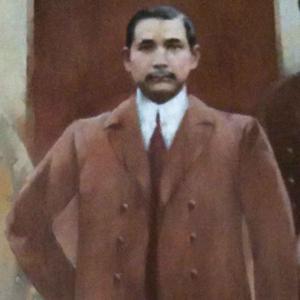
Dr. Sun Yat sen is a legend in mainland China, on Taiwan and in the Chinatowns of the world. This revolutionary's picture can be found at Tiananmen Square in Beijing and in the Legislative Chamber in Taipei.
Few people are recognized as heroes by both the Chinese Communist Party and the KMT. Dr. Sun Yat-sen is one of them.
This episode explores his early life and education in Cuiheng Village, in Honolulu, in Guangzhou and in Hong Kong. Against his older brother's wishes, he is baptized and converts to Christianity. He tries to work for Earl Li Hongzhang, but then starts a revolutionary movement with the Revive China Society and launches his first insurrection in Guangzhou. He is then banished and is kidnapped in London and becomes a media darling. This peasant's son is fast becoming a revolutionary hero.
Image: "Dr. Sun Yat-sen" by bfishadow is licensed under CC BY 2.0.
For more information, sources and content see: https://chineserevolution.substack.com
Or enjoy The Chinese Revolution YouTube channel: https://www.youtube.com/channel/UCCOjBYMNC_3xjQXKv6ab9YA?sub_confirmation=1
Hosted on Acast. See acast.com/privacy for more information.
From the publisher's feed
The history of 19th century and 20th century China, leading up to the Chinese Revolutions, the Republic of China and then the People's Republic of China.
This podcast was inspired by Mike…
The episodes cover the Opium Wars, Taiping Rebellion, foreign treaties and concessions bringing trade and Christianity to China, the Boxer Rebellion, China's 1911 Revolution, the Warlord Period, the KMT and the rise of the Communist Party of China. The Chinese United Fronts are discussed. Personalities like the Empress Dowager Cixi, the Qing emperors, Earl Li Hongzhang, Kang Youwei, Sun Yat-sen, Yuan Shikai, Wu Peifu, Wang Jingwei, Chiang Kai-shek, Zhou Enlai, Zhu De and Mao Zedong are featured. The experiences of Chinese working overseas, including in Australia, Canada, Malaysia, South Africa and the United States of America are also brought to life. We have looked at stories from the late Qing Dynasty. Now we are looking at the stories of the Republic of China, the Communist International (Comintern)'s interest in exporting world revolution to China and the United Fronts, including the Second Sino-Japanese War.
For more information, sources and content see: https://chineserevolution.substack.com
Or enjoy The Chinese Revolution YouTube channel: https://www.youtube.com/channel/UCCOjBYMNC_3xjQXKv6ab9YA?sub_confirmation=1
The Chinese Revolution podcast has charted as a top history podcast in Argentina, Australia, Belgium, Canada, France, Ghana, Great Britain, Hungary, Hong Kong, Hungary, India, Indonesia, Japan, Malaysia, Norway, Poland, Singapore, Slovenia, South Africa, Sweden, Vietnam and Zimbabwe.
The Chinese Revolution is also listed #15 in a Top 100 Military History all time podcast chart and is also listed in a Top 100 China podcasts, the Top 100 Biography podcasts and the Top 100 Historical podcasts charts.
The Chinese Revolution podcast has been listened to in around125 countries.
You can support this show through Buy me a coffee. https://www.buymeacoffee.com/thechineserevolution
Hosted on Acast. See acast.com/privacy for more information.