
Sign up to save your podcasts
Or

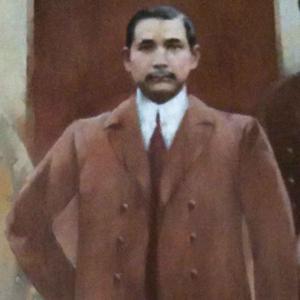


The new Communist Party of China faced decisions on how to grow. Henk Sneevliet, representative of the Communist International (Comintern) to the Far East recommended allying with Sun Yat-sen and the KMT and forming a United Front. Communist Party members could join the KMT as individuals while the Communist Party criticized it and organized the workers and peasants for revolution.
Henk faced resistance among the Chinese Communists who preferred to go a different way. They tried to organize railway workers and call for a General Strike. Meanwhile, the Seamen's Union in Guangzhou had more success.
What was the best way forward for the Communists in China?
"Comintern Logo" by Thespoondragon is licensed under CC BY-SA 4.0.
Hosted on Acast. See acast.com/privacy for more information.
A discussion with Anthony Vernon about atheism in China, both before and since Communism. The distinction between Chinese and foreign religions is featured, as well as how the Chinese Communist Party has changed its policies towards religions over time.
Image: "Karl Marx, painted portrait _DDC2742" by Abode of Chaos is licensed under CC BY 2.0
You save and you support this podcast by using those links. Thank you!
Hosted on Acast. See acast.com/privacy for more information.
Students were the first Chinese to pay attention to the Russian Revolution and the new Communist government there. The Communist International (or Comintern) founded in 1919, also actively promoted and sponsored revolution abroad. Gregory Voitinsky arrived in 1920 as part of the Soviet efforts in China.
Chinese students in France (like Zhou Enlai) and professors at Peking University were quick to promote socialist and Marxist ideas and to form societies and launch publications. They were encouraged by Cai Yuanpei, the Republic of China's first Minister of Education who was then Rector of Peking University. In particular, Chen Duxiu and Li Dazhao were two intellectuals very active in the lead up to the First Congress of the Communist Party of China. Each was elected at that important first meeting. Chen became the party's first Secretary-General and Li became responsible for propaganda. A Dutch communist, Henk Sneevliet, was present on behalf of the Comintern. A 28 year old Mao Zedong was also there before returning to Hunan province.
Image: "中共一大會會址" by billibala is licensed under CC BY-SA 2.0.
Hosted on Acast. See acast.com/privacy for more information.
Sun Yat-sen's Three Principles of the People inspired the KMT party and were implemented after his death in 1925. They also facilitated cooperation between the KMT and the Communist Party of China during the periods of a United Front.
This episode discusses those Three Principles as a prelude to a look at the founding of the Chinese Communist Party.
You can support this show through Buy me a coffee. https://www.buymeacoffee.com/thechineserevolution
Image: "Dr. Sun Yat-sen" by bfishadow is licensed under CC BY 2.0.
Hosted on Acast. See acast.com/privacy for more information.
This podcast update looks forward to the beginning of the Chinese Communist Party, its United Front with the KMT, then the death of Sun Yat-sen, who is followed by Chiang Kai-shek. You’ll hear stories of the KMT’s successful Northern Expedition before turning its knives on the Communists and the beginning of the fighting between those two sides. There will also be another context episode with a guest soon.
Image: "Revolution of 1911" by Gary Lee Todd, Ph.D. is marked with CC0 1.0.
Hosted on Acast. See acast.com/privacy for more information.
Zhang Zuolin, the Manchurian Warlord, was a streetfighter known as the Pimple who went from waiter to leader of China's north.
He climbed from bandit, to soldier and then formed bonds with Japan, Qing officials and then Yuan Shikai. Step by step he grew his power first in Fengtian province, then all three Manchurian provinces and then virtually all of north China.
But that was not enough and he craved complete control in Beijing too. The coalition government broke up and war was declared between his Fengtian Clique and the Zhili Group.
Wu Peifu showed himself to be the better commander in 1922 and Zhang had to lick his wounds and regroup in Manchuria. He waited for a chance to exact revenge.
Image: "Zhang Zuolin, former warlord of Manchuria 1927" by quinet is licensed under CC BY 2.0.
Hosted on Acast. See acast.com/privacy for more information.
A look at taxes, inflation, bandits, offshore funds and roving armies during China's Warlord Period.
Image: "1920s Chinese coins" by renaissancechambara is licensed under CC BY 2.0.
Hosted on Acast. See acast.com/privacy for more information.
A southern Chinese government is set up in Guangzhou. Sun Yat-sen is named Generalissimo. The First Fleet joins with 9 warships.
The Anfu Clique wants to attack the south and fails to defeat rebels in Hunan. Then Wu Peifu is sent south and makes progress, but stops his advance and criticizes Duan Qirui for siding with Japan against his fellow Chinese.
Wu then supports the May Fourth Movement and gains southern friends and northern enemies.
War breaks out between the Anfu and Zhili Cliques. After initial losses, Wu Peifu helps to defeat the Anfu Clique in battle. Duan Qirui resigns and a new administration is set up by the Zhili and Fengtian Cliques.
Meanwhile, the people are suffering from warlords, taxes, duties and destruction. Banditry is often the last resort of the unemployed. But the difference between soldiers and bandits is less than first appears.
You can support this show through Buy me a coffee. https://www.buymeacoffee.com/thechineserevolution
Image: "Wu Peifu with sword" by Unknown authorUnknown author is licensed under CC BY-SA 4.0.
Hosted on Acast. See acast.com/privacy for more information.
The Chinese had high hopes for the negotiations in Versailles after the end of the First World War. Wellington Koo argued the Chinese case ably. China wanted to retake control of its Shandong Province, but instead Japan continued to control it because of agreements signed during the war. Then it became clear that Duan Qirui and his Anhui Clique had benefited from Japanese funds in exchange for signing away Shandong to Japan.
The May Fourth Movement saw an eruption of student anger, supported by intellectuals, businesses and workers. There was even a general strike in Shanghai. The seeds of Chinese Communism were being planted two years before the founding of the Chinese Communist Party.
Behind the scenes, provincial warlords and officials supported the May Fourth Movement as a way of undermining Duan Qirui and his Anhui Clique. They could genuinely use patriotism to criticize Duan's betrayal of China to Japan.
These tensions among warlords would soon reach a boil.
Image: "File:Vi Kyuin Wellington Koo Chinees-Taiwanees politicus, diplomaat en rechter. Mede, Bestanddeelnr 900-8984.jpg" by Anefo is marked with CC0 1.0.
Hosted on Acast. See acast.com/privacy for more information.
The KMT had been active opposing Yuan Shikai and his monarchy project. It had strong support among overseas Chinese.
After Yuan Shikai's death, Li Yuanhong became President and Duan Qirui became Premier. KMT hopes for an effective republic quickly faded. Li and Duan disagreed about whether China should enter the First World War. Li, his Vice-President and Congress all opposed the war. Only Duan wanted to enter the war. He was dismissed following a vote by Congress.
Zhang Xun, the General with the Queue, used that tension to invade Beijing with his 500 soldier Pigtail Army, and restore the teenage Pu Yi as Qing Emperor.
Duan Qirui quickly retook Beijing and assumed power in China. China entered the war on the same side as Japan, Great Britain, France and Russia. China contributed 140,000 labourers through the Chinese Labour Corps and the Corps de Travailleurs Chinois. Some stayed in France after the war.
By being on the winning side in the war, Chinese expected that their country would regain control of the former German concessions. But Duan Qirui had signed those over to Japan in exchange for loans that helped bring him to power. He also agreed that Japanese troops could be stationed along the Chinese frontier with Russia.
Chinese opinion was strongly against Duan when these secret agreements came out. What role would mass mobilization have on Duan?
Image: "Chinese Labour Corps memorials" by ThruTheseLines is licensed under CC BY 2.0.
Hosted on Acast. See acast.com/privacy for more information.
From the publisher's feed
The history of 19th century and 20th century China, leading up to the Chinese Revolutions, the Republic of China and then the People's Republic of China.
This podcast was inspired by Mike…
The episodes cover the Opium Wars, Taiping Rebellion, foreign treaties and concessions bringing trade and Christianity to China, the Boxer Rebellion, China's 1911 Revolution, the Warlord Period, the KMT and the rise of the Communist Party of China. The Chinese United Fronts are discussed. Personalities like the Empress Dowager Cixi, the Qing emperors, Earl Li Hongzhang, Kang Youwei, Sun Yat-sen, Yuan Shikai, Wu Peifu, Wang Jingwei, Chiang Kai-shek, Zhou Enlai, Zhu De and Mao Zedong are featured. The experiences of Chinese working overseas, including in Australia, Canada, Malaysia, South Africa and the United States of America are also brought to life. We have looked at stories from the late Qing Dynasty. Now we are looking at the stories of the Republic of China, the Communist International (Comintern)'s interest in exporting world revolution to China and the United Fronts, including the Second Sino-Japanese War.
For more information, sources and content see: https://chineserevolution.substack.com
Or enjoy The Chinese Revolution YouTube channel: https://www.youtube.com/channel/UCCOjBYMNC_3xjQXKv6ab9YA?sub_confirmation=1
The Chinese Revolution podcast has charted as a top history podcast in Argentina, Australia, Belgium, Canada, France, Ghana, Great Britain, Hungary, Hong Kong, Hungary, India, Indonesia, Japan, Malaysia, Norway, Poland, Singapore, Slovenia, South Africa, Sweden, Vietnam and Zimbabwe.
The Chinese Revolution is also listed #15 in a Top 100 Military History all time podcast chart and is also listed in a Top 100 China podcasts, the Top 100 Biography podcasts and the Top 100 Historical podcasts charts.
The Chinese Revolution podcast has been listened to in around125 countries.
You can support this show through Buy me a coffee. https://www.buymeacoffee.com/thechineserevolution
Hosted on Acast. See acast.com/privacy for more information.