
Sign up to save your podcasts
Or



Based on Podcast App listening data
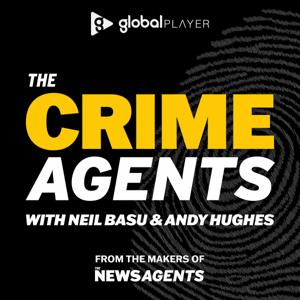
In this special episode, Andy exclusively reveals bombshell allegations of child abuse against a former Met Police officer, who has been accused of being part of a grooming gang by two different survivors.
He tells a shocking story of children in care being abused by a VIP paedophile ring that allegedly involved an MP and a judge, as well as this former police officer. Andy explains why some of the allegations were recorded properly at the time - and why some weren't. And he and Neil discuss whether this issue may have been covered up by the Met Police.
Tune in to hear a powerful story of alleged abuse by figures at the top of the establishment - and Neil's reaction to yet another potential case of a police officer being involved in serious criminal behaviour.
And don't miss part two of this special investigation - where Andy hears directly from victims of child sexual abuse, and he and Neil discuss why children in care are so vulnerable to exploitation. You can listen to it here.
Follow us on social media: @thecrimeagents
In The Crime Agents' latest Q&A episode, Andy and Neil discuss the way police and the CPS treated Caroline Flack, the TV presenter who took her own life in 2020. Did officers seek to make an example of her because she was a celebrity? Or did prosecutors have a duty to pursue the domestic assault case against her? Tune in to hear their verdict on how this tragic episode could have been handled differently.
Andy and Neil also discuss the NCA: the National Crime Agency, sometimes described as Britain's answer to the FBI. Is it right that it's been asked to help stop illegal Channel crossings? Or will it distract the Agency from investigating drug smuggling and other organised crime?
Andy and Neil also explain how police bail works, and reveal their favourite police dramas on TV today.
Have a question for a future episode? Send a voicenote via email to [email protected] or leave a question on social media: @thecrimeagents
The Justice Secretary has announced one of the biggest changes in hundreds of years to the way the British justice system works. Jury trials for crimes carrying sentences of three years or less will be scrapped - but will this really solve the deep-rooted problems at the heart of a creaking system?
In this episode, Andy and Neil explain how the backlog in our criminal courts has reached a record high - and debate whether getting rid of juries will really speed things up, or if it might end up leading to more miscarriages of justice. They also compare the UK's system to those in other countries, and discuss whether juries would have reached different verdicts in high-profile cases such as the ones involving Amanda Knox and Oscar Pistorius.
Andy and Neil also reveal the other changes the government could make to improve our broken criminal justice system - and later, they look at the impact the thousands of arrests at recent Palestine Action protests will be having on that very system.
Follow us on social media: @thecrimeagents
Christmas: for most of us, it's a time of joy and celebration. But for a new group of organised criminals, Christmas means opportunity. Retail crime and shoplifting have hit record levels in the last few years - and the festive season, including Black Friday, is when this issue is at its worst.
So when did shoplifting go from petty crime to serious business? When did retail criminals turn from hard-up addicts and opportunists, to gangs with getaway cars and balaclavas?
In this episode, Andy and Neil explore why shop theft has become so rife, and what needs to be done for the police to regain control of Britain's high streets. They hear from two experts on different sides of the problem: Cullen Mais, who was once the country's most prolific shoplifter, and is now reformed and working with retailers to catch thieves. And Lucy Mitchell from the New West End Company, which runs private security for many of London's busiest shopping streets.
Follow us on social media: @thecrimeagents
What proportion of 999 calls in the UK are genuine emergencies? The answer will shock you.
In this episode, Andy and Neil play you some of the most bizarre and ridiculous 999 calls which have been made in the last year - and explain why these hoaxes and time-wasters could ultimately be a matter of life and death.
They also take you behind the scenes of an emergency response room to explain what happens when a genuine emergency is called in: who answers the phone? How quickly are officers deployed? And who decides whether firearms backup is needed? Plus, Neil reveals the top three most memorable 999 calls he responded to in his days as a PC.
Andy and Neil also discuss what it takes to deal with the unique challenges of being a response cop - and whether it's time to take tougher action on those who waste police time.
Follow us on social media: @thecrimeagents
Why do less than 3% of all reported rapes in the UK lead to a conviction? Andy and Neil describe that statistic as "shameful" and "a scandal" - and attempt to explain why a combination of rape myths and problems in our creaking justice system make it so hard to prove someone's guilt.
Plus Andy reveals why one senior detective he's spoken to believes it's time to get rid of jury trials in rape cases - and why using lie detectors could be part of the way forward.
Plus Andy and Neil are joined by Jade Blue McCrossen-Nethercott: a rape survivor who was so badly treated by the justice system that she took legal action against the CPS - and won. Jade tells her story, including the extraordinary reason why her trial collapsed, and explains what she is doing now to work with police and prosecutors to improve the way this issue is handled.
You can find a link to the Jade's website here.
Follow us on social media: @thecrimeagents
Men are responsible for nearly 80% of all crime carried out in the UK and make up over 90% of Britain's prison population. In this Q&A episode, Andy and Neil are asked: why is this the case? Is testosterone to blame? Is it down to a lack of critical thinking skills in young men? Or is it an inevitable consequence of a patriarchal society?
Andy and Neil also explain whether Andrew Mountbatten Windsor is now more vulnerable to police investigations over his friendship with Jeffrey Epstein - both in the UK and the US - now he is no longer a Prince and has been stripped of his Royal titles.
They're also asked which one law they would change in a bid to cut crime rates and whether deterrent sentences work in the way they are intended to. Plus, Neil explains the surprising reason why taking part in Nazi-themed chat rooms and sleeping under a portrait of Hitler isn't enough for someone to be convicted of terrorism offences.
Have a question for a future Q&A episode? Send it to [email protected]
Follow us on social media: @thecrimeagents
One day in September 1985, a dawn raid in South London went badly wrong. Police were looking for a man called Michael Groce - but they raided the wrong address, and ended up shooting his mother, Cherry Groce, who was left paralysed for the rest of her life. The incident led to an uprising in Brixton, and the anger soon spread to Tottenham, and even Toxteth in Liverpool.
In this episode, Andy and Neil explain the background to the shooting of Cherry Groce and the riots which spread across the country in the autumn of 1985. They also speak to Lee Lawrence, Cherry's son, who watched as his mother was shot by a Met Police officer in her own home.
Lee tells Andy and Neil the powerful story of his battle to get justice for his Mum, and why he's now decided to work with the police to help prevent what happened 40 years ago from ever happening again.
Follow us on social media: @thecrimeagents
As a train guard fights for his life and several other passengers recover in hospital, Andy and Neil bring you the latest on the story which continues to dominate the news: the mass stabbing on a train in Cambridgeshire on Saturday night.
They explain that the man charged with carrying out those attacks has also been charged with an attempted murder on a train in London the night before - and discuss whether more could have been done to prevent this tragedy from happening.
Neil also breaks down why this incident does not classify as a terrorist attack - and he gives his verdict on whether the police were right to give details of the suspect's ethnicity so soon after he was arrested. Later, they debate whether the idea of having more of a police presence on public transport is a realistic possibility - and whether it would help to stop more attacks like this from happening in the future.
Follow us on social media: @thecrimeagents
Have you ever wondered how it feels to carry a firearm on the streets of London? Or what it's like to be among the first responders after a terror attack? And why do a small number of police officers in the UK choose to carry a gun, for no extra money, with all the added scrutiny and pressure that comes with the job?
In this episode, Andy and Neil sit down for an exclusive interview with Will, a former sergeant in the Met's Firearms Unit, who gives them a rare insight into armed policing in the UK. He talks about attempting to resuscitate the terrorist who carried out the Westminster Bridge attack in 2017, being there on the night his colleague shot and killed Chris Kaba in 2022, and whether firearms officers are unfairly held to higher standards by the justice system.
Just weeks after armed police played a key role in stopping the Manchester Synagogue Terror attack, this is a unique opportunity to find out what it's really like to serve in a role which feels more important than ever.
Watch our episodes on YouTube and follow us on social media: @thecrimeagents
From the publisher's feed
Ranked by our users in the last 21 days

382 Listeners

663 Listeners
267 Listeners

725 Listeners

3,030 Listeners

1,115 Listeners

937 Listeners

617 Listeners

425 Listeners

905 Listeners
102 Listeners
30 Listeners

2,297 Listeners

1,093 Listeners

13 Listeners