
Sign up to save your podcasts
Or



Based on Podcast App listening data
THE DAILY ARTICLE FOR JULY 29, 2020
A church in Texas is using barbecue to minister during the pandemic. Today's podcast tells their story, then we focus on a biblical principle that liberates us to speak biblical truth with courage and power.
ABOUT THE DENISON FORUM
The Daily Article is a daily biblical commentary on the news of the day by Dr. Jim Denison.
To learn more about the Denison Forum, visit DenisonForum.org or email us at [email protected].
THE DAILY ARTICLE FOR JULY 28, 2020
Rep. John Lewis is being remembered in the US Capitol today. Today's podcast discusses the faith leaders who led the civil rights movement, focuses on two changes many evangelicals need to make to assume cultural leadership today, and closes with three statements that are unfortunately controversial today.
ABOUT THE DENISON FORUM
The Daily Article is a daily biblical commentary on the news of the day by Dr. Jim Denison.
To learn more about the Denison Forum, visit DenisonForum.org or email us at [email protected].
THE DAILY ARTICLE FOR JULY 27, 2020
Are these the "last days"? In light of two hurricanes and other headlines, today's podcast explores three predictions by Jesus in Luke 21, then we focus on two ways evangelicals can respond to our fallen culture with good news and compassion.
ABOUT THE DENISON FORUM
The Daily Article is a daily biblical commentary on the news of the day by Dr. Jim Denison.
To learn more about the Denison Forum, visit DenisonForum.org or email us at [email protected].
THE DAILY ARTICLE FOR JULY 24, 2020
Lightning struck the Statue of Liberty this week. Today's podcast tells the story as a cultural metaphor, then we discuss our need for the God who empowers morality and liberty.
ABOUT THE DENISON FORUM
The Daily Article is a daily biblical commentary on the news of the day by Dr. Jim Denison.
To learn more about the Denison Forum, visit DenisonForum.org or email us at [email protected].
THE DAILY ARTICLE FOR JULY 23, 2020
The US ordered the Chinese consulate in Houston to be closed. Today's podcast explains this escalating conflict, then we discuss my experiences in Beijing and focus on two transforming biblical responses.
ABOUT THE DENISON FORUM
The Daily Article is a daily biblical commentary on the news of the day by Dr. Jim Denison.
To learn more about the Denison Forum, visit DenisonForum.org or email us at [email protected].
From the publisher's feed
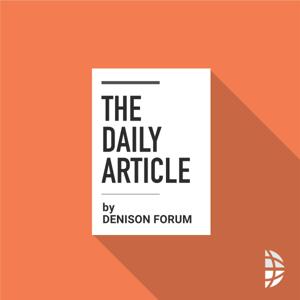
The Daily Article Podcast offers news discerned differently every Monday through Friday morning. With biblical insight into the day’s latest news and current events, this narrated edition of Dr.…
Ranked by our users in the last 21 days

1,652 Listeners

15,995 Listeners
5,193 Listeners
8,580 Listeners
3,944 Listeners

4,757 Listeners

3,092 Listeners

914 Listeners

7,111 Listeners
2,380 Listeners

1,275 Listeners
1,210 Listeners
768 Listeners
132 Listeners

373 Listeners
42 Listeners

4 Listeners