
Sign up to save your podcasts
Or

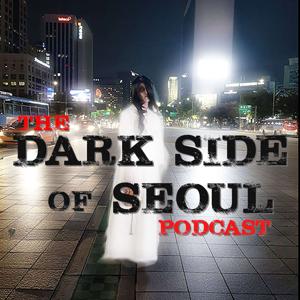


King Jeongjo is barely in the ground and his entire reform project is already under threat. This episode covers 1801–1803: the regency of Queen Dowager Jeongsun, two significant but fatally incomplete reform measures, and the beginning of the Andong Kim clan’s century-long stranglehold on the Joseon court.
Topics covered:
Resources mentioned:
Website: darksideofseoul.com
About the Podcast
The Dark Side of Seoul explores Korea’s hidden history, true crime, folklore, ghost stories, urban legends, disasters, political scandals, and the strange corners of Korean culture that rarely make it into guidebooks. Hosted by long-time Korea residents Joe McPherson and Shawn Morrissey, the show blends historical research, cultural analysis, and firsthand experience to examine the people, events, beliefs, and mysteries that have shaped the Korean peninsula.
Some episodes take deep dives into forgotten historical events, serial killers, political intrigue, and supernatural traditions. Others tackle current events and unusual news stories through our shorter “Fun Sized” episodes, connecting today’s headlines to larger patterns in Korean society.
Whether we’re discussing Joseon-era conspiracies, haunted mountains, cults, disasters, ghost encounters, or modern social issues, our goal is always the same: to explore the darker side of Korea with curiosity, skepticism, and historical context.
Hosted by Simplecast, an AdsWizz company. See pcm.adswizz.com for information about our collection and use of personal data for advertising.
Joe and Shawn are joined by Justin Kyle, co-host of the weekly horror film podcast Straight Chilling, for a decade-by-decade guide to Korean horror cinema. Starting from a lost 1924 silent film made under Japanese occupation and running through Na Hong-jin's divisive 2024 creature feature, Justin leads a structured tour of the films, directors, themes, and historical forces that shaped one of world cinema's most distinctive horror traditions.
Guest
Justin Kyle, Straight Chilling Podcast
Topics discussed
The 1924 silent horror film adaptation of the Tale of Two Sisters, made during Japanese occupation around the same time as Nosferatu and The Cabinet of Dr. Caligari, now a lost film
The Korean Film Archive's YouTube channel and Blu-ray releases for older films, and the ongoing problem of lost or damaged Korean films even from relatively recent decades
Why Korean horror rarely produces slashers, monster films, or vampire stories, and what it produces instead
The femme fatale and the vengeful female ghost as recurring figures in Korean horror, and the argument that these women have genuine narrative agency rather than existing simply as threats to be defeated
The 1960s as the first golden age of Korean horror, and the unusually high cinematographic quality of films from that era
How Park Chung-hee's nationalist cultural policies in the 70s inadvertently created a boom in shaman-themed cinema
The censorship era of the 70s and 80s, what it did to Korean filmmaking, and why the 80s produced so few horror films
The shamanism film tradition in Korean cinema and why claims that it is a new trend are wrong
Whispering Corridors (1998) as the beginning of the second golden age of Korean horror
Why the end of censorship in the mid-to-late 90s unlocked a new era of ambitious Korean filmmaking
The Quiet Family, A Tale of Two Sisters, The Host, and Thirst as the peak of 2000s Korean horror
The debate over whether Park Chan-wook or Bong Joon-ho is the better filmmaker
Train to Busan and the argument about whether it is a great zombie film, a mediocre horror film, or an accessible action film that Koreans don't even classify as horror
The Wailing as the conclusion of the second golden age
Seire (2021) as the best Korean horror film of the current decade, and the Korean folk traditions around birth and death it draws on
Exhuma and what happens when horror films prioritize accessibility over atmosphere
Na Hong-jin's Hope and why it's deeply divisive
The Netflix and K-pop effect on Korean cinema and the argument that chasing international accessibility has drained the daring out of mainstream Korean horror
A Halloween party on October 24, 2026 at Dyson Comics Cafe in Seoul with horror board games, movie trivia, and a Halloween magic show
Korean horror film timeline by decade
1924 — Untitled Tale of Two Sisters adaptation — director unknown — lost film
1960s
1960 — The Housemaid (하녀) — Kim Ki-young
1970s
1970 — Ghosts of Joseon (이조괴담) — Shin Sang-ok
1980s
1981 — Suddenly in the Dark / Suddenly at Midnight (깊은 밤 갑자기) — Go Yeong-nam
1990s
1995 — 301, 302 (삼공일 삼공이) — Park Chul-su
2000s
2001 — Sorum (소름) — Yoon Jong-chan
2010s
2010 — I Saw the Devil (악마를 보았다) — Kim Jee-woon
2020s
2021 — Seire (세이레) — Park Kang
Resources mentioned
Straight Chilling Podcast: straightchilling.com
Timestamps not available for this episode.
About the podcast
The Dark Side of Seoul explores Korea's hidden history, true crime, folklore, ghost stories, urban legends, disasters, political scandals, and the strange corners of Korean culture that rarely make it into guidebooks. Hosted by long-time Korea residents Joe McPherson and Shawn Morrissey, the show blends historical research, cultural analysis, and firsthand experience to examine the people, events, beliefs, and mysteries that have shaped the Korean peninsula.
Some episodes take deep dives into forgotten historical events, serial killers, political intrigue, and supernatural traditions. Others tackle current events and unusual news stories through our shorter "Fun Sized" episodes, connecting today's headlines to larger patterns in Korean society.
Whether we're discussing Joseon-era conspiracies, haunted mountains, cults, disasters, ghost encounters, or modern social issues, our goal is always the same: to explore the darker side of Korea with curiosity, skepticism, and historical context.
Hosted by Simplecast, an AdsWizz company. See pcm.adswizz.com for information about our collection and use of personal data for advertising.
Why do ghosts conveniently conform to the culture of the people seeing them? Korean folklore gives us the cheonyeo gwishin, Western traditions have their own recognizable specters, and decades of movies have taught us that ghosts should be translucent, vaporous, and obviously dead.
Joe and Shawn question whether any of those images are useful when examining claims of actual ghost encounters. If ghosts represent a genuine phenomenon, Shawn argues, their basic characteristics should remain consistent across cultures. The conversation moves from Korean folklore and Shakespeare to filmmaking, Newfoundland ghost traditions, the concept of han, trauma as an explanation for hauntings, and the surprisingly mundane descriptions that appear in some of the more convincing alleged encounters.
More in Shawn’s newsletter article The Most Haunted Place on Earth!
00:00 Introduction
06:00 Defining the problem with ghosts
10:00 Folklore as explanation
11:36 What if ghosts are real?
13:00 Korean ghost imagery
15:00 Fictional ghosts versus alleged encounters
17:30 Ghost imagery across cultures
20:00 The mundane ghost
22:00 Theater, film, and translucent spirits
25:00 Ghosts we may not recognize
27:00 Newfoundland's "fetch" tradition
29:00 The most haunted place on Earth
31:00 Trauma and restless spirits
33:00 Han and Korean ghosts
34:50 Final discussion
36:30 Listener shout-out
The Dark Side of Seoul explores Korea's hidden history, true crime, folklore, ghost stories, urban legends, disasters, political scandals, and the strange corners of Korean culture that rarely make it into guidebooks. Hosted by long-time Korea residents Joe McPherson and Shawn Morrissey, the show blends historical research, cultural analysis, and firsthand experience to examine the people, events, beliefs, and mysteries that have shaped the Korean peninsula.
Hosted by Simplecast, an AdsWizz company. See pcm.adswizz.com for information about our collection and use of personal data for advertising.
Joe visited a brand-new free museum in Seoul's Insadong neighborhood built on a six-year archaeological excavation. The dig exposed a layer of the city from the late 1590s, right before the Japanese invasions reduced large parts of Seoul to rubble. The artifacts are fascinating. The signage is a list of measurements. The actual story, that this neighborhood was frozen in the moment before catastrophe, is buried in a set of video interviews near the back that most visitors probably walk past.
Topics discussed:
Shawn's Substack newsletter Welcome to Savage Hollar, a follow-up Korean urban legends book in progress, and a new book about hauntings in Newfoundland
A new Korea concierge service helping travelers book KTX tickets, baseball tickets, and navigate Korean websites built exclusively for Korean IDs and Korean phone numbers
A live music venue in Nagwon called EDLS with a brew pub, live jazz, rock, and experimental music Thursday through Saturday, 10,000 to 15,000 won cover
The Insadong Urban Heritage Exhibition Hall: what it is, what it contains, and why it fails to explain itself
The history of pimgol, Seoul's network of back alleys designed so commoners could work and move around the city without bowing to aristocrats on horseback
The Gongpyeong regulation requiring archaeological digs before any construction in the Insadong-Jongno area, and the cluster of small underground museums it has produced
A clay jar full of metal movable type, some cast in Hangeul, deliberately buried underground, not lost in a fire but hidden intentionally
Bronze hand cannons stockpiled nearby, and what that stockpile suggests about the circumstances
Why the dig focused on the late 1590s layer specifically: almost nothing from that era survives elsewhere in the city
The Japanese invasions of 1592 as the explanation for everything buried, abandoned, or burned in that layer
Joseon-era astronomical instruments and a water clock of significant mechanical complexity found at the site
Why Korean heritage interpretation consistently describes physical dimensions instead of telling the story, and why a brand-new museum opened in 2026 still has this problem
Practical information:
Insadong Urban Heritage Exhibition Hall (인사동 도시유적전시관)
Resources mentioned:
Shawn's Substack: Welcome to Savage Hall
Timestamps not available for this episode.
About the podcast
The Dark Side of Seoul explores Korea's hidden history, true crime, folklore, ghost stories, urban legends, disasters, political scandals, and the strange corners of Korean culture that rarely make it into guidebooks. Hosted by long-time Korea residents Joe McPherson and Shawn Morrissey, the show blends historical research, cultural analysis, and firsthand experience to examine the people, events, beliefs, and mysteries that have shaped the Korean peninsula.
Some episodes take deep dives into forgotten historical events, serial killers, political intrigue, and supernatural traditions. Others tackle current events and unusual news stories through our shorter "Fun Sized" episodes, connecting today's headlines to larger patterns in Korean society.
Whether we're discussing Joseon-era conspiracies, haunted mountains, cults, disasters, ghost encounters, or modern social issues, our goal is always the same: to explore the darker side of Korea with curiosity, skepticism, and historical context.
Hosted by Simplecast, an AdsWizz company. See pcm.adswizz.com for information about our collection and use of personal data for advertising.
Insa-dong as one of Joe and Shawn’s first experiences of Seoul
How the neighborhood has changed since the early 2000s
Traditional Korean incense and surviving specialty shops
The hidden waterways that shaped Insa-dong’s streets
Insa-dong during the late Joseon period and Korean Empire
How Japanese colonial rule helped create the antiques district
Looted temple and palace artifacts entering the antique trade
The rise of artists, galleries, tea houses, and literary culture
Crime and kidnapping in old Insa-dong
Poet Chun Sang-byeong and his abduction by the Korean intelligence services
Torture, political repression, and Chun’s disappearance
Insa-dong’s designation as Korea’s first cultural district
Starbucks, Hangul signage, and the commercialization of “traditional” Seoul
Ssamziegil and the transformation of Insa-dong into a shopping destination
Dragon’s Beard candy and Insa-dong’s changing street-food culture
The 2013 Insa-dong fire
Museums, galleries, traditional crafts, and what remains worth visiting
How nostalgia shapes the way longtime residents remember Insa-dong
00:00 Tourist Season introduction
02:10 Introducing Insa-dong and memories of old Seoul
05:00 How Insa-dong has changed
08:00 Traditional Korean incense and surviving old shops
25:10 The geography of Insa-dong and its buried waterways
30:00 Insa-dong during the Korean Empire
35:00 How Insa-dong became Seoul’s antiques district
39:00 Japanese colonial dealers and looted cultural artifacts
42:00 Crime and kidnapping in old Insa-dong
47:05 Poet Chun Sang-byeong and Seoul’s literary culture
48:55 Chun Sang-byeong’s abduction and torture
55:00 The legacy of Chun Sang-byeong
1:00:25 Insa-dong becomes Korea’s first cultural district
1:00:55 Starbucks and the famous Hangul sign
1:04:55 Ssamziegil and the commercialization of Insa-dong
1:09:00 Insa-dong street food
1:10:45 Dragon’s Beard candy
1:36:05 The 2013 Insa-dong fire
1:48:30 What remains worth seeing in Insa-dong
2:00:00 Museums, crafts, tea, and surviving cultural attractions
Insa-dong
Cheonggyecheon
Jongno
Joseon Dynasty
Korean Empire
Japanese colonial period
Chun Sang-byeong
Ssamziegil
Starbucks Insa-dong
Dragon’s Beard candy
Korean traditional incense
Insa-dong antique dealers
Insa-dong art galleries
Traditional Korean tea houses
The 2013 Insa-dong fire
Website
https://darksideofseoul.com
Patreon
https://patreon.com/darksideofseoul
Instagram
https://instagram.com/darksideofseoul
Facebook
https://facebook.com/darksideofseoul
YouTube
https://youtube.com/@darksideofseoul
The Dark Side of Seoul explores Korea's hidden history, true crime, folklore, ghost stories, urban legends, disasters, political scandals, and the strange corners of Korean culture that rarely make it into guidebooks. Hosted by long-time Korea residents Joe McPherson and Shawn Morrissey, the show blends historical research, cultural analysis, and firsthand experience to examine the people, events, beliefs, and mysteries that have shaped the Korean peninsula.
Hosted by Simplecast, an AdsWizz company. See pcm.adswizz.com for information about our collection and use of personal data for advertising.
Nami Island’s origins, General Nami and the false tomb, Korea’s domestic tourism boom, Winter Sonata and the early Korean Wave, K-drama tourism, artist Kang Woo-hyon’s transformation of the island, the Republic of Naminara, tourism marketing, Gapyeong attractions, Instagram tourism, overtourism, and whether Nami Island is actually worth visiting.
00:00 Tourist Season summer replay introduction
00:31 Why are we talking about Nami Island?
02:01 Nami Island wasn’t originally an island
03:07 General Nami and the false tomb
04:22 The Bukhangang “land of tourist traps”
05:28 Winter Sonata changes everything
06:43 How Winter Sonata helped launch the Korean Wave
07:12 K-dramas as tourism marketing
08:17 The artist who reinvented Nami Island
~12:00 The Republic of Naminara and its tourism gimmicks
~18:00 What Nami Island is actually like to visit
~21:00 Other Gapyeong tourist attractions
25:40 Who should actually visit Nami Island?
26:37 The contradiction of “eco-tourism” and mass tourism
27:10 Instagram, influencers, and manufactured destinations
28:01 Closing and Dark Side of Seoul tours
29:34 Final travel advice
Nami Island / Republic of Naminara, Winter Sonata, Bae Yong-joon, Choi Ji-woo, Korean Tourism Organization, Bukhangang, Cheongpyeong Dam, General Nami, Gapyeong, Petite France, K-drama filming locations, the Korean Wave, Korean domestic tourism, Instagram tourism, Dark Side of Seoul tours, and ZenKimchi Experiences.
Dark Side of Seoul:
darksideofseoul.com
ZenKimchi Experiences:
zenkimchi.com
YouTube:
Dark Side of Seoul on YouTube
Patreon:
Dark Side of Seoul Patreon
The Dark Side of Seoul explores the strange, hidden, and occasionally disturbing sides of Korean history, folklore, culture, crime, and travel. Hosted by Joe McPherson and Shawn Morrissey, the show draws on decades of experience living, researching, writing, and guiding in Korea.
Hosted by Simplecast, an AdsWizz company. See pcm.adswizz.com for information about our collection and use of personal data for advertising.
Tourist brochures rarely tell the whole story. In this Tourist Season replay, Joe and Shawn revisit one of the podcast's most popular travel episodes, uncovering the wars, massacres, murders, ghost stories, and redevelopment controversies hidden behind some of Korea's best-known tourist destinations.
00:00 Tourist Season introduction
02:30 Horror movie watch parties and summer updates
10:15 Why every tourist site has a darker history
13:30 Incheon and the Korean War
24:00 The 2017 Incheon child murder
37:45 Jeju's Bukchon Massacre
50:00 Bukchon Hanok Village beyond the postcards
1:02:00 Ikseon-dong before the cafés
1:22:00 Jeonju's anonymous Christmas donor
1:33:30 Cheonggyecheon before restoration
1:50:00 Listener mail: Korean hiking bells
Website
Patreon
YouTube
The Dark Side of Seoul explores Korea's hidden history, true crime, folklore, ghost stories, urban legends, disasters, political scandals, and the strange corners of Korean culture that rarely make it into guidebooks. Hosted by long-time Korea residents Joe McPherson and Shawn Morrissey, the show blends historical research, cultural analysis, and firsthand experience to examine the people, events, beliefs, and mysteries that have shaped the Korean peninsula.
Hosted by Simplecast, an AdsWizz company. See pcm.adswizz.com for information about our collection and use of personal data for advertising.
This week kicks off our summer rerun series, digging up the best tourism episodes from the archive while we take a break from new true crime deep dives. First up: 141, Tourists from Hell.
Years of running walking tours and food tours in Seoul means years of collecting the worst behavior tourism has to offer. Hand holders who never read their confirmation emails. Tour-splainers who think they know the history better than the guide telling it. The no-show who ghosted, left a one-star review, then demanded a refund anyway. A hotel concierge (the irony) who wanted a private tour at group rates, only ate at Michelin-level places, and ended the day eating bread from a bakery because nothing else met his standards.
Plus, why Joe stopped taking media fixer gigs after some genuinely great experiences with names like Bourdain and Zimmern, and a stack of tourist horror movie recommendations to close things out.
If you've ever worked in hospitality, this one's for you. If you've ever been that guest, you might recognize yourself.
Website:
Apple Podcasts:
Spotify:
Patreon:
YouTube:
Instagram:
Facebook:
Contact:
The Dark Side of Seoul explores Korea's hidden history, folklore, true crime, urban legends, supernatural traditions, and the overlooked stories that shaped the peninsula. Alongside deep dives into Korea's darker past, the podcast also explores life in modern Korea through travel, culture, and the often hilarious realities of working as professional tour guides.
Hosted by Simplecast, an AdsWizz company. See pcm.adswizz.com for information about our collection and use of personal data for advertising.
Joe and Shawn examine how the family had already been identified as a high-risk household and had been visited by schools, welfare officials, police, and child protection workers. Despite multiple warning signs, no agency ever developed a complete picture of the family's crisis. The episode explores whether this tragedy represents an isolated incident or a broader failure of institutions designed to protect children and families.
02:00 The Ulsan case
06:00 Financial hardship and the family's circumstances
12:00 Welfare assistance and why it wasn't enough
19:00 Single fathers and asking for help
24:00 Child protection and looking for the wrong warning signs
31:00 Mental health, stigma, and caregiver burnout
37:00 Bureaucracy and agency coordination failures
43:00 Possible reforms and remaining concerns
Apple Podcasts: https://podcasts.apple.com/us/podcast/the-dark-side-of-seoul-podcast/id1504623984
Spotify: https://open.spotify.com/show/1lZBXNX79kwH2NXcJWNcb8 Patreon: https://patreon.com/darksideofseoul
YouTube: https://youtube.com/@darksideofseoul
Instagram: https://instagram.com/darksideofseoul
Facebook: https://facebook.com/darksideofseoul
Contact: [email protected]
Hosted by Simplecast, an AdsWizz company. See pcm.adswizz.com for information about our collection and use of personal data for advertising.
Dark Side of Seoul Podcast
Episode 316
The Weird Science Behind Korean Food Nationalism
Apple Podcasts: https://podcasts.apple.com/us/podcast/the-dark-side-of-seoul-podcast/id1504623984
Spotify: https://open.spotify.com/show/1lZBXNX79kwH2NXcJWNcb8 Patreon: https://patreon.com/darksideofseoul
YouTube: https://youtube.com/@darksideofseoul
Instagram: https://instagram.com/darksideofseoul
Facebook: https://facebook.com/darksideofseoul
Contact: [email protected]
https://link.springer.com/article/10.1186/s42779-023-00194-3
It was published in 2023 in the Journal of Ethnic Foods, an open-access journal published by BioMed Central. It has multiple authors, references dozens of sources, and presents itself as a scientific examination of Korean food history and philosophy.
But once you start reading it closely, something becomes obvious.
The paper repeatedly makes sweeping historical, linguistic, archaeological, genetic, and anthropological claims that either go well beyond the available evidence or directly contradict mainstream scholarship. Rather than weighing competing explanations, it almost always arrives at the same conclusion: Korean food is uniquely independent, uniquely original, and fundamentally separate from neighboring cultures.
That is what makes this paper interesting.
Not because it's simply "wrong." Plenty of academic papers contain mistakes.
It's interesting because it reflects a broader pattern that occasionally appears in Korean public discourse, media, and even academia: the desire to demonstrate Korean exceptionalism through scientific language.
They must be:
Others find their way into books, museums, newspapers, documentaries, and occasionally academic publications.
Modern Korea emerged from colonization, war, dictatorship, and decades of being culturally overshadowed by larger neighbors. Building a strong national identity was an understandable project.
The problem comes when pride begins driving the research instead of the research informing the pride.
Good scholarship starts with evidence and follows wherever it leads.
Nationalistic scholarship often starts with the conclusion and works backwards.
That doesn't make every conclusion false.
It does make readers ask a very different question:
"Is this trying to discover the truth?"
Or
"Is this trying to prove something?"
This paper often feels like the latter.
"Nevertheless, until now, the history of food on the Korean Peninsula has been mainly studied by history scholars who can read Chinese characters rather than by natural scientists, resulting in errors and distortions in our understanding of the identity, history, and originality of Korean food.
In this paper, we aim to correct these errors and distortions and to present scientifically validated research... Furthermore, we also aim to provide scientific truths..."
"The early Korean population developed their characteristic foods in relative isolation from other regions of Asia due to the oceans and rugged mountains surrounding the country.
Therefore, we must be very careful when discussing the culture and history of Korean food through Chinese books...
Korea has historically been geographically isolated... it was also so historically resistant to outside influences and interactions that it was commonly called the 'Hermit Kingdom.'"
"Another distinctive feature of Korean cuisine is the unique presentation of bap and banchan...
We call this banchan culture, and it is a food culture that does not exist in any other country in the world."
"Not only do we have a different ethnic root than China, but we also do not have oil or sugar as elements to make food delicious agriculturally."
...
"In an environment where livestock and dairy products did not exist, where sugar to provide a sweet taste was unavailable, and where there was no oil to enhance the flavor..."
"As with all vegetables and herbs, they have less flavor when they do not contain salt, fat, or protein.
The essence of Korean cuisine lies in the spirit and wisdom of Korean ancestors on how to eat these tasteless vegetables deliciously, which can be said to be the soul of Korean food."
"The earthenware vessels found in Korea during the ancient times were... mostly different from that of China.
From this alone, we can tell that the food culture of ancient times in Korea was independently formed from that of China."
"The Korean and Chinese peoples are ethnologically different nations."
...
"Korea has continued to develop independently thereby developing and preserving its own culture and history without being culturally absorbed by the country of China."
"Korean is classified as Ural-Altaic (Trans-Eurasian), which is completely different from the Chinese language system (India-Europe).
Korean belongs to the same linguistic family as Manchurian, Mongolian, Japanese, Hungarian, and Finnish."
"The rapid decline in male genetic diversity... suggests that during the war, the invaders slaughtered men and humiliated women."
...
"Therefore, it is a false claim that Korean food came from either China or Japan through men's communication.
Wars have not advanced the development of food.
Had mothers' languages not changed after the war, their food would not have changed either."
"In an environment where livestock and dairy products did not exist... where sugar... was unavailable... and where there was no oil to enhance the flavor..."
"Foreigners who do not understand this come to believe that Korean food is very spicy.
In reality, authentic Korean food is never hot because chili pepper varieties cultivated in Korea are not hot."
"Royal court cuisine and jongka cuisine are not Korean food; they are based on Chinese food."
The paper argues wars and foreign influence did not shape Korean food.
Then later it writes:
"Inexpensive wheat flour from the USA replaced the more expensive rice with flour, which has greatly contributed to the development of pajeon, tteokbokki, and kuksu."
It doesn't need exaggerated origin stories.
It doesn't become less Korean because chili peppers came from the Americas.
It doesn't become less Korean because Buddhism came through China.
It doesn't become less Korean because dumplings arrived with the Mongols.
Every great cuisine is built through centuries of borrowing, adapting, refining, and making ideas its own.
Ironically, that's exactly what makes Korean food so interesting.
The strongest case for Korean cuisine isn't that it developed in complete isolation.
It's that Korea took influences from around the world and transformed them into something unmistakably Korean. That story is both more believable and far more impressive.
Hosted by Simplecast, an AdsWizz company. See pcm.adswizz.com for information about our collection and use of personal data for advertising.
From the publisher's feed

9,471 Listeners

4,768 Listeners

15,563 Listeners
99,732 Listeners
26,010 Listeners

15,577 Listeners
18 Listeners
57 Listeners
1,979 Listeners
1,146 Listeners
101 Listeners
1,909 Listeners

1,105 Listeners
1,377 Listeners
164 Listeners