
Sign up to save your podcasts
Or

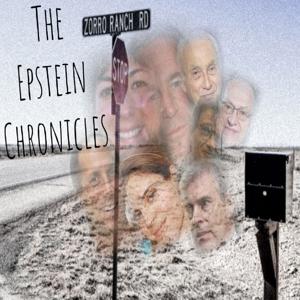
By Bobby Capucci


4
223223 ratings


The podcast currently has 21,409 episodes available.
The most played episodes among Podcast App listeners.
Sarah Ferguson is reportedly considering a new memoir that would address the fallout from Prince Andrew’s association with Jeffrey Epstein and the damage the scandal caused to their family. According to the report, Ferguson has discussed writing about the years in which Andrew’s public standing collapsed, including the scrutiny surrounding his friendship with Epstein, the Virginia Giuffre allegations and the consequences that followed for the Duke and those closest to him. The proposed book is being framed as Ferguson’s chance to tell her version of what happened behind the scenes and explain how the Epstein scandal affected her relationship with Andrew and their daughters.The memoir has not been formally announced, and no publication date or final deal has been confirmed, but the possibility has attracted attention because Ferguson has remained one of Andrew’s most visible defenders throughout his disgrace. A book touching directly on Epstein would inevitably draw scrutiny over what Ferguson knew, when she knew it and how she viewed Andrew’s continued relationship with Epstein after his 2008 conviction. It would also reopen questions about Ferguson’s own connection to Epstein, including the £15,000 payment he made toward one of her debts, which she later said she regretted accepting.to contact me:[email protected]:Sarah Ferguson 'Planning Memoir to Tackle Jeffrey Epstein Scandal'Become a supporter of this podcast: https://www.spreaker.com/podcast/the-epstein-chronicles--5003294/support.

Bill Gates again addressed his relationship with Jeffrey Epstein during a September 27 appearance on NBC’s Meet the Press, where he denied ever visiting Epstein’s private island and said his contact with Epstein consisted of roughly 10 meetings over a period of a few years. Gates laughed nervously at points while answering questions and insisted that there were never women present during those meetings, that he had no financial relationship with Epstein and that he never visited Epstein’s island. He also pointed to his June testimony before the House Oversight Committee, where he called his decision to meet with Epstein a “grave error in judgment” and said he had been drawn in by Epstein’s claims that he could help raise large amounts of money for global health initiatives.The renewed questioning came after months of scrutiny over how extensive the relationship actually was. An external review commissioned by the Gates Foundation found roughly 30 meetings between Epstein and foundation leaders and staff, including Gates, between 2011 and 2014, even as employees raised concerns about Epstein’s criminal history. Gates has maintained that he never knew about any ongoing criminal activity and that he ultimately cut off contact after concluding Epstein could not deliver the philanthropic connections he had promised. The larger controversy has therefore centered not on an accusation that Gates participated in Epstein’s crimes, but on why he continued meeting with a convicted sex offender, how extensive those contacts were and why the relationship persisted despite warnings about Epstein’s past.to contact me:[email protected] a supporter of this podcast: https://www.spreaker.com/podcast/the-epstein-chronicles--5003294/support.
Pam Bondi’s handling of the Epstein files became a major source of controversy after she publicly raised expectations that the Justice Department was about to deliver significant new transparency, only for the initial February 2025 release to consist largely of material that had already been publicly reported or leaked. Bondi then revealed that the FBI’s New York field office had thousands of additional pages that had not initially been turned over to her and ordered the bureau to produce everything. The situation became even more politically damaging when the Justice Department and FBI issued a July 2025 memo saying their review had found no incriminating “client list,” no credible evidence that Epstein had blackmailed prominent people and no evidence sufficient to open investigations into uncharged third parties. That conclusion clashed sharply with the expectations Bondi herself had helped create, including her earlier statement that an Epstein “client list” was sitting on her desk for review.Critics in Congress, the media and even within the administration accused Bondi and the Justice Department of trying to close the book on Epstein rather than aggressively pursue the unanswered questions surrounding his network. The July memo explicitly said that “no further disclosure would be appropriate or warranted,” a position that generated enough backlash that the issue continued through lawsuits, congressional scrutiny and eventually the Epstein Files Transparency Act, which forced a much larger release of records. Courts later noted the widespread controversy over the department’s reversal on disclosure, and the House Oversight Committee eventually moved to subpoena Bondi over DOJ’s handling of the files. Bondi and the department defended their work as an exhaustive review constrained by victim privacy, sealed records and the absence of evidence supporting new prosecutions, but the sequence of promises, limited releases, contradictory messaging and the attempt to declare the review essentially finished left her handling of the Epstein matter under sustained scrutiny.to contact me:[email protected] a supporter of this podcast: https://www.spreaker.com/podcast/the-epstein-chronicles--5003294/support.
The police investigation surrounding Andrew Mountbatten-Windsor has continued to broaden as Thames Valley Police pursue allegations tied to his relationship with Jeffrey Epstein and his conduct while serving as a senior royal. Andrew was arrested in February 2026 on suspicion of misconduct in public office, and investigators have since appealed directly for witnesses and potential victims to come forward with information involving alleged sexual misconduct, corruption, fraud or the improper sharing of confidential information. Police have described the inquiry as unprecedented and have made clear that they are prepared to examine allegations beyond the narrow circumstances that originally triggered the investigation.The widening investigation has unfolded alongside a broader wave of Epstein-related police activity in Britain following the release of millions of additional documents in the United States. Other police forces, including Surrey and Essex, have opened or reviewed separate Epstein-related allegations, while Thames Valley Police continue examining Andrew’s conduct and connections. Months after his arrest, the investigation remained active, with reports indicating that detectives were still working through evidence and that a conclusion might not come for some time. What began as scrutiny of Andrew’s ties to Epstein has therefore developed into a much larger police inquiry examining whether those relationships intersected with potential criminal misconduct.to contact me:[email protected] a supporter of this podcast: https://www.spreaker.com/podcast/the-epstein-chronicles--5003294/support.
Day two of Tyler Robinson’s preliminary hearing focused heavily on prosecutors’ effort to connect Robinson to the Utah Valley University campus and to the physical evidence recovered after Charlie Kirk was shot. Investigators introduced additional surveillance footage they said showed Robinson moving around UVU before and after the shooting, while the State also turned to forensic evidence recovered along the alleged escape route. A screwdriver found on top of the Losee Center and a towel recovered from a wooded area near the rifle became major points of testimony. The State Bureau of Investigation introduced an FBI laboratory report concluding that DNA from both Robinson and his roommate, Lance Twiggs, was present on the screwdriver and towel, evidence prosecutors argued helped connect Robinson to the rooftop area and to the abandoned rifle. The hearing also featured argument over the State’s allegation that Kirk had been targeted because of his political and religious views, an issue relevant to the victim-targeting enhancement prosecutors had attached to several chargesThe defense spent much of the day attacking how strongly the forensic evidence could actually be interpreted. FBI forensic examiner Amanda Bakker was questioned for roughly three hours as defense attorney Michael Burt dug into the technical details of the DNA testing, mixtures, statistical interpretation and the limitations of what the results could establish about when or how DNA was deposited on the objects. Robinson’s lawyers also pushed back against the State’s motive theory, challenging the attempt to characterize the killing as being driven by Kirk’s religious beliefs in addition to political disagreement. By the end of day two, prosecutors had added important physical evidence to the surveillance case presented on day one, but the defense had begun laying out the approach it would use throughout the hearing: concede that certain items contained Robinson-associated evidence while aggressively challenging what that evidence actually proved about possession, timing, motive and the circumstances of Kirk’s killing.to contact me:[email protected] a supporter of this podcast: https://www.spreaker.com/podcast/the-epstein-chronicles--5003294/support.
The podcast currently has 21,409 episodes available.

507 Listeners
12,572 Listeners

3,072 Listeners
1,219 Listeners

7,586 Listeners
8,326 Listeners
50,457 Listeners
9,198 Listeners

493 Listeners
1,883 Listeners

653 Listeners
791 Listeners
1,009 Listeners
13 Listeners

256 Listeners