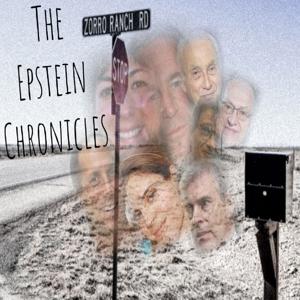
The Epstein Chronicles

The Epstein Chronicles

Download on the App Store
  • Favorites

    64

    Followers

  • Typical duration

    14 min

    per episode

Based on Podcast App listening data

The Epstein Chronicles episodes

  • Mega Edition: Jeffry Epstein And His Side Hustle As A "Banker" (4/12/26)
    Jeffrey Epstein, a financier and convicted sex offender, was known to have engaged in illicit activities, including the operation of a vast sex-trafficking network involving underage girls. However, specific details on how he may have navigated or circumvented Title 31 of the U.S. Code, which pertains to money and finance regulations, are not readily available in the provided sources. Title 31 encompasses laws related to financial recordkeeping and reporting, including anti-money laundering (AML) and countering the financing of terrorism (CFT) measures. While Epstein's financial dealings have been scrutinized, particularly concerning his relationships with major financial institutions, the exact mechanisms he employed to potentially bypass Title 31 regulations remain unclear based on current public information.

    Jeffrey Epstein established several offshore entities to manage his wealth and assets, notably founding the Financial Trust Company in 1996, which he based in the U.S. Virgin Islands to capitalize on favorable tax benefits, reportedly reducing his federal income taxes by up to 90%.  n 2013, he obtained a banking license for Southern Country International, a specialized bank in the U.S. Virgin Islands designed to serve offshore clients. Despite holding this license until 2019, the bank conducted minimal, if any, business operations.   Epstein also utilized a network of shell companies, such as Plan D LLC, Maple Inc., and Great St. Jim LLC, to hold various assets, including his private jet and real estate properties.

    to contact me:

    [email protected]

    Become a supporter of this podcast: https://www.spreaker.com/podcast/the-epstein-chronicles--5003294/support.

    43 min
  • Mega Edition: Maxwell’s Attempt to Look Respectable—and Why It Failed (4/11/26)
    Ghislaine Maxwell attempted to leverage her long-standing proximity to powerful political figures—most notably the Clintons—as part of a broader effort to recast herself as a peripheral player rather than a central architect of Jeffrey Epstein’s sex-trafficking operation. In post-conviction filings and behind-the-scenes advocacy, Maxwell emphasized her access to former presidents, donors, and global elites as evidence of a life rooted in high-level social and political circles, implicitly arguing that such status made the prosecution’s portrayal of her as a hands-on trafficker implausible. The subtext was clear: she sought to frame herself as a social facilitator who moved among the famous and influential, not as a criminal mastermind deserving of a decades-long sentence.

    That strategy extended to highlighting her connections to Bill Clinton and Hillary Clinton, suggesting—without producing exculpatory evidence—that her associations with prominent Democratic power brokers reflected legitimacy and respectability rather than criminality. Prosecutors and the court rejected this framing, noting that elite access does not negate culpability and that Maxwell’s role was proven through victim testimony, corroborating evidence, and a clear pattern of conduct. Ultimately, the court made plain that political proximity would not mitigate the severity of the crimes, and Maxwell’s attempt to use her relationships with the Clintons as a softening narrative failed to move the needle at sentencing.


    to  contact me:

    [email protected]

    Become a supporter of this podcast: https://www.spreaker.com/podcast/the-epstein-chronicles--5003294/support.
    39 min
  • The Real Hoax? Pretending Ghislaine Maxwell’s Move Was Standard Protocol
    If you’re looking for a hoax, here it is — the real magic trick wasn’t some mythical Epstein “client list,” it was the quiet transfer of Ghislaine Maxwell into a glorified country-club prison where she’s living more comfortably than most law-abiding Americans. The system that pretends to deliver justice for trafficked children somehow decided that a convicted sex-trafficker who helped run one of the most depraved exploitation networks in modern history deserved soft-serve punishment at Club Fed Bryan — a minimum-security campus usually reserved for accountants who cooked the books, not predators who helped destroy hundreds of lives. Instead of razor wire and concrete, Maxwell now enjoys open-air dorm housing, recreational perks, yoga-style programming, and a level of comfort violently inconsistent with the severity of her crimes. If you want to talk about outrage, corruption, or institutional rot, start right there. That’s the hoax — the idea that justice was served.


    And it gets even more grotesque when you look at the details. Reports of special privileges — separate visitation space, extra commissary access, curated accommodations, even animal-therapy sessions — read like parody compared to what real incarcerated women endure every day in America. Meanwhile, survivors who have fought for decades to be heard watch the woman who helped traffic them stroll around a federal playground like she’s at a wellness retreat. While the public is distracted with manufactured hysteria about a nonexistent Hollywood “list,” the government quietly handed Maxwell the gentlest landing available, proving once again that punishment in this country is tiered: brutal for the poor, cushioned for the powerful, and optional for the well-connected. If the public wants to be furious about something real instead of fairy tales, they don’t need conspiracy theories — they just need to look at how the system protected the monster it claims to have defeated.


    to contact me:


    [email protected]

    Become a supporter of this podcast: https://www.spreaker.com/podcast/the-epstein-chronicles--5003294/support.
    15 min
  • The Law According to DOJ: Why Epstein’s Deal Was “Technically Legal" (Part 3)
    The Department of Justice has consistently argued that the controversial 2007–2008 Epstein non-prosecution agreement did not violate the Crime Victims’ Rights Act because, in its view, the CVRA’s protections did not attach until formal federal charges were filed. DOJ lawyers maintained that during the pre-charge negotiation phase, federal prosecutors were operating within their lawful discretion to decline prosecution and enter into a resolution without notifying potential victims. According to this position, because Epstein was never federally charged at the time the agreement was reached, the government contended there were no legally recognized “crime victims” under the CVRA to notify, consult, or confer with during the negotiations.


    The government further argued that the plea deal itself was a lawful exercise of prosecutorial authority designed to secure accountability through a state-level conviction while conserving federal resources and avoiding litigation risks. DOJ filings emphasized that the CVRA was not intended to regulate prosecutorial decision-making before charges are brought, nor to force prosecutors to disclose or negotiate plea discussions with potential victims in advance. In short, the DOJ’s defense rests on a narrow interpretation of when victims’ rights legally begin, asserting that while the outcome may have been deeply troubling, it did not constitute a statutory violation under the government’s reading of federal law.


    to contact me:

    [email protected]


    source:

    Title

    Become a supporter of this podcast: https://www.spreaker.com/podcast/the-epstein-chronicles--5003294/support.

    14 min
  • The Law According to DOJ: Why Epstein’s Deal Was “Technically Legal" (Part 2)
    The Department of Justice has consistently argued that the controversial 2007–2008 Epstein non-prosecution agreement did not violate the Crime Victims’ Rights Act because, in its view, the CVRA’s protections did not attach until formal federal charges were filed. DOJ lawyers maintained that during the pre-charge negotiation phase, federal prosecutors were operating within their lawful discretion to decline prosecution and enter into a resolution without notifying potential victims. According to this position, because Epstein was never federally charged at the time the agreement was reached, the government contended there were no legally recognized “crime victims” under the CVRA to notify, consult, or confer with during the negotiations.


    The government further argued that the plea deal itself was a lawful exercise of prosecutorial authority designed to secure accountability through a state-level conviction while conserving federal resources and avoiding litigation risks. DOJ filings emphasized that the CVRA was not intended to regulate prosecutorial decision-making before charges are brought, nor to force prosecutors to disclose or negotiate plea discussions with potential victims in advance. In short, the DOJ’s defense rests on a narrow interpretation of when victims’ rights legally begin, asserting that while the outcome may have been deeply troubling, it did not constitute a statutory violation under the government’s reading of federal law.


    to contact me:

    [email protected]


    source:

    Title

    Become a supporter of this podcast: https://www.spreaker.com/podcast/the-epstein-chronicles--5003294/support.

    13 min
  • The Law According to DOJ: Why Epstein’s Deal Was “Technically Legal" (Part 1)
    The Department of Justice has consistently argued that the controversial 2007–2008 Epstein non-prosecution agreement did not violate the Crime Victims’ Rights Act because, in its view, the CVRA’s protections did not attach until formal federal charges were filed. DOJ lawyers maintained that during the pre-charge negotiation phase, federal prosecutors were operating within their lawful discretion to decline prosecution and enter into a resolution without notifying potential victims. According to this position, because Epstein was never federally charged at the time the agreement was reached, the government contended there were no legally recognized “crime victims” under the CVRA to notify, consult, or confer with during the negotiations.


    The government further argued that the plea deal itself was a lawful exercise of prosecutorial authority designed to secure accountability through a state-level conviction while conserving federal resources and avoiding litigation risks. DOJ filings emphasized that the CVRA was not intended to regulate prosecutorial decision-making before charges are brought, nor to force prosecutors to disclose or negotiate plea discussions with potential victims in advance. In short, the DOJ’s defense rests on a narrow interpretation of when victims’ rights legally begin, asserting that while the outcome may have been deeply troubling, it did not constitute a statutory violation under the government’s reading of federal law.


    to contact me:

    [email protected]


    source:

    Title

    Become a supporter of this podcast: https://www.spreaker.com/podcast/the-epstein-chronicles--5003294/support.
    13 min
  • Inside The OIG Interview: The Warden's Statement Detailing The Death Of Jeffrey Epstein (Part 9) (4/11/26)
    Lamine N'Diaye, in his interview with the Office of the Inspector General, essentially tried to turn the Metropolitan Correctional Center into a scapegoat while positioning himself as a bystander to its failures. He leaned heavily on the narrative that the facility was already broken—staff shortages, overtime abuse, infrastructure decay—as if that somehow absolved him of responsibility rather than underscoring the urgency of his role. What stands out is not just what he admitted, but what he avoided: there is little evidence in his account of decisive leadership, no clear record of aggressive intervention, and no meaningful acknowledgment that the buck was supposed to stop with him. Instead, he described a system failing in slow motion while he remained at the helm, fully aware of the cracks but unwilling—or unable—to reinforce them before they gave way.

    Even more troubling is how his interview reflects a pattern of deflection that mirrors broader institutional behavior in the wake of Jeffrey Epstein’s death. N’Diaye pointed to correctional officers missing rounds, falsifying logs, and working under extreme fatigue, but failed to explain why those conditions were tolerated under his command, especially after Epstein had already been flagged as a high-risk inmate following a prior incident. The responsibility didn’t disappear into the system—it sat squarely in his office, and his testimony reads less like accountability and more like damage control. The overall picture is not of a warden overwhelmed by circumstances, but of a leader who allowed a known crisis environment to persist unchecked, then attempted to retroactively frame it as inevitable once the worst-case scenario unfolded.


    to contact me:


    [email protected]


    source:

    EFTA00119019.pdf

    Become a supporter of this podcast: https://www.spreaker.com/podcast/the-epstein-chronicles--5003294/support.
    12 min
  • Inside The OIG Interview: The Warden's Statement Detailing The Death Of Jeffrey Epstein (Part 8) (4/11/26)
    Lamine N'Diaye, in his interview with the Office of the Inspector General, essentially tried to turn the Metropolitan Correctional Center into a scapegoat while positioning himself as a bystander to its failures. He leaned heavily on the narrative that the facility was already broken—staff shortages, overtime abuse, infrastructure decay—as if that somehow absolved him of responsibility rather than underscoring the urgency of his role. What stands out is not just what he admitted, but what he avoided: there is little evidence in his account of decisive leadership, no clear record of aggressive intervention, and no meaningful acknowledgment that the buck was supposed to stop with him. Instead, he described a system failing in slow motion while he remained at the helm, fully aware of the cracks but unwilling—or unable—to reinforce them before they gave way.

    Even more troubling is how his interview reflects a pattern of deflection that mirrors broader institutional behavior in the wake of Jeffrey Epstein’s death. N’Diaye pointed to correctional officers missing rounds, falsifying logs, and working under extreme fatigue, but failed to explain why those conditions were tolerated under his command, especially after Epstein had already been flagged as a high-risk inmate following a prior incident. The responsibility didn’t disappear into the system—it sat squarely in his office, and his testimony reads less like accountability and more like damage control. The overall picture is not of a warden overwhelmed by circumstances, but of a leader who allowed a known crisis environment to persist unchecked, then attempted to retroactively frame it as inevitable once the worst-case scenario unfolded.


    to contact me:


    [email protected]


    source:

    EFTA00119019.pdf

    Become a supporter of this podcast: https://www.spreaker.com/podcast/the-epstein-chronicles--5003294/support.
    17 min
  • Inside The OIG Interview: The Warden's Statement Detailing The Death Of Jeffrey Epstein (Part 7) (4/11/26)
    Lamine N'Diaye, in his interview with the Office of the Inspector General, essentially tried to turn the Metropolitan Correctional Center into a scapegoat while positioning himself as a bystander to its failures. He leaned heavily on the narrative that the facility was already broken—staff shortages, overtime abuse, infrastructure decay—as if that somehow absolved him of responsibility rather than underscoring the urgency of his role. What stands out is not just what he admitted, but what he avoided: there is little evidence in his account of decisive leadership, no clear record of aggressive intervention, and no meaningful acknowledgment that the buck was supposed to stop with him. Instead, he described a system failing in slow motion while he remained at the helm, fully aware of the cracks but unwilling—or unable—to reinforce them before they gave way.

    Even more troubling is how his interview reflects a pattern of deflection that mirrors broader institutional behavior in the wake of Jeffrey Epstein’s death. N’Diaye pointed to correctional officers missing rounds, falsifying logs, and working under extreme fatigue, but failed to explain why those conditions were tolerated under his command, especially after Epstein had already been flagged as a high-risk inmate following a prior incident. The responsibility didn’t disappear into the system—it sat squarely in his office, and his testimony reads less like accountability and more like damage control. The overall picture is not of a warden overwhelmed by circumstances, but of a leader who allowed a known crisis environment to persist unchecked, then attempted to retroactively frame it as inevitable once the worst-case scenario unfolded.


    to contact me:


    [email protected]


    source:

    EFTA00119019.pdf

    Become a supporter of this podcast: https://www.spreaker.com/podcast/the-epstein-chronicles--5003294/support.
    16 min
  • Mega Edition: Jean Luc Brunel And His Revolting "Gift" To Jeffrey Epstein (4/11/26)
    Jean-Luc Brunel, the disgraced French modeling agent and close associate of Jeffrey Epstein, was accused in court filings of one of the most disturbing acts linked to the Epstein network — procuring a set of 12-year-old French triplets for Epstein as a “birthday gift.” According to testimony from Virginia Giuffre and other witnesses, Epstein allegedly bragged that Brunel had “bought them from their parents” in Paris by offering money and promises of modeling careers. The triplets were reportedly flown to the U.S., abused for several days, and then returned to France. While Brunel denied any involvement, the story became emblematic of how he allegedly exploited his modeling connections to funnel young girls into Epstein’s orbit under the guise of legitimate work.

    The accusations fit a larger pattern of abuse stretching across Brunel’s decades in the fashion industry. He was widely accused of using his agency, MC2 Model Management, which Epstein helped fund, to traffic underage girls from Europe and South America. French prosecutors arrested Brunel in December 2020 on charges of rape and trafficking minors, but before he could face trial, he was found hanged in his Paris jail cell in February 2022 — an eerily similar fate to Epstein’s. His death left many questions unanswered, including the true extent of his role in supplying girls to Epstein and whether the triplets’ story was ever properly investigated.


    to contact me:


    [email protected]

    Become a supporter of this podcast: https://www.spreaker.com/podcast/the-epstein-chronicles--5003294/support.

    45 min

About The Epstein Chronicles

From the publisher's feed

Jeffrey Epstein was a multi millionaire who had political and business ties to some of the most rich and powerful people in the world. From businessmen to politicians at the highest levels, Epstein…

Best of The Epstein Chronicles

Ranked by our users in the last 21 days

More shows like The Epstein Chronicles

Crime Talk with Scott Reisch by R. Scott Reisch

Crime Talk with Scott Reisch

507 Listeners

The Bulwark Daily by The Bulwark

The Bulwark Daily

12,576 Listeners

BROKEN: Jeffrey Epstein by Hyperobject Industries / Sony Music Entertainment

BROKEN: Jeffrey Epstein

3,071 Listeners

EPSTEIN: Devil in the Darkness by a360media

EPSTEIN: Devil in the Darkness

1,219 Listeners

The Mysterious Mr. Epstein by Audible

The Mysterious Mr. Epstein

7,585 Listeners

The Daily Beast Podcast by The Daily Beast, Joanna Coles

The Daily Beast Podcast

8,325 Listeners

The MeidasTouch Podcast by MeidasTouch Network

The MeidasTouch Podcast

50,433 Listeners

The Lincoln Project by The Lincoln Project

The Lincoln Project

9,188 Listeners

Law&Crime Sidebar by Law&Crime

Law&Crime Sidebar

494 Listeners

When You Know You Know by Podcast WABCRadio

When You Know You Know

1,876 Listeners

Inside Trump's Head by The Daily Beast, Michael Wolff and Joanna Coles

Inside Trump's Head

650 Listeners

The Mary Trump Podcast by Mary Trump Media

The Mary Trump Podcast

791 Listeners

The Jim Acosta Show by Jim Acosta

The Jim Acosta Show

1,004 Listeners

Jeffrey Epstein:  The Coverup Chronicles by Bobby Capucci

Jeffrey Epstein: The Coverup Chronicles

13 Listeners

The Tara Palmeri Show by Tara Palmeri

The Tara Palmeri Show

255 Listeners