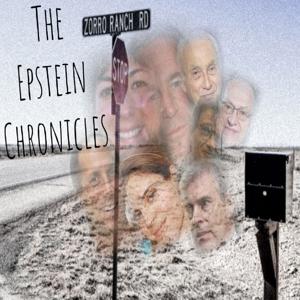
The Epstein Chronicles

The Epstein Chronicles

Download on the App Store
  • Favorites

    64

    Followers

  • Typical duration

    14 min

    per episode

Based on Podcast App listening data

The Epstein Chronicles episodes

  • Post Mortem: What We Learned From The DOJ's Colloquy With Epstein's Lawyers (4/2/26)
    The email exchanges between Southern District of Florida prosecutors and Jeffrey Epstein’s legal team reveal a deeply imbalanced negotiation process in which the Department of Justice appeared to cede control rather than assert it. Instead of building a case around the severity of the allegations, prosecutors were shown exploring lesser charges, even considering misdemeanors, while Epstein’s attorneys dictated terms, timelines, and conditions. The dynamic reflects a prosecution that was reactive and accommodating, allowing the defense to shape the trajectory of the case. This imbalance escalated when Epstein’s legal team bypassed local prosecutors and successfully appealed to Main Justice, shifting authority away from those directly handling the investigation and toward higher-level officials more receptive to compromise. The resulting non-prosecution agreement, which granted Epstein federal immunity and extended protections to potential co-conspirators, was not an isolated outcome but the culmination of a process defined by repeated concessions.

    The emails also expose a broader systemic failure, where the pursuit of resolution appeared to outweigh the pursuit of justice. Victims were largely absent from the discussions, and the agreement itself was kept from them, undermining transparency and trust. The tone of the correspondence—often conciliatory rather than adversarial—further highlights how far the process strayed from standard prosecutorial conduct. These communications provide a clear record of how decisions were made, revealing a justice system vulnerable to influence and institutional pressure. The fallout has been widespread, fueling public outrage, legal challenges, and renewed scrutiny of the DOJ’s handling of the case. Ultimately, the emails serve as both evidence and indictment of a system that, in this instance, failed to uphold its most fundamental responsibility: delivering accountability.


    to contact me:

    [email protected]


    Become a supporter of this podcast: https://www.spreaker.com/podcast/the-epstein-chronicles--5003294/support.

    14 min
  • Collaboration or Capitulation: The DOJ’s Colloquy With Epstein’s Lawyers Exposed (Part 6) (4/3/26)
    The back-and-forth between prosecutors in the Southern District of Florida and Jeffrey Epstein’s legal team during the negotiation of the non-prosecution agreement reads less like an adversarial process and more like a prolonged, collaborative dialogue aimed at reaching terms acceptable to Epstein himself. His attorneys were not simply responding to charges—they were actively shaping the framework of the deal, pushing for concessions on scope, immunity, and exposure not just for Epstein, but for potential co-conspirators. Instead of drawing hard lines, federal prosecutors engaged in a sustained colloquy that entertained defense proposals, adjusted positions, and ultimately bent toward a resolution that prioritized closure over accountability. The result was an agreement that allowed Epstein to plead to minor state charges while securing sweeping federal immunity, effectively shutting down a far broader investigation before it could fully develop.

    What makes this even more damning is how the Department of Justice appeared willing—if not eager—to accommodate Epstein’s demands at nearly every turn. Rather than treating him as the central figure in a sprawling abuse network, prosecutors treated him like a negotiating partner whose preferences needed to be satisfied. Victims were sidelined, key investigative avenues were abandoned, and the final agreement was structured in a way that insulated not only Epstein but others in his orbit from federal scrutiny. This was not a failure of resources or a lack of evidence—it was a conscious decision to resolve the case on terms dictated by the defense. The DOJ’s handling of this process reflects a systemic breakdown in prosecutorial duty, where the pursuit of justice was subordinated to expediency and deference to power, leaving behind one of the most glaring examples of institutional failure in modern federal criminal practice.


    to contact me:


    [email protected]


    source:

    EFTA00226107.pdf

    Become a supporter of this podcast: https://www.spreaker.com/podcast/the-epstein-chronicles--5003294/support.
    13 min
  • How Epstein’s Shadow Is Reshaping Donor Legacy on College Campuses (4/2/26)
    What’s unfolding around Les Wexner’s name on college campuses isn’t just a debate—it’s a long-overdue reckoning with how wealth has been used to buy prestige, silence, and institutional protection. Universities didn’t just accept donations, they traded credibility for them, elevating donors into untouchable figures while avoiding scrutiny of their backgrounds and associations. The Epstein scandal shattered that arrangement by exposing how deeply intertwined powerful donors were with a system that prioritized money over accountability. Now, the public is no longer willing to separate philanthropy from the person behind it, and the continued honoring of names like Wexner’s is being seen not as neutral, but as an active endorsement of a deeply compromised legacy.

    The demand to remove those names is not radical—it is the bare minimum of accountability, and the resistance to doing so reveals exactly where institutional priorities lie. Universities are stalling not because the issue is unclear, but because they fear the consequences of disrupting a donor-driven system that has long benefited them. Claims that the situation is “complicated” are little more than excuses to delay action that should have already been taken. At its core, this moment is about whether institutions will continue protecting their past decisions or finally align their actions with the values they claim to uphold. The public’s patience is gone, and anything short of decisive action will only deepen the perception that these institutions value money over truth.


    to contact me:


    [email protected]


    Become a supporter of this podcast: https://www.spreaker.com/podcast/the-epstein-chronicles--5003294/support.
    15 min
  • Bondi on the Brink: Trump’s Frustration Grows as Epstein Pressure Mounts (4/2/26)
    President Donald Trump has been privately discussing the possibility of removing Attorney General Pam Bondi from her position, though no final decision has been made. The internal conversations are reportedly being driven in large part by frustration over the Justice Department’s handling of the Jeffrey Epstein files, which has sparked backlash from Trump’s political base as well as scrutiny from Congress. Bondi is also facing a looming deposition tied to the ongoing Epstein-related investigation, further increasing pressure on her position. Despite this, Trump has publicly maintained a supportive stance, calling Bondi “a wonderful person” and stating that she is doing a good job.

    Behind the scenes, however, dissatisfaction appears to be growing. Trump has reportedly complained that Bondi has not gone far enough in pursuing investigations against his political opponents, while also failing to effectively manage the political fallout surrounding Epstein-related disclosures. Discussions have included potential replacements, with EPA administrator Lee Zeldin emerging as a leading candidate due to his loyalty and alignment with Trump’s agenda. While Bondi remains in her role for now and continues to appear alongside the president publicly, the situation reflects broader instability within the administration and the possibility of another high-level shakeup in the near future.


    to contact me:

    [email protected]


    source:

    Trump 'considers firing' Pam Bondi over attorney general's handling of Epstein files | Daily Mail Online


    Become a supporter of this podcast: https://www.spreaker.com/podcast/the-epstein-chronicles--5003294/support.

    15 min
  • The DOJ Probe: Prince Andrew, Epstein, Maxwell, and the Peru Trail (4/2/26)
    The Justice Department disclosed in court filings that investigators uncovered emails they believed suggested Ghislaine Maxwell was actively involved in arranging young women for sexual encounters, including for Prince Andrew. According to the documents cited in a search warrant application ahead of Maxwell’s 2020 arrest, the FBI identified multiple email exchanges in which Maxwell appeared to coordinate introductions and logistics involving young females. In one exchange, Andrew allegedly deferred responsibility to Maxwell with a message interpreted as leaving the arrangements “entirely to you,” while other communications referenced requests for “new inappropriate friends,” reinforcing investigators’ view that these were not casual social interactions but organized efforts.

    Additional emails tied to a 2002 trip to Peru further strengthened that interpretation, with Maxwell allegedly asking contacts to help find women who were “intelligent, pretty, fun” and discreet, language investigators believed was coded or suggestive in context. The FBI ultimately used these communications to argue there was probable cause that Maxwell was facilitating access to young women for sexual purposes, though she was never formally charged with arranging women specifically for Andrew, and he has denied any wrongdoing. The disclosures have resurfaced as part of broader document releases, adding new scrutiny to longstanding allegations about the scope of Maxwell’s role within Epstein’s network and the extent to which high-profile individuals may have been involved.


    to contact me:

    [email protected]


    source:

    DOJ told judge emails suggested Maxwell was arranging young women to have sex with Prince Andrew - ABC News


    Become a supporter of this podcast: https://www.spreaker.com/podcast/the-epstein-chronicles--5003294/support.

    13 min
  • Mega Edition: Thomas Massie And His Battle Against The Epstein Machine (4/2/26)
    Thomas Massie has positioned himself as one of the more aggressive voices in Congress pushing for transparency around the Epstein case, arguing that the federal government has failed to fully disclose what it knows about Epstein’s network, financial dealings, and potential co-conspirators. He has used hearings, public statements, and legislative pressure to call out what he describes as institutional stonewalling, particularly from the Department of Justice. Massie has framed the issue not just as a criminal matter, but as a test of whether powerful individuals are being shielded from scrutiny, repeatedly emphasizing that partial disclosures and heavily redacted documents only deepen public distrust.

    His efforts have often put him at odds with both parties and elements of the federal bureaucracy, as he has pushed for broader document releases, fewer redactions, and more aggressive oversight of agencies involved in the investigation. Massie has criticized what he sees as selective transparency—where information is released in a way that protects institutions rather than exposes the full scope of wrongdoing—and has advocated for mechanisms like independent review or special oversight to ensure accountability. While his push has gained attention and some public support, it has also faced resistance, underscoring the broader political and institutional tensions surrounding any attempt to fully unravel the Epstein case.


    to contact me:


    [email protected]


    Become a supporter of this podcast: https://www.spreaker.com/podcast/the-epstein-chronicles--5003294/support.
    46 min
  • Mega Edition: Leon Black And His Attempt To Change The Epstein Narrative (4/2/26)
    Leon Black has consistently maintained that his relationship with Jeffrey Epstein was strictly professional, centered on financial and estate planning services, and that he was unaware of the full extent of Epstein’s criminal behavior. He framed the payments—reportedly totaling over $150 million—as legitimate compensation for complex tax and philanthropic advisory work. Black has also emphasized that he severed ties once Epstein’s misconduct became undeniable, presenting himself as someone who, while perhaps naïve, was ultimately misled about the true nature of Epstein’s activities.


    That narrative becomes far harder to reconcile when placed against the broader record. Evidence shows Black continued engaging Epstein for years after Epstein’s 2008 conviction for soliciting a minor, a point at which the risks and reputational red flags were already public and unmistakable. Internal reviews and reporting have also raised questions about the scale of the payments relative to the services described, as well as the persistence of the relationship despite mounting scrutiny. Taken together, the timeline, the financial magnitude, and the continued association suggest a level of awareness—or at minimum willful disregard—that undermines the idea of a purely transactional, arms-length relationship as Black has portrayed it.


    to contact me:


    [email protected]


    Become a supporter of this podcast: https://www.spreaker.com/podcast/the-epstein-chronicles--5003294/support.
    37 min
  • Mega Edition: Jeffrey Epstein's Reign Of Terror Began Long Before The Island Was Purchased (4/1/26)
    Chief Michael Reiter, the former Palm Beach Police Chief, openly condemned the investigation into Jeffrey Epstein as deeply corrupted by influence, wealth, and political pressure. After his department conducted a meticulous, months-long investigation that identified dozens of underage victims and built a compelling case for serious felony charges, Reiter was stunned to find that the State Attorney’s Office appeared unwilling to prosecute Epstein accordingly. Instead of pursuing justice, prosecutors seemed to downplay the severity of the crimes. Reiter described how meetings with State Attorney Barry Krischer became tense and evasive, with Epstein’s legal team allowed unusual access and influence. The result was a disturbing reluctance by local prosecutors to move forward with charges that fit the evidence—charges that would have led to significant prison time.


    Reiter was so alarmed by what he saw behind the scenes that he took the extraordinary step of bypassing local prosecutors and turning the case over to the FBI. He then wrote a letter of apology to the victims and their families, expressing regret that the system had failed them. In his words and actions, Reiter made it clear that justice was being obstructed not because the evidence was lacking, but because Epstein had the money and legal firepower to warp the system in his favor. He would later describe the entire handling of the case—particularly the secretive non-prosecution agreement brokered by U.S. Attorney Alexander Acosta—as “a complete breakdown of the justice process,” and the most disturbing failure he had witnessed in his entire career.


    to contact me:

    [email protected]


    source:

    Ex-Florida police chief: Epstein case 'the worst failure of the criminal justice system' in modern times

    Become a supporter of this podcast: https://www.spreaker.com/podcast/the-epstein-chronicles--5003294/support.

    34 min
  • Judge Berman Lights Up The DOJ After Receiving A Letter From Survivors
    In the wake of a blistering letter sent on behalf of Epstein survivors, Judge Richard Berman has demanded answers from the Department of Justice about its handling of the Epstein documents and its failure to protect victim privacy. The survivors condemned the DOJ for what they described as gross negligence, after a release of documents revealed survivor names while shielding the identities of abusers and powerful associates. Berman is now insisting that the DOJ explain what information they plan to release and how they intend to safeguard the people who endured Epstein’s crimes.

    The DOJ spent nearly a million dollars and extensive resources claiming to carefully sanitize the records, yet the only reported “error” ended up exposing the victims. Given the long history of sweetheart deals, concealed evidence, and institutional protection surrounding Epstein, many believe this was no innocent mistake but part of a pattern of shielding influential figures while suppressing accountability. The survivors’ letter marks a turning point, signaling an end to polite cooperation and a direct challenge to a system that has repeatedly failed them. Judge Berman’s demands suggest the pressure on federal authorities is now intensifying.


    to contact me:

    [email protected]


    source:

    Judge seeks to shield Epstein victims after dozens of names exposed in documents release

    Become a supporter of this podcast: https://www.spreaker.com/podcast/the-epstein-chronicles--5003294/support.
    13 min
  • Ghislaine Maxwell's DOJ Interview: No Names, No Justice, No Surprise
    The Department of Justice’s release of the Ghislaine Maxwell transcripts is nothing but theater—a sham staged to protect the powerful and slam the door shut on the Epstein saga. Maxwell, a convicted trafficker, was granted immunity and a microphone to mock survivors, erase the notion of a client list, and cast doubt on Epstein’s death, all while the DOJ used her denials as a shield. The scandal isn’t that these transcripts were released—it’s that the interview happened at all, that the government legitimized a predator’s voice and tried to use it as “closure” for the most explosive trafficking scandal of our time.


    But this isn’t closure—it’s desperation. They want the public exhausted, numb, and willing to accept Maxwell’s lies as the final word. Yet those who’ve been in the trenches since the beginning know better. This doesn’t end because she says it ends. Every denial and every carefully managed release only proves the cover-up is alive, the names are still hidden, and the truth is still too dangerous to reveal. The DOJ can trot out Maxwell as their mouthpiece, but it won’t work—this fight isn’t over, and when the reckoning comes, it won’t be Maxwell or the elites doing the laughing.


    to contact me:

    [email protected]

    Become a supporter of this podcast: https://www.spreaker.com/podcast/the-epstein-chronicles--5003294/support.

    16 min

About The Epstein Chronicles

From the publisher's feed

Jeffrey Epstein was a multi millionaire who had political and business ties to some of the most rich and powerful people in the world. From businessmen to politicians at the highest levels, Epstein…

Best of The Epstein Chronicles

Ranked by our users in the last 21 days

More shows like The Epstein Chronicles

Crime Talk with Scott Reisch by R. Scott Reisch

Crime Talk with Scott Reisch

507 Listeners

The Bulwark Daily by The Bulwark

The Bulwark Daily

12,561 Listeners

BROKEN: Jeffrey Epstein by Hyperobject Industries / Sony Music Entertainment

BROKEN: Jeffrey Epstein

3,070 Listeners

EPSTEIN: Devil in the Darkness by a360media

EPSTEIN: Devil in the Darkness

1,218 Listeners

The Mysterious Mr. Epstein by Audible

The Mysterious Mr. Epstein

7,584 Listeners

The Daily Beast Podcast by The Daily Beast, Joanna Coles

The Daily Beast Podcast

8,321 Listeners

The MeidasTouch Podcast by MeidasTouch Network

The MeidasTouch Podcast

50,431 Listeners

The Lincoln Project by The Lincoln Project

The Lincoln Project

9,192 Listeners

Law&Crime Sidebar by Law&Crime

Law&Crime Sidebar

493 Listeners

When You Know You Know by Podcast WABCRadio

When You Know You Know

1,876 Listeners

Inside Trump's Head by The Daily Beast, Michael Wolff and Joanna Coles

Inside Trump's Head

651 Listeners

The Mary Trump Podcast by Mary Trump Media

The Mary Trump Podcast

790 Listeners

The Jim Acosta Show by Jim Acosta

The Jim Acosta Show

1,004 Listeners

Jeffrey Epstein:  The Coverup Chronicles by Bobby Capucci

Jeffrey Epstein: The Coverup Chronicles

13 Listeners

The Tara Palmeri Show by Tara Palmeri

The Tara Palmeri Show

254 Listeners