
Sign up to save your podcasts
Or

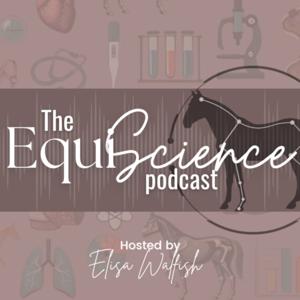
By Elisa Walfish

5
1212 ratings


The podcast currently has 24 episodes available.
The most played episodes among Podcast App listeners.
Brianna Navarro did everything right when she bought Teddy, full pre-purchase exam, head-to-toe x-rays, a clean bill of health. Eight months later, she had to say goodbye. In this episode, Brianna shares her journey with ECVM and wobbler syndrome: the signs she missed early on, the CT scan that revealed severe spinal cord compression, and the hard decision to euthanize. She also talks about Teddy's Legacy Foundation, which she founded to help other horse owners with diagnostics, research, and education, plus her recent clinic with Celeste Lazarus and her new horse, Zephyr. To learn more or apply for a diagnostic grant, visit https://www.teddyslegacy.org/ or find Teddy's Legacy on social media @teddys_legacy If you haven't heard our previous episode with Kate Workman on ECVM, start there first, it covers the science behind everything discussed here.

Dr. Kate Workman (Denali Equine, Rexos) returns to break down ECVM, the lower-neck malformation increasingly linked to behavior, performance, and pain issues in horses. We cover her newly published, open-access paper (with Dr. Sharon May-Davis and Dr. Audrey DeClue), the grading system, how to diagnose it correctly, how to manage a horse presenting symptoms of ECVM. In this episode: what ECVM is and the clinical signs the grade 1–4 scale, unilateral vs. Bilateral effects on the longus coli, brachial plexus, and vertebral artery surgical risk diagnosing it right (and the most common x-ray mistake) genetics and breeding About Dr. Kate Workman: Dr. Kate Workman is aveterinarian at Denali Equine and co-founder of Rexos, a nonprofit dedicated to cataloging axial skeleton conditions in horses through necropsy-based research. Her team has performed detailed post-mortem studies on horses euthanized for unresolved behavioral, performance, and pain issues, work that led to her most recent paper on ECVM. Denali Equine https://denaliequine.com/ The paper: Identifying by Radiograph Grade 4 Aplasia of the Caudal Lamina Ventralis in the Equine Sixth Cervical Vertebra and Three Coinciding Morphological Variations https://www.mdpi.com/2076-2615/16/3/482
What if many of the problems we label as "lameness" don't actually begin in the limbs? In this episode I sit down with Dr. Audrey DeClue, an equine veterinarian known for challenging long-standing assumptions in equine medicine. Together, we explore the concept of body lameness, why biomechanics should play a central role in every lameness examination, and how collaboration between veterinarians, bodyworkers, farriers, saddle fitters, trainers, and owners can dramatically improve outcomes for horses. Dr. DeClue shares the experiences that transformed her approach to veterinary medicine, the importance of questioning accepted ideas, and why observing the horse as a whole, not just individual body parts, is essential for finding the root cause of dysfunction. Whether you're a horse owner, trainer, bodyworker, farrier, therapist, or veterinarian, this episode offers a thought-provoking conversation that encourages us all to ask better questions, think more critically, and ultimately provide better care for our horses.
In this episode of the EquiScience Podcast, we sit down with equine rehabilitation specialist and researcher Sandro to explore the science behind balance pads in horses. We break down his recent study on postural sway, pad density, and limb placement, and discuss how balance training can improve proprioception, spinal stability, muscle function, and injury prevention in sport horses. From rehabilitation protocols for tendon and ligament injuries to practical tips for horse owners using balance pads at home, this conversation dives deep into the biomechanics and physiology behind one of the most popular tools in equine rehab and performance training. @sandrocolla
This conversation delves into the complexities of pain perception in horses, exploring how individual differences in personality can influence their behavior and expression of pain. The discussion highlights the importance of accurate pain assessment in veterinary care and the evolutionary factors that shape how horses respond to pain. By comparing pain responses in horses and dogs, the conversation emphasizes the need for a nuanced understanding of equine behavior and welfare. Carrie Ijichi discusses her research on how personality traits influence physiological responses to pain, the importance of measuring stress through various indicators, and the implications of these findings for animal welfare practices. The conversation also highlights the challenges of studying animal behavior and the need for more comprehensive research to improve the understanding of how animals cope with pain and stress.
The podcast currently has 24 episodes available.
112 Listeners

130 Listeners
213 Listeners

27 Listeners

61 Listeners
6 Listeners