
Sign up to save your podcasts
Or

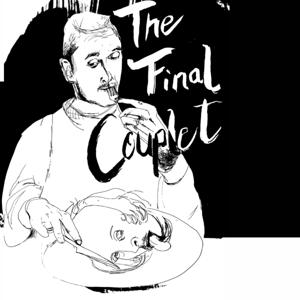


Sonnet 56 confused the hell out of me but I grabbed it by the lapels and dragged it into the modern age eventually. A new literary character joins our never ending story.
Sonnet 56
Sweet love, renew thy force; be it not said
Thy edge should blunter be than appetite,
Which but to-day by feeding is allay’d,
To-morrow sharpened in his former might:
So, love, be thou, although to-day thou fill
Thy hungry eyes, even till they wink with fulness,
To-morrow see again, and do not kill
The spirit of love, with a perpetual dulness.
Let this sad interim like the ocean be
Which parts the shore, where two contracted new
Come daily to the banks, that when they see
Return of love, more blest may be the view;
As call it winter, which being full of care,
Makes summer’s welcome, thrice more wished, more rare.
Shakespeare is back to his old self with this one - calling his poems amazing and using vulgar words.
Sonnet 55
Not marble nor the gilded monuments
Of princes shall outlive this powerful rhyme,
But you shall shine more bright in these contents
Than unswept stone besmeared with sluttish time.
When wasteful war shall statues overturn,
And broils root out the work of masonry,
Nor Mars his sword nor war’s quick fire shall burn
The living record of your memory.
’Gainst death and all-oblivious enmity
Shall you pace forth; your praise shall still find room
Even in the eyes of all posterity
That wear this world out to the ending doom.
So, till the Judgement that yourself arise,
You live in this, and dwell in lovers’ eyes.
Coming into your ears with another Sonnet. Shakespeare has found his swagger again and is bigging up his own writing again in Sonnet 54.
Sonnet 54
O how much more doth beauty beauteous seem,
By that sweet ornament which truth doth give!
The rose looks fair, but fairer we it deem
For that sweet odour which doth in it live.
The canker-blooms have full as deep a dye
As the perfumed tincture of the roses,
Hang on such thorns and play as wantonly
When summer's breath their masked buds discloses:
But, for their virtue only is their show,
They live unwoo'd and unrespected fade,
Die to themselves. Sweet roses do not so;
Of their sweet deaths are sweetest odours made:
And so of you, beauteous and lovely youth,
When that shall fade, my verse distills your truth.
Shakespeare compares says his lover is like Adonis, but better. I'd love to have seen just how hot this guy was! He sounds amazing.
Sonnet 53
What is your substance, whereof are you made,
That millions of strange shadows on you tend?
Since every one hath, every one, one shade,
And you but one, can every shadow lend.
Describe Adonis, and the counterfeit
Is poorly imitated after you;
On Helen's cheek all art of beauty set,
And you in Grecian tires are painted new:
Speak of the spring, and foison of the year,
The one doth shadow of your beauty show,
The other as your bounty doth appear;
And you in every blessed shape we know.
In all external grace you have some part,
But you like none, none you, for constant heart.
I'm back on my own for this one! Shakespeare writes another sonnet about how amazing his lover is. Yeah, we get it.
Our story continues with John Donne locked in a chest.
Sonnet 52
So am I as the rich, whose blessed key,
Can bring him to his sweet up-locked treasure,
The which he will not every hour survey,
For blunting the fine point of seldom pleasure.
Therefore are feasts so solemn and so rare,
Since, seldom coming in the long year set,
Like stones of worth they thinly placed are,
Or captain jewels in the carcanet.
So is the time that keeps you as my chest,
Or as the wardrobe which the robe doth hide,
To make some special instant special-blest,
By new unfolding his imprisoned pride.
Blessed are you whose worthiness gives scope,
Being had, to triumph, being lacked, to hope.
The actor Jacob Fortune-Lloyd joins me again for a look at Sonnet 51 (which should be called sonnet 50 part 2). Does Shakespeare treat his horse any better in this one?
Sonnet 51
Thus can my love excuse the slow offence
Of my dull bearer when from thee I speed:
From where thou art why should I haste me thence?
Till I return, of posting is no need.
O! what excuse will my poor beast then find,
When swift extremity can seem but slow?
Then should I spur, though mounted on the wind,
In winged speed no motion shall I know,
Then can no horse with my desire keep pace.
Therefore desire, (of perfect'st love being made)
Shall neigh, no dull flesh, in his fiery race;
But love, for love, thus shall excuse my jade-
Since from thee going, he went wilful-slow,
Towards thee I'll run, and give him leave to go.
The actor Jacob Fortune-Lloyd who you might know from "The Queens Gambit", "The Power" and "Bodies" joins me for the 50th Episode. We mainly talk about how mean Shakespeare is to his poor old horse. Enjoy!
Sonnet 50
How heavy do I journey on the way,
When what I seek, my weary travel’s end,
Doth teach that ease and that repose to say,
‘Thus far the miles are measured from thy friend!’
The beast that bears me, tired with my woe,
Plods dully on, to bear that weight in me,
As if by some instinct the wretch did know
His rider lov’d not speed being made from thee.
The bloody spur cannot provoke him on,
That sometimes anger thrusts into his hide,
Which heavily he answers with a groan,
More sharp to me than spurring to his side;
For that same groan doth put this in my mind,
My grief lies onward, and my joy behind.
Shakespeare is putting himself down again in this one and he's becoming quite possessive of his lover.
Our story continues with Shakespeare locking John Donne in a trunk.
Sonnet 49
Against that time, if ever that time come,
When I shall see thee frown on my defects,
When as thy love hath cast his utmost sum,
Called to that audit by advis'd respects;
Against that time when thou shalt strangely pass,
And scarcely greet me with that sun, thine eye,
When love, converted from the thing it was,
Shall reasons find of settled gravity;
Against that time do I ensconce me here,
Within the knowledge of mine own desert,
And this my hand, against my self uprear,
To guard the lawful reasons on thy part:
To leave poor me thou hast the strength of laws,
Since why to love I can allege no cause.
In this one Shakespeare talks about how he should be more protective of his lover so that they don't run off and do things with other people. He even suggests he should lock them in a chest, which is a but much in my opinion...
Sonnet 48
How careful was I when I took my way,
Each trifle under truest bars to thrust,
That to my use it might unused stay
From hands of falsehood, in sure wards of trust!
But thou, to whom my jewels trifles are,
Most worthy comfort, now my greatest grief,
Thou best of dearest, and mine only care,
Art left the prey of every vulgar thief.
Thee have I not locked up in any chest,
Save where thou art not, though I feel thou art,
Within the gentle closure of my breast,
From whence at pleasure thou mayst come and part;
And even thence thou wilt be stol'n I fear,
For truth proves thievish for a prize so dear.
You'll be pleased to hear Shakespeare's heart and eyes have made up and are friends now.
--------------------------------------
Sonnet 47
Betwixt mine eye and heart a league is took,
And each doth good turns now unto the other:
When that mine eye is famish'd for a look,
Or heart in love with sighs himself doth smother,
With my love's picture then my eye doth feast,
And to the painted banquet bids my heart;
Another time mine eye is my heart's guest,
And in his thoughts of love doth share a part:
So, either by thy picture or my love,
Thy self away, art present still with me;
For thou not farther than my thoughts canst move,
And I am still with them, and they with thee;
Or, if they sleep, thy picture in my sight
Awakes my heart, to heart's and eyes' delight.
From the publisher's feed