
Sign up to save your podcasts
Or

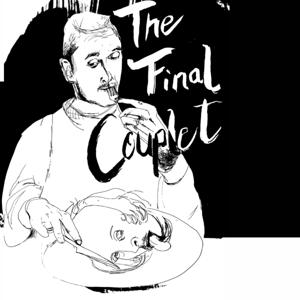


Shakespeare has a nice little argument with himself about when love it at it's most potent.
Our story continues with Shakespeare still mistaking the poor doctor for the Earl Of Southampton.
Sonnet 115
Those lines that I before have writ do lie,
Even those that said I could not love you dearer:
Yet then my judgment knew no reason why
My most full flame should afterwards burn clearer.
But reckoning Time, whose million'd accidents
Creep in 'twixt vows, and change decrees of kings,
Tan sacred beauty, blunt the sharp'st intents,
Divert strong minds to the course of altering things;
Alas! why, fearing of Time's tyranny,
Might I not then say, 'Now I love you best,'
When I was certain o'er incertainty,
Crowning the present, doubting of the rest?
Love is a babe, then might I not say so,
To give full growth to that which still doth grow?
Shakespeare delivers another Sonnet all about how he can see his lover in everything - even really ugly things.
Sonnet 114
Or whether doth my mind, being crowned with you,
Drink up the monarch's plague, this flattery?
Or whether shall I say, mine eye saith true,
And that your love taught it this alchemy,
To make of monsters and things indigest
Such cherubins as your sweet self resemble,
Creating every bad a perfect best,
As fast as objects to his beams assemble?
O! 'tis the first, 'tis flattery in my seeing,
And my great mind most kingly drinks it up:
Mine eye well knows what with his gust is 'greeing,
And to his palate doth prepare the cup:
If it be poisoned, 'tis the lesser sin
That mine eye loves it and doth first begin.
Shakespeare takes a break from his lover but can't help seeing him in everywhere. I imagine it a bit like "Being John Malkovich".
Sonnet 113
Since I left you, mine eye is in my mind;
And that which governs me to go about
Doth part his function and is partly blind,
Seems seeing, but effectually is out;
For it no form delivers to the heart
Of bird, of flower, or shape which it doth latch:
Of his quick objects hath the mind no part,
Nor his own vision holds what it doth catch;
For if it see the rud'st or gentlest sight,
The most sweet favour or deformed'st creature,
The mountain or the sea, the day or night,
The crow, or dove, it shapes them to your feature.
Incapable of more, replete with you,
My most true mind thus maketh mine eye untrue.
I explore William Shakespeare's 112th Sonnet. I think it's all about being a celebrity and how hard it is to be in the public eye. It's a direct continuation from Sonnet 111 so if you haven't listened to that episode yet, go back and have a listen maybe? Our improvised story continues with a development in Shakespeare's love affair with The Earl of Southampton.
Shakespeare seems to think being in public eye is making him a bad person - A bit like a celebrity these days...
Sonnet 111
O! for my sake do you with Fortune chide,
The guilty goddess of my harmful deeds,
That did not better for my life provide
Than public means which public manners breeds.
Thence comes it that my name receives a brand,
And almost thence my nature is subdued
To what it works in, like the dyer's hand:
Pity me, then, and wish I were renewed;
Whilst, like a willing patient, I will drink
Potions of eisel 'gainst my strong infection;
No bitterness that I will bitter think,
Nor double penance, to correct correction.
Pity me then, dear friend, and I assure ye,
Even that your pity is enough to cure me.
Shakespeare confesses to his lover that he has been cheating!
Our story continues with The Earl of Southampton making Shakespeare take a trip to St Paul's Cathedral.
Wow, you can watch this as a video now!
In this episode I discuss Shakespeare's Sonnet 109 which is all about infidelity and time apart.
Shakespeare talks about how hard it is to write new things about your love!
Our story continues with Shakespeare and The Earl of Southampton
Sonnet 108
What's in the brain that ink may character
Which hath not figured to thee my true spirit?
What's new to speak, what now to register,
That may express my love, or thy dear merit?
Nothing, sweet boy; but yet, like prayers divine,
I must each day say o'er the very same;
Counting no old thing old, thou mine, I thine,
Even as when first I hallowed thy fair name.
So that eternal love in love's fresh case,
Weighs not the dust and injury of age,
Nor gives to necessary wrinkles place,
But makes antiquity for aye his page;
Finding the first conceit of love there bred,
Where time and outward form would show it dead.
Do we have a new character on the block? Is he called The Earl Of Southampton? Was he in prison? Lots of questions in this Sonnet!
Sonnet 107
Not mine own fears, nor the prophetic soul
Of the wide world dreaming on things to come,
Can yet the lease of my true love control,
Suppos'd as forfeit to a confin'd doom.
The mortal moon hath her eclipse endur'd
And the sad augurs mock their own presage;
Incertainties now crown themselves assur'd
And peace proclaims olives of endless age.
Now with the drops of this most balmy time
My love looks fresh, and Death to me subscribes,
Since, spite of him, I'll live in this poor rhyme,
While he insults o'er dull and speechless tribes;
And thou in this shalt find thy monument,
When tyrants' crests and tombs of brass are spent.
Shakespeare looks back on some of the literary greats and realises that none of them can describe how hot his young lover is.
Our story continues with Marlowe making a shocking discovery!
Sonnet 106
When in the chronicle of wasted time
I see descriptions of the fairest wights,
And beauty making beautiful old rhyme
In praise of ladies dead and lovely knights,
Then, in the blazon of sweet beauty's best,
Of hand, of foot, of lip, of eye, of brow,
I see their antique pen would have express'd
Even such a beauty as you master now.
So all their praises are but prophecies
Of this our time, all you prefiguring;
And, for they look'd but with divining eyes,
They had not skill enough your worth to sing:
For we, which now behold these present days,
Have eyes to wonder, but lack tongues to praise.
From the publisher's feed