
Sign up to save your podcasts
Or

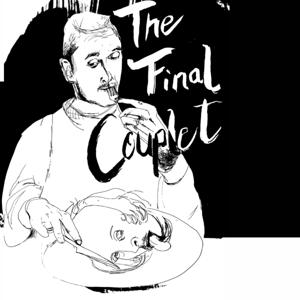


Shakespeare and his mate have both fallen in love with the same woman. Nightmare!
Sonnet 134
So now I have confessed that he is thine,
And I my self am mortgaged to thy will,
Myself I'll forfeit, so that other mine
Thou wilt restore to be my comfort still:
But thou wilt not, nor he will not be free,
For thou art covetous, and he is kind;
He learned but surety-like to write for me,
Under that bond that him as fast doth bind.
The statute of thy beauty thou wilt take,
Thou usurer, that put'st forth all to use,
And sue a friend came debtor for my sake;
So him I lose through my unkind abuse.
Him have I lost; thou hast both him and me:
He pays the whole, and yet am I not free.
Join me and my amazing guest Kaffe Keating for our third and final Christmas Special. We talk Shakespeare and religion, weird festive traditions and the hell they got up to at New Year! Kaffe also surprised me with a phenomenal Christmas present at the end, so make sure to stick around.
Shakespeare is really annoyed because his friend has now fallen in love with the Dark Lady as well.
Our story continues with a confrontation!
Sonnet 133
Beshrew that heart that makes my heart to groan
For that deep wound it gives my friend and me!
Is't not enough to torture me alone,
But slave to slavery my sweet'st friend must be?
Me from myself thy cruel eye hath taken,
And my next self thou harder hast engrossed:
Of him, myself, and thee I am forsaken;
A torment thrice three-fold thus to be crossed.
Prison my heart in thy steel bosom's ward,
But then my friend's heart let my poor heart bail;
Whoe'er keeps me, let my heart be his guard;
Thou canst not then use rigour in my jail:
And yet thou wilt; for I, being pent in thee,
Perforce am thine, and all that is in me.
Shakespeare talks about his lovers eyes being all dark and pitying. He seems to like being pitied for some reason.
Sonnet 132
Thine eyes I love, and they, as pitying me,
Knowing thy heart torments me with disdain,
Have put on black and loving mourners be,
Looking with pretty ruth upon my pain.
And truly not the morning sun of heaven
Better becomes the grey cheeks of the east,
Nor that full star that ushers in the even,
Doth half that glory to the sober west,
As those two mourning eyes become thy face:
O! let it then as well beseem thy heart
To mourn for me since mourning doth thee grace,
And suit thy pity like in every part.
Then will I swear beauty herself is black,
And all they foul that thy complexion lack.
Shakespeare exhibits some incel behaviour in this one, I don't think he knows whether he loves the dark lady or not at this point.
Sonnet 131
Thou art as tyrannous, so as thou art,
As those whose beauties proudly make them cruel;
For well thou know'st to my dear doting heart
Thou art the fairest and most precious jewel.
Yet, in good faith, some say that thee behold,
Thy face hath not the power to make love groan;
To say they err I dare not be so bold,
Although I swear it to myself alone.
And to be sure that is not false I swear,
A thousand groans, but thinking on thy face,
One on another's neck, do witness bear
Thy black is fairest in my judgment's place.
In nothing art thou black save in thy deeds,
And thence this slander, as I think, proceeds.
I'm joined for the second time by the brilliant actor and writer, Emma Paetz. You might have seen her in the likes of DC's "Pennyworth" & BBCs "The Famous Five". We had a great time unpacking this classic.
Sonnet 130
My mistress' eyes are nothing like the sun;
Coral is far more red than her lips' red;
If snow be white, why then her breasts are dun;
If hairs be wires, black wires grow on her head.
I have seen roses damasked, red and white,
But no such roses see I in her cheeks;
And in some perfumes is there more delight
Than in the breath that from my mistress reeks.
I love to hear her speak, yet well I know
That music hath a far more pleasing sound;
I grant I never saw a goddess go;
My mistress, when she walks, treads on the ground.
And yet, by heaven, I think my love as rare
As any she belied with false compare.
Shakespeare talks about lust and how damaging it can be. This one is a LITTLE SPICY.
Sonnet 129
Th' expense of spirit in a waste of shame
Is lust in action; and till action, lust
Is perjured, murd'rous, bloody, full of blame,
Savage, extreme, rude, cruel, not to trust,
Enjoyed no sooner but despisèd straight,
Past reason hunted; and, no sooner had
Past reason hated as a swallowed bait
On purpose laid to make the taker mad;
Mad in pursuit and in possession so,
Had, having, and in quest to have, extreme;
A bliss in proof and proved, a very woe;
Before, a joy proposed; behind, a dream.
All this the world well knows; yet none knows well
To shun the heaven that leads men to this hell.
Shakespeare wishes he was a piano key so the dark lady could play him elegantly with her fingers. Weird?
Sonnet 128
How oft when thou, my music, music play'st,
Upon that blessed wood whose motion sounds
With thy sweet fingers when thou gently sway'st
The wiry concord that mine ear confounds,
Do I envy those jacks that nimble leap,
To kiss the tender inward of thy hand,
Whilst my poor lips which should that harvest reap,
At the wood's boldness by thee blushing stand!
To be so tickled, they would change their state
And situation with those dancing chips,
O'er whom thy fingers walk with gentle gait,
Making dead wood more bless'd than living lips.
Since saucy jacks so happy are in this,
Give them thy fingers, me thy lips to kiss.
We say goodbye to "the fair youth" and hello to "the dark lady". Shakespeare talks about cosmetics and how he thinks they are ruining true beauty.
Sonnet 127
In the old age black was not counted fair,
Or if it were, it bore not beauty's name;
But now is black beauty's successive heir,
And beauty slandered with a bastard shame:
For since each hand hath put on Nature's power,
Fairing the foul with Art's false borrowed face,
Sweet beauty hath no name, no holy bower,
But is profaned, if not lives in disgrace.
Therefore my mistress' eyes are raven black,
Her eyes so suited, and they mourners seem
At such who, not born fair, no beauty lack,
Sland'ring creation with a false esteem:
Yet so they mourn becoming of their woe,
That every tongue says beauty should look so.
The last sonnet in the fair youth series! Can we call it a sonnet if it doesn't have 14 lines?
Our story comes to its conclusion.
Sonnet 126
O thou, my lovely boy, who in thy power
Dost hold Time's fickle glass, his sickle, hour;
Who hast by waning grown, and therein showest
Thy lovers withering, as thy sweet self growest.
If Nature, sovereign mistress over wrack,
As thou goest onwards still will pluck thee back,
She keeps thee to this purpose, that her skill
May time disgrace and wretched minutes kill.
Yet fear her, O thou minion of her pleasure!
She may detain, but not still keep, her treasure:
Her audit (though delayed) answered must be,
And her quietus is to render thee.
( )
( )
From the publisher's feed