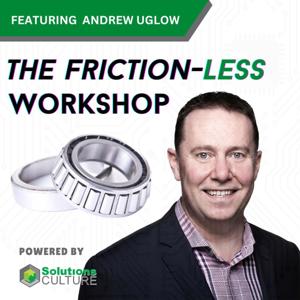
In this episode, we examine the common frustration of workshop leaders who feel they have to repeat instructions a
thousand times without seeing results. Andrew Uglow reveals why the issue is rarely the information itself, but rather the
delivery and the emotional state of the person receiving it. He introduces the TATS framework, which stands for Triage,
Action, and Test, as a structured way to ensure that instructions are not only heard but correctly understood and
implemented.
Andrew explains the critical importance of the triage phase, where the emotional state of both the foreman and the
technician must be managed before any meaningful communication can occur. He shares personal stories from his time as
a technician to demonstrate how a lack of clear instruction and testing can lead to embarrassment, stress, and repeated
mistakes. The discussion also covers the hidden costs of inaction and the importance of closing the capacity gap for
workshop foremen to prevent burnout and improve overall flow.
What You Will Learn:
• Why the meaning of a conversation depends entirely on the hearer's understanding
• How the TATS framework can eliminate the mechanical butt kicking machine
• What the triage phase involves and why it is the most skipped step in communication
• Why technicians need to know the why behind an action to be successful
• How to use the verbal test to ensure instructions are correctly installed in a technician's mind
• What the hidden cost of inaction looks like on your workshop's bottom line
Key Takeaways:
• The importance of building respect and rapport before giving instructions
• How to identify if a technician is in a state to actually process information
• The role of the Quality Information Model in improving service advisor to foreman handovers
• Why blaming technicians for mistakes is often a sign of poor communication delivery
• How to move from a reactive cycle to a proactive, friction-less workshop environment
Notable Quotes:
• "The meaning of any conversation is on what the hearer understands, not what the speaker said."
• "If my instructions are bad, my results are gonna be bad."
• "We want to test that what you heard and what I said are the same thing."
• "Meaning gets installed when they have to make sense of it internally before they can explain it externally."
Andrew has a variety of free downloads and tools you can grab.
Discover if your workshop is Retention Worthy here or visit his website, https://www.solutionsculture.com
(https://www.solutionsculture.com) where the focus is on bringing reliable profitability to automotive workshop owners and
workshop management through the Retention, Engagement and Development of their Technical Professionals.
This podcast was produced by 'Podcasts Done for You' https://commtogether.com.au (https://commtogether.com.au)