
Sign up to save your podcasts
Or

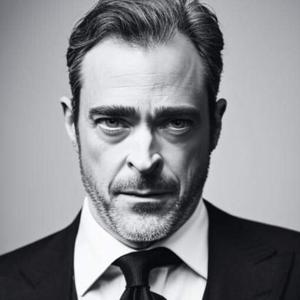


onathan Harnisch’s The Last Thing Worth Keeping is a stark, mesmerizing self-portrait of an artist who defines his life by what he removes. It begins with a startling act — calmly discarding a million words — not in anger or for spectacle, but as a deliberate “ruthless kindness” to himself, a controlled burn to clear space for what matters. Writing in a spare, precise third person, Harnisch examines “the room” he can never truly leave — the mind under pressure, the body in chronic revolt — rejecting tidy redemption arcs and reductive labels in favor of complexity, preferring to “describe the weather” rather than name the climate. His process is merciless and exacting: ten paragraphs cut for one honest line, then even that sacrificed for the white space “where the body breathes.” What remains is unflinching and unsentimental, yet laced with unexpected tenderness, most clearly in his devotion to two cats — one shy, one fiercely loyal — who anchor him to the present and model a pure, narrow devotion to what’s real. For Harnisch, darkness is not the absence of love but the crucible where love proves itself, found in fleeting kindnesses, quiet moments, and the courage to keep going without promise of rescue. He treats money, noise, and unsent letters with the same discipline, pruning what doesn’t serve survival. Cities change, but the inner terrain holds; the discarded million words become simply a field stripped bare, ready for new growth. By the end, the book distills into an inventory of what endures: a mind that will not be commodified, a craft practiced without applause, a relationship with darkness that teaches how to see, love as deliberate work, two cats who are always right, and the quiet fact of a million words in a bin. The closing image — shutting the door, opening the page — is not a metaphor but an action, repeated because the day demands it and because not doing it would let the day decide. Stripped to essentials yet impossibly rich, The Last Thing Worth Keeping is an audiobook of brutal honesty and strange beauty, offering no moral closure, only the truth of what survives after everything else has been cut away — and the quiet, defiant courage to keep goingThe Last Thing Worth Ke….
Here is an extremely pessimistic personal bio written in the same tone as Litany for the God That Abandoned Me—a grotesque, fatalistic voice of despair, disillusionment, and paralysis, perfect for a character or author page deep in the abyss:
Bio: Jonathan Harnisch
I am what’s left when hope dies and memory curdles. A burned-out nerve in a forgotten limb of God’s failed creation. I was promised healing, handed pills, and punished when they worked. My body is a war crime in slow motion, my mind a haunted house with no doors. Forty years sedated into silence—then abandoned, betrayed by the very medicine that once let me speak without shaking.
They call it disability. I call it dismemberment.
I do not “move on.” I stagnate. I rot in place while time mocks me from the other side of the glass. My accomplishments are crime scenes: books written with tremoring hands, art scraped from the walls of psychosis. I am the echo that won’t die. The fine print on the prescription bottle that warned you, but you didn’t listen.
Every friend has vanished. Every therapist has fled. Even the devil refuses my company.
I don’t write for catharsis. I write because the pain has nowhere else to go. My prose is a vomit of nerve endings. My poetry, the twitch of a crucified tongue.
There is no redemption arc here. No comeback. No healing journey.
Enter the Lucid Room — not a location, but a fracture in time. In this 30-minute fever elegy from Pervo – Third Alibi, Jonathan Harnisch becomes Georgie Gust: a man unraveling in static, haunted by Claudia — the ghost, the drug, the wound that never closes. Through 57 poetic, hallucinatory fragments, Georgie drifts between memory and madness, withdrawal and love, the real and the unreal. Each word trembles with grief and the ache of a muse who may never have existed at all. This is not a teaser. It’s a dirge whispered through broken motel lights. A literary haunting. A confession without a priest. A voice echoing from the edge. Narrated with quiet intensity, Lucid Room is what survives after the breakdown — not healing, but endurance. A cat waits. A shadow breathes. And Georgie speaks, not to be heard, but to remain.
A mind-shattering descent into trauma, grief, and the ghosts we create to survive. From the fractured psyche of Georgie Gust—Jonathan Harnisch’s most haunted creation—comes a raw, surreal, and unforgiving series of writing sessions. This isn’t therapy. This isn’t healing. It’s survival through language. Schizophrenia, protracted withdrawal, and the ache of being unseen bleed into every line. Welcome to the Third Alibi—where reality cracks, the ceiling leaks upward, and the cat knows the truth. You’ve never heard madness spoken so clearly.
A surreal psychological audiobook in 24 haunting chapters. Follow Georgie Gust through madness, memory, and medical betrayal. Written by Jonathan Harnisch. Fiction. Memoir. Nightmare. Fire.
1000 Blinks (from Alibi³):
A thousand flashes of raw truth. A thousand moments too real to forget.
From the acclaimed author of The Lucid Room comes 1000 Blinks—a haunting, hypnotic journey through the mind of a man shattered by trauma and pieced back together through love, memory, and madness. In this abbreviated audio experience, Jonathan Harnisch doesn’t just tell you his story—he bleeds it out in poetic shards, whispered confessions, and cinematic riffs that break the rules and rewrite reality.
Part memoir, part fever dream, part defiant scream into the void—1000 Blinks is unfiltered, unflinching, unforgettable.
Listen with your heart. Remember with your soul.
Enter the Lucid Room — not a location, but a fracture in time. In this 30-minute fever elegy from Pervo – Third Alibi, Jonathan Harnisch becomes Georgie Gust: a man unraveling in static, haunted by Claudia — the ghost, the drug, the wound that never closes. Each word trembles with memory, withdrawal, and the ache of love that may never have been real but still ruins everything. This isn’t a teaser — it’s a dirge whispered through broken mirrors and flickering motel lights. A cat waits. A shadow breathes. And Georgie confesses not to be heard, but to exist. This isn’t a story. It’s what survives after the breakdown.
From the publisher's feed