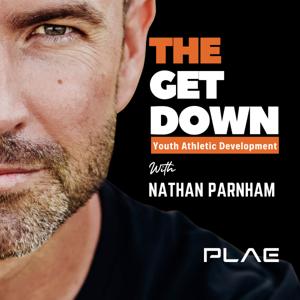
The Get Down - Youth Athletic Development

The Get Down - Youth Athletic Development

By Nathan ParnhamHealth & Fitness
Download on the App Store

The Get Down - Youth Athletic Development episodes

  • EP6: Parents- The pandemic and youth sport participation
    Welcome back to episode six of the Get Down podcast. Where today's focus is squarely on parents navigating the complexities of youth sports in the wake of the pandemic. As we rewind three years to those turbulent times, it's evident that the landscape of family life shifts, with confined living and disrupted routines becoming the norm. Despite these challenges, there were moments of profound connection and joy, like the one I witnessed in a local park, where a family engaged in unstructured sports, epitomizing the essence of quality time and bonding. 
    Today, I’m going to share with you an interesting study around the pandemic's impact on youth athletes, urging parents to reassess priorities, align calendars, and rethink their approach to sports commitments. Join me as we explore how the pause button of the pandemic can lead to a more balanced and fulfilling sporting journey for families.
    Takeaways from this episode:
    The importance of family bonding and spending quality time together despite challenges.
    The pandemic brought significant changes to family life, including limited socialization and disrupted sports activities, leading to a need for reflection on priorities.
    A study revealed shifts in youth athletes' behaviours during the pandemic, with sleep increasing to 9.1 hours per night and structured training hours decreasing by 3.3 hours per week, while 47% reported spending more time outdoors and 13% experienced changes in sporting goals.
    The findings emphasized the benefits of decreased pressure and increased free time for young athletes, allowing for reflection and adjustment of aspirations.
    Parents are urged to reconsider their approach to youth sports, focusing on balance, enjoyment, and alignment with family priorities.
    Reflecting on the study, parents are encouraged to reassess their family's sporting commitments and consider adjusting to reduce stress and prioritize their children's passions.
    I encourage you to leave feedback on this episode.
    In the upcoming episode, we’ll address common misconceptions in athletic development within schools.
    Connect with me:
    InstagramWebsite
    Order my book:
    The Sporting Parent
    Check out our platinum sponsor- PLAE
    InstagramWebsite
    14 min
  • EP5: Coaches- Exploring the youth programming conundrum
    Welcome to episode five of the Get Down podcast, made specifically for coaches in the youth sports arena. In this episode, we will talk about the art of coaching beyond what you learn at university, focusing on programming prescription and utilising your coaching eye.
    Following the positive response from our LTAD (Long-Term Athlete Development) model discussion in episode one, we’re dedicating this episode to a deeper dive into programming within the LTAD framework. We'll recap the Balyi model, highlight the importance of different age cohorts, and discuss specific considerations for programming.
    Whether you're in the high school setting, a private coach, or involved with clubs, join us as we explore the variation of programming for youth athletes, ensuring they're coached according to their unique developmental needs. Let's get started on today’s episode and, please, don’t forget to like, share, and review this episode!
    Takeaways from this episode:
    Year 7 focuses on learning fundamentals, establishing a foundation of relative strength, and incorporating enjoyable activities such as games.
    In year 8, attention is given to factors like peak height velocity and accommodating varying strength levels, while maintaining structured programming with engaging elements.
    Year 9 marks a transition to a more structured training approach, introducing hard implements like kettlebells and promoting competition among peers while maintaining fun.
    Year 10 involves addressing challenges associated with increased independence, encouraging autonomy in exercise selection, and focusing on maintaining relative strength alongside introducing advanced techniques like Olympic lifting.
    Year 11-12 athletes focus on refining skills for flagship teams, emphasising sport-specific qualities, and promoting autonomy and technique as bodies mature.
    Understanding the Long-Term Athletic Development model is coaching to different ages, and prioritising adaptability for diverse youth needs.
    Effective coaching means responding to individual student characteristics with fluidity. 
    Join us for episode six, discussing insights for parents and this relevant article.
    Connect with me:
    Instagram
    Website
    Order my book:
    The Sporting Parent
    Check out our platinum sponsor- PLAE
    InstagramWebsite
    17 min
  • EP4: Guest episode- Understanding the pathway to elite sport
    This guest episode is proudly brought to you by Gymaware. Our guest is unparalleled in his accomplishments in elite sport. Having worked with the best athletes around the globe and for some of the biggest franchises to go with it Darren Burgess knows what it takes to make it in professional sport. 
    Having held head roles in major clubs such as Liverpool FC, Arsenal FC, Melbourne Football Club, and currently Adelaide Football Club Darren shares insights into what separates elite performers from those who seldom achieve their true potential.
    Parents and coaches this episode is for you. A glimpse from the inside.
    Takeaways from this episode:
    -Young athletes are nominated for the AFL draft after state tournaments. The draft includes physical tests and interviews. 
    - Agility and speed tests are crucial for career success prediction in AFL.
    - Managing training loads is key for transitioning athletes. Start with reduced load, and gradually increase over several seasons. 
    - Coaches may need help to restrain early successful players.
    - Some clubs invest significantly in player development. Overall, there needs to be more investment. 
    - Recognising the financial potential of developing young talent is growing.
    - The lack of comprehensive development pathways is delaying player development in Australian sports like AFL and soccer.
    - Movement capacity, developed through exposure to multiple sports and free play, is crucial for athletic success. 
    - Players with diverse movement experiences tend to perform better across different sports.
    - Over the years, there's been a noticeable decline in movement capacity among younger athletes, possibly due to decreased opportunities for unstructured play and increased reliance on technology.
    - Concern about athletes being ill-equipped outside their specific sport due to early specialisation and lack of exposure to other activities.
    - Is key to emphasise diverse methods for strength development beyond traditional gym exercises, such as body resistance and skill-based activities.
    If you share my passion for youth athletic development, don't forget to hit that subscribe button to stay tuned for every episode!
    Connect with me:
    Instagram
    Website
    Order my book:
    The Sporting Parent
    Contact Darren Burgess:
    Instagram- @dburgess25
    X-  @darrenburgess25
    Gymaware- Guest Episode Sponsor
    30% code VBTFUN30
    Course: https://gymaware.com/courses/vbt_fundamentals/ Instagram: https://www.instagram.com/gymaware/ 
    Educational articles: https://gymaware.com/category/blog/ 
    Educational videos: https://www.youtube.com/playlist?list=PL7WTmMMp1R0LYPlDvOhSi8xxipmXiZPx3 
    Check out our platinum sponsor- PLAE
    Instagram
    Website
    30 min
  • EP3: Schools- How to set up the ultimate school facility
    Welcome to episode three of The Get Down podcast. If you're a school diving into athletic development or specifically gearing up to create a top-notch facility, this episode is essential. I'm here to share my experience on how every school can avoid a common pitfall: investing heavily in an athletic development facility before having a clear model or understanding of what youth athletic development means within the school context.
    It's a mistake countless schools make, whether they're opting to build the facility first and then develop the program, or relying on individuals with limited expertise to spearhead the project.
    Today, I'll walk you through critical considerations and processes, ensuring that your school not only sets itself up for success but also saves valuable resources, both in terms of time and money, along the way. Don’t forget to rate, review, and share this podcast with your close ones. Let's begin!
    Takeaways from this episode:
    The youth space should be fit out differently from a commercial gym or elite performance facility.
    Prioritize developing an athletic development program philosophy before investing in facility construction.
    A well-structured program in a modest space is more effective than a large facility without clear guidance.
    Design the facility layout with the safety and usability of youth in mind.
    Ensure a clear entry point with 360-degree visibility and ample floor space for large groups.
    Select equipment with multiple uses across all age groups and training programs.
    Go for simple, versatile equipment to maximize usage and minimize storage requirements.
    Allocate budget wisely for technology investments that serve multiple purposes across all programs.
    Prioritize technology that aligns with the overarching athletic development philosophy.
    Invest in quality equipment that withstands heavy use and minimizes maintenance costs.
    Prioritize durability over immediate savings to ensure long-term success and program sustainability.
    If you share my passion for youth athletic development, don't forget to hit that subscribe button to stay tuned for every episode!
    Connect with me:
    InstagramWebsite
    Order my book:The Sporting Parent
    Check out our platinum sponsor- PLAE
    InstagramWebsite
    12 min
  • EP2: Parents- Why athletic development is no longer a luxury but a necessity
    Welcome to Episode 2, and whether you're already a listener or joining us for the first time, thank you for being here.
    This episode is specifically for parents, eager to learn more about athletic development and why it's evolved from a luxury to an absolute necessity for the emerging generation. As a parent, you might be grappling with questions about athletic development, wondering if it's appropriate for your child, and pondering if playing their chosen sport should be sufficient.
    In this episode, we address these concerns by exploring three key aspects: the evolving necessity of athletic development, insights into generational shifts affecting overall athleticism, and tackling the fear factor by overcoming its implications.
    Join us as we chat about the challenges of unstructured play and how it affects the overall well-being of the current generation.
    Takeaways from this episode:
    Due to the rise in technology, including social media and gaming, the simplicity of unstructured play, which once contributed to our resilience, no longer exists.
    Societal trends of instant gratification and purposeful outcomes have resulted in a fixation with sport specific structured sessions.
    Some individuals, despite their excellence in their sport, often lack basic movement skills, increasing their vulnerability to injuries in the athletic arena.
    Strength training will not stunt your child's growth.
    Injuries are often the result of inadequate supervision, inappropriate age based programming and improper use of equipment.
    Resistance training enhances body control, movement, and overall strength.
    Beyond physical benefits, it fosters self-esteem, confidence, discipline, and accountability, promoting a process-driven approach to athletic development.
    Perception vs reality and the benefits of enhanced movement, sports longevity, injury prevention, and overall well-being in athletic development.
    If you're as passionate about youth athletic development as I am, hit that subscribe button, so you never miss an episode!
    Connect with me:
    InstagramWebsite
    Order my book:
    The Sporting Parent

    15 min
  • EP1: Coaches- Programming for youth in the high school setting.
    Hey there, welcome to our very first podcast episode! I'm beyond excited to share this journey with you, and before we dive into the nitty-gritty, I want to give you a bit of background on why I decided to jump into the podcasting world. The success of the "Sporting Parent" book had me receiving a tonne of questions about youth athletic development, from creating programs to navigating the parenting side of the sporting journey. It became clear that there were common themes that needed addressing.
    So, here we are with a weekly podcast, a four-part series presented in eight week blocks throughout the year, including two special guests per part: game changers in their fields. 
    Our first episode focuses on programming, especially for coaches working in a school context of athletic development. If you're a coach finding your way in the youth setting, whether as a casual coach, taking over from someone, or diving into your first full-time role, join me as we explore "The Get Down." We'll discuss long-term athlete development models, when to introduce strength items, and the importance of differentiating between general and student athletes. 
    If you're as passionate about youth athletic development as I am, hit that subscribe button, so you never miss an episode. We've got some incredible content lined up, and I can't wait for you to be part of this journey. If you have questions or topics you'd like for me to cover, drop them in the comments, and let's make this podcast a community-driven resource. 
    Let's kick off this journey together – episode one, here we come!
    Takeaways from this episode:
    Two main models: traditional Balyi LTAD model (based on chronological age) vs. youth physical development model (favouring biological maturation).
    I prefer the Balyi model for schooling systems, divided into four terms with two four-week mesocycles each term.
    Completion of eight programs each schooling year for long-term athletic success.
    Crucial distinction in strength and conditioning: Soft (e.g., medicine balls) vs. hard (e.g., dumbbells).
    Prioritisation of relative strength in formative years.
    Gradual introduction of harder implements recommended in later years (years eight and nine).
    Significance of timing in introducing hard implements in school facilities.
    Delaying hard implements prioritises enhanced relative strength.
    Strategic and progressive approach needed to avoid challenges in reverting to relative strength exercises.
    Avoiding the distinction for student athletes, embracing Nike's "if you train, you're an athlete" philosophy.
    Multilateral approach, not prioritising specialisation in early years.
    All students, regardless of sport, should focus on general athleticism, multi-planar movement, and relative strength.
    Year 10 marks the transition to sports specificity for flagship teams.
    Building a foundation in general athleticism minimises injuries and maximises competency.
    Importance of mobility, flexibility, and overall athleticism throughout schooling.
    In the next episode, we’ll be focusing on parents and the necessity of athletic development in the high school journey.
    If you're as passionate about youth athletic development as I am, hit that subscribe button, so you never miss an episode! Connect with me:
    InstagramWebsite
    Order my book:
    The Sporting Parent
    16 min

About The Get Down - Youth Athletic Development

From the publisher's feed

Youth sport is a billion dollar industry. Youth athletic development plays a significant role in this. With such a large investment at stake through various stakeholders, how do you know you're on the right path in setting this generation up for success?