
Sign up to save your podcasts
Or

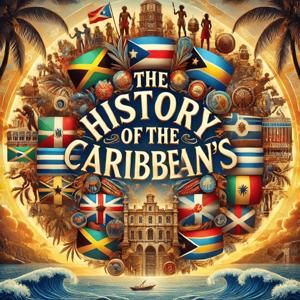


“Carrier of Tension: The U.S. Naval Buildup Reshaping Caribbean Geopolitics” is a sweeping, real-time cultural-history documentary that explores how one event—the arrival of a U.S. aircraft carrier strike group near Venezuelan waters—sent shockwaves through the entire Caribbean. Told in a vivid third-person narrative, the episode reveals how Operation Southern Spear unfolded across a region already shaped by colonial memory, fragile economies, and longstanding territorial disputes.
The story begins with the carrier’s dramatic entry into the basin, then follows its ripple effects across Barbados, Trinidad, Jamaica, The Bahamas, and Guyana. From fishermen noticing unfamiliar wakes at dawn, to diplomats engaging in tense late-night briefings, to governments attempting to balance sovereignty against great-power pressure, the narrative captures the emotional and geopolitical anxiety rising through the Caribbean.
Through 6,000+ words of deep reporting, historical context, and cultural interpretation, the episode explains why the Caribbean—despite its small size—now finds itself at the center of a global strategic shift. As the U.S. Navy signals deterrence, Venezuela amplifies nationalist rhetoric, and Guyana steps into its new role as a rising petrostate, the region must navigate a complex and dangerous moment.
This is the Caribbean as you’ve never seen it:
The cover art depicts the climactic ideological and emotional moment at the heart of the Cuban revolutionary struggle, centered on the enduring partnership between Fidel Castro and Ernesto “Che” Guevara. Rendered in hyper-realistic detail, the image captures the two figures at the height of their revolutionary ascent, standing against a turbulent backdrop that evokes the chaos, sacrifice, and conviction that shaped the Cuban Revolution.
In the foreground, Che Guevara appears slightly angled toward the viewer, his expression resolute and contemplative. His beret—adorned with the iconic star—casts a subtle shadow across his brow, enhancing the depth of his gaze. His fatigues, worn and sweat-stained, signal the physical toll of guerrilla warfare. Every detail—from the coarse texture of his beard to the faint dirt smudges along his jawline—conveys a realism that bridges historical accuracy with cinematic intensity.
Beside him stands Fidel Castro, captured mid-thought, his eyes scanning the horizon with a mixture of tactical awareness and ideological certainty. Castro’s military cap and rugged fatigues integrate seamlessly into the dusty amber tones of the battlefield environment. His posture is upright, confident, and commanding, reflecting his role as the strategic leader of the revolutionary movement.
The background is a dramatic tableau of conflict: silhouettes of guerrilla fighters advance through billowing smoke, while the faint outline of crumbling colonial-era architecture symbolizes both the decay of the old regime and the violent birth of a new political order. A muted sun hangs low, haloing the figures in a warm, dusty glow, further emphasizing the historical weight of the moment.
Overlaying the composition is a bold, blockbuster-style title—“Castro and Che Guevara – The Cuban Revolution”—rendered in large, cinematic text, centered across the bottom third. The typography is crisp, metallic, and illuminated subtly from within, contrasting sharply with the gritty background. The 1400×1400 framing gives the artwork a commanding square format suitable for documentary covers, podcasts, or historical features, evoking both mythic grandeur and documentary authenticity.
The climatic moment of the narrative is captured in a visual tableau that reflects both the terror and resilience of enslaved Africans fleeing the brutal machinery of early American slavery. The scene unfolds deep within a dense, moonlit forest, illuminated only by the pale silver glow of the night sky and the distant orange flicker of torches carried by the overseers in pursuit. Amina and Kofi—central figures whose emotional and symbolic weight drive the narrative—are positioned at the forefront of the visual composition. Their expressions combine fear, determination, and physical exhaustion, embodying the desperate urgency of their flight.
The environment surrounding them is rendered with meticulous, historically grounded detail. The forest is heavy with fog, its tall pines bending in the night wind as if bearing witness to their ordeal. Branches claw at their clothing, dirt smears their skin, and sweat glistens on their brows, underscoring the physical strain of escape. Behind them, the faint silhouettes of violent pursuers—torches raised high, dogs tugging at chains—reinforce the imminent danger.
Amina’s posture conveys both vulnerability and resolve; her wide, fearful eyes search for a path forward while her hands push through the foliage, refusing to surrender. Kofi, slightly behind her but close enough to protect, carries the tension of a man who understands the cost of capture. His body is coiled with strength, his gaze fixed, his muscles taut—capturing the emotional burden of leading both himself and the woman he loves into a future fraught with uncertainty.
Thematic elements of bondage and liberation interplay through the deliberate contrast of light and shadow. The torches—symbols of oppression—glow fiercely in the background, while the moonlight casts a softer illumination on Amina and Kofi, symbolizing the fragile but persistent possibility of freedom. The environment itself becomes a narrative actor, symbolizing both danger and deliverance: the forest conceals them from their oppressors, yet challenges their endurance at every step.
Overall, the scene represents the epic confrontation between enslaved individuals fighting for their humanity and the oppressive system determined to deny it. It encapsulates the tension, stakes, and emotional depth of the escape—an image rooted in historical reality yet rendered with cinematic intensity.
The narrative presents a comprehensive exploration of Britain’s transformation from a modest island kingdom into a global imperial force, foregrounding the complexities, contradictions, and moral tensions inherent in this rise. Jamaica functions as the central geographic and symbolic site through which these dynamics unfold. Within this framework, Port Royal serves not merely as a location but as a historical metaphor—encapsulating the ambition, excess, violence, and collapse that characterized the British imperial project in the Caribbean.
The description of Port Royal emphasizes its role as both a strategic naval base and a hub of sanctioned piracy during the seventeenth century. Figures such as Henry Morgan epitomize the convergence of criminality and state power, illustrating Britain’s willingness to legitimize violence when politically and economically advantageous. The city’s reputation as “the wickedest city on Earth” underscores its cultural significance as a space where wealth and vice coexisted, fueled by privateering profits and transatlantic commerce.
The narrative transitions from piracy to the institutionalized system of African enslavement, marking a decisive shift in British imperial strategy. The account details the traumatic experiences of enslaved individuals, emphasizing the brutality of plantation life, the psychological devastation of forced displacement, and the centrality of coerced labor to the thriving sugar economy. Sugar, in this portrayal, becomes more than a commodity: it is a material embodiment of human suffering, global trade, and imperial wealth.
The account also highlights the ideological and political conflicts surrounding abolition in the late eighteenth and early nineteenth centuries. Figures like William Wilberforce emerge as crucial actors in a contested moral landscape marked by tensions between humanitarian advocacy and entrenched economic interests. The eventual passage of the Slavery Abolition Act of 1833 is framed not as an endpoint but as the beginning of a prolonged struggle for equity, recognition, and justice, given the structural inequalities that persisted long after emancipation.
The modern implications of this history are addressed with equal rigor. The narrative examines how Britain’s colonial legacy continues to shape contemporary debates about race, national identity, historical memory, and systemic inequality. Ongoing movements for reparations and the reevaluation of public monuments reflect a society wrestling with its imperial past. Through this lens, the submergence of Port Royal in 1692 becomes a symbolic moment—a catastrophic collapse that mirrors the moral contradictions embedded within British imperial power.
Overall, the description illustrates the continuous tension between national pride in maritime expansion and the moral reckoning necessitated by centuries of exploitation. The narrative argues that Britain’s future identity depends on its willingness to acknowledge, confront, and learn from the complexities and traumas of its imperial history.
This narrative presents a comprehensive and dramatized exploration of the life and revolutionary rise of Toussaint Louverture, situating his personal journey within the broader political, social, and economic upheavals of late eighteenth-century Saint-Domingue. Beginning with the proclamation of August 29, 1793—a pivotal declaration authored by Louverture— the story frames his emergence as a central figure in the Haitian Revolution. This proclamation is depicted not merely as a political statement, but as a symbolic invocation of unity among the enslaved population, whose aspirations for liberty had been repeatedly suppressed by the colonial order.
Louverture’s early life is explored through historical ambiguity, emphasizing the uncertainty surrounding his birth and formative years. Despite these gaps, the narrative highlights key influences: his father Hippolyte’s respected position among the enslaved, the mixture of African cultural traditions and limited colonial education he received, and his early exposure to the moral contradictions of slavery. These elements contribute to shaping Louverture as an observant, strategically minded individual whose later leadership would be grounded in both practical experience and ideological conviction.
The story situates Saint-Domingue as the wealthiest colony of its time—fueled by sugar, coffee, and the forced labor of over half a million enslaved Africans. The harsh realities of plantation exploitation and the emergence of maroon resistance movements establish the volatile backdrop against which revolutionary sentiments intensified. The presence of a large free mixed-race population further complicated the colony’s social fabric, as legal discrimination and racial hierarchies fostered resentment and political agitation.
As the narrative transitions into the late 1780s and early 1790s, it examines the profound influence of the French Revolution’s ideals—liberty, equality, fraternity—on the enslaved and free populations of the colony. Louverture, at this point a freedman, is portrayed as someone who chose solidarity with the enslaved over personal comfort. His involvement in the 1791 uprising, sparked by the voodoo ceremony led by Dutty Bookman, is framed as both strategic and transformative. Initially operating from the margins, Louverture gradually emerged as a skilled healer, organizer, and eventual military leader.
The story then tracks the intensification of conflict across 1793–1794. Colonial power struggles, planter flight, foreign intervention, and factionalism among the rebels created a landscape defined by instability and opportunity. Louverture’s ability to navigate alliances—shifting between French, Spanish, and internal factions—serves as evidence of his exceptional political pragmatism. His military victory at Vertières, symbolically rendered as a defining moment, cements his stature among both followers and adversaries.
As Louverture gains prominence, internal tensions rise. Rival leaders resent his authority, while external powers fear the broader implications of a successful slave revolution. The abolition of slavery by the French National Convention in 1794 transforms the struggle into an ideological crusade, and Louverture’s efforts to unify disparate groups reveal his commitment to long-term nation-building. His diplomatic negotiations with France underscore his sophisticated understanding of global politics, even as mistrust from multiple factions threatens his position.
The narrative reaches its dramatic climax with Louverture’s betrayal and capture in 1802. Despite his military and diplomatic triumphs, external forces—particularly Napoleon’s ambitions—converge to undermine him. His exile and death in France mark a tragic turning point, underscoring the vulnerability of revolutionary leaders to geopolitical manipulation.
The story concludes with the broader significance of Louverture’s legacy. Though he did not live to witness Haiti’s declaration of independence in 1804, his leadership laid the ideological and structural foundations for the world’s first Black republic. His life stands as a testament to the capacity of oppressed peoples to challenge empire, redefine identity, and envision liberation beyond the limitations imposed upon them.
The narrative presents a dramatized yet historically grounded portrait of Edward Teach—popularly known as Blackbeard—during the apex of his career in the early eighteenth century, a period defined by postwar dislocation, maritime expansion, and the rise of transatlantic piracy. The story situates Blackbeard within the geopolitical aftermath of the War of the Spanish Succession, a moment when thousands of privateers found themselves stripped of legal purpose and cast into economic uncertainty. Against this backdrop, the tale explores the evolution of Teach from a shadowy, disputed origin to one of the most feared and mythologized pirates in the Atlantic world.
The text introduces Blackbeard aboard the Queen Anne’s Revenge, surveying the horizon at sunset—a symbolic gesture that frames the character as both commander and contemplative figure. His alliance with Steed Bonnet, the capture of the French slaver that became his flagship, and his reign of terror across the Caribbean and America’s eastern coastline are woven into the narrative with attention to both documented history and imaginative interpretation. The central action sequence—the attack on a merchant vessel near Charleston—serves as the climatic moment of the narrative, depicting Blackbeard’s tactical brilliance, brutality, and psychological domination of his enemies.
Following the raid, the narrative transitions into an introspective arc, revealing the psychological and moral consequences of piracy. Storm imagery, crew tension, and Blackbeard’s growing unease function as narrative devices that question the sustainability and spiritual cost of a life founded on violence and predation. The concluding segment, set in a secluded Caribbean cove, reframes Blackbeard as a leader in pursuit of legacy and meaning beyond plunder, adding emotional depth to a figure often depicted as purely monstrous.
This narrative presents a dramatized yet historically grounded depiction of seventeenth-century Caribbean piracy, situating the protagonist, Jacques, within the turbulent socio-political landscape that shaped the rise of buccaneers, privateers, and the Brethren of the Coast. The story integrates documented historical phenomena—European imperial competition, the decline of Spanish hegemony, the evolution of privateering into piracy, and the socio-economic environment of Tortuga and Port Royal—with fictionalized character development to illustrate the lived experience of individuals who entered the maritime underworld.
The early chapters contextualize the Caribbean as a contested geopolitical space dominated by Spanish extraction economies and increasingly challenged by French, English, and Dutch privateers. Figures such as Jean Fleury and Henry Morgan embody the transition from state-sanctioned warfare to independent piracy, reflecting shifting imperial policy and economic incentives. Tortuga emerges as both sanctuary and operational base, where buccaneers constructed a proto-democratic system of codes and collective governance, marking a departure from rigid European hierarchies.
Within this framework, the story follows Jacques, a young, impressionable fisherman drawn to the promise of autonomy, wealth, and purpose offered by the Brethren of the Coast. His recruitment by Captain Rafael aboard the Black Serpent serves as a narrative entry point into pirate culture—its camaraderie, discipline, violence, and moral ambiguities. Jacques’s training reveals the practical realities of piracy: navigating by the stars, mastering weaponry, and confronting the psychological toll of constant danger.
The climactic sequence occurs during a planned raid on a Spanish treasure galleon, where an unexpected explosion from a coastal fortress disrupts the strategy and forces the crew into improvised combat. The ensuing battle is depicted with visceral immediacy, highlighting the chaos and unpredictability of naval warfare. Jacques’s first kill marks a pivotal moment in his personal transformation, capturing the tension between adrenaline, fear, and the sobering human cost of piracy.
The aftermath of victory—seizure of Spanish treasure and celebration aboard the Black Serpent—is juxtaposed with Jacques’s introspection about the ethical complexity of his new life. While piracy promises wealth and freedom, it simultaneously demands brutality, moral compromise, and constant confrontation with death. The story concludes with Jacques standing under a starlit Caribbean sky, holding a single piece of gold as both a symbol of achievement and a reminder of the uncertain path ahead. His journey is framed not as an endpoint but as the beginning of a larger arc shaped by the shifting tides of Caribbean power, identity, and resistance.
A clear, documentary narrative on how a small Caribbean state used rules, buffers, and digital rails to turn fragility into steady ground. It blends cultural resilience with policy lessons that any island culture and small economy can adapt. Keywords: Caribbean history, island culture, cultural resilience, documentary narratives, small state economics, fiscal rules, monetary policy.
Explore how Caribbean history and island culture shape global art and fashion in this compelling episode. Discover the stories behind madras patterns, headwraps, and Carnival frames, alongside the vibrant rhythms of reggae, dancehall, and soca. This documentary narrative highlights the journeys of people and places that have propelled local craftsmanship into a worldwide phenomenon. By sharing lived experiences and emphasizing the importance of cultural resilience, we examine how the Caribbean continues to influence the next generation of artists and designers.
Dive into the fascinating world of Caribbean Iguanas in this cultural history documentary. Follow the journey of the Jamaican Iguana and the Rhinoceros Iguana through unique habitats, such as Hellshire’s dry limestone forest and Hispaniola’s salt flats. This compelling narrative explores how rangers, herders, teachers, and kids are keeping these species alive against the backdrop of Caribbean heritage and cultural resilience. By highlighting community efforts, we showcase that even small, steady acts can lead to significant conservation wins in the Caribbean region. Join us as we reflect on the intertwined stories of nature, culture, and the enduring spirit of the Caribbean.
From the publisher's feed

4,757 Listeners

111,767 Listeners

56,395 Listeners

16,318 Listeners

236 Listeners

78 Listeners

143 Listeners

67 Listeners

358 Listeners

8,478 Listeners

93 Listeners