
Sign up to save your podcasts
Or

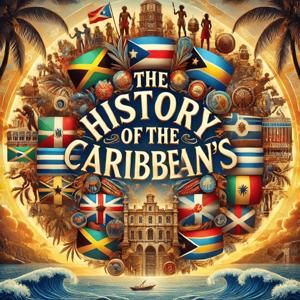


In 1865, Paul Bogle — a Baptist deacon who had spent years filing petitions, writing letters, and walking forty miles to ask for a meeting that was refused — led a march on the Morant Bay courthouse in Jamaica. The colonial militia fired. Thirty days of martial law followed: 439 killed, 604 flogged, over a thousand homes burned. Then England was given three separate legal opportunities to prosecute the man who ordered it. Each time, the courts found new reasons to say no. History of the Caribbean — available on Spotify, Apple Podcasts, and everywhere you listen.
In 1965 at Duke Reid's Treasure Isle, Alton Ellis recorded "Girl I've Got a Date" — and insisted he named the genre we now call rocksteady. But Lynn Taitt, Hopeton Lewis, Hugh Malcolm, and others all claim the credit. Part 4 maps the most disputed origin story in Jamaican music.
Before he was the Godfather of Rocksteady, Alton Ellis nearly quit music to work as a printer in Kingston. Part 3 traces his lost months, his vocal group the Flames, and the day ska died — when Hopeton Lewis, Lynn Taitt, and Gladstone Anderson invented a new sound called rocksteady.
The full Joel Andem story — the complete four-year manhunt assembled into one episode. From the urban-edge hill communities of eastern St. Andrew where the name was made, through the seized video that pushed a reputation into national consciousness, into the rural fog of Clarksonville, St. Ann where a six-bedroom house finally held him. We trace the architecture of fear, the structure of evasion, the shift from chase to intelligence-driven penetration, the May 2004 morning operation, and the 2005 Gun Court convictions that became the proven legal anchor of the story. Not a celebration. A precise close — how a fugitive legend is built in the space between what police allege, what courts prove, what communities fear, and what the landscape allows.
Series: Jamaican Gangster — Joel Andem (Complete)
Episode: The Gideon Warrior and the Jamaican Hills Manhunt — Full Story
Runtime length and chapter markers in the show notes.
He was on Jamaica's most wanted list for 10 years. He was linked to over 100 murders. And he kept receiving government contracts. This is the story of Donovan "Bulbie" Bennett — Klansman Gang leader, Spanish Town's invisible billionaire, and the man politicians were shielded from naming. From the 1993 killing that started it all to the Operation Kingfish raid that ended it.
The final part of the Joel Andem series moves out of the hills and into the courtroom. This episode separates legend from record — the Lennox Ffrench murder case that collapsed when the witness problem hit, and the 2005 Gun Court convictions for illegal possession of firearm and shooting with intent that became the legal anchor of the story. We close the arc with what the Clarksonville raid really proved: that distance is not disappearance, that the structure of evasion was the real subject all along, and that a fugitive legend is built in the space between what police allege, what courts prove, what communities fear, and what the landscape allows. Not a celebration of a gangster. A precise close.
Series: Jamaican Gangster — Joel Andem (Complete)
Episode: Part 6 — Legend, Court, and Capture
Runtime length and chapter markers in the show notes.
In 1959 Kingston, a young labourer named Alton Ellis scratched the lyrics of his first hit "Muriel" onto the wall of a building site. Part 2 traces his journey from Majestic Theatre talent shows to Coxsone Dodd's Studio One — and the birth of Jamaica's independent record industry.
Our latest exploration traces the origins of jamaican jerk, showing how indigenous knowledge and cooking traditions were foundational to this caribbean food. This video explores the historical context, suggesting the first meat was not chicken, and even mentions jerk pork as early ingredients. It offers a fresh perspective on this iconic jamaican cuisine, exploring its rich food culture.
Discover the incredible true story of Millie Small, the teenage Jamaican singer who changed music history with “My Boy Lollipop.” In this episode of Reggae Dancehall Pioneers, we explore how a young girl from Clarendon, Jamaica became Jamaica’s first international recording star and delivered one of the first global ska-pop hits. From her early days in Kingston’s Studio One, to Chris Blackwell, Island Records, Ernest Ranglin, and the explosive success of “My Boy Lollipop,” this full story reveals how Millie Small helped open the door for ska, reggae, and dancehall to reach the world.
We also dive into the deeper side of her legacy — the rise, the industry control, the underpromoted follow-up records, her connection to Jimmy Cliff, and her powerful protest song “Enoch Power,” which was famously banned by the BBC. This is more than the story of a one-hit wonder — it is the story of the woman who helped make Jamaica impossible for the world to ignore. If you love reggae history, dancehall history, Jamaican music legends, ska music, Island Records history, and untold music stories, this is an episode you do not want to miss.
#MillieSmall #MyBoyLollipop #ReggaeDancehallPioneers #JamaicanMusic #Ska #ReggaeHistory #DancehallHistory #IslandRecords #ChrisBlackwell #StudioOne
Our latest cooking video dives into the rich history of authentic jerk, correcting common misconceptions about the scotch bonnet pepper and the origins of the word. We explore how jerk pork, often the oldest meat used, showcases traditional caribbean food preparation. This look at jamaican jerk offers a fresh perspective on its culinary journey.
From the publisher's feed

4,757 Listeners

111,767 Listeners

56,395 Listeners

16,318 Listeners

236 Listeners

78 Listeners

143 Listeners

67 Listeners

358 Listeners

8,478 Listeners
93 Listeners