
Sign up to save your podcasts
Or

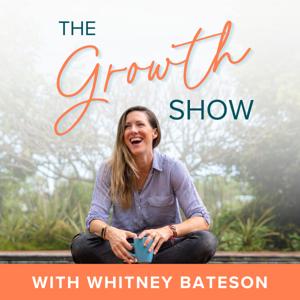


Most of what we post online is old news within a day or two, and then it's back to the hamster wheel. So Whitney brought Nadalie Bardo back to the podcast to talk about a platform that runs on a completely different timeline. Nadalie got 1 million views on Pinterest in her first month as a blogger, organically grew her email list to 24K subscribers, and has spent eight years teaching more than 10,000 blogs, brands, and businesses how to use Pinterest. In this conversation she explains why Pinterest is a search engine and not social media, why pins can keep sending people to your site long after you publish, and what to set up before you start so those clicks actually go somewhere. She also gets into content ideas for health and wellness practitioners, the easiest way to fit Pinterest into a workflow you already have, and why AI-generated pins are a bad bet. It's a great setup for the free Pinterest masterclass Whitney and Nadalie are hosting on October 20th.
Takeaways:
Connect with Nadalie:
Website: https://yourpincoach.com
Instagram: https://www.instagram.com/yourpincoach
Pinterest: https://www.pinterest.com/yourpincoach
TikTok: https://www.tiktok.com/@yourpincoach
YouTube: https://www.youtube.com/@YourPinCoach
Resources mentioned:
Connect with Whitney:
Follow Whitney on Instagram @whitneybateson
Email: [email protected]
Subscribe & Review:
If you're enjoying the podcast, don't forget to follow and leave a review! Your support helps others discover the show.
Hosted on Acast. See acast.com/privacy for more information.
This week we're bringing back episode five, one of the most downloaded episodes of the show, originally recorded in April 2024. Whitney walks through the software she uses to save time and make money: her scheduler, CRM, accounting and forecasting tools, Zapier, cart system, project management, Canva, and time tracking. Along the way, she shares how she decides whether a tool is worth paying for, including a simple frequency test and the eliminate, automate, delegate order for any task you're ready to stop doing. Then she comes back with a new intro and outro covering what's changed in two years. That includes the software she once said she didn't need and now pays for, and the tools that have joined the stack since, like Claude, LastPass, and Google Workspace.
Follow Whitney on Instagram @whitneybateson
If you’re enjoying the podcast, don’t forget to follow and leave a review! Your sup
Hosted on Acast. See acast.com/privacy for more information.
If you've ever been told you can't run Facebook or Instagram ads because you work in health, this episode is going to change how you think about that. Priscilla Zaehringer — who writes the ads, builds the graphics, and submits the campaigns for Whitney's done-for-you funnel clients — takes over the show to explain the one Meta policy that trips up practitioners most: personal attributes. The rule isn't that you can't talk about menopause or GLP-1s or anxiety. It's that a cold ad can't behave like it already knows something private about a stranger. Priscilla walks through two ads running right now for clients, shows the "easy" version she rejected in each case and why, and then gets into the part most people skip — that she can write compliant hooks because by the time she reaches the ad, she's been inside that practitioner's business for weeks.
priscillazaehringer.com
Follow Whitney on Instagram @whitneybateson
If you’re enjoying the podcast, don’t forget to follow and leave a review! Your support helps others discover the show.
Hosted on Acast. See acast.com/privacy for more information.
This one is a replay of Whitney's most recent free Open Coaching Call, and the questions were good enough that it earned its own episode. Nearly everyone who registered said the same thing when asked what they're working on — they want more visibility — so that's where most of the hour goes. Whitney is candid that her own social media does very little for her business, and walks through what she'd do instead: go into audiences other people have already built, reach out to local providers with an actual phone call rather than a brochure, run simple $5/day ads so you stay in front of people without posting, and use local SEO to catch the people who are already searching for a provider. Along the way she takes live questions on lead magnet automations and email platforms, the funnel pitfalls nobody talks about, whether a five-module course should be broken up and sold in pieces, how to move from ChatGPT to Claude without losing your context, and how to keep going when the motivation just isn't there.
Follow Whitney on Instagram @whitneybateson
If you’re enjoying the podcast, don’t forget to follow and leave a review! Your support helps others discover the show.
Hosted on Acast. See acast.com/privacy for more information.
If you've been pouring your energy into email, SEO, and social while the phone stays quiet, this episode is the nudge to go work the channel that pays off fastest. Whitney revisits referral networking as a follow-up to her conversation with Alex Raymond in Ep. 111, and gets practical about the part most practitioners stall on: figuring out who to contact and what to actually say. She shares the AI prompt she'd use to assemble a list of 20 local practices in minutes, plus a cold email and a voicemail script that lead with how you support the other provider's patients rather than what you want from them. She's also honest about why this one gets skipped — a Canva tab feels a lot safer than a phone call to a doctor's office — and why the discomfort is the point. The whole system runs from a spreadsheet and five outreaches a week, no CRM required.
Follow Whitney on Instagram @whitneybateson
If you’re enjoying the podcast, don’t forget to follow and leave a review! Your support helps others discover the show.
Hosted on Acast. See acast.com/privacy for more information.
How you write is how people decide who you are. Whitney has watched this play out twice now: first with dietitians, therapists, and doctors whose clinical training left them writing website copy like a textbook, and now with practitioners handing that same copy to AI and getting back something confident, punchy, and completely unlike them. The missing step in both cases is the same one a copywriter would have insisted on before writing a single line - defining the brand voice first. In this episode Whitney lays out a four-part brand voice summary, where to pull the raw material for it (old blog posts, podcast transcripts, your sent folder, a couple of voice memos), and how to hand it to AI so it organizes your voice instead of polishing it away. She also makes the case for the bucket most people skip: the list of things you refuse to say.
Takeaways:
Resources mentioned
Connect with Whitney
If you're enjoying the podcast, don't forget to follow and leave a review! Your support helps others discover the show.
Hosted on Acast. See acast.com/privacy for more information.
Here's the strange part about most of these websites: they're ranking. They're getting traffic. It's just traffic that was never going to turn into a client — recipes, lists of foods to eat or avoid with a condition, and the general questions people ask while they're still working out what's wrong with them. Whitney has brought on a colleague, Matt, to work with her on SEO (he'll be on the podcast at some point), and over the last few weeks the two of them audited five practice websites and kept running into the same four things. In this episode she walks through all of them: why so much of the SEO advice out there was written for blogs that make their money from ads and affiliate links rather than from selling services, what to go after instead, the local SEO opportunity hardly anyone is taking advantage of even if they've never seen a patient in person, the technical and accessibility issues that creep into every site over time, and the Google Search Console problem showing up on nearly every audit.
Follow Whitney on Instagram @whitneybateson
If you’re enjoying the podcast, don’t forget to fo
Hosted on Acast. See acast.com/privacy for more information.
Whitney has a confession: for years, her entire Kit routine has been logging in, glancing at her subscriber count, and closing the tab. The data was always there — who opens what, who clicks, where people came from — but getting at it meant exporting reports and crunching numbers, and it never made it to the top of the list. This episode is about what changed. Kit now has an MCP connector, which lets you plug your account into Claude or another AI tool and simply ask questions about your own list. Whitney covers what MCP actually means, how to set the connection up, the prompts Kit suggests, the two use cases earning their keep in her business right now, and the one feature she tried that wasn't ready for her workflow.
Follow Whitney on Instagram @whitneybateson
If you’re enjoying the podcast, don’t forget to follow and leave a review! Your support helps others discover the show.
Hosted on Acast. See acast.com/privacy for more information.
If you've ever written a genuinely helpful email and then cringed while tacking your offer onto the bottom, this one is for you. Whitney picks up a thread from her conversation with Orly Wachter about why selling feels so uncomfortable in the health and helping professions, and takes it somewhere practical. She walks through a two-step framework for writing emails that sell without the ick: first generating nine content angles directly from one of your services, then matching one of those angles to a simple email format. She also gets into why the bridge into your call to action so often feels like whiplash, how the benefits-versus-features distinction trips people up, and how often you actually need to be inviting people to work with you. She closes with a challenge to write one of these emails and send it this week, even if you haven't emailed your list in months.
Ep. 132 — What You're Getting Wrong About Selling with Orly Wachter MSc, RD - https://whitneybateson.com/ep-132-what-youre-getting-wrong-about-selling-with-orly-wachter-msc-rd/
The challenge: write one of these emails, send it, and forward it to [email protected]
Follow Whitney on Instagram @whitneybateson
If you’re enjoying the podcast, don’t forget to follow and leave a review! Your support helps others discover the show.
Hosted on Acast. See acast.com/privacy for more information.
Everyone is being told to put AI in their practice, and almost nobody is talking about where it helps versus where it makes things worse. So Whitney brought on Meredith Eaton and Jennifer Crawford, co-CEOs of Move Forward Virtual Assistants, who bought the company in 2022 and grew it from fewer than 40 clients to over 100. They have been inside the day-to-day operations of mental health practices since 2018, so this is not speculation. It's what they have watched land in real practices. This conversation is from their perspective in mental health, but it applies just as much to dietitians, functional medicine practitioners, and nurses. They cover a decision rule for when to use a tool versus a person, the admin work AI is genuinely good at, the moment where handing a call to a bot costs you a client and costs someone their one attempt at getting help, and why competing with the AI therapy apps on price and speed is the wrong move entirely.
TheraBrain waitlist: https://moveforwardvirtualassistants.com/thera-brain
Follow Whitney on Instagram @whitneybateson
If you’re enjoying the podcast, don’t forget to follow and leave a review! Your support helps others disc
Hosted on Acast. See acast.com/privacy for more information.
From the publisher's feed
Hosted on Acast. See acast.com/privacy for more information.
45 Listeners
2,031 Listeners

19,254 Listeners
12,486 Listeners
720 Listeners
7 Listeners