
Sign up to save your podcasts
Or

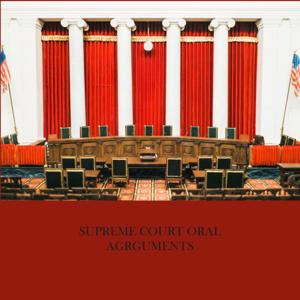


M & K Employee Solutions, LLC v. Trustees of The IAM Pension Fund | Argument Date: 1/20/26 | Docket Link: Here
Oral Advocates:
Question Presented: Can pension plans charge higher prices using future prices, or must they stick with the original prices?
Overview: Four companies' pension withdrawal liability tripled from timing of actuarial assumption changes, creating circuit split over whether "as of" December 31st calculations require December 31st assumptions or permit retrospective professional judgment.
Posture: Arbitrators favored companies; D.C. District Court and Circuit reversed, permitting post-measurement assumption adoption with restrictions.
Main Arguments:
Holding: The ERISA provisions governing the calculation of withdrawal liability from an underfunded Multiemployer Pension Plan do not require that actuarial assumptions underlying the calculation be selected on or before the statutory measurement date.
Voting Breakdown: 9-0. Justice Jackson wrote the majority opinion joined by Roberts, Thomas, Alito, Sotomayor, Kagan, Gorsuch, Kavanaugh, and Barrett. Affirmed D.C. Circuit.
Opinion: Here
Majority Reasoning: (1) Section 1391's "as of" language assigns hard data to measurement date but permits calculation performance afterward using tools including assumptions; (2) Section 1393 imposes no deadline for assumption selection and Congress's omission from parallel provisions signals intentional choice; (3) "Best estimate" requirement necessitates access to most current data potentially unavailable before measurement date.
Implications: Pension plans gain flexibility to select actuarial assumptions after measurement dates using current market data and professional judgment. Employers lose timing-based challenges but retain substantive reasonableness challenges through arbitration. Actuaries avoid artificial deadlines while maintaining accountability through reasonableness requirements. Court leaves open whether assumptions must reflect only information available as of measurement date.
The Fine Print:
Primary Cases:
Timestamps:
[00:00:00] Oral Argument Preview
[00:01:30] Oral Argument Begins
[00:01:41] M & K Opening Statement
[00:03:33] M & K Free for All Questions
[00:26:54] M & K Round Robin Questions
[00:31:47] IAM Opening Statement
[00:34:23] IAM Free for All Questions
[00:47:28] IAM Round Robin Questions
[00:47:31] United States Opening Statement
[00:48:39] United States Free for All Questions
[00:53:44] United States Round Robin Questions
[00:53:50] M & K Rebuttal
I'll create show notes and five alternative episode title options for this opinion episode.Now I'll create the show notes and title options for the M & K Employee Solutions opinion episode.
PART 1: SHOW NOTESM & K Employee Solutions, LLC v. Trustees of IAM National Pension Fund | Case No. 23-1209 | Decided May 21, 2026 | Docket Link: https://www.supremecourt.gov/docket/docketfiles/html/public/23-1209.html
Overview: ERISA withdrawal liability dispute resolves when pension plan actuaries must select calculation assumptions, affecting billions in retirement obligations across multiemployer pension plans serving unionized workers nationwide.
Question Presented: Whether ERISA requires actuarial assumptions underlying withdrawal liability calculations get selected on or before the statutory measurement date.
Posture: D.C. Circuit affirmed district courts allowing post-measurement-date assumption selection, conflicting with Second Circuit precedent.
Main Arguments:
Holding: The ERISA provisions governing the calculation of withdrawal liability from an underfunded Multiemployer Pension Plan do not require that actuarial assumptions underlying the calculation be selected on or before the statutory measurement date.
Voting Breakdown: 9-0. Justice Jackson wrote the majority opinion joined by Roberts, Thomas, Alito, Sotomayor, Kagan, Gorsuch, Kavanaugh, and Barrett. Affirmed D.C. Circuit.
Opinion: Here
Majority Reasoning: (1) Section 1391's "as of" language assigns hard data to measurement date but permits calculation performance afterward using tools including assumptions; (2) Section 1393 imposes no deadline for assumption selection and Congress's omission from parallel provisions signals intentional choice; (3) "Best estimate" requirement necessitates access to most current data potentially unavailable before measurement date.
Implications: Pension plans gain flexibility to select actuarial assumptions after measurement dates using current market data and professional judgment. Employers lose timing-based challenges but retain substantive reasonableness challenges through arbitration. Actuaries avoid artificial deadlines while maintaining accountability through reasonableness requirements. Court leaves open whether assumptions must reflect only information available as of measurement date.
The Fine Print:
Primary Cases:
Oral Advocates:
Havana Docks Corp. v. Royal Caribbean Cruises Ltd. | Oral Argument: 2/23/2026 | Case No. 24-983 | Docket Link: Here
Question Presented: Whether Title III liability requires proving defendants trafficked in property plaintiff currently owns a claim to, or property plaintiff would own absent confiscation.
Overview: Cuban property confiscation case challenges Eleventh Circuit's "counterfactual analysis" requiring proof of hypothetical property ownership, potentially gutting Congress's primary tool for pressuring hostile regimes.
Posture: Eleventh Circuit reversed district court grant of summary judgment for petitioner.
Holding: Havana Docks is not required to establish that the cruise lines “trafficked” in Havana Dock’s property interest.
Voting Breakdown: 8-1. Justice Thomas wrote the majority opinion joined by Roberts, Alito, Sotomayor, Gorsuch, Kavanaugh, Barrett, and Jackson. Justice Sotomayor filed concurring opinion joined by Kavanaugh. Justice Kagan filed dissenting opinion. Vacated and remanded.
Opinion: Here
Majority Reasoning:
Separate Opinions:
Implications: Companies doing business in Cuba using American-built infrastructure face substantial legal risk even when original American property interests expired decades ago. Decision preserves Title III as powerful deterrent preventing companies from waiting out clock on expired property interests. Lower courts must resolve whether statute allows unlimited repeated recoveries, whether lawful-travel exception shields defendants receiving government licenses, and whether concession limitations preclude passenger-service liability.
Main Arguments:
• Havana Docks (Petitioner): (1) Statute creates liability when plaintiff "owns the claim," not hypothetical property ownership; (2) Cuba confiscated physical dock facilities, not abstract concession rights; (3) Narrow interpretation defeats congressional deterrence objectives
• Cruise Lines (Respondent): (1) Property law requires respecting temporal limitations on original rights; (2) Concession excluded passenger services, preventing trafficking in cargo-only rights; (3) Congress balanced deterrence against property law principles
Implications: Havana Docks victory preserves congressional sanctions tool and reinforces meaningful private remedies against hostile regimes. Cruise lines victory creates roadmap for exploiting confiscated property through temporal limitations arguments, undermining deterrent effect and foreign policy objectives toward Cuba.
The Fine Print:
• 22 U.S.C. §6082(a)(1)(A): "Any person who traffics in property which the Cuban Government confiscated shall face liability to any United States national who owns the claim to such property"
• 22 U.S.C. §6023(12)(A): "Property" includes "any present, future, or contingent right, security, or other interest therein, including any leasehold interest"
Primary Cases:
• Humphrey's Executor v. United States (1935): Congress can restrict presidential removal power for independent agencies through "for cause" requirements, establishing legislative authority over agency independence
• United States v. Atlantic Research Corp. (2007): Courts reject interpretations that "reduce potential plaintiffs to almost zero, rendering statutory provisions a dead letter"
Oral Advocates:
Timestamps:
[00:00:00] Oral Argument Preview
[00:01:02] Oral Argument Begins
[00:01:12] Havana Docks Opening Statement
[00:03:15] Havana Docks Free for All Questions
[00:19:05] Havana Docks Round Robin Questions
[00:36:46] United States Opening Statement
[00:38:14] United States Free for All Questions
[00:47:30] United States Round Robin Questions
[00:57:21] Royal Caribbean Opening Statement
[00:59:35] Royal Caribbean Free for All Questions
[01:28:15] Royal Caribbean Round Robin Questions
[01:30:23] Havana Docks Rebuttal
Havana Docks Corp. v. Royal Caribbean Cruises, Ltd. | Case No. 24-983 | Oral Argument: 2/23/2026 | Decided: 5/21/26 | Docket Link: Here
Overview: Supreme Court preserves Title III liability for entities trafficking in physical property confiscated by Cuban Government even when plaintiff's underlying time-limited property interest expired before trafficking occurred.
Question Presented: Whether cruise lines using Havana docks face liability when plaintiff's concession expired before their alleged trafficking.
Posture: District Court granted summary judgment for Havana Docks; Eleventh Circuit reversed applying counterfactual analysis.
Main Arguments:
Holding: Havana Docks is not required to establish that the cruise lines “trafficked” in Havana Dock’s property interest.
Voting Breakdown: 8-1. Justice Thomas wrote the majority opinion joined by Roberts, Alito, Sotomayor, Gorsuch, Kavanaugh, Barrett, and Jackson. Justice Sotomayor filed concurring opinion joined by Kavanaugh. Justice Kagan filed dissenting opinion. Vacated and remanded.
Opinion: Here
Majority Reasoning:
Separate Opinions:
Implications: Companies doing business in Cuba using American-built infrastructure face substantial legal risk even when original American property interests expired decades ago. Decision preserves Title III as powerful deterrent preventing companies from waiting out clock on expired property interests. Lower courts must resolve whether statute allows unlimited repeated recoveries, whether lawful-travel exception shields defendants receiving government licenses, and whether concession limitations preclude passenger-service liability.
The Fine Print:
Primary Cases:
Jules v. Andre Balazs Properties | Case No. 25-83 | Docket Link: Here | Argument: 3/30/26
Overview: A former hotel security guard lost his arbitration entirely, then argued the federal court he originally chose lacked power to confirm the award — forcing the Court to resolve when federal courts retain post-arbitration jurisdiction.
Question Presented: When a federal court pauses a lawsuit for arbitration, does it keep the power to confirm or throw out the arbitration result — even without independent jurisdictional grounds.
Posture: S.D.N.Y. confirmed award; Second Circuit affirmed; Supreme Court granted cert on the jurisdictional question.
Main Arguments:
Implications: A Jules victory forces winning arbitration parties to re-file in state court, pay new fees, re-serve defendants, and educate a new court from scratch — benefiting recalcitrant defendants. A respondents' victory preserves the rule in seven circuits: one court, one proceeding, one appeal resolves the entire dispute, giving businesses and employees certainty about where arbitration enforcement lands.
The Fine Print:
Primary Cases:
Oral Advocates:
Timestamps:
[00:01:25] Argument Begins
[00:01:32] Jules Opening Statement
[00:03:03] Jules Free for All Questions
[00:26:40] Jules Round Robin Questions
[00:32:42] Balazs Opening Statement
[00:34:05] Balazs Free for All Questions
[00:51:56] Balazs Round Robin Questions
[00:52:08] Jules Rebuttal
Jules v. Andre Balazs Properties | Case No. 25-83 | Decided May 14, 2026 | Docket Link: Here
Question Presented: Whether federal courts retain jurisdiction to confirm or vacate arbitration awards when confirmation motions lack independent federal jurisdiction.
Overview: Federal Arbitration Act case resolves circuit split over whether district courts maintaining stayed federal claims during arbitration keep jurisdiction to confirm or vacate resulting arbitral awards.
Posture: District Court confirmed award; Second Circuit affirmed; Fourth Circuit created split reading Badgerow broadly.
Main Arguments:
Jules (Petitioner):
Balazs Properties (Respondent):
Holding: A federal court that previously stayed claims in a pending action under §3 of the FAA retains jurisdiction to confirm or vacate a resulting arbitral award on those claims.
Voting Breakdown: 9-0 decision affirmed Second Circuit. Justice Sotomayor wrote unanimous opinion joined by Roberts, Thomas, Alito, Kagan, Gorsuch, Kavanaugh, Barrett, and Jackson. No separate opinions.
Majority Reasoning:
Separate Opinions: None.
Implications: Federal courts maintain continuous jurisdiction over federal claims throughout arbitration and its aftermath. Streamlines arbitration by consolidating all proceedings—initial stay through final confirmation—in single federal forum when federal claims launched case. Prevents wasteful dual-track litigation where federal courts handle arbitrability appeals while state courts simultaneously handle confirm-or-vacate proceedings. Reinforces FAA's supervisory framework keeping courts engaged from arbitration commencement through final resolution.
The Fine Print:
Primary Cases:
Oral Advocates:
Montgomery v. Caribe Transport II, LLC | Oral Argument: 3/4/2026 | Case No. 24-1238 | Docket Link: Here
Question Presented: Whether the FAAAA's safety exception permits negligent-hiring claims against transportation brokers who arrange shipments with unsafe motor carriers.
Overview: Truck crash victim challenges federal preemption of state tort claims against transportation brokers, testing whether states retain authority to impose negligent-hiring liability on brokers who select carriers with poor safety records.
Posture: Seventh Circuit affirmed district court preemption ruling; circuit split over broker liability.
Interview with Marc Blubaugh: Here
Main Arguments:
Montgomery (Petitioner):
C.H. Robinson (Respondent):
Holding: The FAAAA does not preempt negligent hiring claims made against transportation brokers because States retain authority to regulate safety “with respect to motor vehicles” under the FAAAA.
Voting Breakdown: 9-0. Justice Barrett wrote the majority opinion joined by Roberts, Thomas, Alito, Sotomayor, Kagan, Gorsuch, Kavanaugh, and Jackson. Justice Kavanaugh filed a concurring opinion joined by Alito. Reversed and remanded.
Majority Reasoning: (1) Claims "with respect to motor vehicles" means claims that "concern" vehicles used in transportation, applying ordinary meaning and Dan's City Used Cars precedent; (2) Requiring brokers to exercise reasonable care when selecting carriers concerns the trucks transporting goods most obviously; (3) Safety exception saves only motor-vehicle-safety-related claims, leaving price and route regulations preempted, avoiding swallow-the-rule problem.
Separate Opinions: Kavanaugh concurrence (joined by Alito): Case presents closer questions than majority suggests; contextual considerations point both directions; insurance coverage dichotomy and intrastate-interstate anomaly favor brokers; economic-deregulation structure and federal-regulation absence favor Montgomery; brokers retain defenses through reasonableness standard and proximate cause requirements.
Implications: Transportation brokers face potential state tort liability when selecting motor carriers with poor safety records, affecting 28,000 brokers arranging one-third of domestic freight shipments. Courts must develop standards defining reasonable broker due diligence in carrier selection. Ruling creates enforcement asymmetry permitting state safety regulation for interstate but not intrastate broker arrangements, potentially inviting constitutional challenge to subsection (b) preemption authority.
The Fine Print:
Primary Cases:
Oral Advocates:
Timestamps:
[00:00:00] Case Preview
[00:00:53] Oral Advocates
[00:01:09] Oral Argument Begins
[00:01:17] Montgomery Opening Statement
[00:03:15] Montgomery Free for All Questions
[00:26:20] Montgomery Round Robin Questions
[00:44:00] Caribe and Robinson Opening Statement
[00:46:15] Caribe and Robinson Free for All Questions
[01:04:17] Caribe and Robinson Round Robin Questions
[01:09:37] United States Opening Statement
[01:11:07] United States Free for All Questions
[01:20:35] United States Round Robin Questions
[01:36:19] Montgomery Rebuttal
Montgomery v. Caribe Transport II, LLC | Case No. 24-1238 | Decided May 14, 2026 | Docket Link: Here
Question Presented: Whether the FAAAA's safety exception permits negligent-hiring claims against transportation brokers who arrange shipments with unsafe motor carriers.
Overview: Truck crash victim challenges federal preemption of state tort claims against transportation brokers, testing whether states retain authority to impose negligent-hiring liability on brokers who select carriers with poor safety records.
Posture: Seventh Circuit affirmed district court preemption ruling; circuit split over broker liability.
Interview with Marc Blubaugh: Here
Main Arguments:
Montgomery (Petitioner):
C.H. Robinson (Respondent):
Holding: The FAAAA does not preempt negligent hiring claims made against transportation brokers because States retain authority to regulate safety “with respect to motor vehicles” under the FAAAA.
Voting Breakdown: 9-0. Justice Barrett wrote the majority opinion joined by Roberts, Thomas, Alito, Sotomayor, Kagan, Gorsuch, Kavanaugh, and Jackson. Justice Kavanaugh filed a concurring opinion joined by Alito. Reversed and remanded.
Majority Reasoning: (1) Claims "with respect to motor vehicles" means claims that "concern" vehicles used in transportation, applying ordinary meaning and Dan's City Used Cars precedent; (2) Requiring brokers to exercise reasonable care when selecting carriers concerns the trucks transporting goods most obviously; (3) Safety exception saves only motor-vehicle-safety-related claims, leaving price and route regulations preempted, avoiding swallow-the-rule problem.
Separate Opinions: Kavanaugh concurrence (joined by Alito): Case presents closer questions than majority suggests; contextual considerations point both directions; insurance coverage dichotomy and intrastate-interstate anomaly favor brokers; economic-deregulation structure and federal-regulation absence favor Montgomery; brokers retain defenses through reasonableness standard and proximate cause requirements.
Implications: Transportation brokers face potential state tort liability when selecting motor carriers with poor safety records, affecting 28,000 brokers arranging one-third of domestic freight shipments. Courts must develop standards defining reasonable broker due diligence in carrier selection. Ruling creates enforcement asymmetry permitting state safety regulation for interstate but not intrastate broker arrangements, potentially inviting constitutional challenge to subsection (b) preemption authority.
The Fine Print:
Primary Cases:
Danco Laboratories, L.L.C. v. Louisiana | Nos. 25A1207, 25A1208 | Decided May 14, 2026 | Docket Link: Here
Overview: The Supreme Court blocked the Fifth Circuit's nationwide order reinstating mifepristone's in-person dispensing requirement, preserving mail-order and telehealth distribution while Louisiana's APA challenge to the FDA's 2023 REMS proceeds.
Question Presented: Whether the Fifth Circuit's §705 order suspending the FDA's 2023 mifepristone REMS changes should remain in effect pending appeal.
Posture: District court denied preliminary relief; Fifth Circuit reversed, suspending 2023 REMS nationwide under §705.
Main Arguments:
(1) Louisiana lacks Article III standing — the 2023 REMS does not regulate Louisiana, and its sovereign and Medicaid-cost injuries depend on attenuated third-party choices the Court rejected in Alliance and Texas;
(2) The FDA's removal of the in-person requirement rested on 15 studies covering 55,000 patients and consistent adverse-event data showing no safety concerns;
(3) The Fifth Circuit's order upends five years of settled distribution infrastructure, inflicting irreparable harm on manufacturers, patients, providers, and 20 states supporting the current REMS.
(1) Louisiana holds sovereign standing — approximately 1,000 violations of its abortion laws occur monthly, each constituting an injury to its sovereignty under Stevens, reinforced by $92,000 in Medicaid costs and $17,000 in enforcement outlays;
(2) The FDA itself refuses to defend the 2023 REMS, conceding it reflected "inadequate consideration," and three separate Fifth Circuit panels found the APA challenge likely meritorious;
(3) Neither the public nor the FDA holds any interest in perpetuating an agency action the agency itself admits lacked adequate study, and the manufacturers' desire for higher profits does not constitute irreparable harm.
Ruling: 7–2. The Court issued an unsigned (per curiam) order granting the stay applications, blocking the Fifth Circuit's May 1, 2026 order.
Justice Thomas filed a dissenting opinion (unjoined). Justice Alito filed a separate dissenting opinion (unjoined). Stay granted pending disposition of the Fifth Circuit appeal and any timely certiorari petition.
Majority Reasoning: (1) The per curiam order provided no reasoning — the Court granted the stay applications without explaining which factors it found satisfied; (2) The order specified only procedural mechanics: what it stayed, conditions for termination, and the timeline; (3) The absence of reasoning left unresolved whether the Court credited the manufacturers' standing arguments, the APA merits defense, or the equities analysis.
Separate Opinions:
(1) Justice Thomas (dissenting): Mifepristone manufacturers derive their claimed injury from profits earned through a "criminal enterprise" violating the Comstock Act (18 U.S.C. §§1461, 1462). No court should protect revenue flowing from federal felonies.
(2) Justice Alito (dissenting): The manufacturers failed to demonstrate irreparable injury. The FDA won't enforce the old rules, the manufacturers devoted only 3 of 80-plus pages to irreparable harm, and lost sales in states banning abortion cannot count as cognizable injury because equity demands surrender of profits from unlawful activity.
Implications: This stay preserves nationwide mail-order and telehealth mifepristone distribution while the Fifth Circuit appeal and potential certiorari proceedings unfold. The unresolved standing question — whether states can challenge federal deregulation through sovereign-injury and downstream-cost theories — carries transformative potential for administrative law far beyond mifepristone.
Thomas's invocation of the Comstock Act signals at least one Justice views existing federal law as criminalizing mail-order mifepristone distribution regardless of FDA approval. The FDA's silence and its admission of "inadequate consideration" leave the agency's ultimate posture uncertain, giving Louisiana potent ammunition on the merits.
The Fine Print:
Primary Cases:
Scott v. McDougle | Virginia Gerrymandering Case | Docket Link: Here
On May 15th, the Supreme Court blocked Virginia's gerrymandered maps from taking effect. This episode breaks down the main issue and airs the Virginia Supreme Court oral arguments.
Case Overview: Virginia Supreme Court struck down partisan gerrymandering amendment because 1.3 million Virginians voted early before legislature's second approval, violating constitutional requirement that valid general election separate two legislative votes.
Question Presented: Whether General Assembly complied with Article XII Section 1's intervening-election requirement when approving constitutional amendment twice before referendum.
Oral Advocates
Posture: Circuit court invalidated referendum. Virginia Supreme Court affirmed.
Main Arguments:
Holding: 4-3. Majority opinion by Justice D. Arthur Kelsey affirmed circuit court. Chief Justice Powell dissented, joined by Justices Mann and Fulton. Referendum invalidated despite voter approval.
Majority Reasoning: (1) Article XII Section 1 requires valid intervening general election between two legislative approvals; (2) Early voting beginning September 2025 preceded January 2026 second legislative vote, preventing intervening election; (3) "Election" means combined voting actions from early voting through Election Day, citing Foster v. Love.
Separate Opinions:
Implications: Prevents 10-1 partisan congressional gerrymander, maintains 6-5 nonpartisan court-drawn maps. Establishes that Virginia constitutional amendment process cannot circumvent procedural requirements through narrow interpretations excluding early voting. Reinforces strict compliance standard for constitutional amendments. SCOTUS denied emergency stay May 16, 2026 without noted dissents.
The Fine Print:
Primary Cases:
From the publisher's feed

25,766 Listeners

3,467 Listeners
377 Listeners

1,100 Listeners
706 Listeners

87,153 Listeners

111,829 Listeners

2,398 Listeners

32,252 Listeners

7,127 Listeners

5,732 Listeners

3,920 Listeners

15,896 Listeners

718 Listeners

741 Listeners