
Sign up to save your podcasts
Or

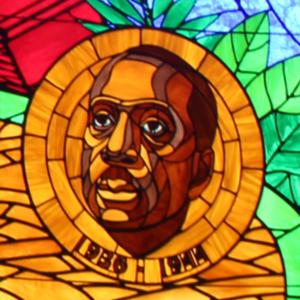


In Part One of this two part recording, Howard Thurman shares a series of readings and stories that have been significant to him throughout his life. Put alongside one another, one can get a sense of Thurman's concerns and interests, ranging from God's mysterious hand in the working of history, the dynamics of life and death, to the insistent search for truth against all other temptations. Ultimately, this recording offers us a window into Thurman's thought and reflection by way of those things that Thurman himself claims to be in conversation with.
Part of the Collection, NA
Tags:
Description by Rodell Jefferson III.
Recorded in NA
Citation: Thurman, Howard, “Thurman on Thurman, 1959,” The Howard Thurman Digital Archive, accessed July 9, 2024, https://thurman.pitts.emory.edu/items/show/993.
In this 1954 sermon, Thurman takes on the topic of commitment. Every expression of life is ordered around some structure or design, and Thurman reasons that human life is no different. To be committed is to put the demands of one purpose above all else, which in turns put all the resources of the universe at the disposal of the individual. Thurman says that the universe is in fact so life-giving and dynamic that even evil commitments are nourished, but they are not ultimately sustained. Thurman ends saying that we must organize our lives around some hard core of purpose, for this will set our lives in order and give meaning to the otherwise random and impersonal events of life.
Part of the Collection, NA
Tags:
Description by Rodell Jefferson III.
Recorded in NA
Citation: Thurman, Howard, “Your Life's Working Paper, 1954 October 10,” The Howard Thurman Digital Archive, accessed July 9, 2024, https://thurman.pitts.emory.edu/items/show/969.
In this Thanksgiving sermon, Thurman reads from Oswald McCall's The Hand of God, followed by discussions of what it means to be thankful for all the lives that sustain our own lives. He also explores the "vast feeling continuum" from which all our feelings flow and how we should be faithful in our feelings and words, for our lives are not our own.
Part of the Collection, Religious & National Holidays
Tags:
Description by Unknown
Recorded in Marsh Chapel, Boston University, Boston, Massachussetts
Citation: Thurman, Howard, “A Thanksgiving Service: Let Us Give Thanks, 1953 November 22,” The Howard Thurman Digital Archive, accessed July 9, 2024, https://thurman.pitts.emory.edu/items/show/958.
In this final sermon on "The Men Who've Walked With God," Thurman talks about the dynamics of human values. We are each born with a fundamental sense of values, however our values might be put towards destructive ends. It is easy to lie and mislabel our values, whether it be by ignorance or for the sake of convenience. Thurman says that power and knowledge tends to have a particular corrosive effect on our sense of values and responsibility. The answer to this is humility – measuring ourselves not by others' achievements, but "by the dream that stirred our hearts."
Part of the Collection, Men Who've Walked with God (1953)
Tags:
Description by Rodell Jefferson III.
Recorded in Fellowship Church, San Francisco, California
Citation: Thurman, Howard, “Men Who've Walked With God: The Light That Is Darkness, 1953 July 26,” The Howard Thurman Digital Archive, accessed July 9, 2024, https://thurman.pitts.emory.edu/items/show/953.
Thurman's 13th sermon on "The Men Who've Walked With God" examines "The Imitations of Christ" written by Thomas à Kempis. Thurman says that there is a part of our personalities that wants to give over control; we want to relate to something ultimate and reliable in which we can find stability and guidance. This authority, Thurman says, must be found deep within; therein lies our freedom, for without this inner authority, we will bow to the symbols of authority in our lives. Uncovering this authority requires the spiritual discipline of keeping track of ourselves, and the plans we have for our lives.
Part of the Collection, Men Who've Walked with God (1953)
Tags:
Description by Rodell Jefferson III.
Recorded in Fellowship Church, San Francisco, California
Citation: Thurman, Howard, “Men Who've Walked With God: Thomas à Kempis, 1953 July 17,” The Howard Thurman Digital Archive, accessed July 9, 2024, https://thurman.pitts.emory.edu/items/show/952.
In this 12th sermon on "The Men Who've Walked With God," Thurman talks about our outer and inner lives through Jacob Böhme, a Lutheran of the 16th century. Böhme felt that understanding the world entails more than simply experiencing it, but also relating to it from a center point. In dealing with the world, we need to bring a "double view" to all things. We must see one another in the reality of our circumstances, but also in our completeness as manifestations of life. For Böhme, this double view is what it means to practice love, and this is the love that each person hungers for.
Part of the Collection, Men Who've Walked with God (1953)
Tags:
Description by Rodell Jefferson III.
Recorded in Fellowship Church, San Francisco, California
Citation: Thurman, Howard, “Men Who've Walked With God: Jacob Böhme, 1953 July 12,” The Howard Thurman Digital Archive, accessed July 9, 2024, https://thurman.pitts.emory.edu/items/show/951.
In this tenth sermon on "The Men Who've Walked with God," Thurman explores painter, Fra Angelico. Angelico's life shows us what is possible when we dedicate our skills and disciplines totally to God. Angelico, painting out of the ultimate loyalty of his heart, did not worry about judgments or critics or making money; for him, painting was the way in which the living God was projected. Thurman says that Angelico made his life into a tool for God to reveal God's glory. When our lives are dedicated to God, our whole lives taken on new meaning, and the commonplace becomes sacramental.
Part of the Collection, Men Who've Walked with God (1953)
Tags:
Description by Rodell Jefferson III.
Recorded in Fellowship Church, San Francisco, California
Citation: Thurman, Howard, “Men Who've Walked With God: Fra Angelico, 1953 June 28,” The Howard Thurman Digital Archive, accessed July 9, 2024, https://thurman.pitts.emory.edu/items/show/950.
In this seventh lecture on "The Men Who've Walked with God," Thurman examines Gandhi. For Thurman, Gandhi illustrates what it looks like to bring mystical insight into politics and the traffic of life. In the work of Gandhi, one sees that "it is possible to achieve effective, worldly ends by the use of... techniques that are, themselves, unworldly." By shining the light of spiritual truth onto the conflicts and frustrations of life, new creative synthesis is made possible. For Thurman, Gandhi is a mystic who did not withdraw from the world, but rather brought his religious integrity into human relations.
Part of the Collection, Men Who've Walked with God (1953)
Tags:
Description by Rodell Jefferson III.
Recorded in Fellowship Church, San Francisco, California
Citation: Thurman, Howard, “Men Who've Walked With God: Gandhi, 1953 June 7,” The Howard Thurman Digital Archive, accessed July 9, 2024, https://thurman.pitts.emory.edu/items/show/949.
In this fifth lecture on "The Men Who've Walked with God," Thurman speaks on the Greek philosopher Plotinus. For Thurman, Plotinus's insight is the "double search" of mystical experience – the idea that as we seek out God, God also searches for us. Through this journey, one comes to share in the divine mind, or as Thurman says, "thinking God's thoughts after Him." However, Thurman is describing a thinking process, but rather an experience of ecstasy that expands beyond our sense of personality. This is the result of God spilling over into the mind and finally communing with the soul God has sought out.
Part of the Collection, Men Who've Walked with God (1953)
Tags:
Description by Rodell Jefferson III.
Recorded in Fellowship Church, San Francisco, California
Citation: Thurman, Howard, “Men Who've Walked With God: Plotinus, 1953 May 10,” The Howard Thurman Digital Archive, accessed July 9, 2024, https://thurman.pitts.emory.edu/items/show/948.
In this third lecture on "The Men Who've Walked with God," Thurman examines mysticism through the Brahmanic mystics and the development of Hinduism. The insight of the mystics was that one's soul was identical with the world-soul. However, this presented an issue. If dying means that one will merge back into the world-soul, does life have any meaning? Thurman explains how the Doctrine of Reincarnation was made to answer this. What we do in this world has an effect on our souls; living makes a difference. Out of this insight, the mystics crafted a respect for personality out of respect for the living God.
Part of the Collection, Men Who've Walked with God (1953)
Tags:
Description by Rodell Jefferson III.
Recorded in Fellowship Church, San Francisco, California
Citation: Thurman, Howard, “Men Who've Walked With God: Brahman Mystics, 1953 April 26,” The Howard Thurman Digital Archive, accessed July 9, 2024, https://thurman.pitts.emory.edu/items/show/947.
From the publisher's feed
It is my goal to support the The Howard Thurman Digital Archive, at Pitts Theology at Emory University, with their…
I've set a personal goal of listening to all 290+ recordings in one year, and having these recordings available as a podcast will help tremendously. I am so grateful to have them. And I am hopeful that others will discover Dr. Thurman through this podcast.