
Sign up to save your podcasts
Or

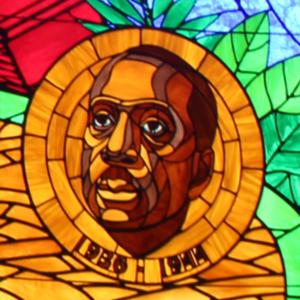


In the fourth and final sermon of the Freedom and Suffering series, Thurman takes his exploration of suffering a step further. Thurman suggests that we must learn to be worthy of our suffering. We should not seek out suffering, but when it comes to us, we must search for the meaning and dignity in it. Thurman also considers that human beings can only suffer because we are capable of loving. To love is to identify with another's suffering, to enter into it and yet remain as ourselves. Religion, he says, is our wrestling with the pain and helplessness of love. Thurman ends on the doctrine of incarnation, in which God learns how to suffer with human beings, so as to teach us how to move into another's suffering.
Part of the Collection, Freedom and Suffering (1959, Marsh Chapel, Boston, MA)
Tags:
Description by Rodell Jefferson III.
Recorded in Marsh Chapel, Boston University, Boston, Massachussetts
Citation: Thurman, Howard, “Freedom and Suffering, Part 4, 1959 November 29,” The Howard Thurman Digital Archive, accessed July 9, 2024, https://thurman.pitts.emory.edu/items/show/1054.
In this third sermon in the Freedom and Suffering series, Thurman focuses in on the suffering aspect. Suffering is the common experience of human beings, and perhaps all living beings. Thurman says that the Christian tradition itself was born out of pain and suffering, and represents the human project of squeezing optimism from pessimism. Thurman adds that we are always trying to deduce the logic of our suffering, but even still there are times when the balance of reaping and sowing does not add up. In these moments we may feel like a victim in the world, but Thurman insists that we have the freedom to work with our fate creatively, revealing the meaning, worth, and dignity of our lives.
Part of the Collection, Freedom and Suffering (1959, Marsh Chapel, Boston, MA)
Tags:
Description by Rodell Jefferson III.
Recorded in Marsh Chapel, Boston University, Boston, Massachussetts
Citation: Thurman, Howard, “Freedom and Suffering, Part 3, 1959 November 22,” The Howard Thurman Digital Archive, accessed July 9, 2024, https://thurman.pitts.emory.edu/items/show/1053.
In this second sermon in the Freedom and Suffering series, Thurman adds grace into his discussion on freedom and failure. Human beings have the freedom to fail again and again, however we never fail totally and absolutely. In this there is grace. For Thurman, grace is our experience of something dealing with us beyond balance and beyond merit; it is an unexplainable outpouring that sustains, redeems, and reassures us. Grace is found in God who does not give up on us, who sees us beyond the surface for our infinite worth. Even amongst failure, grace tips the balance scale in our favor.
Part of the Collection, Freedom and Suffering (1959, Marsh Chapel, Boston, MA)
Tags:
Description by Rodell Jefferson III.
Recorded in Marsh Chapel, Boston University, Boston, Massachussetts
Citation: Thurman, Howard, “Freedom and Suffering, Part 2: Freedom and Grace, 1959 November 15,” The Howard Thurman Digital Archive, accessed July 9, 2024, https://thurman.pitts.emory.edu/items/show/1052.
In Part 1 of this sermon series, Thurman claims that freedom and failure are twins. The gift of life is also the gift of failure, which is also the gift of freedom. Without the ability to choose, there can be no failure. Thus, human beings are free and fallible creatures. The ultimate and inevitable failure for a living organism is death. Thurman says that the human spirit must confront death and failure. From this confrontation arises a new perspective on life, a renewed understanding of freedom and life.
Part of the Collection, Freedom and Suffering (1959, Marsh Chapel, Boston, MA)
Tags:
Description by Rodell Jefferson III.
Recorded in Marsh Chapel, Boston University, Boston, Massachussetts
Citation: Thurman, Howard, “Freedom and Suffering, Part 1: Freedom and Failure, 1959 November 8,” The Howard Thurman Digital Archive, accessed July 9, 2024, https://thurman.pitts.emory.edu/items/show/1051.
In this third installment of “What Shall I do With My Life”, Thurman addressed the experience of community from the fluidity of consciousness. The line of delineation between life and death, love and hate, war and forgiveness are all discussed with regards to our own self-consciousness. Our experience of community is one with the unity of life and the aliveness of life. Still, it is the desire of man to stabilize those things that we need to guarantee our physical existence. Since the impersonal, social, and economic, and natural forces that impact our lives can not be controlled, we must choose freedom to accept the responsibility of our reaction to these things.
Part of the Collection, What Shall I Do With My Life? (1971, New York Community Church, New York, NY)
Tags: community, consciousness
Description by ShaCarolyn Halyard
Recorded in New York Community Church, New York City, New York
Citation: Thurman, Howard, “What Shall I Do with My Life, Part 3: The Experience of Community, 1971 March 21,” The Howard Thurman Digital Archive, accessed July 9, 2024, https://thurman.pitts.emory.edu/items/show/1002.
In this final installment of Moment of Crisis, Thurman is discussing the response of religious communities to the marginalized in society. The salvation of foreigners in Isaiah 56 is discussed as the unnamed prophet referenced in this text was compelled to take a position against those other prophets and devout believers, who insisted on the utter exclusiveness, cultural exclusiveness, religious exclusiveness, of the Judites. This critical moment points out one of the central paradoxes of the religious experience, man-made categories that define who has the right to worship God where. Thurman believes that exclusivity in religious institutions and communities is against life and therefore against God.
Part of the Collection, Moment of Crisis (1958, Marsh Chapel, Boston University, Boston, MA)
Tags: community, duality, religious experience
Description by ShaCarolyn Halyard
Recorded in Marsh Chapel, Boston University, Boston, Massachussetts
Citation: Thurman, Howard, “Moment of Crisis, Part 6, 1958 March 16,” The Howard Thurman Digital Archive, accessed July 9, 2024, https://thurman.pitts.emory.edu/items/show/1000.
In Part 5 of this lecture series on crisis, Thurman examines the tension between the private life and the transcendent experience. We have boundless freedom and responsibility over our own lives, but we may come to a point where we identify, not just with our individual destiny, but the destiny of humankind as a whole. Thurman suggests that it is through this expanded sense that the spirit of the living God can operate. On one side, we are drawn into transcendent goals bigger than ourselves; on the other, we are lulled into the peace of our little lives.
Part of the Collection, Moment of Crisis (1958, Marsh Chapel, Boston University, Boston, MA)
Tags:
Description by Rodell Jefferson III.
Recorded in Marsh Chapel, Boston University, Boston, Massachussetts
Citation: Thurman, Howard, “Moment of Crisis, Part 5, 1958 March 9,” The Howard Thurman Digital Archive, accessed July 9, 2024, https://thurman.pitts.emory.edu/items/show/999.
This installment of Moment of Crisis focuses on Abraham Lincoln. Thurman shares an excerpt from President Lincoln’s memoir that speaks to the personal crisis he faced as he grappled with whether slaves should be freed in the interest of saving the Union. Lincoln, heavily influenced by the founding fathers, believed that slavery was a violation of the mind, spirit, and will of the founding fathers. Still, those who embraced slavery and those in opposition of slavery understood that lives would be lost should the country go to war. The implications if emancipation as it relates to the Confederacy are woven into this lecture as well.
Part of the Collection, Moment of Crisis (1958, Marsh Chapel, Boston University, Boston, MA)
Tags: America, choice, crisis, slavery
Description by ShaCarolyn Halyard
Recorded in Marsh Chapel, Boston University, Boston, Massachussetts
Citation: Thurman, Howard, “Moment of Crisis, Part 4, 1958 March 2,” The Howard Thurman Digital Archive, accessed July 9, 2024, https://thurman.pitts.emory.edu/items/show/998.
In Part Two of the "Thurman on Thurman" recording, Howard Thurman speaks about the story of the Syrophoenician woman in the Gospels. Thurman says that this story means a great deal to him because, for him, it is a clue into the inclusiveness of the faith. For Thurman, seeking out God's inclusivity is a responsibility to his own religious experience. Thurman says that the Syrophoenician woman's ultimate message to Jesus and to us is that the world is one, and that Jesus could not do for Israel without doing for others. Thurman finishes saying that this i the only kind of God that he can worship: A God that speaks to this deep need for inclusivity, for "I could not be happy in heaven if my brother's in hell."
Part of the Collection, NA
Tags:
Description by Rodell Jefferson III.
Recorded in NA
Citation: Thurman, Howard, “Thurman on Thurman (continued), 1959,” The Howard Thurman Digital Archive, accessed July 9, 2024, https://thurman.pitts.emory.edu/items/show/994.
From the publisher's feed
It is my goal to support the The Howard Thurman Digital Archive, at Pitts Theology at Emory University, with their…
I've set a personal goal of listening to all 290+ recordings in one year, and having these recordings available as a podcast will help tremendously. I am so grateful to have them. And I am hopeful that others will discover Dr. Thurman through this podcast.