
Sign up to save your podcasts
Or

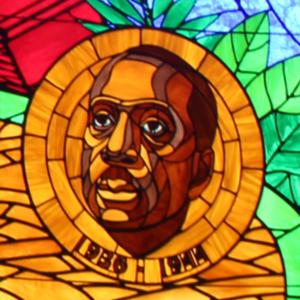


This section of the Mysticism and Social Action collection contains a brief talk by Thurman followed by Q&A discussion. Thurman grounds the discussion in the paradox of religion: How does one keep their inner life uncluttered whilst not using the inner life as an escape from involvement in the world? Thurman insists that these two rhythms are actually part of one pulse beat. One questioner asks Thurman about the temptation of Jesus in the wilderness and how this might reflect the dynamics of withdrawal and return in religious life. Another questioner asks about the discipline of centering, in which Thurman offers his thoughts on what it means to be a "chosen" people.
Part of the Collection, Mysticism and Social Change (1978, Berkeley, CA)
Tags:
Description by Rodell Jefferson III.
Recorded in Unitarian Church, Berkeley, California
Citation: Thurman, Howard, “Mysticism and Social Action, Part 1 (Panel discussion with Howard Thurman), 1978 October 14,” The Howard Thurman Digital Archive, accessed July 9, 2024, https://thurman.pitts.emory.edu/items/show/1133.
This continuation of Thurman's talk on mysticism and social action finds him illustrating the ultimate principles of the mystic. For the mystic, social action is not an end in itself, but rather is the process by which the mystics removes obstacles blocking the altar in their own heart. The mystic is one who has undergone a journey of self into their central core where God dwells, where the forgiveness of God is found. But what the mystic discovers is not just for themselves, but for all people. The mystic's social action is motivated by the dream of awakening people to that presence within themselves. It is in this work that the mystic redeems their own soul, even in the face of ultimate sacrifice, by remaining loyal to the mystical insight that life is one, and God's love is available to all.
Part of the Collection, Mysticism and Social Change (1978, Berkeley, CA)
Tags:
Description by Rodell Jefferson III.
Recorded in Unitarian Church, Berkeley, California
Citation: Thurman, Howard, “Mysticism and Social Change (continued; Lawrence Lecture), 1978 October 13,” The Howard Thurman Digital Archive, accessed July 9, 2024, https://thurman.pitts.emory.edu/items/show/1132.
This first part of Thurman’s sermon on mysticism addresses different definitions and experiences of mysticism and how they relate to social change. He begins by talking about his place in a radically depersonalizing Western society, and how refusal to accept assigned categories in that society results in lifelong struggle. He elaborates on his first experiences with mysticism, being alone on a Florida beach as a child and feeling the vast rhythm of life as he looked up at the sky. It is the sentiment of this image that characterizes Thurman’s view of mysticism: a highly personal practice of quiet reflection where the obstacles that muddle the awareness of God are removed. And it appears that it is through this removal of those obstacles that social change arises.
Part of the Collection, Mysticism and Social Change (1978, Berkeley, CA)
Tags:
Description by Anthony Fiddes
Recorded in Unitarian Church, Berkeley, California
Citation: Thurman, Howard, “Mysticism and Social Change (Lawrence Lecture), 1978 October 13,” The Howard Thurman Digital Archive, accessed July 9, 2024, https://thurman.pitts.emory.edu/items/show/1131.
Everyone should be given the chance to be born again, Thurman says. We live in a dynamic universe that is not standing still, nor anything in it. Life is always bursting forth from life, renewing itself again and again. And yet, human beings crave stability and certainty, for this is where we find our security. Thurman briefly meditates on the Book of Revelation, and the image of a new Heaven and a new Earth: "Heaven is a place where God dwells. And this daring, lonely dreamer on the island said, there shall come a time when the old Heaven cannot hold God, and there has to be a new Heaven." Thurman suggests that perhaps even ultimates can grow. We must resist the urge to put ceilings over God, others, and ourselves, for this is to imprison them in the categories of our minds, taking away their chance to be new. Thurman says life is not finished with any of us, even if we may be finished with life – because God is a part of life, and as long as life is alive, life cannot die.
Part of the Collection, NA
Tags:
Description by Rodell Jefferson III.
Recorded in NA
Citation: Thurman, Howard, “The Chance to Be New, 1978 October 8,” The Howard Thurman Digital Archive, accessed July 9, 2024, https://thurman.pitts.emory.edu/items/show/1130.
This sermon is the ninth of nine in a series of sermons given in Marsh Chapel that are titled "The Inward Journey." In this sermon, it appears that Howard Thurman intended to speak of Albert Schweitzer's work in relation to mysticism and religious experience; however, what we find in this sermon is Thurman reflecting upon the call of the religious leader in a time of societal unrest. He notes that there are two major events happening at this time: smallpox infesting Pakistan, and the murder of numerous Muslim men and children. He uses Albert Schweitzer and Olive Schreiner to reveal the significance of the religious practitioner giving their own life on behalf of those whom are suffering in place of a sermon that was expected (by the original audience) to be about identity, mysticism, and religious experience.
Part of the Collection, NA
Tags: Africa, Albert Schweitzer, Anglican Church, avalanche, Bishop Colenso, bushbacks, Christianity, cognitive dissonance, contextuality, creativity, current events, ecology, experience, incarceration, Jesus, kenosis, life, meditation, monkeys, murder, Olive Schreiner, On the Edge of the Primeval Forrest, ox, Pakistan, reverence, smallpox, the great decision, tobacco, vitality, William Blake, Zulu
Described by Dustin Mailman
Recorded in Marsh Chapel, Boston University, Boston, Massachussetts
Citation: Thurman, Howard, “Albert Schweitzer (9), 1962 Jan 14,” The Howard Thurman Digital Archive, accessed July 9, 2024, https://thurman.pitts.emory.edu/items/show/1081.
This sermon is the eighth of nine in a series of sermons given in Marsh Chapel that are titled "The Inward Journey." In this sermon, Thurman explores St. Augustine's texts "Confessions," and "City of God." He uses each of these texts to navigate St. Augustine's theological posturing towards salvation, original sin, free will, and conversion. The climax of this sermon critiques Augustine's claim that the church is the place to which humanity finds salvation, which is held in juxtaposition to Augustine's emphasis upon God's grace being the vehicle to which salvation and religious are actualized.
Part of the Collection, NA
Tags: Anthony, Augustine, burn, church, City of God, Confessions, conversion, creation narrative, creativity, discipline, empire, evil, experience, fall of humanity, free will, grace, Incarnation, intention, mind, original sin, Pelagius, realization, rebirth, redemption, religious experience, reorder, salvation, Tolle Legge, tremble
Description by Dustin Mailman
Recorded in Marsh Chapel, Boston University, Boston, Massachussetts
Citation: Thurman, Howard, “St. Augustine, part 1 (7); St. Augustine, part 2 (8), 1961 Dec 3, 10, Side B,” The Howard Thurman Digital Archive, accessed July 9, 2024, https://thurman.pitts.emory.edu/items/show/1078.
This sermon is the seventh of nine in a series of sermons given in Marsh Chapel that are titled "The Inward Journey." In this sermon, Thurman explores St. Augustine's biography, specifically speaking to the influence of Manichean Philosophy on Augustine prior to his conversion to Christianity. Thurman notes of the dualistic nature of this philosophy, and the ways in which redemption for both the body and the mind are non-existent in this train of thought. Thurman continues by noting the significance of redemption in Augustine's theological imagination, and appropriates Augustine's construction of redemption towards the political landscape of Germany post World War I.
Part of the Collection, NA
Tags: America, asceticism, be still my soul, biography, body, Carthage, creative energy, discernment, dualism, Germany, interconnectivity, libertinism, Manichean Philosophy, mind, North Africa, prayer, redemption, Roman Empire, sovereignty, World War I
Description by Dustin Mailman
Recorded in Marsh Chapel, Boston University, Boston, Massachussetts
Citation: Thurman, Howard, “St. Augustine, part 1 (7); St. Augustine, part 2 (8), 1961 Dec 3, 10,” The Howard Thurman Digital Archive, accessed July 9, 2024, https://thurman.pitts.emory.edu/items/show/1077.
This sermon is the sixth of nine in a series of sermons given in Marsh Chapel that are titled "The Inward Journey." In this sermon, Thurman explores biographical and theological elements of Plotinus, the 3rd century philosopher. The pinnacle of this sermon rests at a moment where Thurman explains that Plotinus' thought tells the listener that the entirety of creation is a creative expression of God. Thurman continues that it is in a movement of faithful pursuit of the said creative expression, one may come to know God.
Part of the Collection, NA
Tags: Antioch, children, cosmos, Emerson, Enneads, George Cross, God centered, infancy, meditation, Moby Dick, pagan, panentheism, Persian War, plague, Plotinus, prayer, Rome, silence, sovereignty, teacher, Tennyson, Woodworth
Description by Dustin Mailman
Recorded in Marsh Chapel, Boston University, Boston, Massachussetts
Citation: Thurman, Howard, “St. Francis of Assisi (5); Plotinus (6), 1961 Nov 12, 26, Side B,” The Howard Thurman Digital Archive, accessed July 9, 2024, https://thurman.pitts.emory.edu/items/show/1076.
This sermon is the fifth of nine in a series of sermons given in Marsh Chapel that are titled "The Inward Journey." In this sermon, Thurman moves through the entirety of St. Francis of Assisi's biography. Starting with Francis' conversion, to his deep connection to creation, then to his love ethic, then concluding with the implications of his experience with mysticism and contemplation. Here, Thurman is holding up the life of St. Francis of Assisi as an exemplar for the ideal religious life - a life of love, a life of service, a life of responsibility.
Part of the Collection, NA
Tags: abstraction, biography, birds, Children of God, contemplation, creativity, ecology, Francis of Assisi, insects, kenosis, legend, leprosy, Lord's Prayer, love, marriage, Peruvian War, poetry, prayer, seraphim, simplicity, Surrender
Description by Dustin Mailman
Recorded in Marsh Chapel, Boston University, Boston, Massachussetts
Citation: Thurman, Howard, “St. Francis of Assisi (5); Plotinus (6), 1961 Nov 12, 26,” The Howard Thurman Digital Archive, accessed July 9, 2024, https://thurman.pitts.emory.edu/items/show/1075.
This sermon is the fourth of nine in a series of sermons given in Marsh Chapel that are titled "The Inward Journey." Utilizing the intersections between Jane Steger, Jacob Boehme, and Meister Eckhart, Thurman explores what Steger calls "the inner light." He notes that the inner light within humanity is first, the "ground of God that is present in humanity," and second, a phenomenon that is "imposed upon the personality" without consent. He holds this definition in juxtaposition with a religious experience he once had, illustrating the intimate, yet universal, nature of the religious experience.
Part of the Collection, NA
Tags: autonomy, beggars grass, Charles River, choir, deception, fluid center, freedom, geese, Geiger counter, George Fox, Germantown, grace, identity, Incarnation, inner life, Jacob Boehme, Jane Steger, John Wycliffe, John's gospel, leaves from a secret journal, light, logos theology, Lord's Prayer, Meister Eckhart, Milwaukee, nostalgia, personality, Philadelphia, recall, self, skywriters, Society of Friends
Description by Dustin Mailman
Recorded in Marsh Chapel, Boston University, Boston, Massachussetts
Citation: Thurman, Howard, “Meister Eckhart (3); The Inner Light (4), 1961 Oct 15, 22, Side B,” The Howard Thurman Digital Archive, accessed July 9, 2024, https://thurman.pitts.emory.edu/items/show/1072.
From the publisher's feed
It is my goal to support the The Howard Thurman Digital Archive, at Pitts Theology at Emory University, with their…
I've set a personal goal of listening to all 290+ recordings in one year, and having these recordings available as a podcast will help tremendously. I am so grateful to have them. And I am hopeful that others will discover Dr. Thurman through this podcast.