
Sign up to save your podcasts
Or

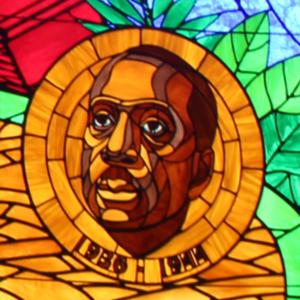


In this recording within the We Believe Series; Howard Thurman uses his text, "The Inward Journey," to discern what it means to live a life of intentionality. He holds up the orderly life and the life of crisis as the two ways one may live their life. He continues that regardless of one's life orientation, that one must wrestle with the reality of failure being embedded into the human experience. Thurman notes that life is a pattern that is continually unfolding, revealing a wider pattern, and that one's recognition of this pattern comes from an intentionally lived life. In this recording within the We Believe Series; Howard Thurman uses Langston Hughes' poem, "Rivers," to speak to human experience. Thurman discusses the analogy of human life as a river flowing, flooding, and resting.
Part of the Collection, We Believe (Television Series, 1958-1965)
Tags: Abraham Lincoln, agony, Augustine, Congo, contemplation, death, design, essence, experience, flood, goal, goals, integrity, inward journey, journey, Langston Hughes, life, meaning of life, Mississippi River, New Orleans, order, pattern, pilgrim's progress, responsibility, Rivers, soul, storm, tension, Thomas a Kempis, turbulence
Dustin Mailman
Recorded in WHDH-TV, Boston, Massachusetts
Citation: Thurman, Howard, “The Intentional Life (1962-05-18); Life is a River (1961-03-24),” The Howard Thurman Digital Archive, accessed July 9, 2024, https://thurman.pitts.emory.edu/items/show/1232.
In this recording within the We Believe Series; Howard Thurman reflects upon his writing within, "The Inward Journey," reflecting upon what it means to obtain perfection. He critiques narratives of linearity being the means of perfection, naming such notions as harmful and unhelpful. Thurman leans into the dynamic nature of life, naming perfection as an individual journey which unfolds on its own, personal terms. In this recording within the We Believe Series; Howard Thurman reflects upon his writing within, "The Inward Journey," reflecting upon the ways in which imagination influences the spiritual life.
Part of the Collection, We Believe (Television Series, 1958-1965)
Tags: authenticity, Columbia, contextuality personality, dynamism, experience, fulfillment, imagination, individualism, inward journey, perfection, philosophy of a fool, projection, psychology, relationship, sculptor, sociologist, synchronicity, wholeness
Dustin Mailman
Recorded in WHDH-TV, Boston, Massachusetts
Citation: Thurman, Howard, “The Image of Perfection (1963-04-26); Angelos of God (1961-09-29),” The Howard Thurman Digital Archive, accessed July 9, 2024, https://thurman.pitts.emory.edu/items/show/1231.
In this recording within the We Believe Series; Howard Thurman reflects upon Jane Steger's "Leaves From A Secret Journal," to reflect upon the significance of personal experience. He reflects upon a dog, from Jane Steger's writing, who is blind but slowly is able to see light, to which Thurman asks the question, "Did you ever dream that this universe of light was waiting for you?" From this question, Thurman dives into the significance of human experience, revering relationship as the driver for shifting one's own perspective which allows a new light to shine upon one's understanding of life. In this recording within the We Believe Series; Howard Thurman reflects upon a meditation from his text, "The Inward Journey," and an anonymous quotation from a personal letter sent to Thurman. His reflection wrestles with the tension between the "time and place" of one's life, and the "meaning and significance" of one's life.
Part of the Collection, We Believe (Television Series, 1958-1965)
Tags: blind puppy, childhood, cities, clouds, darkness, desert, destruction, Earth, experience, George Washington, God, inward journey, Jane Steger, learning, leaves from a secret journal, light, meaning, New York, opener of the way, Pawling, permanence, potentiality, relationship, rhythm, scent, smell, twilight, universe, vision, womb
Dustin Mailman
Recorded in WHDH-TV, Boston, Massachusetts
Citation: Thurman, Howard, “Growing Apprehension in Life (1963-09-13); Human Life in Perspective (1964-05-22),” The Howard Thurman Digital Archive, accessed July 9, 2024, https://thurman.pitts.emory.edu/items/show/1230.
In this recording within the We Believe Series; Howard Thurman reads from his text, "The Growing Edge." In his reading, he relates human life to a seed that is in the wind. He notes that a person "without God is a seed in the wind," which suggests that God is the source of grounding and life. He then speaks to the dynamic nature in life, and how though life is filled with both devastation and joy, that one should rejoice in the gift that is life. In this recording within the We Believe Series; Howard Thurman reflects upon Matthew 22:11-14. In his reflection, Thurman notes of the ways in which humanity longs for a climactic moment, a moment in which life is fulfilled. He notes, "We stand in our moment unaware. Happy is the one who knows that their moment is the great moment." For Thurman, fulfillment is possible now, and reorienting one's posturing towards the potential that one holds today is the key for synthesis and actualization.
Part of the Collection, We Believe (Television Series, 1958-1965)
Tags:
Dustin Mailman
Recorded in WHDH-TV, Boston, Massachusetts
Citation: Thurman, Howard, “Grace of Man and God (1964-04-24); The Great Moment (1962-12-07),” The Howard Thurman Digital Archive, accessed July 9, 2024, https://thurman.pitts.emory.edu/items/show/1229.
In this recording within the We Believe Series; Howard Thurman reads from Jane Steger's "Leaves from a Secret Journal." He attempts makes sense of the makeup of one's own life through the lens of ecology and biology. Using examples such as trees and DNA, Thurman explores the depths of the "order" of human existence. In this recording within the We Believe series; Howard Thurman draws upon a parable of two leaves at the end of the Fall season. The two leaves are in conversation with one another, pondering questions of why they must die and who will take their place when they die. After reading this parable, Thurman reflects upon the ways in which all of creation's lived experience participates in death; rendering death as an event that happens in one's life, not something that happens to oneself.
Part of the Collection, We Believe (Television Series, 1958-1965)
Tags: A Song of Living, angels, biology, chaos, coding, common experience, completion, confidence, constitution, creativity, ecology, epistemology, experience, Jane Steger, journey, leaves, leaves from a secret journal, life, North Carolina, Oak Tree, parable, peace, personality, pigs, Sargasso Sea, seasons, snakes, transcendence, tree, urge of life, Virginia, working paper
Dustin Mailman
Recorded in WHDH-TV, Boston, Massachusetts
Citation: Thurman, Howard, “The Country of the Heart (1963-09-20); Death - A Part of Life (1961-05-12),” The Howard Thurman Digital Archive, accessed July 9, 2024, https://thurman.pitts.emory.edu/items/show/1228.
In this recording within the We Believe Series; Howard Thurman reflects upon his writing within "The Inward Journey," to speak to the impact Jesus has upon one's experience of life. Thurman notes that it is in one's seeking of God that they find Jesus, and when one finds Jesus, one has the resources to find synthesis, wholeness, and unity. In this recording within the We Believe Series; Howard Thurman reflects upon his writing within "The Inward Journey." In this reflection, he gives a narration of the passage of scripture that is commonly referred to as "Jesus' Triumphal Entry Into Jerusalem," and provides a series of questions and perspectives from the perspective of Jesus and those who were with Jesus in this narrative.
Part of the Collection, We Believe (Television Series, 1958-1965)
Tags: christology, donkey, experience, fact, family, flowers, heart, historical Jesus, holiday, hope, ideal, inward journey, Jesus of Nazareth, kingdom, lent, longing, love, ministry, palms, prayer, process, prophet, quest, reflections, sanctification, spirit, story, synthesis, Triumphant Entry
Dustin Mailman
Recorded in WHDH-TV, Boston, Massachusetts
Citation: Thurman, Howard, “Jesus, His Contribution (1963-03-01); The Triumphant Entry (1964-03-20),” The Howard Thurman Digital Archive, accessed July 9, 2024, https://thurman.pitts.emory.edu/items/show/1227.
In this recording within the We Believe Series; Howard Thurman uses Oswald W.S. McCall's "Hand of God" to reflect upon Good Friday. Thurman utilizes a historical interpretation to makes sense of the life and death of Jesus, stating that "the event of his death cannot be separated from the logic of his life." In this recording within the We Believe Series; Howard Thurman uses Oscar Wilde's "De Profundis" to make sense of Good Friday. He again dwells upon the historical Jesus, the implications that following Jesus would have upon one who was living in the first century, and the significance of Jesus' death.
Part of the Collection, We Believe (Television Series, 1958-1965)
Tags: agony, crucifixion, De Profundis, death, experience, God, Good Friday, Hand of God, historical Jesus, holiday, Holy Week, human spirit, interpretation, Jesus, Jesus of Nazareth, Jordan Valley, legion, logic, oppression, Oscar Wilde, Oswald W.S. McCall, participation, Passover, personality, reverence, sovereignty, suffering, theodicy, transcendence
Dustin Mailman
Recorded in WHDH-TV, Boston, Massachusetts
Citation: Thurman, Howard, “"The Crucifixion" (1959-03-27); Good Friday (1964-03-27),” The Howard Thurman Digital Archive, accessed July 9, 2024, https://thurman.pitts.emory.edu/items/show/1226.
n this recording within the We Believe Series; Howard Thurman utilizes Frederick J. Moffitt's "Thus A Child Learns," as a point of departure for his liturgy for the devotion of a child. Thurman notes that it is the "birthright" of every child to be given the tools "define for them what it is that they are seeking and where they may find it." In this recording within the We Believe Series; Howard Thurman reflects from his text, "Meditations of the Heart," to "think about children and our relationship to them." Throughout this meditation, Thurman explores the ways in which adults should listen to, teach, and learn from children.
Part of the Collection, We Believe (Television Series, 1958-1965)
Tags: behavior, belonging, children, community, creativity, curiosity, dedication, dependability, development, developmental psychology, divan, experience, faith, family, Frederick J. Moffitt, furniture, genuine, goodness, habits, home, imagination, influence, intention, learning, life, love, meditations of the heart, moonlight, prayer, relationship, responsibility, self-control, teaching, Thus a Child Learns, tone, tradition, vitality
Dustin Mailman
Recorded in WHDH-TV, Boston, Massachusetts
Citation: Thurman, Howard, “The Child and Religious Meaning (1964-01-24); Our Children Are Not Our Things (1963-11-01),” The Howard Thurman Digital Archive, accessed July 9, 2024, https://thurman.pitts.emory.edu/items/show/1225.
In this recording within the We Believe Series; Thurman draws from his work "Meditations of the Heart" to reflect upon the meaning of a new year. He suggests that each passing year is a "year that has fulfilled itself and passed on," and is filled with change, fresh starts, grace, and hard lessons. In the passing of the previous year, Thurman suggests, there is an "opportunity to love life more wisely," noting that both the past and the future are "Golden Ages." In this recording within the We Believe Series; Thurman draws from his work "Meditations of the Heart," to reflect upon the content of freedom, as the July 4th holiday approaches him and the original audience. He waxes over the variety of expressions of freedom: freedom as release from a current moment, freedom as a wide-open road, freedom as responsibility which leads to growth in wisdom. While discerning these forms of freedom, Thurman returns to a mantra, "Give me the strength to be free and to endure the burden of freedom and loneliness of those without change."
Part of the Collection, We Believe (Television Series, 1958-1965)
Tags: angels, beginnings, birds, change, child, completion, conformity, death, Fourth of July, freedom, friendship, future, God, gratitude, holiday, innocent, life, maturity, movement, new start, New Years Day, organism, re-ordering, responsibility, seasons, soul, strength, time, tomorrow, understanding, unity, wisdom
Dustin Mailman
Recorded in WHDH-TV, Boston, Massachusetts
Citation: Thurman, Howard, “Salute to the New Year (1962-01-05); The Strength to be Free (1960-07-01),” The Howard Thurman Digital Archive, accessed July 9, 2024, https://thurman.pitts.emory.edu/items/show/1224.
In this fourth lecture from the Disciples of Christ Retreat, Thurman focuses in on two themes of the inner life. Firstly, one must keep open the door of thy heart, even if other people close their hearts to you. Thurman says that this is our ultimate responsibility, for love can bypass all hate and resistance, and it is impossible to prevent another from loving you. The experience of love is energizing and transformative. Lastly, Thurman loops back to the theme of this collection, "All that a [person] has is [their] life." Thurman says that life is all that a person has to give, and that commitment is to give our lives to life itself, which involves giving our live to others – this act of self-giving from our very center is called love.
Part of the Collection, Disciples of Christ Retreat (1971, Santa Barbara, CA)
Tags:
Description by Rodell Jefferson III.
Recorded in Disciples of Christ Retreat, Santa Barbara, California
Citation: Thurman, Howard, “Disciples of Christ Retreat, Lecture 4, 1971 July 25,” The Howard Thurman Digital Archive, accessed July 9, 2024, https://thurman.pitts.emory.edu/items/show/1221.
From the publisher's feed
It is my goal to support the The Howard Thurman Digital Archive, at Pitts Theology at Emory University, with their…
I've set a personal goal of listening to all 290+ recordings in one year, and having these recordings available as a podcast will help tremendously. I am so grateful to have them. And I am hopeful that others will discover Dr. Thurman through this podcast.