
Sign up to save your podcasts
Or

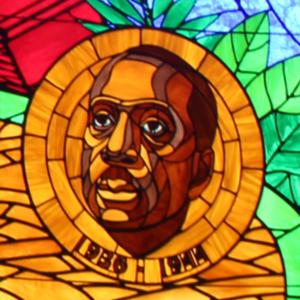


This is the final few minutes of the third lecture in this collection. Thurman says that commitment must be fed by the "living stuff of my living days," by outer life experiences and encounters, as opposed to solely quiet prayer and meditation. Furthermore, Thurman says that one can fail again and again in their commitments and still find renewal if the commitment is felt to be genuine and of God.
Part of the Collection, Disciples of Christ Retreat (1971, Santa Barbara, CA)
Tags:
Description by Rodell Jefferson III.
Recorded in Disciples of Christ Retreat, Santa Barbara, California
Citation: Thurman, Howard, “Disciples of Christ Retreat, Lecture 3 (continued), 1971 July 24,” The Howard Thurman Digital Archive, accessed July 9, 2024, https://thurman.pitts.emory.edu/items/show/1220.
In this third lecture from the Disciples of Christ Retreat, Thurman discusses the conflict and strife that arises in the dynamics of commitment. To yield our inner authority to God is to give up initiative over our own lives; we belong to God, and not simply our own interests and urges. However, Thurman says, that deep down we know that God might lead us into places we did not plan, and perhaps would not have preferred. Thus, religious experience involves both a yielding of our lives to God, as well as snatching our lives back. Surrendering to God is not a singular event, but a never-ending process. Thurman says that prayer and meditation is not enough to keep the commitment, but rather it must be lived out in the traffic of life.
Part of the Collection, Disciples of Christ Retreat (1971, Santa Barbara, CA)
Tags:
Description by Rodell Jefferson III.
Recorded in Disciples of Christ Retreat, Santa Barbara, California
Citation: Thurman, Howard, “Disciples of Christ Retreat, Lecture 3, 1971 July 24,” The Howard Thurman Digital Archive, accessed July 9, 2024, https://thurman.pitts.emory.edu/items/show/1219.
This is a continuation of the second lecture in the Disciples of Christ Retreat collection. Here, Thurman discusses the possibility of self-deception in religious experience. Even in the private world of the inner life, one must seek out validation. With faith and commitment comes a measure of risk, and thus the mind does not want to be mistaken. Thurman says that pride and arrogance are especially perilous in terms of the movement of the living God. Humility is the proper response to God's movement in our lives, rather than certainty and rigidity. Thurman ends saying that our responsibility is not the results of our commitment, but rather the working at, regardless of result. Our responsibility is the unity of heart and mind dedicated to the purposes of God.
Part of the Collection, Disciples of Christ Retreat (1971, Santa Barbara, CA)
Tags:
Description by Rodell Jefferson III.
Recorded in Disciples of Christ Retreat, Santa Barbara, California
Citation: Thurman, Howard, “Disciples of Christ Retreat, Lecture 2 (continued), 1971 July 24,” The Howard Thurman Digital Archive, accessed July 9, 2024, https://thurman.pitts.emory.edu/items/show/1218.
Thurman continues his discussion on the dynamics of commitment in this second lecture of the Disciples of Christ Retreat collection. Thurman begins with a number of readings that allude to the ways in which we often find our hearts and minds divided, and how commitment at our very center might bring unity and wholeness to our lives. In resonance with the first lecture, Thurman says that there can be no sense of self if we cannot experience our minds as our own minds. We must have confidence in the integrity of our own thoughts. Surrender and commitment to God is process by which one gives a yes in one's deepest place – a decision that cannot belong to anyone else. By giving ourselves to God in this way our lives are returned to us and reclaimed from the self-alienation that we once suffered.
Part of the Collection, Disciples of Christ Retreat (1971, Santa Barbara, CA)
Tags:
Description by Rodell Jefferson III.
Recorded in Disciples of Christ Retreat, Santa Barbara, California
Citation: Thurman, Howard, “Disciples of Christ Retreat, Lecture 2, 1971 July 24,” The Howard Thurman Digital Archive, accessed July 9, 2024, https://thurman.pitts.emory.edu/items/show/1217.
In this brief continuation of the first lecture, Thurman continues to talk about a sense of self through a story of his encounter with a crying boy. Investigating to see what was wrong with the boy, Thurman found that the boy was chewing his big toe and was crying because it hurt. He did know it was his own toe. Thurman says that we must grow into awareness and ownership over our bodies, and commitment of one's life is the highest expression of this. And commitment in turn brings meaning and purpose to our lives, meaning that is from God.
Part of the Collection, Disciples of Christ Retreat (1971, Santa Barbara, CA)
Tags:
Description by Rodell Jefferson III.
Recorded in Disciples of Christ Retreat, Santa Barbara, California
Citation: Thurman, Howard, “Disciples of Christ Retreat, Lecture 1 (continued), 1971 July 23,” The Howard Thurman Digital Archive, accessed July 9, 2024, https://thurman.pitts.emory.edu/items/show/1216.
In this first lecture of the Disciples of Christ Retreat collection, Thurman discusses the dynamics of commitment. We are given life, but what is it that we shall give our lives to? Thurman insists that this is a question we all must eventually answer. What we stake our lives on determines the quality of our lives. Thurman says that it takes a great challenge to lift us up from the monotonous ruts we find ourselves in. Commitment to a single end energizes our lives and sparks growth in us. Such dedication can bring freedom and empowerment to our inner lives even as our external circumstances remain stagnant. It is through great commitment that we reclaim our bodies as our own, and fulfill our senses of self.
Part of the Collection, Disciples of Christ Retreat (1971, Santa Barbara, CA)
Tags:
Description by Rodell Jefferson III.
Recorded in Disciples of Christ Retreat, Santa Barbara, California
Citation: Thurman, Howard, “Disciples of Christ Retreat, Lecture 1, 1971 July 23,” The Howard Thurman Digital Archive, accessed July 9, 2024, https://thurman.pitts.emory.edu/items/show/1215.
In this recording, Thurman reflects on the ways in which our needs are so often met by people we do not know and how we are indebted to those unknown benefactors. In turn, we must try to be generous with others even when there is no possibility of merit or recognition.
Part of the Collection, We Believe (Television Series, 1958-1965)
Tags:
Description by Spencer Roberts
Recorded in WHDH-TV, Boston, Massachusetts
Citation: Thurman, Howard, “We are All Indebted! The Story of Stranger Paying for Trunk (1965-03-26),” The Howard Thurman Digital Archive, accessed July 9, 2024, https://thurman.pitts.emory.edu/items/show/1179.
Thurman begins by comparing Hanukkah and Christmas. They are both crucial moments that “gather into themselves the essence of all striving and the meaning of all hope.” Hanukkah remembers “preservation of the eternal light.” Christmas “announces . . . a light that lightest every man that cometh into the world.” He then shares two touching Christmas stories. The first of a man who celebrated Christmas with his towns impoverished children. The second of Thurman viewing the sunrise over Mt. Everest. He concludes by sharing the meaning of Christmas, “light is the enemy of the darkness. And the light does not have to shine all the time.”
Part of the Collection, Religious & National Holidays
Tags: Christmas, Hanukkah, light
Description by Erik Mattson
Recorded in Fellowship Church, San Francisco, California
Citation: Thurman, Howard, “The Mood of Christmas, 1978 December 24,” The Howard Thurman Digital Archive, accessed July 9, 2024, https://thurman.pitts.emory.edu/items/show/1175.
In this final installment of Mysticism and Social Change, Thurman gives a final word to the relationship between the inner life and social action in response to a questioner who wonders if mysticism is a luxury for the comfortable and the elite. Thurman begins by saying that he has little hope for institutions to change the social order of things, rather each person must choose where they stand and live out their dream for the world they want to live in. Thurman says that he chose the church to be the place where he decided to live out his dream, which came with its own set of tensions: the structures of the church could not give Thurman the hope he needed, but the message of Jesus did, and thus Thurman needed to parse the two apart in his personal and primary experience. Furthermore, Thurman says that institutions do not deal with people personally. While large-scale operations are important, Thurman says that one must "feed a hungry person in a manner that the hungry person knows that he is being addressed, not merely his hunger." Thurman thus sees himself, and the mystic insight, as bearing witness to this need, seeing that the victimized person feels cared for at their center, not merely superficially helped.
Part of the Collection, Mysticism and Social Change (1978, Berkeley, CA)
Tags:
Description by Rodell Jefferson III.
Recorded in Unitarian Church, Berkeley, California
Citation: Thurman, Howard, “Mysticism and Social Action, Part 2 (Panel discussion with Howard Thurman, continued), 1978 October 14,” The Howard Thurman Digital Archive, accessed July 9, 2024, https://thurman.pitts.emory.edu/items/show/1135.
This recording is a continuation of the Q&A discussion on Mysticism and Social Action. Thurman begins by fielding a question about the relationship between innocence and knowledge, and the tension that one feels between inner reality and outer reality. Thurman also gives his thoughts on death as an experience of life, saying that death is not the final extinguishment of life, but rather an event that is a part of life. Thurman insists that there is a life-continuity rhythm just as there is a life-death rhythm. Lastly, Thurman speaks to the experience of religion, and the experience of God beyond an idea in the mind. Thurman says that the personal aspect of God, for him, is a sense of presence beyond definition and category, felt in the body rather than known through mental processes. The recording ends with a pointed question about the relationship between mysticism and the alleviation of suffering and injustice in the world, which is picked up in the next section.
Part of the Collection, Mysticism and Social Change (1978, Berkeley, CA)
Tags:
Description by Rodell Jefferson III.
Recorded in Unitarian Church, Berkeley, California
Citation: Thurman, Howard, “Mysticism and Social Action, Part 1 (Panel discussion with Howard Thurman, continued), 1978 October 14,” The Howard Thurman Digital Archive, accessed July 9, 2024, https://thurman.pitts.emory.edu/items/show/1134.
From the publisher's feed
It is my goal to support the The Howard Thurman Digital Archive, at Pitts Theology at Emory University, with their…
I've set a personal goal of listening to all 290+ recordings in one year, and having these recordings available as a podcast will help tremendously. I am so grateful to have them. And I am hopeful that others will discover Dr. Thurman through this podcast.